



Type Of Ice Melt You SHOULD NOT Use On Roofs
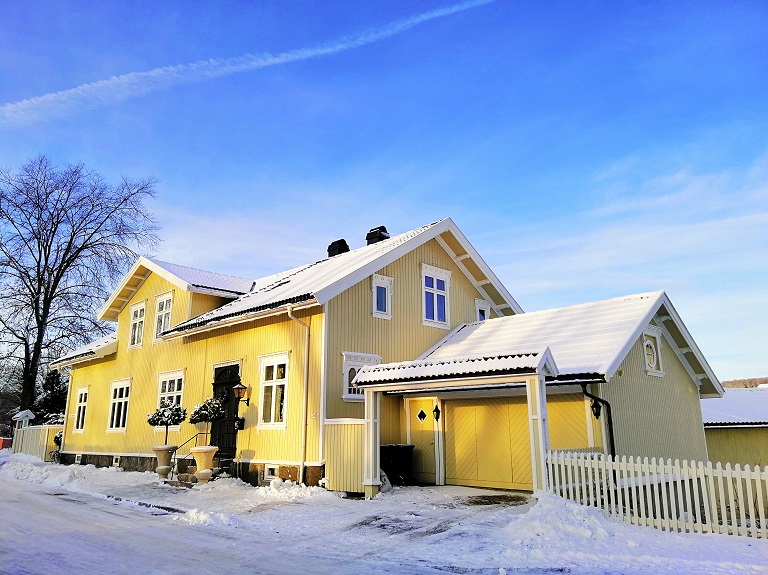
What Ice Melt Should You Avoid on a Roof?
Avoid applying a deicer to a roof until you have checked the roofing manufacturer’s maintenance guidance. This is especially important for asphalt shingles, because some roofing manufacturers recommend avoiding chemical ice-melt products altogether. For other roofing systems, chloride-containing deicers such as sodium chloride, calcium chloride and magnesium chloride can also introduce corrosion and runoff concerns around metal components, gutters and surrounding areas.
When a roof manufacturer permits deicer use, a chloride-free product may reduce chloride-related corrosion concerns. Safe Paw is a chloride-free ice melt discussed in this article, but compatibility should still be confirmed for the specific roofing material before application.
For established ice dams, mechanical snow removal or professional removal may be more appropriate than repeatedly applying deicing products.
IKO advises against chemicals on asphalt roofing, while GAF recommends careful snow removal and professional ice-dam removal. (IKO Global)
Are you winter-ready this year? You must be looking for a good ice melt that does not harm your property, particularly your roof. If so, you’re in the right place.
You see, icicles look beautiful, but they could pose a considerable problem such as:
- breaking your shingles, causing a leak in your home.
- blocking your gutter and roof system.
- causing a fungus accumulation in areas around the shingles or the chimney.
Moreover, breaking an icicle may suddenly injure someone walking below. And these are only some of the problems. There can be several other problems that may trouble you. Therefore, you must invest in a good ice melt for roof.
Key Takeaways
- Roof-material guidance comes first: asphalt shingles, metal roofing, TPO and modified-bitumen systems should not automatically be treated the same way.
- Some asphalt-shingle manufacturers advise against applying chemical ice-melt products directly to the roof.
- Sodium chloride, calcium chloride and magnesium chloride are chloride-based deicers; chloride exposure can contribute to metal corrosion and environmental salt loading.
- Chloride-free does not automatically mean compatible with every roofing membrane or shingle.
- Safe Paw is a chloride-free formulation, but roof-manufacturer guidance should be checked before applying any deicer.
- Ice dams are usually better addressed by controlling snow accumulation, insulation, ventilation and roof-temperature differences rather than repeatedly melting the visible ice.
EPA documents broader chloride effects on infrastructure and freshwater, while GAF identifies insulation and ventilation as central to ice-dam prevention. (US EPA)
What is the Best Ice Melt for Roofs and Ice Dams?
1. Sodium Chloride: Why Rock Salt is Bad for Snow on Roofs
The most common type of deicing salt is Sodium Chloride. It is also known as Rock salt and comprises irregularly shaped crystals. Since they are relatively inexpensive, they are the most preferred type of deicing salts.
However, they work up to only 20 degrees Fahrenheit temperature. They can damage the freeze-induced expansion and contraction of the tiles and roof shingles. In addition, they are pretty toxic to the vegetation around and leave a whitish residue on the driveways and foliage when it dries off. It makes your surroundings look very untidy.
How it works:
Rock salt melts ice by dissolving into available moisture and creating a salt solution with a lower freezing point than pure water.
It’s cheap and fast-acting — but destructive.
Why you should avoid it:
- Works only to about 20°F
- Corrosive to shingles and gutters
- Leaves white residue on surfaces
- Toxic to plants and pets when ingested.
Rock salt can burn paw pads, irritate skin, and, when ingested, may lead to vomiting and electrolyte disturbances.
However, they work up to only 20 degrees Fahrenheit temperature. They can damage the freeze-induced expansion and contraction of the tiles and roof shingles. In addition, they are pretty toxic to the vegetation around and leave a whitish residue on the driveways and foliage when it dries off. It makes your surroundings look very untidy.
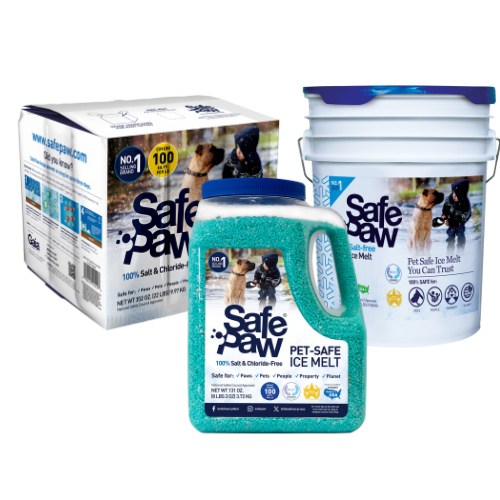
Pet Safe Ice Melt – Safe Paw
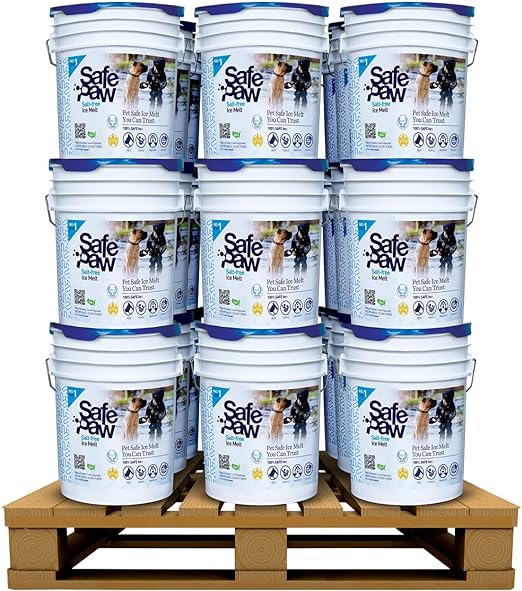
Safe Paw, Child Plant Dog Paw & Pet Safe Ice Melt -35lb, 36 Pails

Safe Paw, Child Plant Dog Paw & Pet Safe Ice Melt -22lb, 100Bboxes
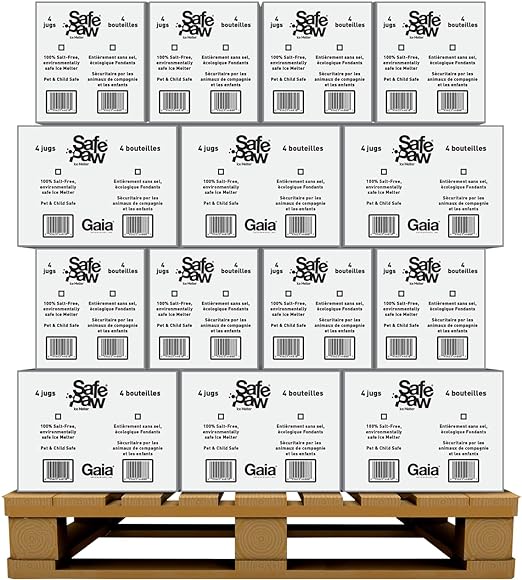
Safe Paw, Child Plant Dog Paw Pet Safe Ice Melt, 160 Jugs

Pet Products Powered By EzPz.pet

2. Magnesium Chloride: Is it a Genuinely Roof Safe Ice Melt?
It is less irritating to skin, animals, vegetation, environment, concrete, metal, etc. However, it works down to 5 degrees Fahrenheit only. Anything beyond that or closer to zero degrees will cause the roof shingles and concrete to expand and contract, damaging it and making it an expensive affair for you.
Magnesium chloride, often praised for its lower operational temperature and less corrosive nature compared to rock salt, still has considerable downsides. It can be more expensive than other salts and still poses risks to pets and plants if not used carefully. Overexposure to this compound can lead to irritation of pet paws and skin, and when it leaches into the soil, it can harm the surrounding vegetation by altering soil composition and potentially contaminating local waterways. Often marketed as a “gentler” alternative, magnesium chloride still comes with major limitations:
- Functions only to 5°F
- Corrodes metal and shingles over time
- Alters soil chemistry and harms vegetation when runoff occurs.
- Can irritate pets’ paws and skin if overapplied.
While Magnesium Chloride is less corrosive than rock salt, it’s still not safe for roofs or pets.
Ice Melt For Roof
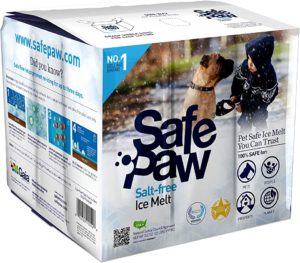
Pet Friendly Ice Melt – Safe Paw!
The Original and the #1 Child and Pet Safe Ice Melt for over 20 years. Guaranteed environmentally safe – will not harm waterways and sensitive wetlands.
3- Calcium Chloride Roof Melt: Risks of Corrosion and Heat
They melt the ice quickly; however, they are not entirely safe for the vegetation, roofs, and concrete. In addition, they are exothermic and can cause cracks on the roof or around the chimney if there is a temperature variation and causing paw irritation and chemical burns on contact. Calcium chloride melts ice aggressively down to about -25°F, but the heat it releases can crack shingles or warp roof materials.
It also:
- Stains and erodes metal roofing
- Burns vegetation
- Causes paw irritation and chemical burns on contact.
4- Calcium Magnesium Acetate (CMA) for Roof Snow Melt
As for calcium magnesium acetate, it’s often marketed as a safer, more environmentally friendly alternative to rock salt. However, it comes with its own set of challenges. The effectiveness of CMA depends heavily on application rates and environmental conditions, which can result in inconsistent performance. It’s also one of the more expensive deicing options, which may not make it the best choice for all consumers. Like magnesium chloride, it can still impact the environment if overused, contributing to nutrient imbalances in nearby ecosystems. CMA is often promoted as a green alternative, but:
- It’s less effective below 20°F
- Requires heavy application to work
- Still impacts aquatic ecosystems when overused
- Expensive compared to chloride-free alternatives
5- Can You Use a Homemade DIY Roof Melt?
People look for homemade ice melt for roofs. They believe they are good and can be used for roofs as well. However, alternatives like alcohol, beetroot juice, rubbing alcohol, etc. are least effective and leave a stain and messy residue behind.
Common household options (vinegar, rubbing alcohol, beet juice) may look safe, but they:
- Lack consistent melting power
- Leave stains or residues
- May irritate pets’ paws or attract dirt and mold
- Don’t last long during freeze–thaw cycles
Roof Material and Winter Ice Guidance
| Roof / Component | Recommended First Step | Deicer Consideration |
| Asphalt shingles | Remove accessible snow without damaging shingles and check manufacturer guidance | Some manufacturers recommend avoiding chemical deicers |
| Metal roof | Check coating and roofing-system instructions | If deicer is permitted, evaluate corrosion and runoff |
| TPO membrane | Review membrane manufacturer documentation | Do not rely solely on general “roof-safe” claims |
| Modified-bitumen roof | Check membrane/sealant compatibility | Product compatibility can depend on the exact system |
| Gutters and flashing | Maintain drainage and inspect materials | Minimize unnecessary chloride exposure |
| Established ice dam | Consider qualified removal | Deicer alone does not address the root cause |
6- Why a Chloride-Free Pet Safe Ice Melt is Best for Your Shingles
Safe Paw is one brand that can help you safely de-ice your roofs without causing them any damage. It is 100% salt-free and chloride-free, making it safe for the environment, your roofs, and your home in general.
This eco-friendly snow and ice melt is safe for use and does not affect the environment negatively, and can be used even when there are plants.
It contains a traction agent that prevents falls and ensures there are no slips.
It preserves and protects your roof. By knowing and understanding your roof; Safe Paw is designed to protect floors and roof surfacWhy Is Choosing the Right Ice Melt for Roofs So Important?
Icicles may look pretty, but they can cause:
- Broken shingles and roof leaks
- Blocked gutters and drainage systems
- Mold or fungus buildup near chimneys
- Falling hazards that can injure people
These problems worsen when the wrong ice melt—especially chloride-based products—is used. es. It is the best product to use so as not to destroy your roof.
Safe Paw Ice Melt is 100% chloride-free and designed for both roof and ground safety.
It’s People & Pet Safe, Non-Corrosive, and melts ice effectively down to -2°F.
Safe Paw Benefits:
- Works safely on shingles, metal, wood, and concrete
- No heat reaction — prevents cracking or roof stress
- Non-toxic if ingested in small quantities
- Won’t harm plants or soil
- Long shelf life and excellent spread rate
- Contains traction agents to reduce slips and falls
Which Approach Fits Your Situation?
- Asphalt-shingle roof:
Start with manufacturer-approved snow and ice management rather than assuming an ice melt should be applied directly. Some asphalt-roof manufacturers recommend avoiding chemical deicers. (IKO Global) - Metal roof:
If the manufacturer permits deicer use, a chloride-free formulation may be worth considering where minimizing chloride exposure is a priority. - TPO or specialty membrane roof:
Use only products confirmed compatible with the specific membrane system. - Recurring ice dams:
Focus on insulation, ventilation and roof-temperature management rather than repeatedly treating only the ice. (GAF) - Pedestrian areas below the roof:
Ice Traction or Walk On Ice can be discussed for improving traction on appropriate walking surfaces; they should not be positioned as roof-deicing products.
Pros & Cons Table
| Deicing Approach | Potential Advantages | Important Limitations |
| Sodium chloride | Common deicer; creates brine that lowers water’s freezing point | Chloride-based; can contribute to metal corrosion and salt runoff |
| Calcium chloride | Effective deicing chemistry and releases heat when dissolving | Chloride-based; compatibility with roof components must be checked |
| Magnesium chloride | Deicing salt used in cold-weather applications | Still chloride-based; pet exposure and runoff require consideration |
| CMA | Non-chloride acetate-based deicer | Performance, application rate and roof-material compatibility still need evaluation |
| Chloride-free ice melt | Avoids chloride exposure | “Chloride-free” alone does not establish compatibility with every roof material |
| Mechanical snow removal | Avoids adding deicing chemicals to the roof | Must be performed without damaging roofing materials |
| Professional ice-dam removal | Appropriate for difficult or established ice dams | Requires professional assessment |
EPA documents chloride effects and FHWA classifies sodium chloride, calcium chloride, magnesium chloride and CMA as separate deicing materials. (US EPA)
Roof Deicing Limitations
- Asphalt shingles: Some asphalt-roof manufacturers recommend avoiding chemical ice-melt products on the roof. Follow the shingle manufacturer’s current care instructions. (IKO Global)
- Metal roofing: Check the roof manufacturer’s guidance and consider the effect of runoff on fasteners, flashing and gutters.
- TPO and membrane roofs: Do not assume that a product used on metal or concrete is automatically compatible with a roofing membrane.
- Ice dams: Deicer may address visible ice temporarily but does not correct the insulation or ventilation conditions that can cause repeated ice dams. (GAF)
- Roof access: Avoid climbing onto a snow- or ice-covered roof. GAF recommends qualified professional removal for established ice dams. (GAF)
- Runoff: Consider where melted material will drain, particularly around plants, soil, pets and metal components.
Safe Paw is one of the few commercial ice melts that’s genuinely salt- and chloride-free, minimizing corrosion and runoff risk.
Finding a Non-Corrosive Ice Melt for Roof and Gutter Protection
Not always. Even products labeled “eco” or “green” may still contain trace chlorides or harmful binding agents.
Improper use of any deicer—eco-friendly or not—can:
- Increase soil salinity
- Harm aquatic life
- Degrade roofing materials
Always check for chloride-free, non-corrosive, and pet-safe labels — and confirm manufacturer testing data.
Before Applying Any Ice Melt to a Roof
- Identify the roofing material.
- Check the roofing manufacturer’s current maintenance instructions.
- Remove loose snow first where it can be done safely.
- Determine whether the problem is surface ice or an established ice dam.
- Check the deicer’s ingredients and technical documentation.
- Consider gutters, flashing, fasteners and vegetation below the runoff path.
- Apply only if both the roofing guidance and product guidance support the intended use.
- Address insulation or ventilation problems if ice dams repeatedly return.
GAF recommends snow removal and attention to the underlying causes of ice dams rather than treating only the visible accumulation. (GAF)
What Causes an Ice Dam?
An ice dam forms when snow melts over warmer portions of a roof, flows toward colder roof edges and refreezes near the eaves. Water can then collect behind the ice and potentially work beneath roofing materials. Uneven roof temperature is commonly associated with insulation and ventilation conditions, which is why removing the visible ice alone may not solve the underlying problem.
GAF and Owens Corning both describe this warm-roof/cold-eave mechanism. (GAF)
Does Roof Material Change Which Deicing Method You Should Use?
Yes. Asphalt shingles, standing-seam metal roofs, gutters, TPO membranes and modified-bitumen systems are made from different materials and can have different maintenance requirements. Do not assume that a product compatible with one roofing system is automatically appropriate for another.
Deicing treats existing ice. Ice-dam prevention focuses on reducing the conditions that repeatedly create the ice, including uneven roof temperature, snow accumulation, insulation and ventilation problems.
GAF identifies insulation and attic ventilation as important preventive factors. (GAF)
How Much Snow Can a Roof Hold? Comparing Deicing Systems
While electric and hydronic roof deicing systems prevent ice dams, they come with:
- High installation and energy costs
- Material fatigue from constant heat cycles
- Environmental footprint (if powered by non-renewable energy)
Geothermal tail water systems are more sustainable but limited by location and upfront costs. These systems are best paired with safe, chloride-free melts for long-term roof health.
Geothermal Tail Water and Sustainable Ways to Melt Ice on Roofs
Exploring innovative heating solutions like geothermal tail water systems can also be beneficial. These systems use the residual water from geothermal heating processes to melt ice on driveways and sidewalks. This method is not only efficient but also environmentally friendly, utilizing the constant temperature of geothermal water to keep surfaces clear without additional energy costs.
Roof deicing systems have evolved significantly, and keeping up with the market analysis shows that more homeowners are opting for sustainable and efficient methods to combat winter’s challenges. Understanding the size, share, and growth of these systems can help in making informed decisions that align with both safety and environmental sustainability.
Choosing the right products for winter safety and maintenance involves a balance between effectiveness, cost, environmental impact, and safety for pets and property. While alternatives like magnesium chloride and calcium magnesium acetate offer benefits, they also come with notable limitations. This makes products like Safe Paw, which are designed to be safe for pets, children, and all types of concrete, an appealing choice for those looking to minimize negative impacts while effectively managing winter conditions.
Thus, avoid using an ice melt that contains Chloride in any form- be it Magnesium chloride, calcium chloride, or sodium chloride. Choose a safer alternative with natural ingredients because your roof deserves equal care as any other part of your property.
How to Melt Ice on Roof Surfaces Without Causing Leaks
Icicles may look pretty, but they can cause:
- Broken shingles and roof leaks
- Blocked gutters and drainage systems
- Mold or fungus buildup near chimneys
- Falling hazards that can injure people
These problems worsen when the wrong ice melt—especially chloride-based products—is used.
When winter storms strike, the instinct is to reach for whatever ice melt is most accessible—often a chloride-laden snow salt or basic rock salt found at the local store. But while these might melt ice quickly, the damage they leave behind isn’t always visible right away. Roof shingles begin to weaken, seams degrade, and runoff chemicals seep into your soil and siding. Even worse, standard snow salt and chloride-based blends can be highly toxic for your pets, causing painful paw burns or worse if ingested.
That’s where a pet safe ice melt like Safe Paw changes the game. It’s 100% chloride-free, non-toxic, and designed to be safe around pets, kids, and even sensitive roofing materials. Unlike traditional options that rely on harsh exothermic reactions and corrosive elements, Safe Paw uses a patented, dual-action formula that melts ice while offering traction and long-lasting coverage. It works effectively on a wide range of surfaces—including roofs, pavers, concrete, decks, and driveways—without risking structural damage or environmental contamination.
Moreover, pet owners who rely on roof melts often forget that snow or ice will eventually slide down to walkways where their pets roam. If you’re using a chloride product, that runoff can pose a significant risk. Pets may lick their paws, accidentally ingest residue, or suffer from cumulative exposure that leads to internal issues. Pet friendly ice melt ensures peace of mind throughout your property—from the rooftop to the curb.
A quick search for “ice melt near me” may yield dozens of options, but not all of them put your pets or property first. Too many products masquerade as “eco” or “safe” while still containing trace levels of chloride or harmful additives that can leach into soil, corrode roof flashing, and impact foundation health. If you’re tired of juggling effectiveness with safety, the solution is simple: Safe Paw.
The EPA warns that salt runoff can increase water salinity, corrode metal roofing, and damage nearby vegetation.
Why Safe Paw is the Top-Rated Pet Safe Ice Melt for Homeowners
Unlike traditional products, Safe Paw offers both roof protection and pet safety in one formula.
- Works effectively to -2°F — proven through independent testing.
- Non-corrosive
- No chloride, salt, or harmful chemicals.
- Safe for pets, plants, and children.
- Provides traction, lasts up to 72 hours, and stores for multiple seasons.
Safe Paw has been trusted for over 30 years by homeowners who prioritize safety and sustainability. It’s manufactured by Gaia Enterprises, founded by Steve Greenwald, a chemical engineer dedicated to developing eco-safe winter solutions. For over 30 years, Gaia Enterprises has led the charge in developing eco-friendly, People & Pet Safe deicing products. The company’s mission is to protect pets and the planet from the ground up.
Safe Paw Ice Melt:
- People & Pet Safe
- Non-Corrosive
- Effective down to -2°F
- Long Shelf Life
- Excellent Spread Rate
Safe Paw isn’t just an ice melt; it’s a commitment to people, pets, and planet-friendly safety.
Gaia Enterprises Inc. delivers 100% pet-safe and environmentally friendly winter products. Safe Paw, our flagship product, is the #1 selling pet-safe ice melt that does not harm pets, safe if ingested, and safe on all types of concrete.
Frequently Asked Questions (FAQs) About Roof Ice Melt
Other Ice Melt Products
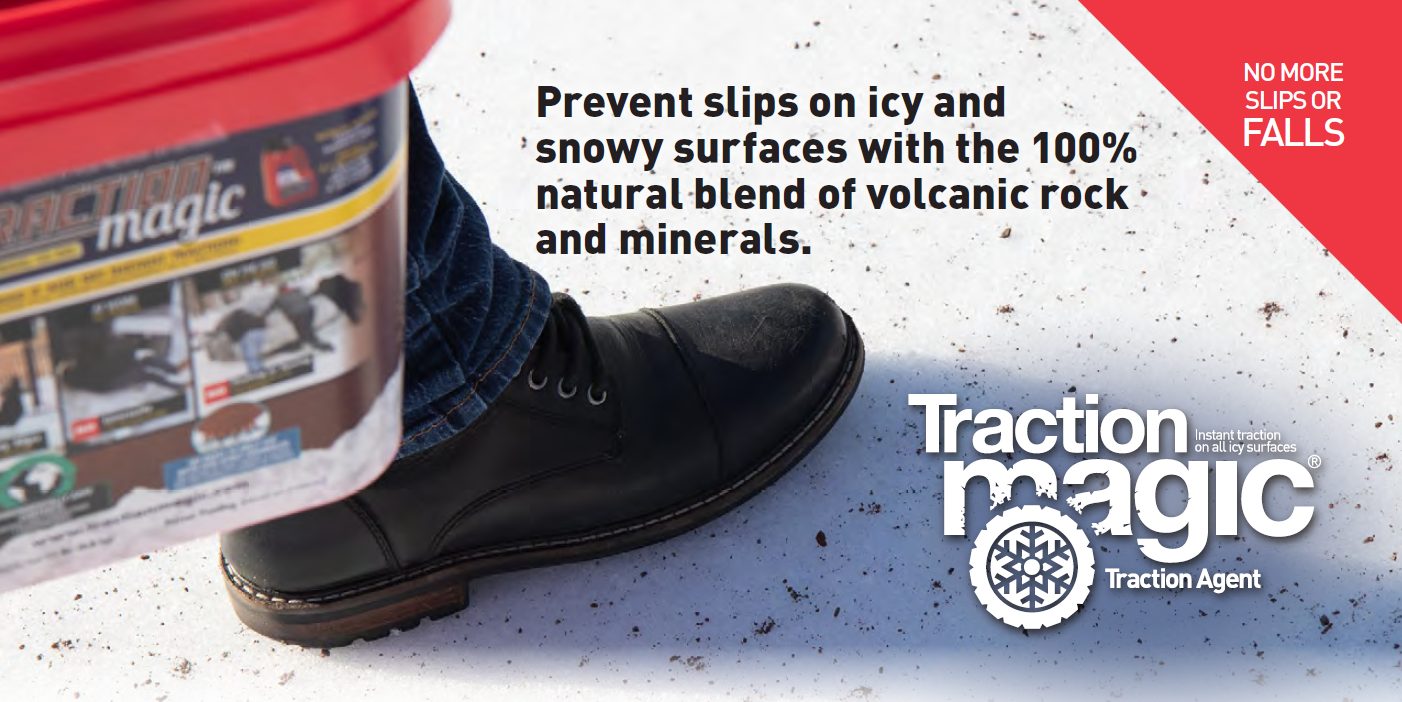
Traction Magic
Stay safe on slippery surfaces with a product that’s 100% natural and safe for pets, people, and your property. Use Traction Magic on sidewalks, steps, or as instant traction for your car.
Safe Thaw
Imagine an ice melt you can put down and never worry about. It won’t harm pets, kids and your property. That’s Safe Thaw. Unlike anything else on the market, Safe Thaw can change how winter affects our planet.
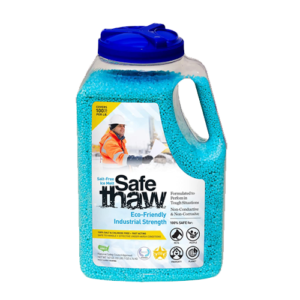
Ice Traction (with Traction Magic™)
Ice Traction (with Traction Magic™) is your go-to winter solution for driveways, walkways, parking lots — and even black ice on the road. Unlike salt or ice melts, it delivers instant grip on snow and slippery surfaces with no wait time. Just spread and go.

Safe Thaw
Imagine an ice melt you can put down and never worry about. It won’t harm pets, kids and your property. That’s Safe Thaw. Unlike anything else on the market, Safe Thaw can change how winter affects our planet.

Author: Shweta Saxena
Shweta, a passionate pet lover and environmental advocate, has dedicated herself to promoting winter safety for pets. Living amidst the scenic, snowy landscapes of Canada, she expertly merges her love for animals with her exceptional writing talents. Her commitment is deeply rooted in ensuring the well-being of pets during the harsh winter months.
Related Articles
- Cold Air and Potential New Weather System Expected in Western U.S. on February 20
- January 23 Snowstorm: Prepare Your Roof for Winter’s Fury
- January 10 Snowstorm Forecast: Heavy Snow and Roof Care Tips
- How Much Snow Can Your Roof Hold? Understanding The Limits
- Would Safe Paw Harm The Rubber Base Of The Roof?