Don’t Salt Your Concrete Driveway- Use This Instead
0 comments
Avoid rock salt and other chloride-based deicers on concrete driveways when possible, especially on concrete that is less than 12 months old, damaged, poorly drained or not designed for freeze-thaw exposure. Chloride brines can increase saturation, contribute to surface scaling and accelerate corrosion of embedded metal. During the first winter, remove snow promptly and use traction-only options such as coarse sand or mineral grit. On suitable mature concrete, use only a product whose label permits concrete application, apply the minimum recommended amount and remove slush promptly.
Key Takeaways
Rock salt is sodium chloride. When salt solution enters concrete pores and refreezes, repeated saturation and freeze-thaw expansion can contribute to scaling, pitting and cracking.
Chloride exposure can accelerate corrosion where reinforcing steel or other embedded metal is present.
Do not apply chemical deicer to concrete that is less than 12 months old unless the installer has provided written approval.
For new concrete, prioritize prompt snow removal and traction-only materials such as coarse sand or mineral grit.
For suitable mature concrete, compare the product label, active ingredients, effective-temperature range, application rate and concrete restrictions before use.
Apply only the amount directed on the label and remove slush to reduce repeated saturation and refreezing.
Product, environmental and pet-safety claims should be supported by current labels, safety data sheets or independent testing.
Audio Edition of This Article
People in areas with harsh winters are familiar with the dangers of a slick, icy driveway. Your driveways can become slip and fall hazards, putting you at risk of falling and having to nurse a wounded rib or elbow—or worse—with every step you take. An ice melt salt, which swiftly breaks up ice and generates traction, is the solution to this winter disaster. Although it’s a simple repair, applying salt or other chloride ice melter on concrete roads might have unintended repercussions. The answer is a concrete-safe ice meltthat will keep snow away from the driveway without damaging it.
What Should You Use on Your Driveway?
Driveway condition
Preferred approach
Avoid or verify
Concrete under 12 months old
Prompt snow removal; coarse sand, mineral grit or another traction-only material.
Avoid chemical deicers unless the installer gives written approval.
Mature concrete in good condition
Use the minimum label-directed amount of a product permitted for concrete; remove slush promptly.
Verify active ingredients, application rate and temperature range.
Cracked, scaled or spalled concrete
Use traction-only methods and arrange repair or professional inspection.
Avoid heavy or repeated deicer use.
Stamped, colored, sealed or decorative concrete
Follow the installer and sealer manufacturer’s winter-care instructions.
Do not assume a general “concrete-safe” label applies.
Driveway with pets, plants or drainage to waterways
Choose methods with documented pet, plant and environmental information; control runoff.
Do not rely on broad marketing claims without product documentation.
New Section: Safer Winter Application Steps
Clear loose snow before it compacts or bonds to the surface.
Check the concrete age, condition, sealer restrictions and drainage path.
Read the product label and safety data sheet before application.
Use the minimum amount specified by the manufacturer; do not spread by guesswork.
Keep granules and meltwater away from pets, children, vegetation and drains as directed by the label.
Remove loosened ice, slush and excess residue promptly.
Reapply only when conditions and the label require it, rather than automatically adding more product.
Best Ice Melt for Concrete Driveway: The Ultimate Pet-Safe Ice Melt Guide
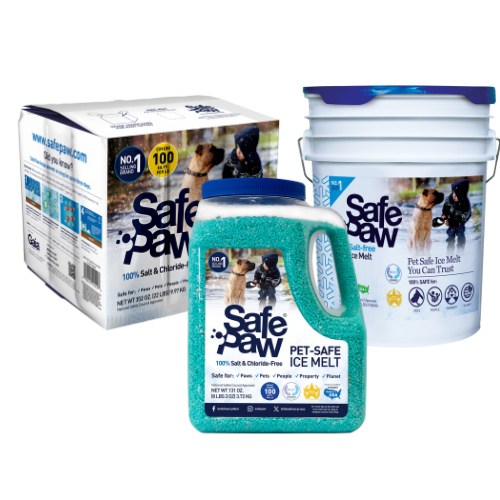
Pet Friendly Ice Melt – Safe Paw!
The Original and the #1 Child and Pet Safe Ice Melt for over 20 years. Guaranteed environmentally safe – will not harm waterways and sensitive wetlands.
Is Rock Salt Poisonous? Understanding the Risks to Pets and Concrete
Rock salt is not only poisonous for your pets and plants but also highly corrosive. Its harmful chlorides cause health risks to children and pets—salt damages concrete driveways, patios, and sidewalks indirectly. Salt corrodes concrete beneath the surface, resulting in discolored, cracked, and crumbling concrete. It is caused mainly by chemicals reacting with the pavement surface.
Salt reduces the freezing point of water. It increases the pressure of frozen water, amplifying the freeze-thaw cycle’s effect. So if anyone asks you this question, is rock salt poisonous? The answer is yes. It is deadly for pets, plants, and even concrete and metals.
Why You Should Avoid Salt on Concrete Driveway and Garden Areas
Yes — rock salt (sodium chloride) is toxic to pets, plants, and soil. When dogs or cats walk on salted surfaces, salt crystals can stick between their pads and cause burns or irritation. If they lick their paws, it may lead to vomiting, dehydration, or even salt poisoning.
The ASPCA warns that chloride-based deicers can irritate paws and cause gastrointestinal distress. Moreover, the same salt runoff that harms your concrete can seep into lawns, alter soil pH, and damage root systems.
Safe Paw, in contrast, is 100% chloride-free and biodegradable, offering a safe alternative for homes with pets and gardens.
Does Ice Melt Damage Concrete? How Chemical Deicers Cause Spalling
When the frosty season rolls in, keeping our driveways and walkways safe becomes a priority. But here’s the scoop—not everything that’s labelled safe ice melt for concrete is safe. You’ll find plenty of types of ice melt in the market likecalcium chloride, magnesium chloride, etc. These chemical-based ice melt products might do the trick quickly, but they’re thirsty chemicals, absorbing moisture and expanding it inside your concrete. This isn’t just a little expansion; we’re talking about the kind that leads to scaling, spalling, and outright cracking—nasty stuff if you don’t have air entrained concrete or if it lacks proper sealing.
Why Avoid Salt on Concrete Driveway? The Science of Freeze-Thaw Damage
If you live in a cold climate, it’s tempting to grab a bag of rock salt when snow hits. It seems simple: salt lowers water’s freezing point, turning ice into slush. But here’s the catch — this same chemical reaction weakens concrete from the inside out.
Winter Driveway Options
Option
Pros
Cons / limitations
Best for
Prompt shoveling or snow blowing
No chemical residue; reduces snow compaction and bonding.
Requires timely labor and suitable equipment.
All driveways; first choice for new concrete.
Coarse sand or mineral grit
Adds immediate traction; works at any temperature.
Does not melt ice; requires cleanup and can enter drains.
New concrete and temporary grip.
Heated mat
Melts snow without granular residue; reusable.
Higher initial cost, electricity needs and limited coverage.
Steps, entrances and short walkways.
Rock salt / sodium chloride
Widely available and low cost.
Chloride exposure, limited cold-temperature performance, runoff and concrete restrictions.
Only where the label and surface condition permit.
Calcium or magnesium chloride
Can melt at lower temperatures than rock salt.
Still chloride-based; may increase moisture exposure and corrosion concerns.
Mature surfaces only where permitted.
Chloride-free deicer
Avoids chloride-related corrosion mechanisms.
Not risk-free for every concrete surface; claims and active ingredients vary.
Suitable mature concrete when label restrictions are satisfied.
Editorial Treatment of Current Alternatives
Current option
Recommended page treatment
Sand
Keep. State clearly that it adds traction but does not melt ice and must be cleaned from drains.
Kitty litter
Move to a “Not recommended as a primary solution” note. It can become messy and does not reliably melt ice.
Vinegar
Remove unless supported by reliable guidance. Acidic liquids may affect surfaces and are not a dependable driveway deicer.
Beet juice with sugar
Rewrite as a specialized additive used in some road-treatment programs, not a simple household recipe. Do not recommend sugary application without evidence and cleanup guidance.
Salt-free / natural ice melt
Replace “natural” and “safe” generalizations with the actual active ingredients, label restrictions and documented test results.
According to the American Concrete Institute (ACI), chloride salts such as sodium chloride and calcium chloride draw water into tiny surface pores. When temperatures drop again, that moisture refreezes, expands, and creates internal pressure that causes scaling and cracking. Over just a few seasons, this cycle can strip the surface layer and make your driveway crumble.
Salt vs. Ice Melt Alternatives for Concrete: A Performance Comparison
Option
Melting role
Concrete considerations
Pet / environmental note
Evidence to link
Rock salt (sodium chloride)
Melts ice within a limited temperature range.
Chloride brine can increase saturation and contribute to scaling; may accelerate metal corrosion.
Can irritate paws or cause illness if ingested; runoff adds chloride.
Current label/SDS plus concrete and environmental source.
Calcium chloride
Melts at lower temperatures than rock salt.
Still chloride-based; exothermic behavior and moisture exposure require caution.
Can irritate paws and skin; runoff contains chloride.
Current label/SDS and independent technical source.
Magnesium chloride
Used for melting in colder conditions.
Still chloride-based; concrete and corrosion restrictions may apply.
Can irritate exposed tissue; runoff contains chloride.
Current label/SDS and independent technical source.
Verified chloride-free deicer
Performance depends on its active ingredients and formulation.
Avoids chloride-related corrosion, but is not universally safe for all concrete.
Use only documented pet and environmental claims.
Product label, SDS and independent test report.
Sand / mineral traction grit
Does not melt ice; adds grip.
No deicing chemistry; can require cleanup and drain management.
Ingredient-specific dust and ingestion precautions may apply.
Product instructions or material data.
Heated mat
Melts snow and prevents bonding in a small area.
No deicer residue; confirm surface and electrical compatibility.
No granular exposure when used correctly.
Manufacturer instructions and safety certification.
Best Ice Management Solutions for Every Concrete Situation
Best for concrete under 12 months old Prompt snow removal plus coarse sand or mineral traction grit. These methods improve grip without applying chemical deicer to vulnerable new concrete.
Best for steps and small entrances A heated mat designed for exterior use can reduce snow bonding and avoid granular residue. Confirm electrical and surface compatibility.
Best for suitable mature concrete where deicer is permitted Choose a product whose current label permits concrete use, check its active ingredients and temperature range, apply only the label-directed amount and remove slush promptly.
Best for damaged or decorative concrete Use traction-only methods and follow the installer, sealer manufacturer or repair professional’s instructions before applying any deicer.
Best Ice Melt for Concrete Driveway: Comparing Top De-icing Brands
Now, let’s dive into the melting pot of products:
Safe Paw: Think of this as the eco-warrior of ice melts. It’s a champion for both your pets and your pavements, ditching the harsh salts and chlorides for a gentler, yet effective, blend of modified crystalline amide core, glycols, and surfactants. This mixture not only respects your concrete’s integrity but also ensures that Fido’s paws stay burn-free.
Green Gobbler and Snow Joe Melt-2-Go: Here’s where things get icy. These brands might melt your ice, but they’re also melting some of your driveway’s resilience and possibly your pet’s health with their chloride-packed recipes. Effective? Sure, in the same way a sledgehammer cracks a nut.
If you’re looking for some alternatives to ice melt, well, let’s take a look at those as well.
Concrete and product limitations: No ice melt is guaranteed safe for every driveway. Risk depends on concrete age, mix design, air entrainment, curing, drainage, moisture exposure, finishing, sealer, existing damage, dosage and weather. New, decorative, stamped, colored, sealed, cracked or reinforced concrete may require additional restrictions. Always follow the concrete installer’s guidance and the product label.
Pet-safety limitation: Do not describe a product as harmless if ingested unless the exact claim is supported by the current label and safety documentation. Keep all winter products away from pets and children as directed by the manufacturer, and contact a veterinarian or poison-control service if exposure causes concern.
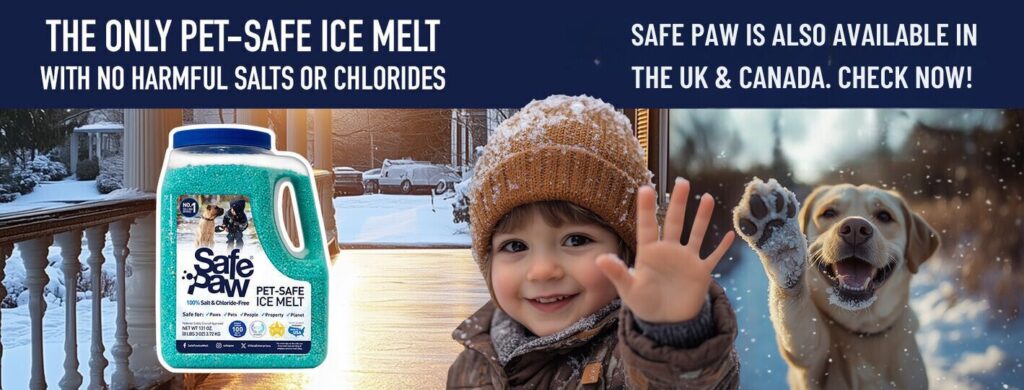
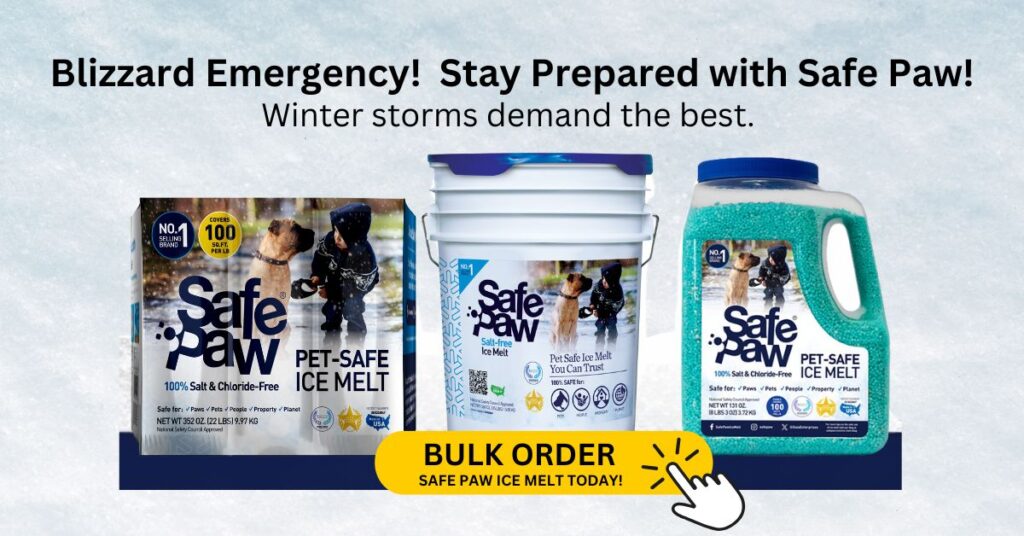
Ice and Snow Everywhere? Stock Up on Safe Paw – the ONLY Pet Safe Ice Melt you can trust
Which Ice Melt is Safe for Concrete? Concrete Safe Ice Melt Alternatives
Salt-Free And Natural Ice Melt
It does not have any toxic chlorides and is non-corrosive. It is safe for pets and plants. Its all-natural ingredients will melt snow without damaging your concrete. It also gives you long-lasting protection from snow accumulation.
Sand
It provides traction on the slippery driveway, preventing your friends and family from slipping and falling. It is suitable for traction, but sand is not an ice melter. Moreover, it needs to be cleaned thoroughly. Otherwise, it can clog the drains.
Kitty Litter
Kitty litter is similar to sand in that it gives grip for a non-slip surface while not melting snow and ice. However, it would help to put extra effort into cleaning the messy residue left behind by kitty litter.
Vinegar
Vinegar includes citric acid, which aids in the melting of snow and ice. However, it may take a few applications. Therefore, use it if you have plenty of time to wait for the melting process to begin. Not ideal for immediate effect.
Beet Juice With Sugar
One of the other methods to de-ice your home without salt is to use sugar beet juice. Sugar beet juice decreases the melting point of ice and snow. However, sugar may attract the unnecessary attention of unwanted crawlers and creatures to your driveway. Therefore, it would be best to wash your driveway thoroughly after each application to get rid of red patches.
Get ready for winter with – the ONLY Pet Safe Ice Melt you can trust
Choosing Chloride-Free Ice Melt Products for Long-Term Concrete Health
Navigating the icy gauntlet of winter requires more than just throwing down the first deicer you grab. With freeze-thaw cycles challenging the durability of our driveways, and the environmental impact of salts sneaking into our waterways, it’s about making informed, safe choices.
For those who want to keep their winter wonderlands safe and intact, it’s clear—the future ofde-icinglies not in the salt shaker, but in smarter, safer ice melt alternatives like Safe Paw, which balance immediate needs with long-term sustainability. So next time you’re faced with a frosty front walk, remember, there’s a way to melt ice that keeps both the planet and your pavement in mind.
Is Rock Salt Bad for Concrete Driveways? What Salt Does to Snow
When temperatures drop, it’s tempting to reach for traditional salt to clear your driveway—but before you do, it’s worth asking: what does salt do to snow? On the surface, it seems helpful. Salt lowers the freezing point of water, helping snow and ice melt faster. But what many homeowners don’t realize is that this chemical reaction is also what accelerates the breakdown of concrete, corrodes metal, and harms nearby vegetation. That’s why using conventional salt for snow melt often leads to long-term damage.
Salt doesn’t actually remove the snow—it simply alters the chemistry to melt ice into slush. That slush then refreezes during cold snaps, leading to slicker surfaces. And if the concrete on your driveway isn’t sealed or is less than a year old, it can absorb the saltwater, which expands and contracts as temperatures change, resulting in cracks, pits, and surface scaling.
Salt lowers the freezing point of water — but not enough during extreme cold. It’s most effective above 15°F (-9°C). Below that, melting slows dramatically, leaving behind slush that refreezes into black ice when temperatures dip again. That refreezing isn’t just inconvenient; it’s dangerous. It makes driveways slippery and increases the risk of falls and surface scaling.
Even more alarming is the environmental toll. Salt runoff gets washed into waterways, raising chloride levels in streams and harming aquatic life. If you live in an area that frequently deals with winter alerts like the Licking County snow emergency, choosing the wrong ice melt could make you part of the problem. This is why chloride-free options like Safe Paw are gaining traction—they provide effective snow melt without the environmental and structural cost.
The U.S. Geological Survey (USGS) reports that chloride runoff from winter road salts has raised chloride concentrations in streams and lakes by over 200% in urban areas, harming fish and soil health. So while salt might seem helpful short-term, it causes long-term structural and environmental damage.
Salt Free Ice Melt for Concrete: Preventing Cracks and Surface Erosion
Even products labeled “safe for concrete” can be misleading. Many contain calcium chloride or magnesium chloride — chemicals that pull moisture deep into the concrete slab. As that water freezes and expands, it forces the surface to flake, pit, and crack. Chemical ice melts don’t just melt ice — they eat away at your concrete’s foundation, especially if the surface isn’t sealed or is less than a year old.
Why Salt-Free and Concrete Friendly De-Icers are the Smartest Choice
Salt-free ice melts rely on non-chloride, non-corrosive ingredients that break surface tension instead of relying on chemical reactions. The result: effective melting without structural damage.
Safe Paw®, created by Gaia Enterprises, was engineered to protect concrete, pets, and the environment simultaneously. Its unique formula combines a modified crystalline amide core with glycols and traction agents that begin melting ice instantly — even in sub-zero temperatures down to –2°F.
Unlike rock salt, Safe Paw:
Does not corrode concrete or metal.
Prevents re-icing by forming an anti-bonding barrier.
Contains zero chlorides or salts, so it’s non-toxic and eco-friendly.
Is safe for pets and children, even if accidentally ingested.
Safe Paw was developed more than 30 years ago by chemical engineer Steve Greenwald after seeing his own dog’s paws burned by salt-based ice melts.
How Cold Does It Need to Be to Snow? Preparing for Safer Snow Melt
Understanding how cold does it need to be to snow is essential for winter readiness. Snow typically forms when the air temperature is at or below 32°F, but the ground temperature also plays a crucial role. If the ground is warmer than freezing, snow may melt upon contact—if it’s colder, snow accumulation and freezing become more likely. So, even in relatively mild regions, once conditions line up, your driveway could quickly become a hazard zone.
During a Licking County snow emergency, for example, it’s not just about snow falling—it’s about snow sticking, melting, refreezing, and forming dangerous sheets of black ice. Traditional salt may give a false sense of safety in these moments. It melts the top layer of snow, but without proper reapplication or timely removal, that water can refreeze, increasing risk.
Smart snow removal starts with prevention. Applying a non-toxic, chloride-free snow melt product like Safe Paw before a snowfall helps prevent snow from bonding to surfaces in the first place. Safe Paw works at lower temperatures and contains traction agents that add grip without damaging your driveway. So rather than reacting to snowfall with aggressive chemicals, Safe Paw allows for proactive, damage-free winter management that keeps your home, pets, and environment safe.
Pet Safe Ice Melt – Safe Paw
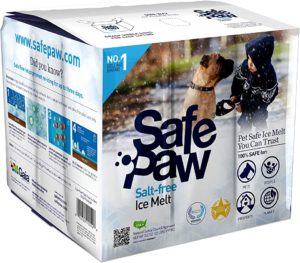
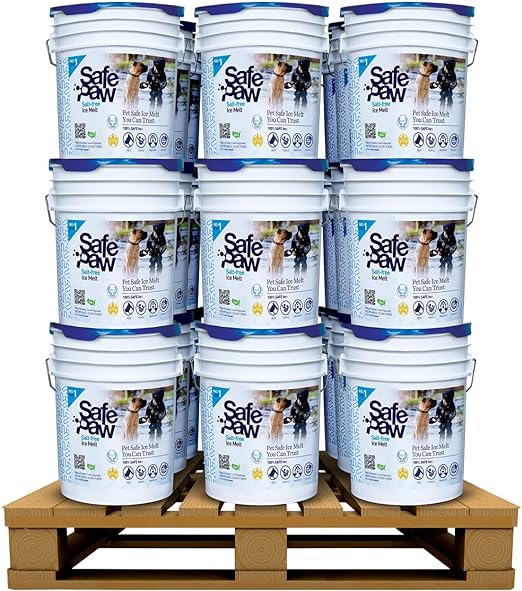
Safe Paw, Child Plant Dog Paw & Pet Safe Ice Melt -35lb, 36 Pails
Conclusion: Protecting Your Home with Pet-Safe Ice Melt for Concrete
Rock salt is inexpensive and familiar, but chloride brine can create avoidable risks for concrete, embedded metal, nearby plants, pets and runoff. For concrete that is less than 12 months old, prioritize prompt snow removal and traction-only materials. For suitable mature concrete, check the surface condition and installer restrictions, choose a product whose label permits concrete use, apply only the directed amount and remove slush promptly. No product is risk-free for every driveway, so the safest choice begins with the age and condition of the concrete.
Ice and Snow Everywhere? Stock Up on Safe Paw – the ONLY Pet Safe Ice Melt you can trust
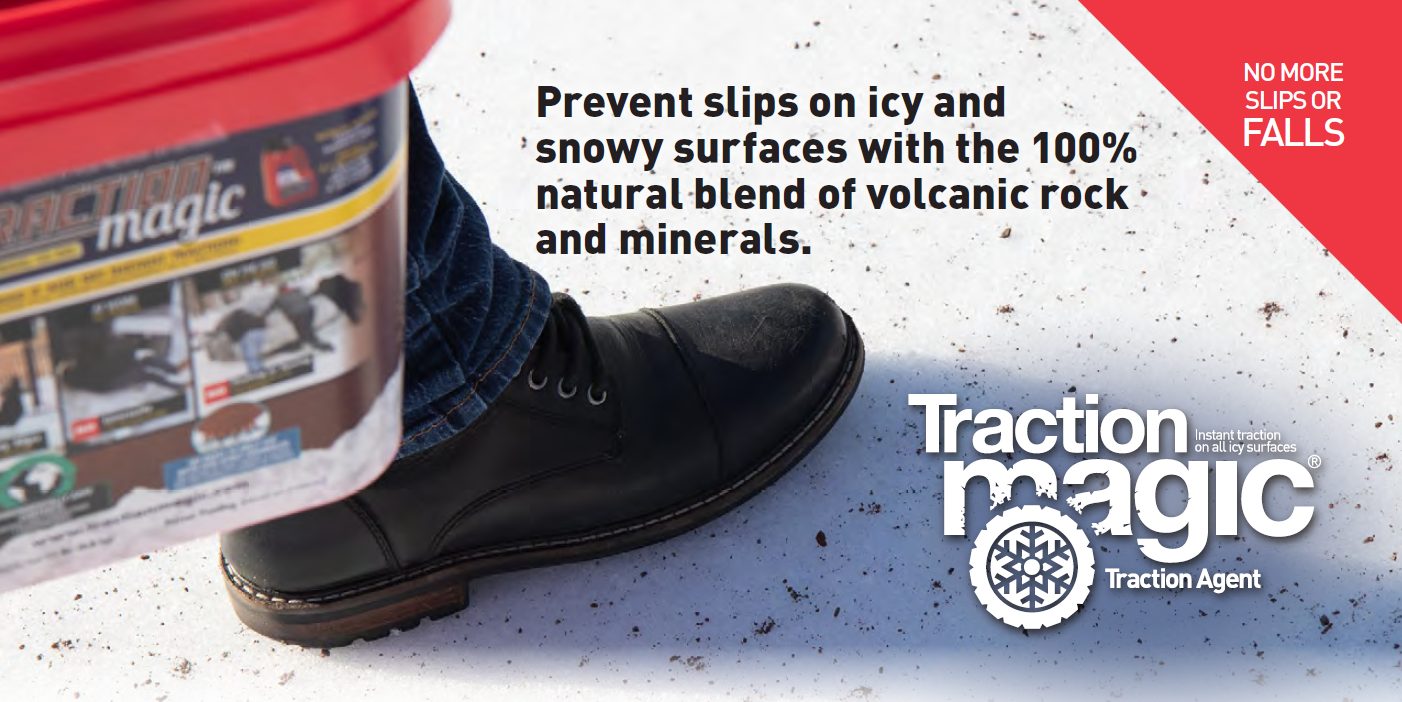
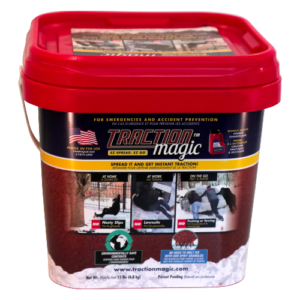
Stay safe on slippery surfaces with a product that’s 100% natural and safe for pets, people, and your property. Use Traction Magic on sidewalks, steps, or as instant traction for your car.
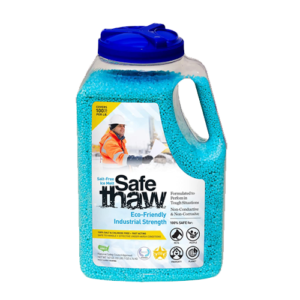
Imagine an ice melt you can put down and never worry about. It won’t harm pets, kids and your property. That’s Safe Thaw. Unlike anything else on the market, Safe Thaw can change how winter affects our planet.
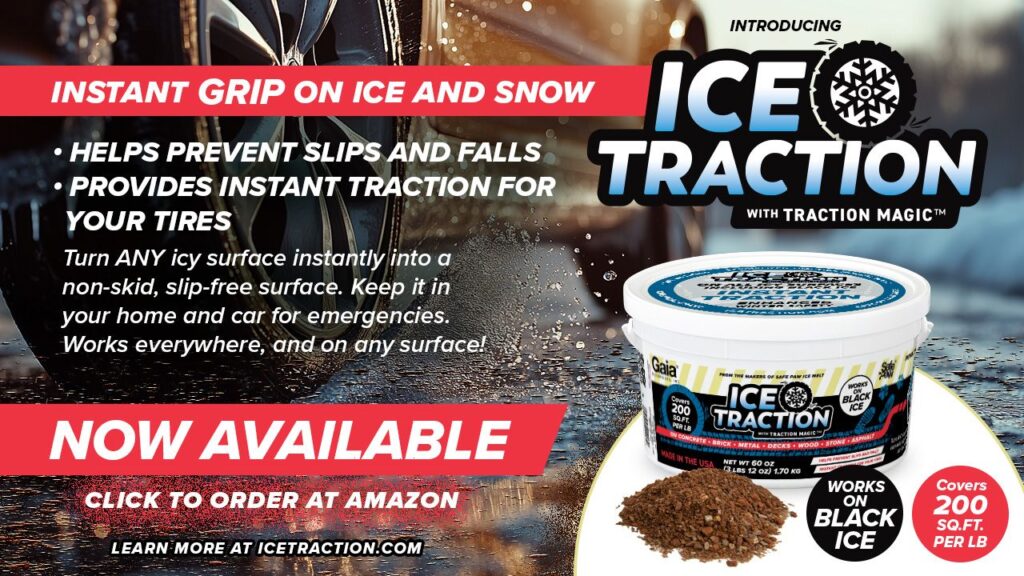
Ice Traction (with Traction Magic™) is your go-to winter solution for driveways, walkways, parking lots — and even black ice on the road. Unlike salt or ice melts, it delivers instant grip on snow and slippery surfaces with no wait time. Just spread and go.
Imagine an ice melt you can put down and never worry about. It won’t harm pets, kids and your property. That’s Safe Thaw. Unlike anything else on the market, Safe Thaw can change how winter affects our planet.
Rock salt creates a chloride brine that can enter concrete pores. Repeated wetting, freezing and thawing can contribute to scaling, pitting and cracking, while chlorides may accelerate corrosion of embedded metal. Actual risk depends on the concrete mix, age, condition, drainage and exposure.
Avoid chemical deicer on concrete that is less than 12 months old unless the concrete installer has approved a specific product and application method. During the first winter, remove snow promptly and use traction-only materials such as coarse sand or mineral grit.
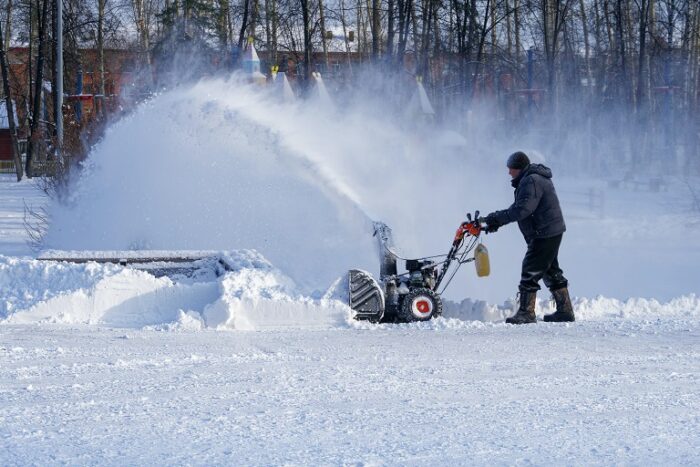
Use prompt shoveling or snow blowing, coarse sand, mineral traction grit or a heated mat suitable for the surface. These methods improve safety without relying on chloride deicing chemistry.
No product affects every slab in the same way, but no deicer is risk-free for every surface. Ingredient type, dosage, concrete age, air entrainment, drainage, existing damage and freeze-thaw exposure all matter.
Calcium chloride can melt ice at lower temperatures than sodium chloride, but it is still a chloride-based deicer. It may increase moisture exposure and chloride-related concerns, so use it only where the surface and label permit.
Scaling is the flaking or peeling of the concrete surface. It can occur when a saturated surface repeatedly freezes and thaws, especially when the concrete is new, weak, poorly finished or not adequately air-entrained for the climate.
No. Chloride-free products avoid chloride-related corrosion mechanisms, but concrete age, condition, sealer, drainage, dosage and product formulation still matter. Follow the label and installer instructions.
Use only the application rate stated on the label. More product does not necessarily work better and can increase residue, runoff, cost and surface exposure.
Yes. Remove loosened ice, slush and excess residue when practical. This reduces repeated saturation and refreezing on the driveway.
Review the current product label, safety data sheet and any independent test report linked to the claim. Terms such as pet-safe, concrete-safe, biodegradable and non-corrosive should be used only within the documented conditions.
Author: Steven J Greenwald
Nature-friendly innovations are Steve’s passion and his products are deeply rooted in this philosophy. “Safe for people, pets, property, and the planet” isn’t just a tagline; it’s the very essence of Steve’s vision.
Driven by a profound respect for our environment, for the last 50 years, Steve is leading the charge towards a future where sustainability isn’t an option but a standard.