


Salt Hazards – Is Rock Salt Poisonous To Humans?

Rock salt used for winter deicing is primarily sodium chloride. It can help melt ice, but excessive or repeated exposure can create health, environmental, and property concerns. Ice-melt residue may irritate skin or paws, swallowing it can cause gastrointestinal symptoms and, in sufficiently large amounts, dangerous sodium imbalances. Road-salt runoff also contributes chloride to freshwater and can accelerate corrosion of vehicles and infrastructure. (Poison Control)
Typical warning label found on rock salt and salt-based ice melt products:
“Danger! Keep away from pets and children wear rubber gloves and goggles when using. Wash contaminated clothing and call doctor immediately if contact with eyes or ingested.”
A recent national survey shows that 60% of American households use rock salt and salt-based ice melt products during the cold winter months to reduce ice around the home. An alarming 62% of Americans are unaware of the health dangers associated with the use of these products on your children, pets, and property.
Key Takeaways About Rock Salt Hazards
- Rock salt used for deicing is generally sodium chloride.
- Small accidental exposure is different from consuming a toxic dose; risk depends on the amount and route of exposure.
- Ice-melt residues can cause skin or paw irritation and gastrointestinal upset if swallowed.
- Excessive sodium ingestion can produce serious electrolyte disturbances.
- Pets can ingest winter deicers while licking contaminated paws or eating treated snow.
- Chloride from road salt can enter groundwater, streams, lakes, and other freshwater systems.
- Chloride exposure can accelerate corrosion of metals and reinforcing steel in concrete.
- Sand or grit can provide traction, but it does not melt ice.
- Every deicing alternative has its own performance, environmental, surface, and cost trade-offs. (ASPCA)
Rock salt, and other salt-based ice melters, contain sodium chloride or potassium chloride which can heat up to 175 degrees when exposed to water, ice, and low temperatures. Often these white pellets (crystals) sit on ice and snow surfaces for a long period before penetrating. This presents a danger to pets, children, surfaces, and the environment. There are safe alternatives such as Safe Paw.
What Is Rock Salt?
Rock salt used for winter road and walkway treatment is primarily sodium chloride. It works by forming a brine that lowers the freezing point of water, helping loosen the bond between ice and pavement. Its effectiveness decreases as pavement temperatures fall. (Federal Highway Administration)
How Can People Be Exposed to Rock Salt?
- Handling deicing pellets with bare hands
- Touching treated snow or slush
- Accidental ingestion
- Eye contact
- Tracking residue indoors on shoes
- Contact with salty meltwater
Poison Control notes that common ice-melting chemicals can cause irritation or dryness on skin and gastrointestinal distress when swallowed. (Poison Control)
How Can Pets Be Exposed to Road Salt?
- Walking across treated sidewalks
- Salt becoming trapped between paw pads
- Licking paws after returning indoors
- Eating treated snow
- Direct ingestion of deicer pellets
ASPCA specifically identifies paw licking and ingestion of treated material as exposure pathways. (ASPCA)
Pet Friendly Ice Melt – Safe Paw!
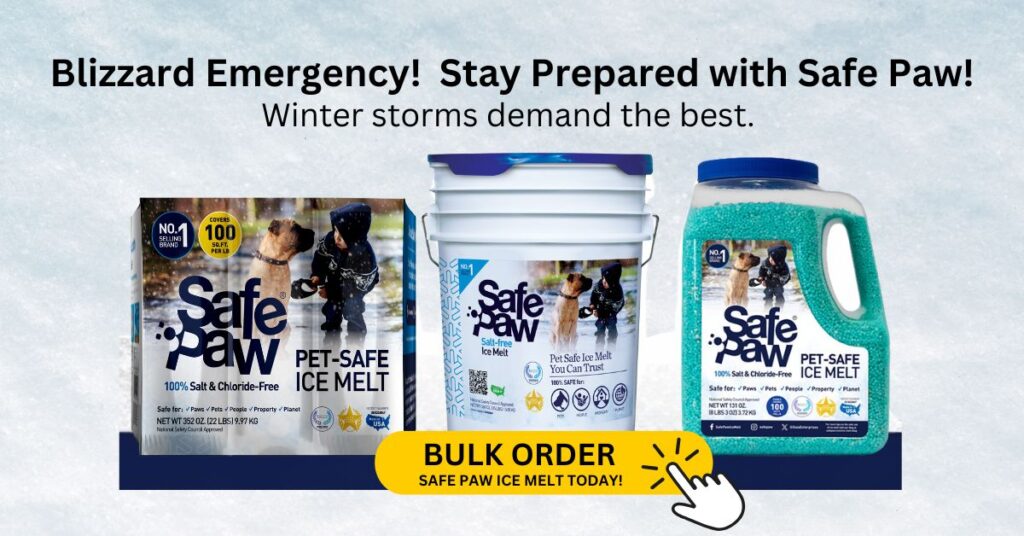
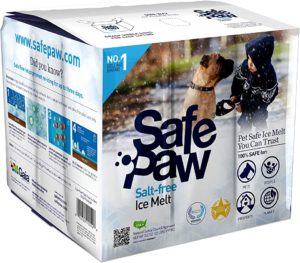
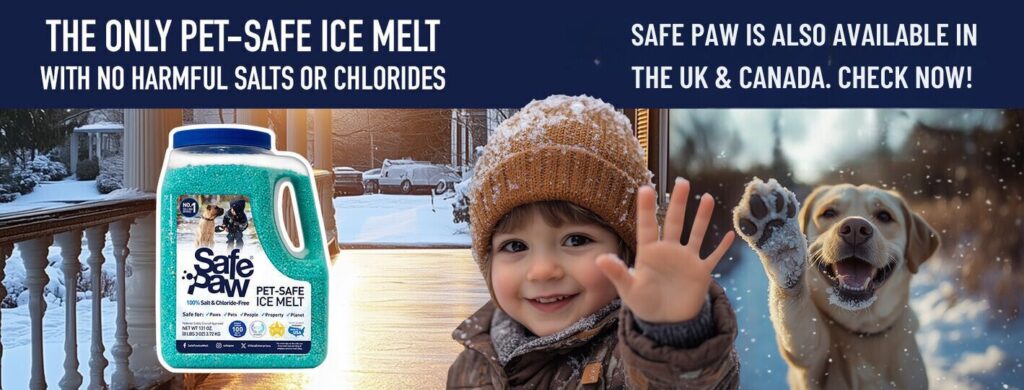
The Original and the #1 Child and Pet Safe Ice Melt for over 20 years. Guaranteed environmentally safe – will not harm waterways and sensitive wetlands.
Main Hazards Associated With Rock Salt
Human exposure
- Skin dryness or irritation
- Eye irritation
- Gastrointestinal symptoms following ingestion
- Serious sodium toxicity following sufficiently large ingestion
Pet exposure
- Paw or skin irritation
- Licking residue from paws
- Vomiting or diarrhea following ingestion
- Possible electrolyte abnormalities after significant exposure
Property and infrastructure
- Metal corrosion
- Chloride penetration into reinforced concrete
- Increased risk of reinforcing-steel corrosion
- Salt residue tracked into buildings
Environmental effects
Effects on roadside vegetation and soils
Increasing freshwater chloride concentrations
Effects on aquatic organisms
Drinking-water-source contamination
Pros and Cons of Rock Salt for Winter Ice Removal
| Rock Salt Consideration | Advantage | Limitation |
| Ice melting | Effective and widely used under suitable temperatures | Effectiveness decreases in colder conditions |
| Availability | Common and generally inexpensive | Heavy use increases chloride loading |
| Human contact | Easy to handle with appropriate precautions | Can irritate skin and may cause gastrointestinal effects if swallowed |
| Pet exposure | Helps reduce slippery ice | Residue may contact paws or be ingested during grooming |
| Infrastructure | Helps maintain usable winter surfaces | Chlorides contribute to corrosion |
| Environment | Improves winter mobility | Runoff can increase freshwater chloride concentrations |
FHWA describes sodium chloride as a widely used deicer whose performance depends strongly on temperature, while EPA documents its environmental and infrastructure impacts. (Federal Highway Administration)
What Are the Best Alternatives to Rock Salt for Safer Winter Deicing?
Let’s talk about some alternatives to rock salt and see whether they are safe both for the environment and your concrete or not:
Calcium Magnesium Acetate (CMA)
While Calcium magnesium acetate is kinder to the environment, its lower effectiveness in very cold temperatures means you might find yourself using more product to achieve the same results as more traditional methods. This can lead to increased costs and potential runoff issues.
Potassium Acetate
Potassium acetate is highly effective and works at lower temperatures, but its higher cost might not make it the best choice for everyone. Plus, despite being less harmful, it can still contribute to runoff issues if not used carefully.
Sand and gravel provide great traction but do nothing to actually melt the ice. They can also lead to sediment accumulation in nearby waterways or storm drains, potentially creating blockages.
Sand and Gravel
Beet juice de-icer is innovative and less corrosive, but it can be sticky and may require more frequent cleanup to prevent a messy residue. Its effectiveness can also vary based on conditions.
Beet Juice De-Icer
Brine
Using brine is a proactive approach, but it requires timing and foresight before the storm hits. It can also dilute and spread, reducing its effectiveness if not applied at the right time.
Calcium Chloride
Calcium chloride is a heavy hitter for ice melt but can cause skin irritation if you’re not careful during application. Its aggressive nature means it can also contribute to quicker deterioration of concrete over time.
Magnesium Chloride
While magnesium chloride is gentler than calcium chloride, it can still pose risks to pets and the environment when used in large quantities. Overuse can lead to damage to plants and potentially affect water quality due to runoff.
Amidst these options, don’t forget about Safe Paw. Safe Paw offers a chloride-free, acetate-free, salt-free, and environmentally friendly option that effectively melts ice without the downsides of traditional salts. It’s safe for pets, children, and concrete, ensuring that you can tackle winter conditions without any worry about damaging your driveway or harming the environment. Safe Paw provides a comprehensive solution that covers all bases – safety, effectiveness, and environmental responsibility.
Why You Should Choose a Pet-Safe Ice Melt Over Traditional Road Salts
Last winter, Diana shifted to a new neighborhood. She is a homeowner with two young kids and a dog. They enjoyed living in this green and pet-friendly community. Soon she became good friends with her neighbor and started sharing tips on kids and pets.
Before winter arrived, Diana and her neighbor both got their ice melt solutions. Diana got herself an ice melt salt, whereas her neighbor opted for a natural salt-free ice melt. As the snow started falling, both the neighbors got busy spreading ice melt and making their premises free from snow and ice.
Ice accumulation on your driveway and walkways can lead to slip and fall accidents and can even damage the surfaces underneath due to freeze-thaw cycles.
During this period of snowfall, Diana’s children started complaining of rashes and itching. At the same time, her pet also suffered from an infection in its paws. That was a very trying period for her as she could not understand the cause behind these problems.
She decided to consult her neighbor, who was a doctor. She told her,’ I do not know what happened to my kids and dog? They all were fine two days back but now both the kids have rashes and my pet has infected paws. Is it some allergy or a symptom of a disease?’
Her neighbor asked her about their last two days’ routine. Diana informed her that all three played in the snow for some time. Then she asked,’ Have you used any salt on ice?’ Diana told her that she has got salt for snow removal and has used it after the snowstorm.
Her neighbor said,’ Do you know what does ice and salt do to your skin? They form a powerful brine solution that can melt ice but harm the kids. It can cause rashes and blistering. If salt goes in your eyes, it can lead to eye irritation.’
Diana then said,’ What happens if you eat rock salt?’
Her neighbor informed her that if a child ingests it by mistake, he needs immediate medical care, as it can cause stomach problems and kidney damage.’
Diana was appalled to know this. She then asked, ‘Is rock salt bad for dogs?’ At this, her neighbor told her that these salts are equally dangerous for pets. They can burn their skin, cause ulcers, redness, and intestinal problems if licked. She also told her that these salts can also kill her plants and can damage her concrete. Salt on ice is never a safe option for anyone.
Diana realized her mistake. She bought an ice melt that was cheap and readily available without going through its components and disadvantages. She promised herself that she will do her research before buying an ice melt.
Comparing Deicers: Sodium Chloride vs. Environmentally Friendly Alternatives
During the winter months, many salts are used to help with the removal of snow, slush, and ice from highways. Five of the most prevalent types utilized in deicing operations are as follows:
It is an environmentally friendly product that does not include salt. It can replace all of the salt ice melts. The environment will not be endangered by a product that does not contain salt. Here is how it works
- Spread it anywhere on the ice and snow you need to remove.
- A deicing liquid is ejected from the crystal, speeding up the melting process.
- It breaks down the molecular structure of ice and snow, preventing water molecules from rebuilding into ice crystals.
- The granules drill through ice in 10 minutes, weakening it.
It has a unique combination of a crystalline amide core laced with magical glycols that are non-corrosive and non-toxic, and it uses a patented dual-effect compound. This combination makes it quick to act and accelerates the melting process. Not only is it safer, but it is also more effective than other rock salt options. It is a pellet-based alternative to rock salt and can cover more area. It does not damage concrete, brick, or wood structures, or roadways. Unlike other rock salt alternatives, it is of the highest quality and is environmentally friendly.
Important Context About Rock Salt Toxicity
“Hazardous” and “poisonous” should not be used interchangeably. Brief skin contact with rock salt does not mean a person has been poisoned. However, deicing salts can irritate skin and eyes, and swallowing significant quantities can cause more serious effects. With sodium chloride, excessive ingestion can raise blood sodium concentrations and potentially cause neurological complications such as seizures or coma. (Poison Control)
Risk varies according to the specific deicer, concentration, amount, exposure route and individual involved. Calcium chloride, magnesium chloride, potassium chloride and sodium chloride should not be described as if they have identical properties. (ASPCA)
How to Reduce Rock Salt Exposure Around the Home
- Remove snow mechanically before applying deicer.
- Follow product-specific application rates.
- Avoid unnecessary over-application.
- Wear gloves when handling deicers.
- Keep deicers stored away from children and animals.
- Wipe or rinse pet paws after walks on treated surfaces.
- Sweep excess material from walkways when conditions allow.
- Consider runoff when applying products near lawns, drains and waterways.
These points are much more useful for search intent and AI extraction than a fictional case study. EPA and ASPCA both recommend minimizing unnecessary salt exposure/application and reducing pet contact with winter chemicals. (US EPA)
Rock Salt vs Calcium Chloride, Magnesium Chloride, CMA and Chloride-Free Ice Melt
| Deicing Approach | Main Characteristic | Important Consideration |
| Sodium chloride / rock salt | Common conventional road deicer | Adds sodium and chloride to runoff; less effective at very low temperatures |
| Calcium chloride | Effective at lower temperatures than sodium chloride | Chloride-based; dissolution releases heat and exposure can irritate tissue |
| Magnesium chloride | Chloride-based deicer used in solid/liquid applications | Still contributes chloride and may cause gastrointestinal irritation if ingested |
| Calcium magnesium acetate (CMA) | Non-chloride deicer | Lower environmental impact in some applications but substantially more expensive |
| Sand/grit | Adds traction | Does not melt ice and can contribute sediment |
| Chloride-free ice melt | Avoids chloride salts | Performance depends on the particular formulation and application conditions |
FHWA and EPA both emphasize that deicing alternatives involve different cost, temperature-performance and environmental trade-offs rather than one universally superior option. (Federal Highway Administration)
Best Deicing Approach by Winter Safety Need
- For routine snow management: Remove as much snow mechanically as possible before applying a deicer.
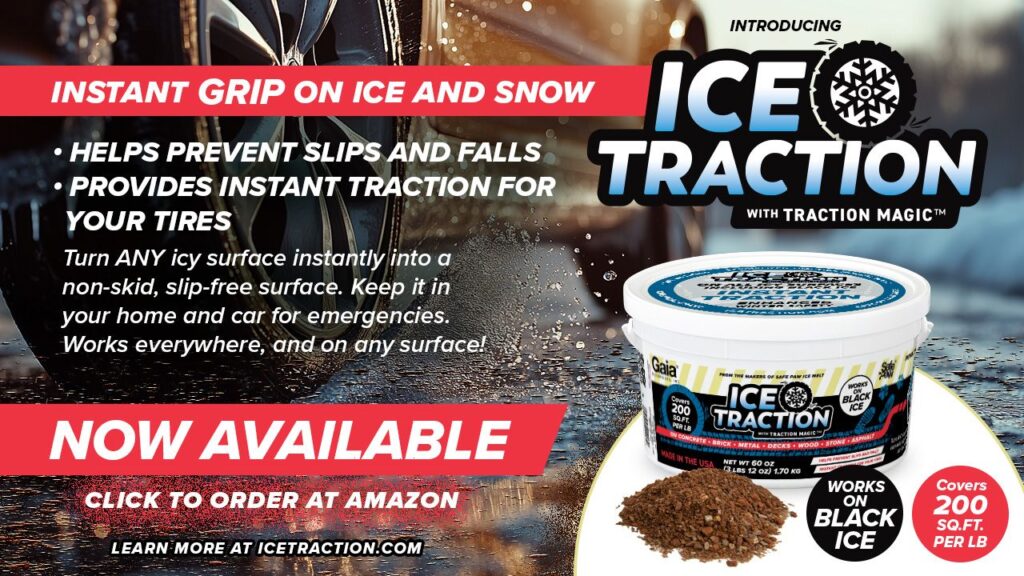
- For traction without melting: Sand, grit, Ice Traction or Walk On Ice can be discussed as traction approaches.
- For reducing chloride use: Consider a verified chloride-free deicing formulation.
- For chloride-sensitive infrastructure: Review surface and manufacturer guidance before choosing a deicer.
- For pet-used areas: Consider paw exposure, ingestion risk, ingredients and application rate.
- For environmentally sensitive areas: Minimize unnecessary deicer application and evaluate runoff pathways.
EPA specifically recommends reducing salt usage and considering alternatives or improved application practices in sensitive locations. (US EPA)
How to Choose a Safe Ice Melt: 4 Tips for Responsible Homeowners
1. Check the composition of the ice melt jar.
Do check the composition of your ice melt before purchasing it. By going through it, you will find out whether the ice melt contains any disastrous salts or not. The Safe Paw jar mentions
- Non-toxic safe if ingested
- Safe on paws, eyes, and skin
- Melts in sub-zero temps
- Safe on all decking materials
2. Research Online For The Product
Diana went through the product website and researched different ice melt brands. She read online reviews, read testimonials, and watched videos.
Most of the reviews were in favor of natural salt-free ice melt.
According to one review, salt-free natural ice melt is better for the environment and animals. There is only one planet for us and we all should keep it healthy. This ice melt is also safe to use on asphalt driveways and pathways.
Unlike most ice melters that claim to be safe for pets and concrete, brick, and other hard surfaces, another customer claims that this all-natural product is safe for all of these. There is no salt in it, not even rock salt.
Despite the statements on the label of most rock salts, especially those advertised as pet safe, it is not safe for dogs or concrete. One of the proud pet owners admits that this ice melt helps her save time and trouble while keeping her kids and pets safe. She can let her kids and dogs play in the snow without worrying about any harmful chemicals.
3. Safety Standards: How to Verify a Pet-Safe and Kid-Safe Ice Melt Product
On the site of a very popular ice melt, Diana found out that it completes all the safety regulations and has been recognized by various authorities.
It contains no salt and is suitable for children and pets. It has garnered several major awards for being safe for people, pets, and the environment.
1. Governmental awards in the United States
2.Parent Tested Parent Approved (PTPA) Green Product Seal of Approval for family-friendly and effective products https://www.ptpamedia.com/services/parent-tested-parent-approved-seal-of-approval/
3. Inclusion in the Whole Green Catalog – 1000 Best Things for the Earth
Pediatricians, veterinarians, wildlife experts, groomers, animal shelters, and humane organizations all endorse it.
4. Which Ice Melt is the Most Effective and Eco-Friendly for Mature Concrete?
First and foremost, not every product on the market is safe for you and your concrete since some manufacturers offer snowmelt that contains chemicals or salts that are potentially harmful to kids, pets, plants, and concrete.
Such compounds are hazardous for your and your family’s well-being. They can damage the surface and possibly produce fissures, especially if the concrete is brand new. Selecting a product that is safe for all and suitable for concrete is critical. It is also worth noting that these products hurt not just the surface but also the environment.
Get an ice melt that is salt-free and safe. It will not only keep you safe but also keep nearby plants alive without polluting the water bodies. Best ice melt means safe families with fewer injuries and better ecological balance.
You can get your salt-free natural ice melt from any nearby store or can order it online.
Conclusion: Protecting Your Community from the Dangers of Rock Salt
You need to take care of your household this winter but do make sure to take care of your neighbors as well. As Diana was helped by her neighbor in her moment of crisis, the same way, we all can help each other. We can work together to ensure a healthy environment for ourselves, kids, and pets. Start preparing early for winters and consult experts beforehand. You can also talk to the ice melt manufacturer for a demo or call them for technical help.
FAQs

New Product Launch – Ice Traction (with Traction Magic™)
Ice Traction is your go-to winter solution for driveways, walkways, parking lots — and even black ice on the road. Unlike salt or ice melts, it delivers instant grip on snow and slippery surfaces with no wait time. Just spread and go.
Other Ice Melt Products
Walk On Ice
Prevent slips at home, work or on the go, The handy disposable canister can be taken everywhere, with the same 100% naturally occurring minerals that provide instant traction on ice or snow.
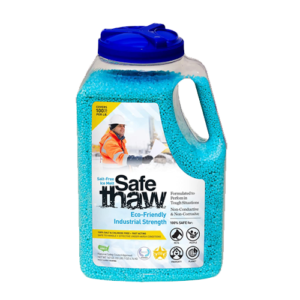
Safe Thaw
Imagine an ice melt you can put down and never worry about. It won’t harm pets, kids and your property. That’s Safe Thaw. Unlike anything else on the market, Safe Thaw can change how winter affects our planet.