Winter Storm Snow Forecast: Is Ice Melt A Safe Option To Use On Your Wooden Deck?
0 comments
Is Ice Melt Safe for a Wood Deck?
Ice melt can be used on a wood deck only when the specific wood, finish, fasteners and product instructions are compatible. Remove loose snow first, use a plastic shovel or broom, and apply only the amount of deicer needed for remaining bonded ice. A chloride-free ice melt avoids adding chloride, but “chloride-free” alone should not be treated as a universal guarantee of compatibility with every wood species, coating or deck condition.
Listen to the Article: Audio Version Available
Those having wooden decks or steps are already aware of how treacherous they are when covered in ice. A frozen hardwood deck is, in most situations, even riskier than an icy driveway or path. With winter now in full swing, you’ll want to stock up on ice melt materials. When compared to more salt-free ice melt solutions on the market, traditional ice melt falls short.
Key Takeaways
Clear loose snow mechanically before relying on deicer.
Wood movement and durability are strongly affected by moisture, so repeated wetting and long periods of saturation deserve attention.
Check the deck material and finish before using any deicer; natural wood, pressure-treated wood, painted/stained wood and composite decking can have different care requirements.
Chloride-containing deicers can contribute to chloride runoff and can increase corrosion risk for susceptible metal components; application should be efficient rather than excessive.
Deicers work mainly by forming a solution that lowers the freezing point of water; not every deicer “works by releasing heat.”
Pet exposure should be considered separately from surface compatibility. Even products described as pet-friendly should be kept from being eaten, and paws should be cleaned after contact when appropriate.
What to Check Before Treating an Icy Wood Deck
Wood type: natural, pressure-treated, acetylated or another modified wood.
Surface finish: bare, sealed, stained or painted.
Hardware: exposed screws, nails, brackets, rail connections or other metal components.
Surface condition: existing cracks, splinters, peeling finish, standing water or decay.
Temperature: confirm the deicer’s effective working range.
Drainage: identify where melted snow and deicer runoff will go.
Pet/child use: reduce direct contact and prevent ingestion of deicing material or treated slush.
Why You Need Ice Melt for Wood Decks: Protecting Your Property Investment
Wood is far more naturally porous as a decking material than equivalent alternatives such as plastic composites or concrete. As water seeps into the wood during the day, it expands overnight as temperatures drop, causing it to fracture, splinter, and buckle.
The damage is increased with each freeze-thaw cycle as the wood becomes progressively more porous, rendering any sealant you’ve applied useless. As a result, keeping your deck clear of ice throughout the winter is critical to protecting your investment.
Wood absorbs water easily due to its porous cellular structure, making it highly vulnerable to freeze–thaw cracking.
Heavy, wet snow can add more than 20 pounds of weight per cubic foot, increasing the risk of structural deck overload.
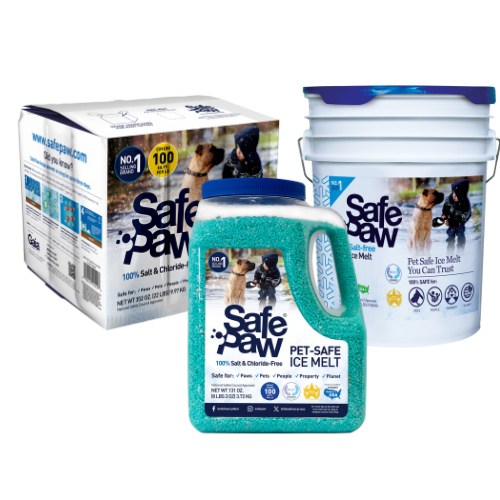
Ice and Snow Everywhere? Stock Up on Safe Paw – the ONLY Pet Safe Ice Melt you can trust
Even a single winter storm can dump enough snow to put elevated decks’ load-bearing capacity in jeopardy. Under the weight of enough snow and ice, a badly maintained deck left unattended over the winter might easily collapse. Another reason to keep your wood deck free of ice and snow is for accessibility.
How Does Ice Melt Work? Understanding the Science of Deicing
During winter storms or heavy snowfall, ice melt products keep decks from becoming slippery. Ice melts operate by releasing heat into the ice and snow to melt it and prevent it from creating ice crystals! Using any ice melt without first learning about it could end up doing more harm than good to your composite deck. You need to be aware of rock salt, calcium chloride and magnesium chloride dangers also.
Ice melt works by forming a brine solution that lowers the freezing point of water, allowing ice to loosen and break its bond with surfaces.
Sodium chloride and other salts do not chemically melt ice—they disrupt the molecular freezing process and accelerate moisture penetration.
Salt & Chloride Free Ice Melt
Pet Friendly Ice Melt – Safe Paw!
The Original and the #1 Child and Pet Safe Ice Melt for over 20 years. Guaranteed environmentally safe – will not harm waterways and sensitive wetlands.
Finish may react differently to residue, moisture or abrasion
Follow finish-care instructions; test a small inconspicuous area if appropriate
Painted wood
Coating condition and adhesion matter
Avoid harsh scraping; use only treatments compatible with the coating
Pressure-treated wood
Fastener selection and moisture are important design factors
Avoid blanket safety claims; consider hardware exposure and product compatibility
Composite decking
Manufacturer-specific formulation and care instructions
Treat as a separate material category; link to the dedicated composite/Trex guide
Weathered / damaged deck
Existing splits, peeling finish or decay can worsen winter problems
Prioritize maintenance assessment and gentle snow removal rather than assuming a deicer will solve the underlying condition
Choose the Approach by Situation
Situation
Practical approach
Fresh loose snow
Use a broom or plastic shovel before snow compacts or partially melts.
Thin bonded ice
Use a surface-compatible deicer sparingly after loose snow is removed.
Very low temperature
Check the deicer’s working range; rely more on mechanical removal or traction if melting is ineffective.
Chloride exposure is a concern
Consider a chloride-free deicer, while still checking compatibility with the wood and finish.
Sensitive coating or unknown finish
Use gentle mechanical removal first and verify the finish manufacturer’s care guidance before applying deicer.
Pets frequently use the deck
Minimize exposure, keep deicer packaging inaccessible, prevent ingestion of treated snow/slush, and clean paws after contact when needed.
Recurring standing water / refreezing
Improve drainage and address the moisture pathway rather than repeatedly increasing deicer application.
In this article, we will talk about ice melt for wood decks and safe ice melt options that won’t leave you slipping on style or safety. As soon as the winter season starts most homeowners are on the hunt for the best ice melt for wood. It’s a tough balancing act between effectiveness and gentleness. Many products will promise safety, but watch out for those hidden harsh chemicals. Safe Paw again comes out on top, with a formulation that targets ice without corroding your beautiful deck. Remember, protecting your wood decks from ice melt starts with choosing the right product.
Speaking of which, your choice of ice melt can impact more than just your walkways. Opting for an eco-friendly ice melt means you’re playing it safe for the planet too. These products ensure you’re not just clearing ice but also contributing to a healthier ecosystem. Doesn’t it feel great to be part of the green solution during the chilly seasons?
Get ready for winter with – the ONLY Pet Safe Ice Melt you can trust
Winter is no joke when it comes to your outdoor spaces. Winter safety for wood decks involves more than just shoveling snow—you need the right ice melt that won’t leave lasting damage. And while you’re at it, why not ensure it’s safe ice melt for wood decks as well as your pets?
Did you know not all ice melts are created equal when it comes to your furry friends? Choosing a pet safe ice melt is crucial to keep those paws safe. While most salts can irritate your pet’s paws or worse, products like Safe Paw are formulated to ensure your pets can tread safely without any harmful chemicals. Isn’t it better when you know your ice melt won’t harm any part of your family?
Gaia Enterprises Inc. delivers 100% pet-safe and environmentally friendly winter products. Safe Paw, our flagship product, is the #1 selling pet-safe ice melt that does not harm pets, safe if ingested, and safe on all types of concrete.
Speaking of Safe Paw, this eco-friendly ice melt is a game-changer for those with wood decks and environmental concerns. With a blend of plant friendly ice melt ingredients, Safe Paw ensures your decking remains pristine and your plants perky. It’s salt-free—meaning no more damage to your wood surfaces or surrounding greenery. Why settle for less when you can protect your outdoor spaces and keep them green and clean?
Now, isn’t it better when your winter solutions are tailored for safety, effectiveness, and environmental kindness? With these tips, your winter season will be less about worry and more about enjoying the snowy beauty safely and sustainably.
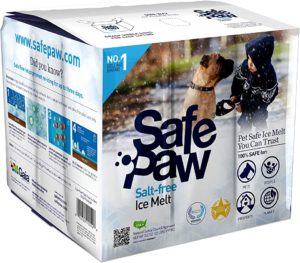
Pet Safe Ice Melt – Safe Paw
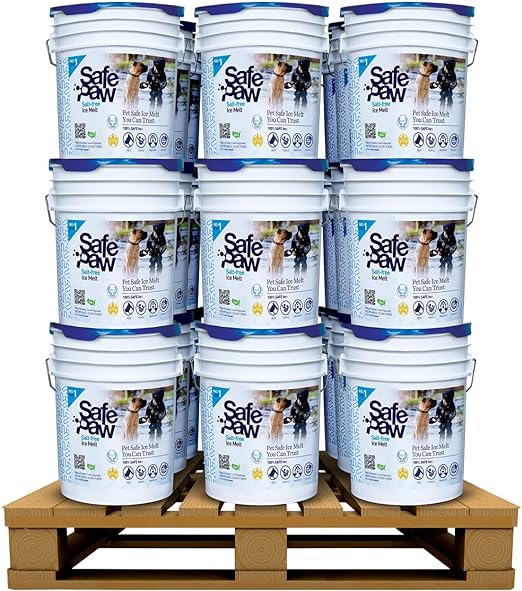
Safe Paw, Child Plant Dog Paw & Pet Safe Ice Melt -35lb, 36 Pails
Can You Put Ice Melt on a Wood Deck? Safety and Surface Risks
Before you sprinkle any ice-melt product onto your deck, it’s essential to consider its composition and potential impact. Traditional ice-melt products often contain salt or chlorine-based ingredients that can deteriorate wood over time, leading to potential damage and expensive repairs.
Traditional ice melts often contain:
Sodium chloride (rock salt) This is the most widely used deicer but is highly corrosive and accelerates surface wear. It dries out wood fibers, leading to brittleness and long-term structural weakening.
Calcium chloride Extremely hygroscopic—it pulls moisture out of the air and into materials. This increases water absorption in wood, which encourages swelling, softening, and freeze-thaw deterioration.
Magnesium chloride Although marketed as “safer,” it still breaks down lignin in wood and increases moisture retention. Over time, it promotes warping, discoloration, and premature rot.
Wood loses structural integrity when repeatedly exposed to salts due to increased moisture retention and fiber breakdown.
How Ice Melt Works on Ice—and What Makes a Pet-Safe Ice Melt Different?
During winter storms or heavy snowfall, ice melt products keep decks from becoming slippery. Ice melts operate by releasing heat into the ice and snow to melt it and prevent it from creating ice crystals! Using any ice melt without first learning about it could end up doing more harm than good to your composite deck. You need to be aware of rock salt, calcium chloride and magnesium chloride dangers also.
Ice melt works by creating a brine that generates heat to melt ice and break its bond with surfaces like your deck. However, the chemicals used in these products can harm both your wooden deck and the surrounding environment.
Get ready for winter with the Only Pet Safe Ice Melt you can trust!
Should You Use Ice Melt on Wood Decks or Trex Decking?
While using ice melt on your wooden deck can seem like a quick solution to avoid slips and falls, it’s important to remember that not all products are created equal. Some ice melts can cause serious damage to wood. Hence, it’s crucial to select an ice melt product that is specifically formulated to be safe for wood decks.
Traditional ice melts often contain:
Sodium chloride (rock salt) Highly corrosive, accelerates moisture absorption in wood, and increases freeze–thaw stress. Over time it weakens surface fibers and shortens deck lifespan.
Calcium chloride Very aggressive to organic materials; it pulls moisture into wood and promotes internal swelling. This repeated wetting and drying leads to cracking and premature surface failure.
Magnesium chloride Retains moisture for long periods and breaks down lignin — the natural “glue” that holds wood fibers together. This softens wood structures and increases long-term deterioration.
All three degrade wood and promote water infiltration by opening pores, breaking fiber bonds, and accelerating rot formation in damp climates.
Which Ice Melt is Safe for Wood Decks? Choosing Chloride-Free Solutions
This brings us to the essential question—what kind of ice melt is safe for wood decks? One product that stands out is ‘Safe Paw’, a non-toxic, biodegradable ice melt. Unlike salt or chlorine-based products, ‘Safe Paw’ is designed to be gentle on your deck and safe for the environment and pets.
When treating wood decks during icy conditions, not all ice melts are equal. The safest type is a salt-free, chloride-free formula — one that will not accelerate wood deterioration, fasten corrosion, or damage surrounding landscaping or hardware.
Safe Paw: A Verified Non-Toxic Choice
Safe Paw stands out because it is:
Salt-free (no sodium chloride/rock salt)
Chloride-free (no calcium chloride, magnesium chloride or other chlorides)
Non-toxic and safe if ingested — safe for pets walking on the deck and for households with children
Effective to –2°F (- ≈ -19 °C) in harsh conditions.
Safe for wood, pets, plants, and metal hardware, meaning the deck’s surface, fasteners, and environment are all protected.
Why this matters:
Many standard deicer formulas rely on chloride salts, which not only corrode metal fasteners and degrade wood fibers over repeated freeze/thaw cycles, but also run off into the soil and nearby vegetation. For example, the U.S. Environmental Protection Agency’s Safer Choice Program describes how safer chemical ingredients (including deicers) are evaluated for their relative hazard, including for outdoor use and direct release into the environment.
By choosing Safe Paw (or another truly salt- and chloride-free product), you reduce the risk of:
Wood deck surface degradation and finish peeling
Corrosion of screws/bolts and metal clips used in decking
Harm to nearby plants, soil, and landscaping from runoff
Paw injuries or pet health issues from harsh salts on deck surfaces
Chloride-free deicers are generally safer for wood, plants, soil, and waterways and avoid the corrosive properties of traditional salts.
How to Remove Snow and Ice From a Wood Deck
It’s not just about the product — it’s about the method. A smart strategy protects the wood, prevents corrosion, and keeps pets safe while minimizing long-term maintenance costs.
Clear loose snow with a broom or plastic shovel. Avoid aggressive scraping that can damage the finish or wood surface.
Inspect the surface for standing water, loose finish, damaged boards and exposed hardware before applying any treatment.
If bonded ice remains, choose a deicer that is compatible with the deck material and finish, and confirm its working temperature.
Apply a light, even amount according to product directions. More material does not automatically mean faster or better results.
Once the ice loosens, remove slush and residue when conditions allow. Avoid adding rinse water when it could immediately refreeze.
Recheck shaded areas, stairs and drainage points for refreezing.
Wood Deck Winter Methods: Advantages and Limitations
Method
Advantages
Limitations
Useful when
Broom / plastic shovel
Removes snow without adding deicer; precise control
Manual effort; compacted ice may remain
Fresh loose snow and routine maintenance
Traction grit
Provides immediate grip
Does not melt ice; some gritty materials can be abrasive or messy
Short-term traction when melting is slow or unnecessary
Chloride-free deicer
Avoids adding chloride from the treatment
Surface compatibility and temperature performance still vary by formulation
Chloride exposure is a specific concern and the product is compatible with the deck
Sodium chloride / rock salt
Widely available; forms brine that depresses freezing point
Adds chloride; can contribute to runoff and metal corrosion; residue can remain
Only where deck/finish instructions permit and efficient application is feasible
Calcium chloride
Effective at lower temperatures than sodium chloride in many applications; dissolution is exothermic
Adds chloride; can be irritating and can affect nearby materials depending on exposure
Only when compatible with the deck system and product instructions
Anti-icing before a storm
Can reduce bonding of snow/ice when the product is designed for pre-treatment
Not every product or wood finish is suitable for pre-treatment
When explicitly allowed by product and deck-care instructions
Important Limitations for Wood Deck Deicing
Wood decks are not a single material category. Species, preservative treatment, finish, age, moisture exposure and metal hardware can all affect winter-care decisions. A chloride-free label reduces chloride exposure but does not by itself prove compatibility with every wood surface. Avoid universal claims that a deicer cannot stain, cannot affect a finish, or is harmless if swallowed unless product-specific evidence supports those statements. Always follow the deck/finish and deicer care instructions that apply to the actual materials in use.
Why Traditional Rock Salt is Not Safe for Wood Decks and Metal Fasteners
Dries out wood fibres — Rock salt draws moisture from the wood’s surface and interior, disrupting the natural moisture balance. Over time this drying effect can cause the wood to shrink, crack or splinter.
Accelerates corrosion of fasteners and hardware — Sodium chloride creates a highly corrosive environment; while the deck boards may survive initially, the screws, nails, joists or metal brackets beneath are vulnerable, leading to structural instability.
Surface discoloration and staining — Salt crystals and spray from salted areas can leave white residues, rust stains, or uneven colour patches on wood decks. These blemishes degrade aesthetics and may require refinishing sooner.
Increases freeze-thaw damage risk — Because rock salt may cause surface moisture to penetrate then freeze inside wood pores, it encourages expansion, cracking and delamination of boards.
Damages adjacent landscaping and soil — Salt runoff from decks can harm surrounding plants, leach into soil and degrade the deck’s setting environment, which indirectly stresses the deck structure and finish.
Inappropriate for winter deck care according to manufacturers — Many ice-melt manufacturers explicitly advise against using rock salt on wood decks because of its damaging effects, recommending alternatives.
Rock salt granules can scratch wood surfaces and accelerate deterioration due to their abrasive crystal structure. Sodium chloride dries out organic materials, including wood, and disrupts the natural moisture balance.
Is Calcium Chloride Safe for Wood Decks? Performance vs. Potential Damage
Calcium chloride melts ice quickly, but:
Stains wood
Leaves oily residue
Can degrade deck coatings
Irritates paws
Calcium chloride can cause severe irritation to skin, eyes, and respiratory systems, making it unsuitable for surfaces pets and people frequently touch.
Is Ice Melt Safe for Pets? Protecting Animal Paws on Your Deck
According to the ASPCA, many common ice melts contain chloride salts that can irritate paws, dry the skin, and cause gastrointestinal upset if licked. Even brief contact can lead to redness, cracking, chemical burns, or vomiting if ingested during grooming. Repeated winter exposure increases the risk, especially on sidewalks treated with harsh salts. This is why Safe Paw’s chloride-free, non-toxic formula is widely recommended—it prevents paw burns, avoids ingestion hazards, and protects both pets and indoor floors from corrosive residue.
Chloride-based ice melts pose toxicity risks to dogs and cats, especially if they lick their paws after exposure.
Is Eco-Friendly Ice Melt Better for Your Deck and the Planet?
Chloride-based deicers don’t just damage surfaces — they harm ecosystems long after winter ends. Research from the United States Geological Survey (USGS) shows that chloride pollution from road salt accumulates in soil and groundwater, persisting for years and harming plants, wildlife, and freshwater streams.
Switching to a salt-free ice melt helps protect:
Deck wood — no chloride-driven fiber erosion or hardware corrosion
Soil — prevents salinity buildup that harms roots and microorganisms
Nearby plants — avoids salt-burn and foliage damage
Local streams — reduces chloride runoff that endangers fish and aquatic plants
Your pets & kids — no harsh chemical residues on high-touch areas
A trusted example is Safe Paw, engineered to be salt-free, chloride-free, acetate-free, and non-corrosive, making it safer for surfaces, soil, pets, and waterways.
How to Melt Ice on a Wood Deck Safely: Finding the Best Deicer
Rock salt is the most common option for deicing wood decks, but it has several drawbacks. For starters, metal bolts and supports are virtually usually used to secure hardwood decks. As a result, using a salt-based deicer will cause rust and corrosion of such parts.
Rock salt dries out wood, interfering with its expansion and corroding the deck. Salt is never advised as a safe ice melt for wood decks due to its effect on the wood.
The rock salt substance’s jagged edges can cause deep, ugly scratches on the wood’s surface. Other chloride-based ice melts, such as magnesium chloride and calcium chloride, are also available on the market. Magnesium chloride hazards include property and pet damage. Other chlorides are also hazardous.
The best ice melt for your wooden deck is Safe Paw, which is salt-free and eco-friendly ice melt having carbonyl diamide and glycol as main ingredients. It will neither damage your surface nor leave behind a mess. It removes snow from your wooden decks and adds traction also. Unlike salt-based ice melts, it is safe for pets and plants.
Why Pet-Safe Ice Melt is Better for Your Wood Deck and the Environment
Chloride-based deicers don’t just damage surfaces — they harm ecosystems long after winter ends. Research from the United States Geological Survey (USGS) shows that chloride pollution from road salt accumulates in soil and groundwater, persisting for years and harming plants, wildlife, and freshwater streams.
Switching to a salt-free ice melt helps protect:
Deck wood — no chloride-driven fiber erosion or hardware corrosion
Soil — prevents salinity buildup that harms roots and microorganisms
Nearby plants — avoids salt-burn and foliage damage
Local streams — reduces chloride runoff that endangers fish and aquatic plants
Your pets & kids — no harsh chemical residues on high-touch areas
A trusted example is Safe Paw, engineered to be salt-free, chloride-free, acetate-free, and non-corrosive, making it safer for surfaces, soil, pets, and waterways.
Ice Melt Salt Near Me: Why Local Hardware Salt is Often Bad for Wood
If you’ve been typing “snow salt near me” into your search bar with urgency, you’re not alone. Winter storms can create panic, and local hardware stores often run low on deicing products. But here’s the truth: not all deicers are created equal—especially for wood decks. Rock salt, commonly found at most stores, might be readily available, but that doesn’t mean it’s the right choice.
What is rock salt, exactly? It’s simply halite, a natural form of sodium chloride. While it’s inexpensive and widely used, it’s also incredibly harsh. Rock salt is known to corrode metal fasteners, dehydrate wood, and increase surface wear. Not to mention—it’s terrible for your pets and surrounding vegetation. Those jagged crystals can scratch your deck and your dog’s paws in the same sweep.
So instead of defaulting to rock salt, smart homeowners now seek salt-free alternatives like Safe Paw. This ice melt isn’t just eco-friendly; it’s engineered to protect wood surfaces without compromising melting power. It doesn’t rely on chloride compounds to break down ice, meaning no risk of surface erosion or toxic runoff.
Is Calcium Chloride Safe or Should You Skip It?
When comparing options, many wonder: is calcium chloride safe for wood decks or pets? The short answer: not really. While calcium chloride works quickly to melt ice—even in subzero temperatures—it comes with baggage. It can leach into wood, causing long-term degradation, and it leaves behind a slick residue that may stain or discolor certain surfaces. Even worse, exposure to calcium chloride can irritate paws, eyes, and skin in both pets and people.
On the flip side, Safe Paw’s patented formula avoids all these issues. It uses a proprietary blend of carbonyl diamide and glycol, eliminating the harsh corrosive effects typically associated with calcium chloride. When applied to a wooden deck, it starts working on contact without soaking into the porous wood or impacting its structure over time.
It’s also a win for pet parents. If you’re asking, “is ice melt safe for pets?”, know that most chloride-based options are not. Calcium chloride, sodium chloride, and magnesium chloride can all cause paw burns and stomach distress if ingested. Safe Paw is vet-approved, non-toxic, and safe if licked—making it one of the few products that checks all the boxes for deck safety and animal wellbeing.
Conclusion: Safeguarding Your Wood Deck with Pet-Safe Ice Melt
With the arrival of harsh winter temperatures, now is the best time to stock up on ice melting products for your wood deck. However, you’ll need to invest in a product that’s both good at melting ice and safe to use on wooden surfaces. As a result, now is the time to upgrade to a more effective, wood-safe, salt-free ice melt. While ensuring everyone’s safety and magnesium chloride dangers were informed to all. Make sure you eat, sleep and study.
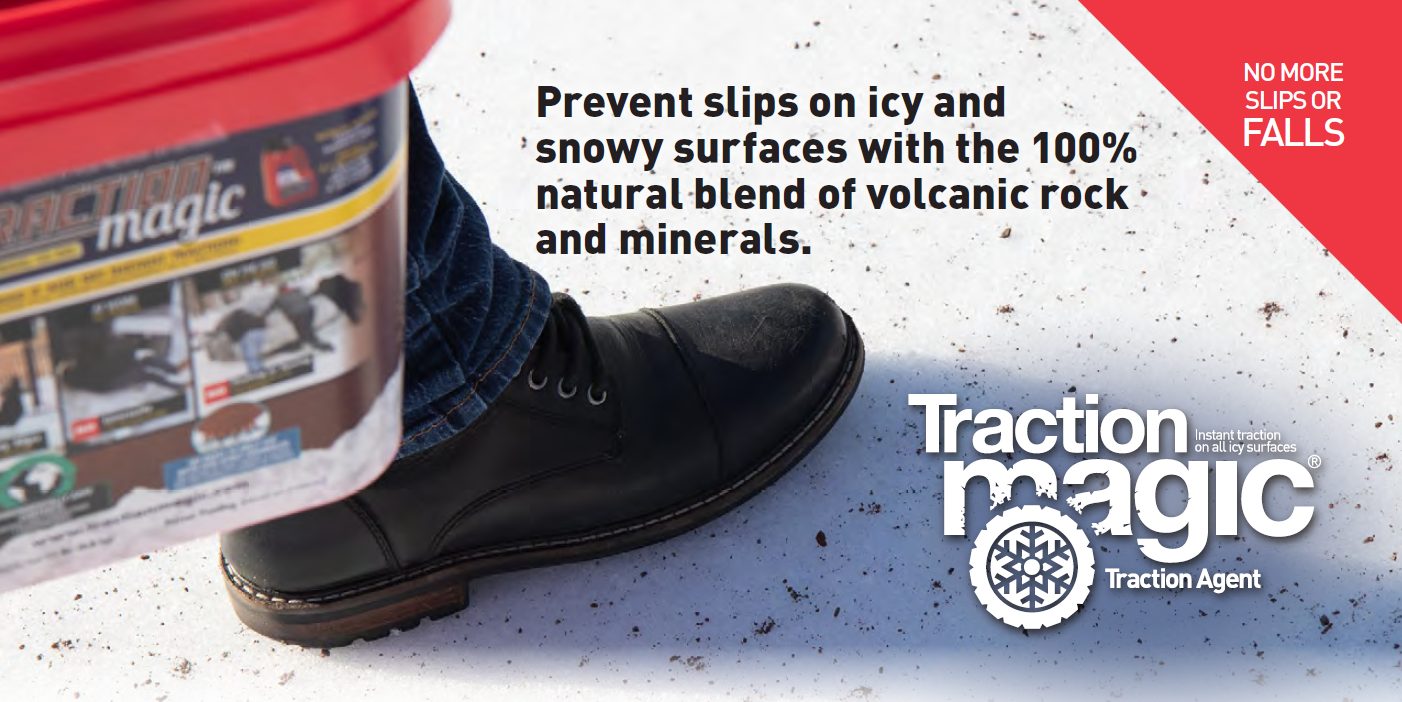
Stay safe on slippery surfaces with a product that’s 100% natural and safe for pets, people, and your property. Use Traction Magic on sidewalks, steps, or as instant traction for your car.
Imagine an ice melt you can put down and never worry about. It won’t harm pets, kids and your property. That’s Safe Thaw. Unlike anything else on the market, Safe Thaw can change how winter affects our planet.
Ice Traction (with Traction Magic™) is your go-to winter solution for driveways, walkways, parking lots — and even black ice on the road. Unlike salt or ice melts, it delivers instant grip on snow and slippery surfaces with no wait time. Just spread and go.
Imagine an ice melt you can put down and never worry about. It won’t harm pets, kids and your property. That’s Safe Thaw. Unlike anything else on the market, Safe Thaw can change how winter affects our planet.
Yes, but compatibility depends on the wood, finish, hardware and deicer formulation. Clear loose snow first and use a product whose instructions allow use on the specific deck surface.
No. Chloride-free means the product does not add chloride, but wood species, coatings, stains, sealers and existing damage can still affect compatibility. Check material-specific instructions and test a small area when appropriate.
Use the minimum effective amount stated in the product instructions. Removing loose snow first reduces the amount needed and keeps the treatment focused on bonded ice.
No. Effective working temperature varies by formulation and concentration. If conditions are colder than the product’s practical range, mechanical removal and traction may be more useful.
No. Composite decking is a manufactured material and should be maintained according to the specific manufacturer’s care instructions. Keep composite/Trex guidance in a separate subsection or dedicated article rather than applying wood guidance automatically.
Prevent pets from eating deicer or treated snow and slush. After outdoor exposure, clean paws when needed and reduce licking. Pet exposure should be evaluated separately from whether a product is compatible with the deck surface.
Author: Steven J Greenwald
Nature-friendly innovations are Steve’s passion and his products are deeply rooted in this philosophy. “Safe for people, pets, property, and the planet” isn’t just a tagline; it’s the very essence of Steve’s vision.
Driven by a profound respect for our environment, for the last 50 years, Steve is leading the charge towards a future where sustainability isn’t an option but a standard.