


5 Methods Of Cleaning The Ice Melt Residue Off Concrete
To remove ice melt residue from sound concrete, begin by sweeping or vacuuming all loose granules and grit. When the surface temperature is safely above freezing, rinse a small section with warm water, scrub it with a stiff nylon brush and a concrete-safe cleaner used according to its label, then rinse thoroughly and remove standing water.
If a white powder returns after the concrete dries, it may be efflorescence rather than tracked deicer residue. Correct the moisture source and use a proprietary efflorescence remover only when it is approved for the exact concrete, sealer, stain or coating. Test a small hidden area first.
Do not use vinegar, baking soda, hydrochloric acid, bleach mixtures, wire brushes or aggressive pressure washing as universal solutions. Cleaning can remove surface deposits, but it cannot repair scaling, spalling, pitting, cracks or exposed aggregate.
Key Takeaways
• Remove dry granules and grit before adding water.
• Clean only when rinse water will not freeze.
• Identify whether the surface has residue, efflorescence or physical damage.
• Use a nylon brush and a cleaner labeled for the exact concrete or coating.
• Test cleaners in a small inconspicuous area.
• Rinse thoroughly and remove standing water to prevent redeposition.
• Never mix acids, bleach or other cleaning chemicals.
• Do not give consumers a homemade hydrochloric-acid dilution.
• Avoid wire brushes and aggressive pressure on decorative, sealed or damaged concrete.
• Move ice-melt product selection to a separate prevention section.
• Stop and seek repair guidance if the surface flakes, pits, cracks or exposes aggregate.
Every year when the weather turns icy, you sprinkle salt down to keep everyone safe, but you end up with a grimy, sticky ice melt residue mess inside your house and on concrete. It’s unsightly, famously tough to clean, and can even harm the finish of your floor!
It never fails that some ice melt product will be tracked inside houses, no matter how hard you try. Once this occurs, it’s critical to clear the dirty area as soon as possible to avoid any potential floor damage.
During the winter months, ice melting compounds are used at building entrances to prevent the ground from becoming slippery, ensuring the safety of staff and customers. The issue is that the ice melt residue is tracked inside and onto carpets and hard floors when visitors enter the house. Many ice melts leave harmful residue on the concrete surface and cause damage, discoloring, or staining. It makes cleaning more difficult. Even some homemade ice melt products also leave behind ugly stains.
Identify What Is on the Concrete
| Condition | Typical appearance | Recommended response |
|---|---|---|
| Loose deicer granules | Crystals, pellets, sand or grit on the surface | Sweep or vacuum before wet cleaning |
| Dried deicer film | White, gray, cloudy or sticky film in application/traffic areas | Warm water, nylon brush and compatible cleaner |
| Efflorescence | Dry, powdery or crystalline deposit that may return after drying | Address moisture; dry-brush; use a labeled specialty remover if needed |
| Scaling | Thin flakes or paste peeling from the surface | Stop aggressive cleaning and assess concrete condition |
| Spalling or pitting | Deeper chips, holes, broken edges or exposed aggregate | Cleaning will not repair it; obtain repair guidance |
| Cleaner/sealer damage | Etching, color change, dullness or coating lift | Stop treatment and contact the cleaner/coating manufacturer |
Tools and Materials
- Broom, shop vacuum or leaf blower for dry residue
- Stiff nylon deck brush; no wire brush
- Warm water and a controlled low-flow rinse
- Concrete-safe cleaner approved for the exact surface
- Bucket and measuring container for label-directed dilution
- Wet vacuum, squeegee or absorbent material for water recovery
- Gloves and eye protection required by the cleaner label/SDS
- Warning signs or barriers if the area is a walkway
Cleaning Cannot Repair Damage
Surface cleaning may remove deicer granules, dissolved salts, tracked soil and some efflorescence. It cannot replace lost cement paste, repair scaling or spalling, close cracks, restore a damaged coating or reverse reinforcement corrosion. If the concrete continues to shed material after gentle cleaning, stop and obtain a condition assessment.
Special Surface Limitations
Stamped, stained, polished, sealed and coated concrete may be altered by acidic, alkaline or abrasive cleaners. New or poorly cured concrete can also be more vulnerable. Confirm compatibility with the concrete, sealer, stain or coating manufacturer before using any specialty cleaner or pressure equipment.
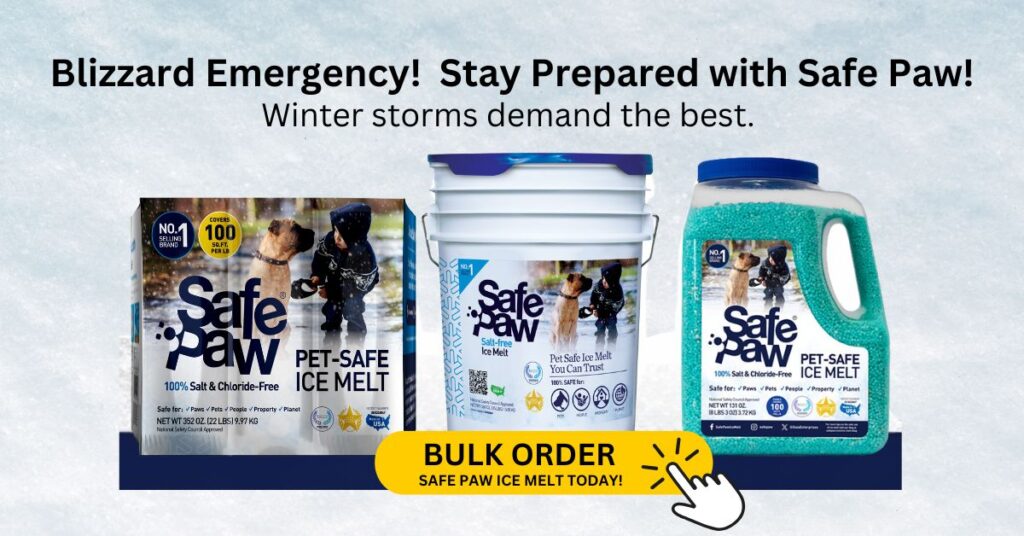
Pet Safe Ice Melt
Pet Friendly Ice Melt – Safe Paw!
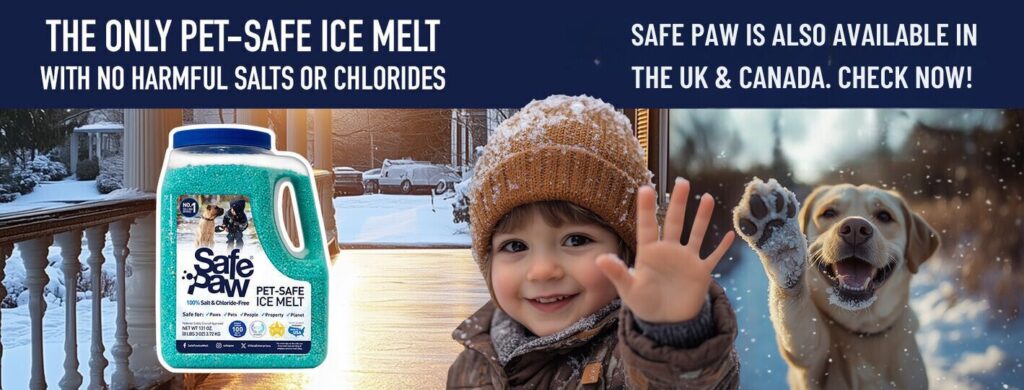
The Original and the #1 Child and Pet Safe Ice Melt for over 20 years. Guaranteed environmentally safe – will not harm waterways and sensitive wetlands.
Different Methods To Clean Ice Melt Residue
1.Washing it away
You can use this method to clean the ice melt residue. Most ice melts are harmful chlorides and we cannot leave them on the surface for long. The chloride residue will seep through the concrete pores and will damage the internal structure. Moreover, these chlorides can also corrode metals.
2. Remove debris
Sweep the concrete to remove any large debris or ice melt. It’s impossible to avoid using ice melts, but you can clean the chemicals mixed with snow with the help of a stiff-bristled broom. Ice melt and other winter soils are prevented from entering and being tracked by keeping the house clean.
3.Choose a Neutralizer for the Floor
Choosing the correct floor cleaning product is the most critical step in removing white streaks and ice melt residue. Ice melt chlorides and other organic residues are all dissolved by floor neutralizers.
Do not attempt to use a cleanser with a pH that is too high or too low. Aside from the risk of harmful chemical reactions, cleaning chemicals with a high or low pH will not remove the residues. Hence, before you use a floor neutralizer, do your research so that you don’t end up doing more harm to your concrete.
Neutralize Salt On Concrete:
- Mix a Solution: Combine water and a neutralizing agent like baking soda or vinegar.
- Scrub the Area: Gently scrub the affected area with the solution using a brush.
- Rinse Thoroughly: Rinse the area with water to remove the solution and salt residue.
Pet Safe Ice Melt – Safe Paw
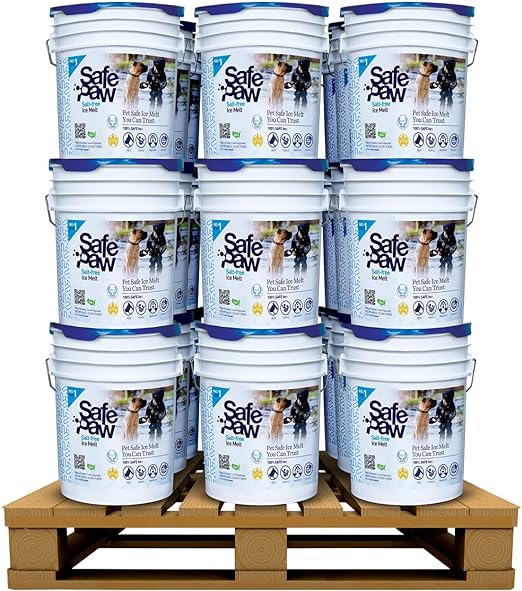
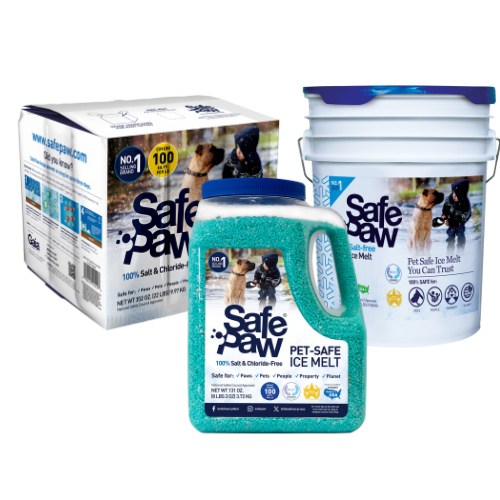
Safe Paw, Child Plant Dog Paw & Pet Safe Ice Melt -35lb, 36 Pails

Safe Paw, Child Plant Dog Paw & Pet Safe Ice Melt -22lb, 100Bboxes
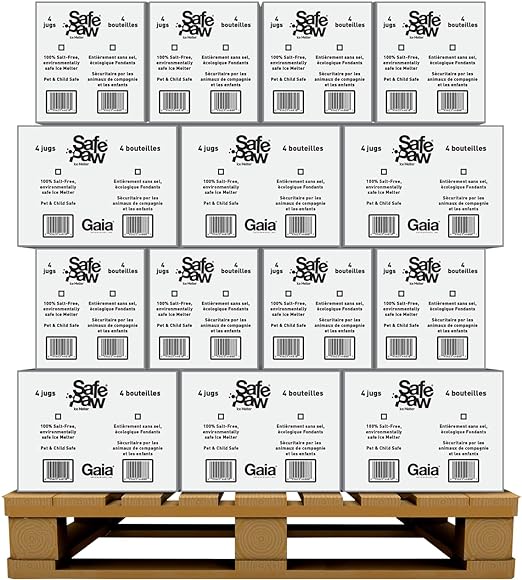
Safe Paw, Child Plant Dog Paw Pet Safe Ice Melt, 160 Jugs

Pet Products Powered By EzPz.pet

4.Getting a salt-free ice melt
A salt-free ice melt with natural ingredients will not leave behind any messy residue. It is safe for all surfaces and will not cause any staining and damage. Once you use this ice melt, it will keep you protected for 72 hours. If you want to clean the surface, dump the residue in your yard, and it will nourish your foliage. It is also a pet-safe ice melt and does not damage the environment.
5.Acid solution
A mixture of mild hydrochloric acid and water might be utilized (1 part acid to 20 parts water). However, because the acid can harm some concrete surfaces, it should only be used by persons who are familiar with it. It may take several attempts to entirely remove the stains and residue if they are severe or thick.
When winter grips your driveway, the first thought is to reach for something that melts ice. But wait—what you choose matters, especially if your driveway is concrete.
It’s important that you learn about non-toxic ice melt, concrete ice melt, or ice melt for concrete driveway, so that you can choose safely not only for the environment but also your concrete surfaces. What distinguishes these options and why are they indispensable during winter maintenance?
Residue, Efflorescence and Damage Comparison
| Condition | Can cleaning remove it? | Recommended action | Avoid |
|---|---|---|---|
| Loose granules | Yes | Dry sweep or vacuum | Dissolving a large pile into runoff |
| White/sticky film | Usually | Warm water, nylon brush and compatible cleaner | Universal acid or alkali recipe |
| Efflorescence | Often temporarily | Correct moisture; specialty remover if needed | Sealing over active moisture |
| Scaling | No | Condition assessment and repair planning | Aggressive scrubbing or pressure |
| Spalling/pitting | No | Concrete-repair evaluation | Calling it a stain and applying stronger chemicals |
| Coating damage | Not usually by cleaning | Contact coating/cleaner manufacturer | Repeated solvent or acid use |
Ice-Control Product Comparison
| Product type | Typical cleanup issue | Concrete consideration | Neutral wording |
|---|---|---|---|
| Sodium chloride / rock salt | White crystalline residue and chloride brine | Can contribute to scaling and corrosion under certain conditions | Cite FHWA/EPA; avoid saying every use immediately damages concrete |
| Calcium chloride | May remain damp or sticky because it attracts moisture | FHWA discusses chemical deicer distress with CaCl2 brines | Use product-specific performance and cleaning guidance |
| Magnesium chloride | May leave damp/sticky film | FHWA also discusses MgCl2-related distress mechanisms | Use qualified, source-backed wording |
| CMA or potassium acetate | Residue varies by formulation and rate | Not automatically residue-free or harmless | Compare exact product data rather than ingredient labels alone |
| Safe Paw | Manufacturer positions it as salt-free and chloride-free | Use current cured-concrete guidance and test documents | Identify claims as manufacturer/test-supported; avoid universal guarantees |
| Traction grit | Dry tracking and abrasive particles | Does not chemically melt ice; may scratch or clog drains | Position as traction, not deicing |
Best Methods for Removing Salt Residue from Concrete
- Best for loose residue
Dry sweeping or vacuuming before any wet cleaning. - Best for fresh light film
Warm water, a nylon brush and a concrete-safe cleaner. - Best for persistent mineral deposits
Moisture correction plus a labeled efflorescence remover. - Best for sealed or decorative concrete
A cleaner approved by the sealer, stain, polish or coating manufacturer. - Best for damaged concrete
A concrete condition assessment rather than increasingly aggressive cleaning. - Best for prevention
Mechanical snow removal, calibrated product use, post-storm sweeping and drainage control.
Non-Toxic Ice Melt
Why consider non-toxic ice melt? For what reason should one consider non-toxic ice melts? It’s plain–it is safety. There are many toxic ingredients used in traditional ice melts. But non-toxic alternatives use ingredients that are safer for pets and humans alike thus reducing worries over accidental ingestion or contact with skin.
Concrete Ice Melt
Your driveway is more than just another piece of pavement; it’s an investment in your home. By using a safe-for-concrete ice melter product, the possibility of developing cracks as well as spalls would be minimized. Traditional salts, like rock salt (sodium chloride), can penetrate porous materials like concrete, causing freeze-thaw cycles that damage the integrity of your driveway. Concrete-safe products usually have less corrosive properties and prolong the life of driveways.
Ice Melt for Concrete Driveway
Choosing the right ice melt for your concrete driveway involves checking a few key boxes. It should be effective at low temperatures, non-corrosive, and should not leave behind a residue that could make your driveway slippery or damage its surface. Some of the best options include calcium magnesium acetate (CMA), which works well without damaging concrete or harming nearby vegetation.
Making the Right Choice
- Environmental Impact: Opt for ice melts that are labeled as environmentally friendly, which means they don’t contain harmful chemicals that can seep into groundwater or harm local wildlife.
- Efficiency: Not all ice melts work the same under extreme cold. Check the effective temperature range listed on the package to ensure it matches your local climate needs.
- Cost-Effectiveness: While some safer options may be more expensive, consider the long-term savings of avoiding concrete repairs.
Application Tips
- Apply Sparingly: More isn’t always better. Use just enough ice melt to break up ice and snow, which reduces the amount of chemical you spread on your environment.
- Proper Storage: Keep your ice melt in a dry, sealed container to prevent clumping and ensure it stays effective.
- Post-Storm Cleanup: Once the ice has melted, sweep away any leftover product to prevent any damage to your concrete and minimize environmental impact.
Choosing a safe ice melt for your concrete driveway doesn’t just protect your investment; it reflects a mindful approach to handling winter’s challenges. By choosing products that are both effective and conscientious, you’re paving the way for a safer, cleaner winter environment around your home.
Five Structured Cleaning Method
Method 1: Dry-Remove Loose Residue
Sweep, vacuum or blow away loose ice melt, sand and grit before using water. Work from the clean area toward the concentrated residue and collect the material rather than pushing it into soil or a drain. Dry removal reduces scratching and prevents unnecessary salt from dissolving into wash water.
Method 2: Rinse and Scrub Light Residue
When temperatures are safely above freezing, wet a small section with warm water and scrub it with a stiff nylon brush. Rinse with clean water and recover standing water with a wet vacuum or squeegee where appropriate. Let the concrete dry before deciding whether a stronger method is needed.
Method 3: Use a Compatible Concrete-Safe Cleaner
For sticky or persistent film, choose a cleaner labeled for concrete and compatible with any sealer, stain or coating. Test it in a hidden area, then follow the manufacturer’s dilution, dwell time, agitation, PPE and rinse instructions. Do not assume that every floor neutralizer is suitable for exterior concrete.
Method 4: Treat Efflorescence or Mineral Deposits
If a dry white deposit returns after the surface dries, check for drainage, cracks, irrigation, snow piles or other moisture sources. Dry-brush the deposit first. If it remains, use a proprietary efflorescence or mineral-deposit remover approved for the exact surface. Protect adjacent metal, glass, plants and coatings as the label directs.
Method 5: Escalate Heavy Contamination or Concrete Damage
Stop do-it-yourself cleaning when the material is unknown, chemically contaminated, partly dissolved into a large brine deposit, or the concrete is scaling, spalling, pitted, cracked or discolored after treatment. Contact the product manufacturer, concrete professional or qualified restoration contractor before applying a stronger chemical or pressure method.
Concrete Salt Stain Removal: Methods, Pros & Cons
| Method | Best for | Advantages | Limitations / cautions |
|---|---|---|---|
| Dry sweeping/vacuuming | Loose granules, sand and grit | Fast; reduces scratching and wash-water load | Does not remove bonded or sticky film |
| Warm water + nylon brush | Fresh light residue on sound concrete | Low-complexity first wet method | Water may refreeze; may require repeat cleaning |
| Concrete-safe cleaner | Persistent film and tracked soil | Product-specific instructions and compatibility data | Wrong cleaner can etch, discolor or affect coatings |
| Efflorescence remover | Recurring crystalline mineral deposit | Designed for masonry deposits | Often acidic; moisture source and PPE must be addressed |
| Low-pressure washing | Sound plain exterior concrete when allowed | Can improve rinsing efficiency | Can damage weak paste, joints, coatings and nearby materials |
| Professional restoration | Severe deposits, unknown contamination or physical damage | Diagnosis and controlled treatment | Higher cost; may require repair rather than cleaning |
| IMPORTANT CONCRETE-CLEANING WARNINGS• Never mix cleaning chemicals. • Never mix hydrochloric or another acid cleaner with bleach; the reaction can release chlorine gas. • Do not publish or use a homemade hydrochloric-acid dilution as routine consumer advice. • Do not treat vinegar or baking soda as universal concrete neutralizers. • Do not use wire brushes, metal scrapers or abrasive wheels on decorative or finished concrete. • Do not pressure-wash weak, cracked, scaled, sealed or coated concrete without confirming compatibility. • Do not clean when rinse water can freeze and create a slip hazard. • Follow the cleaner label and Safety Data Sheet for gloves, eye protection, ventilation, first aid and disposal. • Protect adjacent metal, glass, vegetation, painted surfaces and drains as the cleaner manufacturer directs. • Do not send concentrated residue or dirty wash water into storm drains, soil or surface water where prohibited. • Do not seal damp concrete or a surface with an unresolved moisture source. • Stop cleaning if the surface flakes, pits, changes color, exposes aggregate or loses its coating. |
Conclusion
Water alone will not remove salt residue. To remove it from the surface, you’ll need to use another cleaning agent. There are several commercial cleaners on the market, but you need to be aware of their ingredients as well. The best option is to choose an ice melt with no messy aftereffects. The concrete-safe, pet-safe ice melt is the best solution to your winter worries.
Gaia Enterprises Inc. delivers 100% pet-safe and environmentally friendly winter products. Safe Paw, our flagship product, is the #1 selling pet-safe ice melt that does not harm pets, safe if ingested, and safe on all types of concrete.
FAQs
Other Ice Melt Products
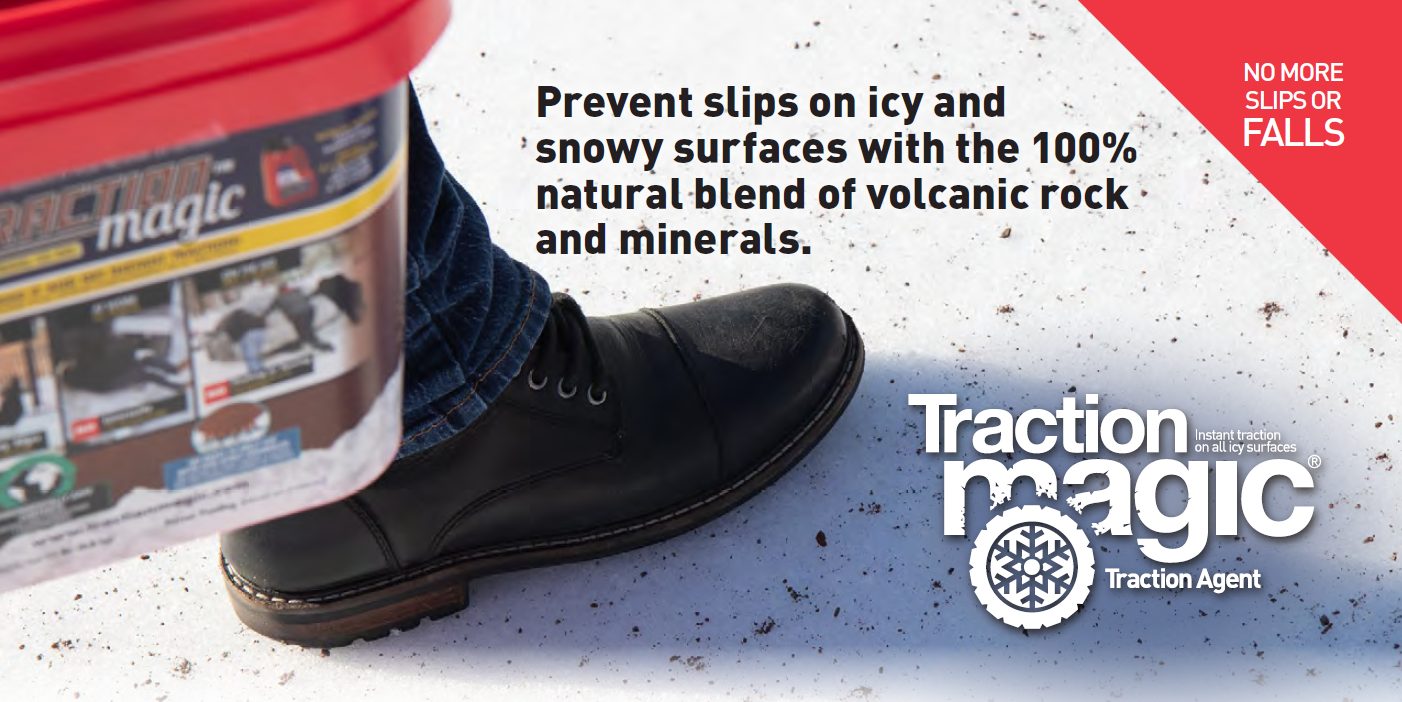
Traction Magic
Stay safe on slippery surfaces with a product that’s 100% natural and safe for pets, people, and your property. Use Traction Magic on sidewalks, steps, or as instant traction for your car.
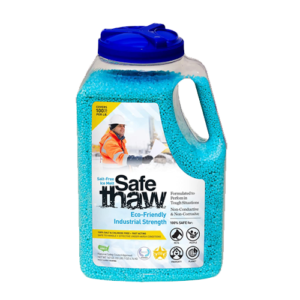
Safe Thaw
Imagine an ice melt you can put down and never worry about. It won’t harm pets, kids and your property. That’s Safe Thaw. Unlike anything else on the market, Safe Thaw can change how winter affects our planet.
Ice Traction (with Traction Magic™)
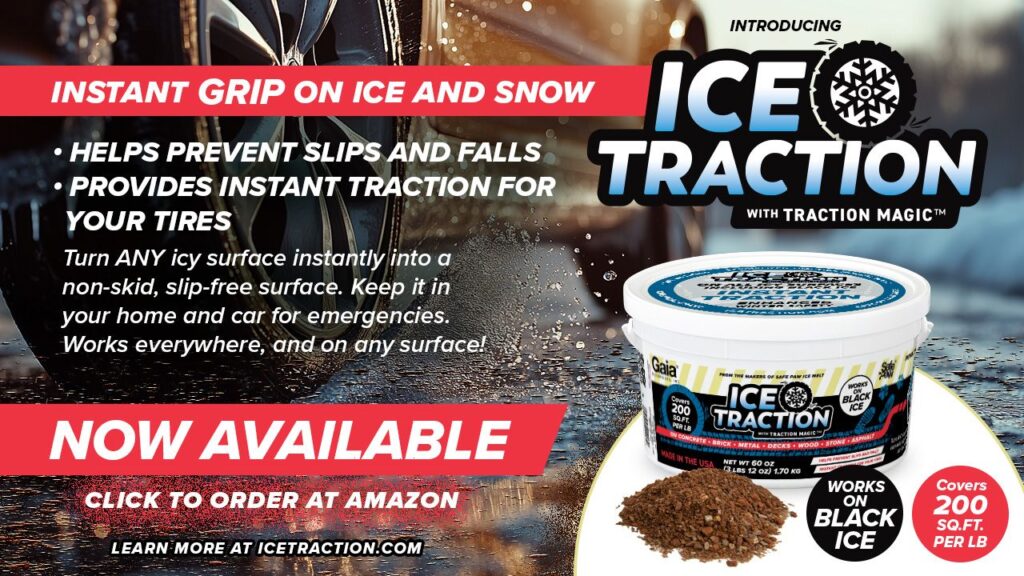
Ice Traction (with Traction Magic™) is your go-to winter solution for driveways, walkways, parking lots — and even black ice on the road. Unlike salt or ice melts, it delivers instant grip on snow and slippery surfaces with no wait time. Just spread and go.

Safe Thaw
Imagine an ice melt you can put down and never worry about. It won’t harm pets, kids and your property. That’s Safe Thaw. Unlike anything else on the market, Safe Thaw can change how winter affects our planet.