



Is It Safe To Salt Your Wooden Deck?
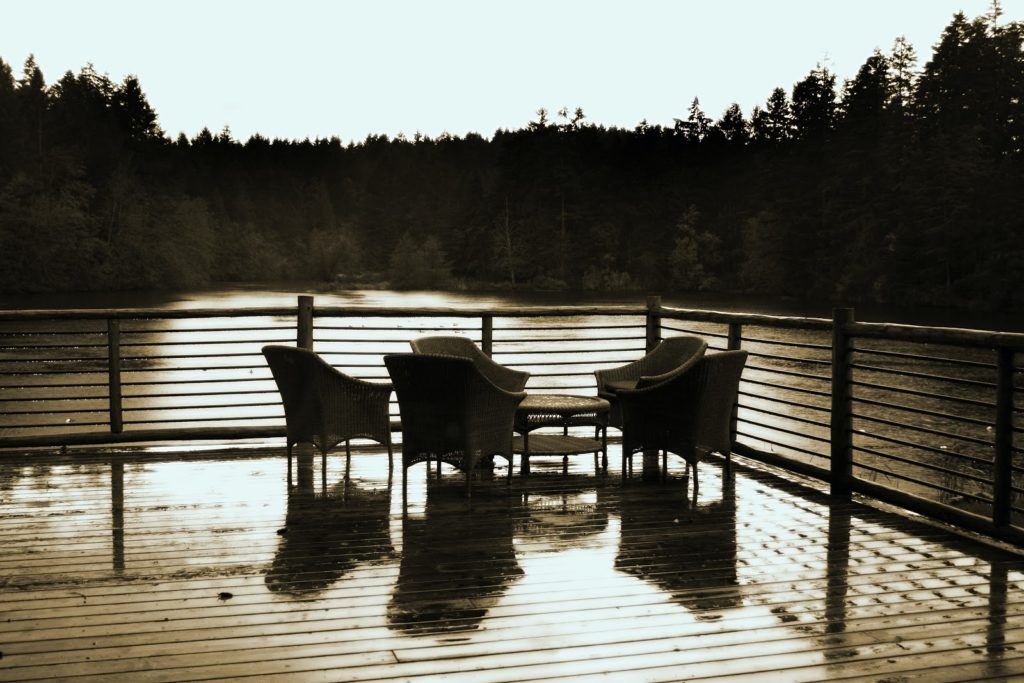
Is Rock Salt Safe for a Wooden Deck?
Rock salt is generally not the preferred treatment for a wooden deck. Clear loose snow first with a broom or plastic shovel, then use only a surface-compatible deicer if bonded ice remains. Chloride-containing salts can leave residue, contribute to corrosion of susceptible metal hardware and add chloride to runoff. Because wood performance also depends strongly on moisture, the safest winter approach is to minimize prolonged wetting and follow the care instructions for the actual wood, finish and fasteners.
Outdoor living is one of the popular trends in home development today. Adding a deck is the best way to enhance the value of your house. Apart from adding a functional space where people can gather, it also gives your house a completely new look. Although there are several decking materials in the market, a wooden deck looks beautiful and elegant and is less expensive. But it is imperative to take care of it in the winter season, especially if it is of natural wood.
One of the most popular ways of clearing snow from the open areas is spreading rock salt- be it on sidewalks, pavements, driveways, or steps. But is it safe to use salt on wooden decks? Let’s find out.
Key Takeaways
- Remove fresh snow mechanically before it becomes compacted or icy.
- Rock salt and other chloride-containing deicers add chloride to the treated area; use them only when compatible with the deck system and only at the amount needed.
- Wood is hygroscopic, so changes in moisture can cause swelling, shrinkage and dimensional movement.
- Deck hardware matters: chloride exposure and persistent moisture can increase corrosion risk for susceptible metals.
- Salt and ice-melt residue can be tracked onto paws; prevent pets from eating treated snow and clean paws after exposure when needed.
- Runoff from treated surfaces can contribute chloride to soil, groundwater and streams, so efficient application and drainage matter.
- A chloride-free ice melt avoids adding chloride, but the label alone does not guarantee compatibility with every wood species, coating or deck condition.
What to Check Before Treating a Wooden Deck in Winter
- Deck material: natural wood, pressure-treated wood, modified wood or composite.
- Surface finish: bare, sealed, stained or painted.
- Hardware: screws, nails, brackets, rail connections and other exposed metal components.
- Condition: cracks, splinters, peeling coatings, decay or standing water.
- Temperature: confirm the deicer’s practical working range.
- Drainage: identify where melted snow, brine and residue will flow.
- Pet use: reduce access to deicer granules and treated slush.
Wood is hygroscopic: its moisture content changes with surrounding humidity and water exposure. USDA Forest Service guidance explains that moisture changes affect wood dimensions and performance. This is a stronger factual foundation for the article than saying chloride salts universally “pull moisture out of wood” or directly corrode wood fibers.
Why Traditional Rock Salt is Dangerous for Wooden Deck Structures
Wood isn’t like concrete or asphalt—it’s a porous, organic material that absorbs and releases moisture constantly. When chloride salts (like sodium chloride, magnesium chloride, or calcium chloride) are applied, they disrupt this natural moisture cycle and speed up wear.
Many people assume “salt is safe because I use it on sidewalks,” but wooden deck structures behave differently. Salt granules lodge into wood pores, retain moisture, and create stress that can prematurely age the deck.
Between using salt on wood deck and a dedicated snow melt, the latter is the better choice, especially when we’re talking about painted wood decks. Salt can strip away the paint, leaving your deck exposed and vulnerable to the elements. A dedicated ice melt for wooden deck, like Safe Paw, is the better choice. It’s effective, won’t damage the paint or the wood, and is safe for pets.
| Research from the USDA Forest Service shows that repeated wet–dry cycles in wood significantly increase cracking and surface degradation. |
How to Remove Snow and Ice From a Wooden Deck
- Clear loose snow with a broom or plastic shovel. Avoid metal-edged tools or aggressive scraping that may damage the surface or coating.
- Inspect the deck for standing water, damaged boards, peeling finish and exposed hardware.
- If bonded ice remains, choose a deicer that is compatible with the actual wood and finish and confirm the product’s working temperature.
- Apply only the amount recommended for the remaining icy area. Excess material is not automatically more effective.
- Once the ice loosens, remove slush and residue when conditions allow. Do not add rinse water where it can immediately refreeze.
- Recheck stairs, shaded areas and drainage points for refreezing.
The Science of Wood Damage: How Sodium Chloride Affects Porous Wood
Rock salt (sodium chloride) is the most widely used deicer—but one of the most harmful for wood. Sodium chloride attracts and holds moisture, which interrupts the expansion-contraction cycle that keeps wood stable.
It also leaves behind gritty white crystals that stain and abrade the deck surface.
Effects of Rock Salt on Wood:
- Extracts natural moisture → causes drying, cracking, and fiber stress
- Weakens paint and sealants → accelerates peeling
- Leaves stains and gritty residue
- Speeds up weathering during freeze–thaw cycles
| The U.S. Geological Survey (USGS) has documented sharp rises in chloride concentrations in urban waterways each winter due to road salt runoff, demonstrating how easily chloride migrates from treated surfaces. |
Is Salt-Based Ice Melt Safe for Pets? Understanding Paw and Ingestion Risks
Salt spread on decks affects more than wood—it affects paws. Pets walking across salt crystals experience irritation from the abrasive texture and chemical exposure.
Pets walking across salted surfaces may experience irritation on their paws. Rough granules can lodge between pads, and chemicals can irritate sensitive skin. Because pets naturally lick their paws after being outside, salt exposure becomes a direct ingestion pathway—making pet-safe alternatives essential for winter deck care.
When wood decks are treated with salt, these concerns extend to the entire outdoor living area.
| The ASPCA warn that chloride-based deicers can irritate pet paws, cause redness, and may trigger vomiting or diarrhea when ingested. |
Environment- Friendly Ice Melt
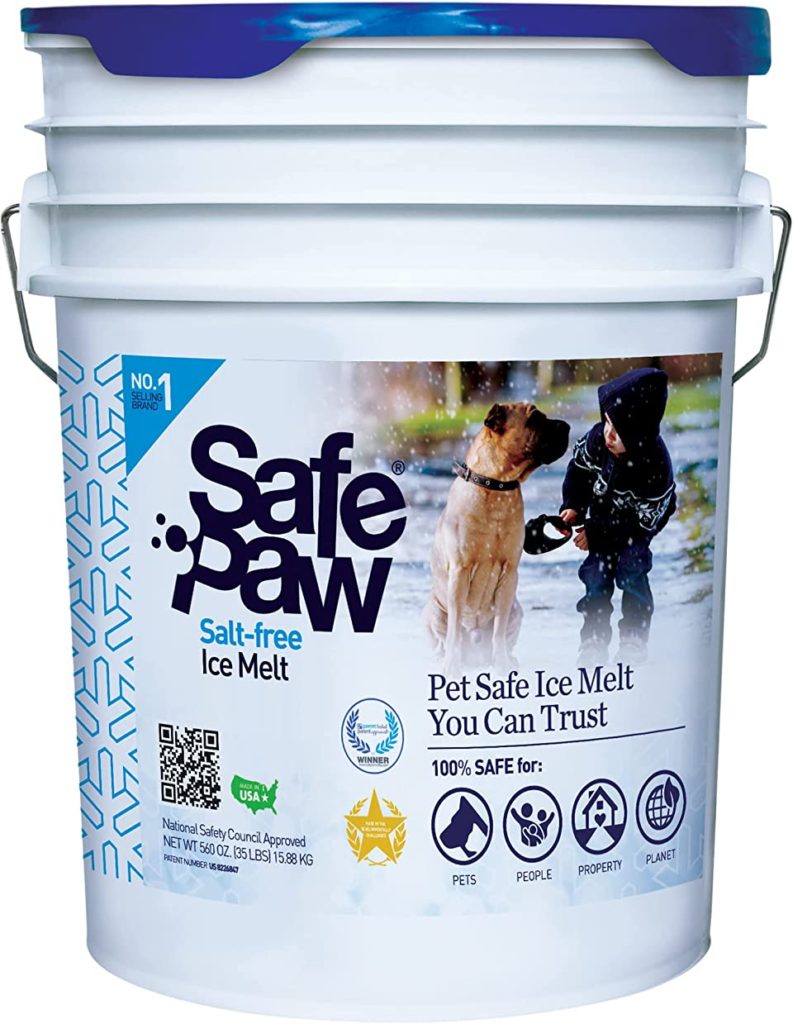
Safe Paw
The Original and the #1 Child and Pet Safe Ice Melt for over 20 years. Guaranteed environmentally safe – will not harm waterways and sensitive wetlands.
Here Are 3 Reasons Why You Should Never Use Salt On Your Wooden Deck:
1- Corrosive
As we all know, rock salt is essentially sodium chloride. It is not safe for wooden decks. The chloride component of the salt absorbs moisture from the wood. When the wood is left dry, it fails to perform its natural contraction and expansion process, thus corrodes soon. Rock salt is not only unsafe to use on wood but also concrete, asphalt, as well as bricks. The salt and other chemicals present in ice melt can cause rashes, eye irritation, and burn paw pads of our four-legged friends.
2- Poisonous
Another reason you should not use rock salt is, that it is not safe to use around kids, pets, and plants. Chlorine in salt and chemical-based ice melt is a toxic respiratory irritant and can damage pets’ skin, eyes, and membranes.
3- Environmentally unfriendly
The runoff from rock salt pollutes streams, rivers, and other waterways. It can even kill or affect the growth of plants.


Winter Deck Methods: Advantages and Limitations
| Method | Advantages | Limitations | Useful when |
| Broom / plastic shovel | Removes snow without adding deicer; precise around stairs and rails | Requires manual effort; bonded ice may remain | Fresh or loose snow |
| Traction grit | Improves grip immediately | Does not melt ice; some materials can be abrasive or messy | Temporary traction in very cold conditions |
| Chloride-free deicer | Avoids adding chloride from the treatment | Compatibility and temperature performance still vary by formulation | Chloride exposure is a concern and the product is compatible with the deck |
| Sodium chloride / rock salt | Widely available and familiar | Adds chloride; residue may remain; can contribute to metal corrosion and runoff | Only when material/finish guidance permits and application is controlled |
| Calcium / magnesium chloride | Can be effective at lower temperatures than sodium chloride depending on formulation | Still adds chloride; may affect nearby materials and pets depending on exposure | Only where specifically compatible with the deck system |
| Pre-treatment / anti-icing | Can reduce bonding when a product is designed for anti-icing | Not every product or finish is suitable for pre-application | Before a storm when instructions explicitly allow it |
Important Limitations for Wooden Deck Deicing
Wood decks vary by species, preservative treatment, age, finish and hardware. A deicer that is acceptable on one deck may not be appropriate on another. “Chloride-free” describes the absence of chloride ingredients; it is not a universal guarantee against staining, coating changes, moisture problems or other surface effects. Avoid absolute pet-safety or ingestion claims without product-specific toxicology, and follow the care instructions that apply to the actual deck and treatment being used.
Why Salt Should Never Be Used on Wooden Decks
1 — Salt Is Corrosive to Wood Fibers
Chloride salts pull moisture from wood, disrupting its ability to expand and contract normally. This accelerates cracking and can lead to premature structural wear.
2 — Salt Is Irritating and Harmful to Pets and Children
Salt can burn paw pads, irritate skin, and may cause digestive distress if ingested.
3 — Salt Is Not Environmentally Neutral
Runoff from decks can harm soil structure and local waterways.
| Studies from the University of Minnesota Extension show that chloride salts accumulate in soil, reducing water availability and stressing plants even at moderate concentrations. |
How Winter Care Changes by Deck Condition
| Deck condition | Main concern | Practical content guidance |
| Bare / unfinished wood | Direct moisture exposure and abrasion | Remove snow early; avoid prolonged wetting; verify deicer compatibility with the wood/treatment |
| Sealed or stained wood | Residue and abrasion can affect appearance or finish | Follow finish-care guidance and avoid aggressive scraping |
| Painted wood | Coating condition and adhesion matter | Use gentle removal; apply only treatments compatible with the coating |
| Pressure-treated wood | Moisture and hardware exposure remain relevant | Avoid blanket safety claims; consider metal connectors and product compatibility |
| Composite decking | Manufacturer-specific care rules | Treat separately and link to the dedicated Trex/composite article |
| Weathered / damaged deck | Existing splits, peeling finish or decay | Address the underlying maintenance issue instead of relying on more deicer |
Choose the Approach by Situation
| Situation | Practical approach |
| Fresh loose snow | Use a broom or plastic shovel before traffic or partial melting compacts the snow. |
| Thin bonded ice | Use a surface-compatible deicer sparingly after loose snow is removed. |
| Very low temperature | Check the deicer’s working range; use mechanical removal or traction when melting is ineffective. |
| Chloride exposure is a concern | Consider a chloride-free deicer while still checking wood/finish compatibility. |
| Sensitive coating or unknown finish | Prioritize gentle mechanical removal and verify the coating manufacturer’s care guidance. |
| Pets frequently use the deck | Prevent ingestion of granules/slush and clean paws after contact when needed. |
| Recurring standing water / refreezing | Improve drainage and moisture management rather than repeatedly increasing deicer use. |
How Does Salt Runoff Affect Soil, Plants, and Nearby Landscapes?
Salt washed off a deck doesn’t disappear—it enters the soil, lawn, and storm runoff systems.
Salt runoff effects include:
- Higher soil salinity → restricts plant water uptake
- Root dehydration → mimics drought conditions
- Long-term vegetation decline
- Elevated chloride levels in streams and groundwater
Because wood decks are often located next to gardens or lawn areas, protecting soil health requires avoiding chloride-based deicers as much as possible.
Why Painted or Stained Wooden Decks Are Especially Vulnerable?
Deck coatings are designed to create a barrier between wood and moisture. Salt, however, breaks down these films, exposing raw wood and decreasing the lifespan of the deck.
Salt Damage on Coated Decks:
- Strips paint and stain
- Causes discoloration
- Allows moisture intrusion
- Triggers faster freeze–thaw damage
- Increases long-term repair costs
Which Types of Ice Melt Are Safer for Wooden Decks?
Not all ice melts behave the same on wood. Most conventional deicers—including sodium chloride, potassium chloride, magnesium chloride, and calcium chloride—are chloride salts. Chloride ions pull moisture from wood, accelerate surface wear, and contribute to environmental runoff.
Homeowners increasingly prefer salt-free, chloride-free, and acetate-free formulas designed specifically for sensitive surfaces. These products rely on urea, propylene glycol, traction minerals, and amide-based technology, which avoid corrosive salt behavior entirely.
1. Moisture Disruption
Chloride salts pull moisture from wood fibers, contributing to drying, cracking, and irregular expansion.
2. Surface and Structural Wear
Salt can roughen and degrade softwood decking materials over time.
3. Environmental and Pet Impact
Salt runoff can harm vegetation, and granules pose irritant risks for pets.
| EPA documentation notes that propylene glycol is classified as low-toxicity and suitable for controlled deicing use, particularly where reduced environmental impact is desired. |
| Urea-based deicers are widely recognized in turf-management literature as non-corrosive to concrete and far gentler on vegetation compared to chloride salts, according to the Minnesota Pollution Control Agency. |
What is the Best Pet-Safe Ice Melt for Wooden Decks?
Using ice melt is the simplest and most effective cure for your winter woes. There are different varieties of winter ice melt solutions available in the market. Most of the ice melt in the market have chloride in their composition. The toxins in these ice melt can affect the shine and longevity of your wooden deck. As we know now that chloride is not safe for your wooden deck, you must choose an ice melt that is salt-free, chloride-free, and acetate-free. Moreover, the residue of salt and chemical-based ice melt can harm the flooring and rugs of your indoor facility.
Therefore, select a good ice melt for a wooden deck. Choose one that is safe for children, pets, and that will not kill the grass. Avoid using sand for snow removal as it will grind and damage the surface of the deck.
If you take care of your deck in the off-season, be sure that it will return the favor in the coming years. By avoiding salt and using a good ice melt for wooden decks, you can keep your deck safe and glistening without straining your back and pockets.
How to Identify Safety Red Flags in Deicing Products (MSDS Guide)
Most homeowners never read Material Safety Data Sheets (MSDS), but doing so instantly reveals whether a product is genuinely pet-safe or only marketed that way.
Red Flags to Watch For:
- Any chloride listing: sodium chloride, magnesium chloride, calcium chloride, potassium chloride
- Skin, eye, or oral irritation warnings
- Exothermic heat release notices (common with CaCl₂)
- Corrosion warnings for metal, concrete, or masonry
- “Keep away from children and pets” statements
- LD₅₀ values indicating moderate–high acute toxicity
| Calcium chloride MSDS sheets confirm it releases heat upon dissolution, a factor that stresses wood fibers and coatings |
| The CDC lists potassium chloride as a substance that can irritate eyes, skin, and mucous membranes, reinforcing why MSDS warnings must be read carefully. |
Winter Safety for Wood Decks
First things first—keeping your wood decks ice free is essential, not just for the wood’s longevity but for safety too. Timely removal of snow and applying ice melt for wood decks strategically before storms can greatly reduce ice buildup. But beware, not all ice melts are created equal! While some may offer a quick fix, they can also leach harmful chemicals into the wood, accelerating deterioration. The key here is to choose products that are both effective and protect wood decks from winter damage without compromising the deck’s integrity.
Protecting Wood Decks from Ice Melt
Navigating through ice melt options can be tricky. It’s crucial to select ice melt that won’t damage wood, which are usually less corrosive than standard options. However, even products marketed as safe can have hidden drawbacks, such as leaving a slippery residue or not being as effective in very low temperatures, which might require frequent reapplication, increasing exposure and potential damage.
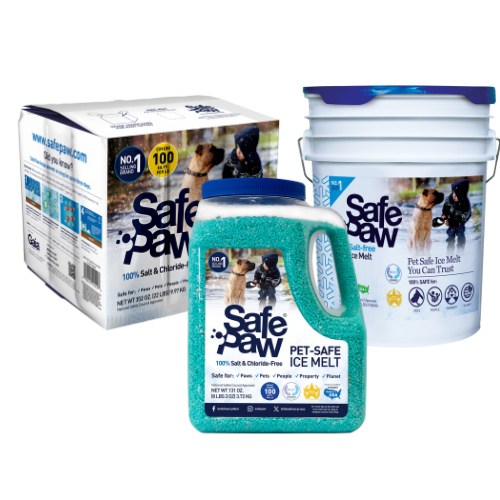
Pet Safe Ice Melt – Safe Paw
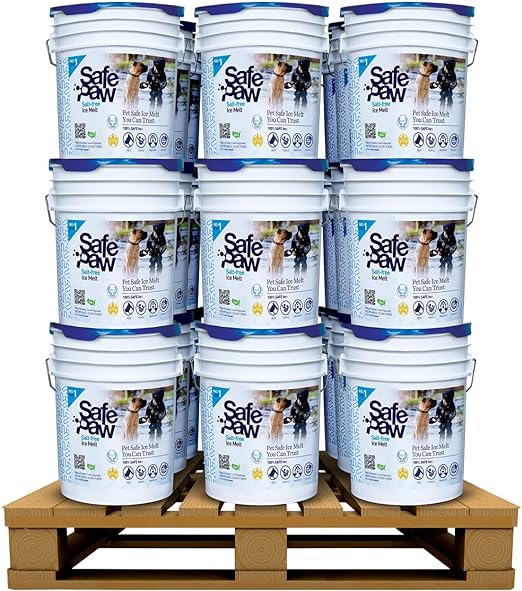
Safe Paw, Child Plant Dog Paw & Pet Safe Ice Melt -35lb, 36 Pails

Safe Paw, Child Plant Dog Paw & Pet Safe Ice Melt -22lb, 100Bboxes
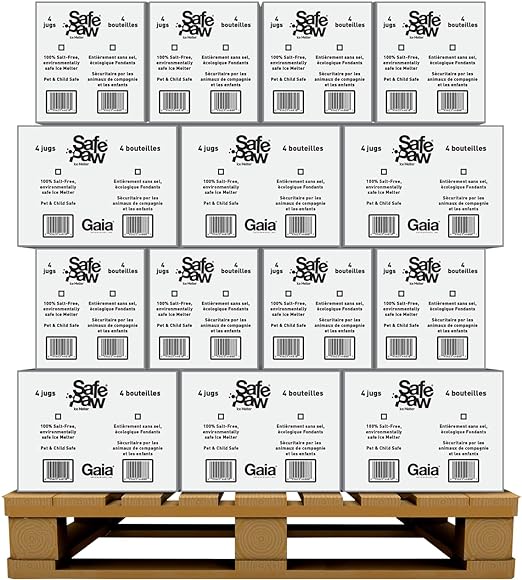
Safe Paw, Child Plant Dog Paw Pet Safe Ice Melt, 160 Jugs

Pet Products Powered By EzPz.pet


Plant-Friendly Ice Melt
Gardens and green areas can suffer too. Opting for plant-friendly ice melt means protecting the flora surrounding your deck. But while these products are gentler on plants, they might not always offer the robust ice-melting power needed during severe weather, or they may require larger quantities to be effective, which can be less cost-effective and still pose risks of runoff and residue.
Safe Ice Melt for Wooden Decks
For those who prioritize eco-conscious living, eco-friendly ice melt products like Safe Paw present a viable solution. They’re designed to be safe on wood and gentle on the environment. However, while other products might claim similar benefits, they often fall short in efficiency or safety for pets and plants—always double-check the components and their concentrations.
Best Ice Melt for Wooden Decks
The best ice melt for wooden decks ideally balances effectiveness, safety, and environmental responsibility. While alternatives such as magnesium chloride or calcium magnesium acetate might seem appealing due to their lower corrosive properties, they can still pose risks to pet health and environmental integrity. Safe Paw, in contrast, is formulated without harsh salts and chlorides, offering a safer and equally effective solution.
The Truth About “Pet-Friendly” Labels: Why Many Still Contain Chlorides
Labels such as “pet-friendly,” “gentle,” “safer formula,” “green blend,” or “eco ice melt” often conceal the fact that the product still contains chloride salts. In most cases, these labels simply recommend using lower quantities—not eliminating chloride exposure.
A truly pet-safe product must be chloride-free, salt-free, and non-corrosive—criteria that only a few industry formulations meet.
| Veterinary advisories from the Pet Poison Helpline show that even “pet-friendly” chloride salts can still irritate paws and cause digestive upset when licked from fur or feet. |
Are Homemade Ice Melts Safe for Wooden Decks?
Considering a homemade ice melt for wood decks? Simple recipes can include natural ingredients like sand or even coffee grounds to provide traction without chemical risks. Yet, these home solutions often provide very temporary relief and can require frequent application, which isn’t always practical or sufficient in harsh conditions.
Recipe for Homemade Ice Melt
A basic recipe for homemade ice melt might mix benign ingredients like sand with salt, but even minimal salt can pose long-term risks to wood integrity and surrounding vegetation. Moreover, homemade mixtures lack the temperature-specific formulations that products like Safe Paw offer, which are designed to work effectively across a range of winter conditions.
When considering your options this winter, remember that while alternatives may offer immediate solutions, they often come with significant caveats. Safe Paw remains a standout choice for those seeking a balance of safety, efficacy, and environmental responsibility, ensuring your wood decks remain pristine and safe throughout the season.
4 Ways to Protect Wooden Decks During Winter Without Using Salt
Several non-salt strategies help maintain deck safety:
1. Regular Snow Removal
Removing snow early prevents ice compression and reduces the need for chemical treatments.
2. Use of Traction Agents
Fine gravel, wood ash, or other non-corrosive traction enhancers provide grip without harming wood.
3. Application of Salt-Free Ice Melts
A chloride-free product designed for sensitive surfaces can melt ice without damaging wood.
4. Pre-Winter Maintenance
Sealing or staining the deck helps limit moisture penetration.
| Building-science studies indicate that surface sealing significantly reduces moisture penetration, extending deck lifespan. |
Restoration Tips: How to Repair and Reseal Salt-Damaged Wood Decks
Steps to restore surfaces:
- Rinse salt residues thoroughly
- Sand raised or damaged fibers
- Fill cracks or holes
- Repaint or reseal
- Switch to a chloride-free deicer for future winters
| Forestry research shows that unsealed wood absorbs moisture more rapidly, increasing susceptibility to freeze-thaw damage. |
Salt on wood deck can lead to holes and other damages over time. Repairing a salt-treated wood deck can be a laborious process involving cleaning, removing loose wood, filling holes, sanding, and repainting or sealing. To avoid this hassle, choose a product like Safe Paw. This ice melt for wooden deck won’t cause the same corrosive damage as salt and will save you time and effort in the long run.
What Makes Safe Paw Ice Melt a Smarter, Faster, and Safer Choice?
When winter hits hard and fast, most people scramble to find something—anything—that melts ice quickly. But speed alone isn’t enough. You need an ice melt that’s fast-acting and safe for your wood deck, pets, plants, and concrete. That’s where Safe Paw Ice Melt outperforms nearly every product on the market. It’s not just about clearing the ice—it’s about doing it without causing long-term damage or environmental harm.
Many homeowners wonder, what melts ice the fastest? While traditional rock salts and calcium chloride might provide a quick reaction, they often damage the surface they’re applied to. They also leach chemicals into nearby soil and can cause burns or digestive issues if pets lick their paws afterward. Safe Paw takes a different approach. Its dual-action formula not only melts ice quickly but also prevents refreezing for up to 72 hours—offering ongoing protection without repeated applications.
And what about common myths like “will iodized salt melt ice”? Technically, yes—it can. But not efficiently, and certainly not safely for your deck or pets. Iodized salt lacks the temperature control and chemical balance needed for effective ice removal in sub-zero weather. Plus, just like other sodium-based deicers, it can lead to wood rot, surface discoloration, and soil toxicity. The reality is that household salts are not formulated for outdoor use and shouldn’t be your go-to for deck deicing.
How Do Sodium Chloride, Calcium Chloride, Magnesium Chloride, and Safe Paw Compare for Wooden Decks?
Performance Comparison: Chloride Salts vs. Safe Paw for Deck Safety
| Ice Melt Type | Working Temperature | Impact on Wood | Environmental & Pet Impact | Marketed as “Pet-Friendly”? |
| Sodium Chloride (NaCl) | ~15°F | Extracts moisture, increases cracking, degrades paint | High soil salinity, paw irritation | Sometimes, but still chloride-based |
| Calcium Chloride (CaCl₂) | ~–20°F | Heat release stresses wood fibers | Irritates vegetation & paws | Occasionally, but still chloride-based |
| Magnesium Chloride (MgCl₂) | ~5°F | Leaves residues that dull wood finishes | Paw irritation; raises soil chloride | Often marketed as pet-friendly but chloride-based |
| Potassium Chloride (KCl) | ~12–20°F | Slower melt; increases freeze–thaw cycling | Ingestion risks; plant stress | Sometimes, but not chloride-free |
| Safe Paw® (Urea + Glycol + Amide Core) | –2°F | Does not extract moisture; protects coatings | No chloride runoff; reduces paw irritation | Yes — 100% chloride-free |
| USGS winter-salt studies confirm that chloride salts are the dominant contributors to seasonal soil and water salinity increases. |
Why Choose an Ice Melt Safe for Concrete and Pets Like Safe Paw?
Choosing an ice melt safe for concrete and pets is no longer just a preference—it’s a necessity. With growing awareness of how traditional salts harm ecosystems, responsible homeowners are looking for alternatives that balance performance with peace of mind. Safe Paw does just that. It’s completely free of salts and chlorides, which are known to erode concrete, stain surfaces, and cause harm to paws, paws, and even human skin.
Safe Paw’s patented formula uses modified carbonyl diamide and glycol—ingredients engineered to penetrate and break down ice without corrosive side effects. It’s safe for use on any surface, including treated and untreated wood, pavers, stone, and painted decks. Unlike many “green-labeled” products that still contain trace amounts of chloride or acetate, Safe Paw contains zero salt, zero chloride, and zero toxins. This makes it not only the ice melt safe for concrete and pets, but also for waterways, plants, and delicate landscaping.
The bonus? It also adds a level of traction to slippery areas, making your deck or walkway safer immediately after application—without leaving behind that gritty mess most products are guilty of. No tracking indoors, no chemical stains, and no worried looks from your dog after a backyard stroll.
What Happens When a “Safer Salt” Creates a Hidden Winter Problem?
Imagine a homeowner who switches from rock salt to magnesium chloride after seeing it marketed as “gentler and pet-considerate.” For a week, the deck stays clear, and everything seems fine—until their dog begins hesitating on the steps, pausing to lick its paws after every walk. At first it looks like normal winter discomfort—but then the redness between the toes becomes hard to ignore. Only later does the homeowner realize that chloride residue had been collecting in the tiny grooves of the wooden boards, sticking to the dog’s paws each time it crossed the deck.
The ice melted quickly.
The underlying problem never changed—just became harder to spot.
| The U.S. Geological Survey reports that chloride levels in many urban streams rise sharply in winter due to road-salt runoff, contributing to long-term aquatic ecosystem stress. |
| The ASPCA lists traditional ice melts containing chloride salts as winter hazards because they can irritate pet paws and may cause vomiting or diarrhea if ingested. |
| According to the University of Minnesota Extension, chloride salts such as sodium, calcium, and magnesium chloride can damage concrete by increasing freeze–thaw cycling and promoting surface scaling. |
Why Safe Paw Is a Smarter and Safer Winter Choice
Safe Paw® Ice Melt is a salt-free, chloride-free deicer manufactured by Gaia Enterprises Inc., founded by chemical engineer Steve Greenwald. It was created as a non-corrosive alternative to sodium chloride, magnesium chloride, potassium chloride, and calcium chloride, which are known to irritate pet paws and accelerate concrete and wood deterioration. Safe Paw’s formulation—based on modified urea, propylene glycol, an amide core, and traction agents—is engineered for homes needing protection for pets, vegetation, concrete, and wooden decks.
Homeowners frequently ask:
- What melts ice the fastest?
- Will iodized salt melt ice?
- Which ice melt is safe for concrete and pets?
Fast melt does not equal safe melt. Chloride salts work quickly, but at the cost of wood damage, soil salinity, and pet irritation.
Safe Paw solves these problems with a dual-action, chloride-free formula that melts ice efficiently down to –2°F while preventing refreezing for extended periods.
| Surface-science research shows that non-corrosive deicers reduce freeze–thaw cycles, lowering structural wear on both wood and concrete. |
This information is based on Gaia Enterprises’ 30+ years of experience developing pet-safe deicing products and reviewing Material Safety Data Sheets (MSDS) for common ice melt chemicals.
Conclusion: Making the Sustainable Choice for Winter Deck Maintenance
Your wooden deck is more than an outdoor space—it’s an investment in comfort and value. Harsh salts and cheap quick fixes can compromise both in the name of short-term ice control. But when you choose Safe Paw Ice Melt, you’re opting for a product that’s fast, effective, and holistic in its safety. It not only addresses the urgent question of what melts ice the fastest, but also answers it responsibly. No need to rely on outdated methods like iodized salt to melt ice, which only brings surface-level relief at a high long-term cost. With Safe Paw, you gain multi-day protection, peace of mind for your pets, and preservation of your home’s surfaces. As the only ice melt safe for concrete and pets that’s also optimized for wooden decks, Safe Paw stands in a category of its own. When the snow hits, let your response be smart, safe, and sustainable. Choose the ice melt that has your back, your pets’ paws, and your home’s integrity in mind—every time.
Get ready for winter with the ONLY Pet Safe Ice Melt you can trust
FAQs
Other Ice Melt Products
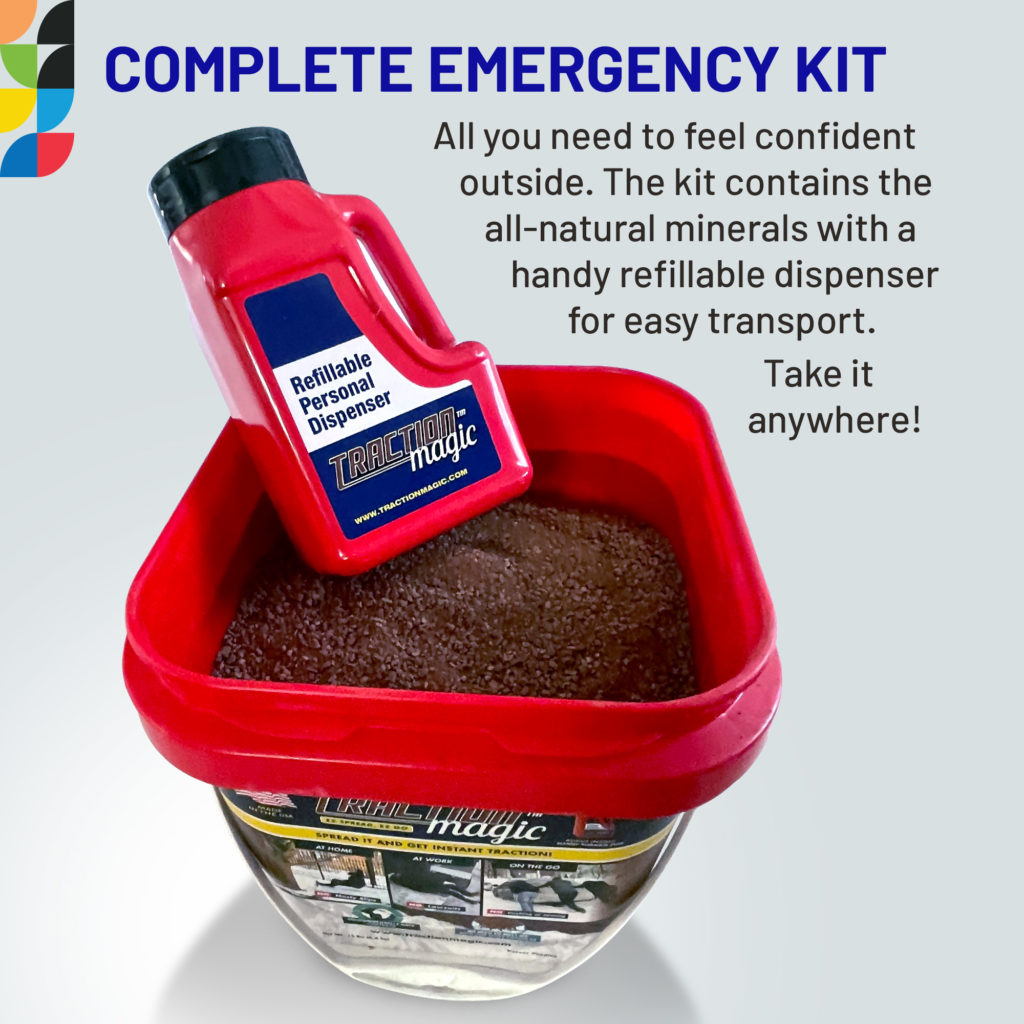
Traction Magic
Stay safe on slippery surfaces with a product that’s 100% natural and safe for pets, people, and your property. Use Traction Magic on sidewalks, steps, or as instant traction for your car. Made in the USA.
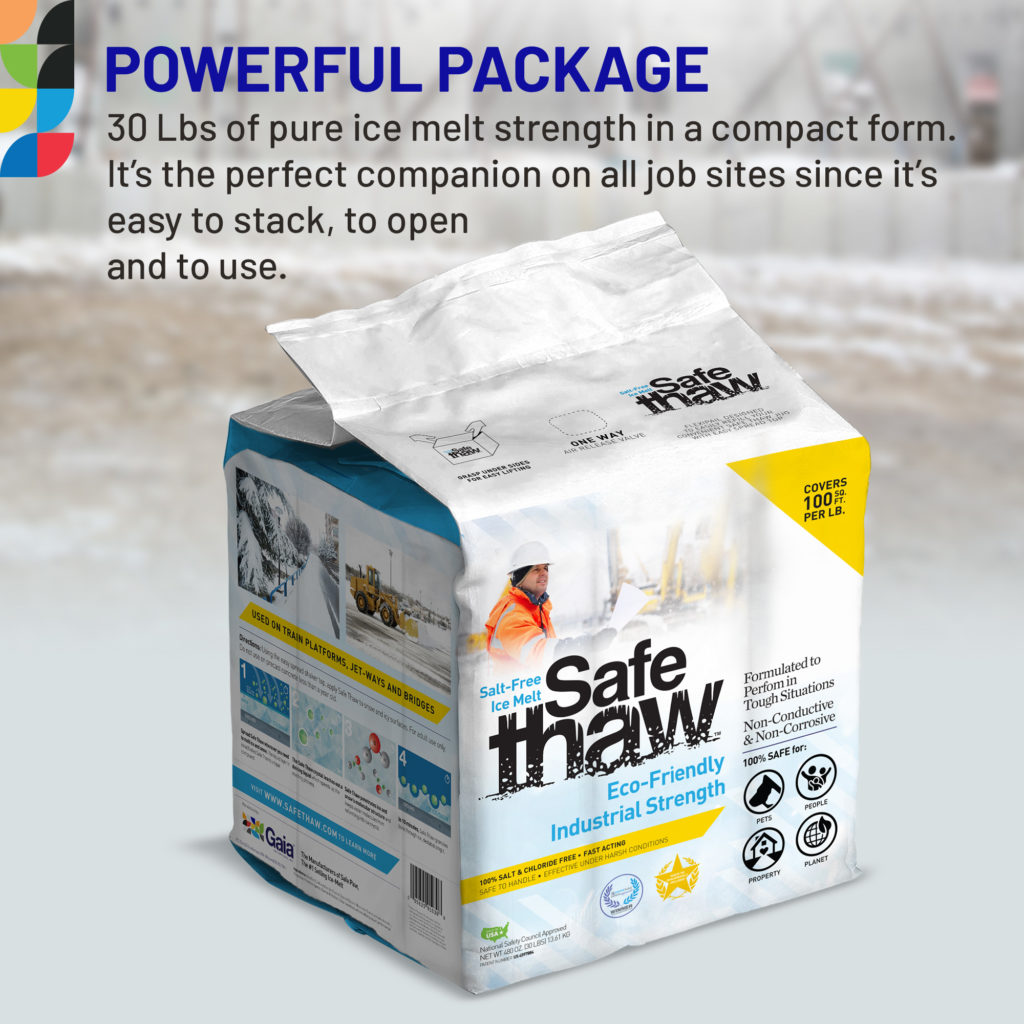
Safe Thaw
Imagine an ice melt you can put down and never worry about. It won’t harm animals or children, and it won’t damage your property. That’s Safe Thaw. Unlike anything else on the market, Safe Thaw can change how winter affects our planet.