



I Was Shocked When I Used Safe Paw On My New Concrete
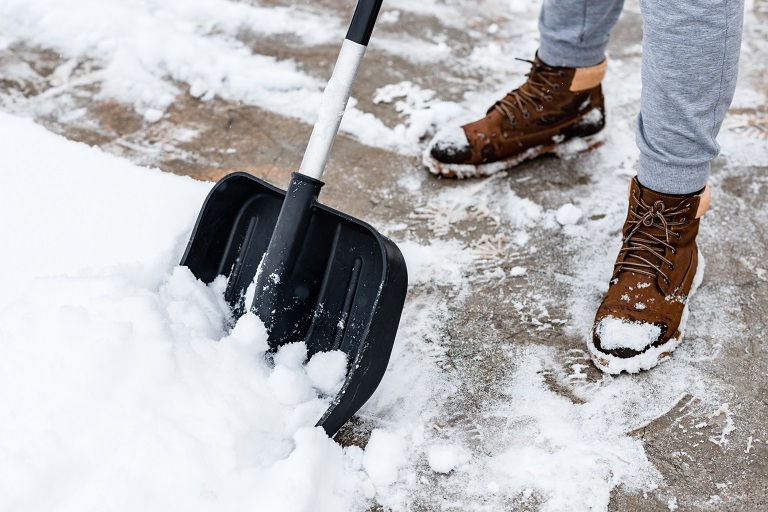
To melt ice without damaging concrete, remove loose snow first and then apply only the label-directed amount of a chloride-free, non-corrosive deicer to mature concrete. Clear the resulting slush before it refreezes. Do not apply chemical deicers to concrete less than 12 months old; use shoveling with sand or traction grit instead.
We have come across several feedbacks and positive comments over the past 20 years. However, when people come up to us and tell us they have found their perfect ice melt safe for concrete, nothing compares to that review. We recently spoke with one of our customers, Gina, and she was thrilled to tell her story.
‘We moved to Michigan nearly a year ago. With winters fast approaching, we were not sure how to get ourselves prepped with the right ice melt products or snow removal equipment, all the while keeping our pets’ safety on top of our minds. So is magnesium chloride safe for pets is one of the top questions playing on my mind.
Key Takeaways
- Do not apply chemical deicers to concrete less than 12 months old; use mechanical snow removal and traction grit.
- On mature concrete, shovel first, apply the minimum recommended quantity and remove melted slush promptly.
- Repeated exposure to chloride-based deicers can contribute to concrete saturation, scaling, reinforcement corrosion and freeze–thaw deterioration.
- Salt-based ice melts can irritate pets’ paws and may cause gastrointestinal or more serious symptoms if ingested.
- Choose a deicer based on the age and condition of the concrete, outdoor temperature, pets, vegetation, drainage and surface finish.
- Product performance and safety claims should be supported by an accessible SDS, laboratory report or authoritative external source.
FHWA and ACI materials support cautious language about salt scaling and freeze–thaw deterioration, while veterinary poison guidance confirms the paw and ingestion risks associated with common ice-melt salts. (Federal Highway Administration)
Before Choosing an Ice Melt, Check These Five Factors
- Age of the concrete: Use mechanical removal and traction material on concrete less than 12 months old.
- Surface type: Stamped, colored and decorative concrete may have sealers that require special care.
- Current temperature: Confirm that the product is rated for the actual pavement temperature, not only the air temperature.
- People, pets and vegetation: Consider paw contact, accidental ingestion, runoff and nearby plants.
- Drainage and existing damage: Cracks, standing water and poor drainage increase the risk of refreezing and surface deterioration.
What to Do If Salt Has Already Damaged Your Concrete
Stop using chloride-based deicers on the affected surface. Once temperatures permit, remove loose scaling material, clean away remaining residue, repair cracks and have badly deteriorated areas assessed by a qualified concrete contractor. After repairs have cured, apply a compatible concrete sealer before the next winter season.
How to Melt Ice on Concrete Safely: Five Steps
- Shovel or sweep first. Remove as much loose snow as possible before applying a deicer.
- Inspect the surface. Do not apply a chemical deicer to new, cracked, badly scaled or poorly sealed concrete without checking the appropriate maintenance guidance.
- Apply a thin, even layer. Follow the package directions rather than covering the surface heavily.
- Allow the product to loosen the ice. Break up and remove softened ice instead of waiting for the entire layer to become water.
- Remove the slush. Sweep or shovel away melted material before temperatures fall and the water refreezes.
Using more deicer than the label recommends does not guarantee faster melting and can increase residue, runoff and cleanup requirements.
Magnesium Chloride Ice Melt: A Popular Option
Magnesium chloride ice melt is frequently chosen because it is effective at lower temperatures (down to -13°F) and is often considered less harmful to concrete than traditional rock salt. However, while it’s more gentle on surfaces, it is still a chloride, which means it can contribute to concrete damage over time, especially when used in excess. For this reason, it’s vital to be mindful of the freeze-thaw cycle, where water seeps into the concrete, freezes, and expands, leading to cracks and surface scaling.
Another plus for magnesium chloride is its reputation for being relatively safer for pets, but it’s not without risks. Pets can still experience irritation or even digestive issues if they come into contact with it. For those with pets, opting for a pet-friendly ice melt like Safe Paw or similar alternatives may be a better solution.
Calcium Magnesium Acetate (CMA): An Eco-Friendly Choice?
Calcium magnesium acetate is often praised for being a more environmentally conscious choice. It’s a combination of calcium and magnesium salts bound to acetic acid, which makes it less corrosive and less damaging to concrete compared to traditional chlorides. It works by preventing ice from bonding to surfaces rather than directly melting the ice. While this may mean that CMA is effective at reducing concrete damage, it doesn’t melt ice as quickly as some of the more aggressive chemicals, like magnesium chloride or potassium chloride.
Potassium Chloride: Gentle but Limited
Potassium chloride is another alternative often viewed as safer for pets and the environment. However, its effectiveness is limited when temperatures drop below 15°F, making it less practical for colder climates. Additionally, like magnesium chloride ice melt, it can still contribute to concrete damage over time if used frequently.
Because of its mild effect, potassium chloride can be used in combination with other de-icing agents for those looking to prioritize concrete safe ice melt without sacrificing too much in terms of effectiveness. However, if you’re primarily concerned with preventing long-term damage, you might want to explore alternatives like Calcium magnesium acetate or opt for no ice melt at all during the first year of new concrete installation.
Tips for Applying Ice Melt Safely
Regardless of the type of ice melt you choose, safe application practices are key to minimizing damage and protecting your surfaces. Here are some quick tips:
- Use sparingly: Over-application of any ice melt product can lead to surface damage, especially for concrete. Spread a thin, even layer and only reapply as needed.
- Shovel first: Always remove as much snow as possible before applying ice melt. This reduces the amount needed and helps protect against chemical build-up.
- Avoid new concrete: As mentioned, do not use any ice melt products, including Safe Paw, on new concrete that is less than 12 months old. This is when the concrete is most vulnerable to damage from the freeze-thaw cycle.
- Rinse off surfaces: After winter, thoroughly clean your driveway or walkways to remove any residue from ice melt products to avoid long-term concrete damage.
When selecting the best ice melt for new concrete, it’s important to weigh the benefits and potential risks of each product. For both pet safety and concrete protection, non-corrosive, pet-friendly ice melts like Safe Paw offer a safer alternative to more traditional products.
Since our move, we interacted with several neighbors and visited local hardware and Petco stores to check reviews of different ice melt products. From reading online to connecting with our immediate neighbors, we found a general inclination towards Safe Paw. Therefore, we studied the effect online and called for a demo as well.

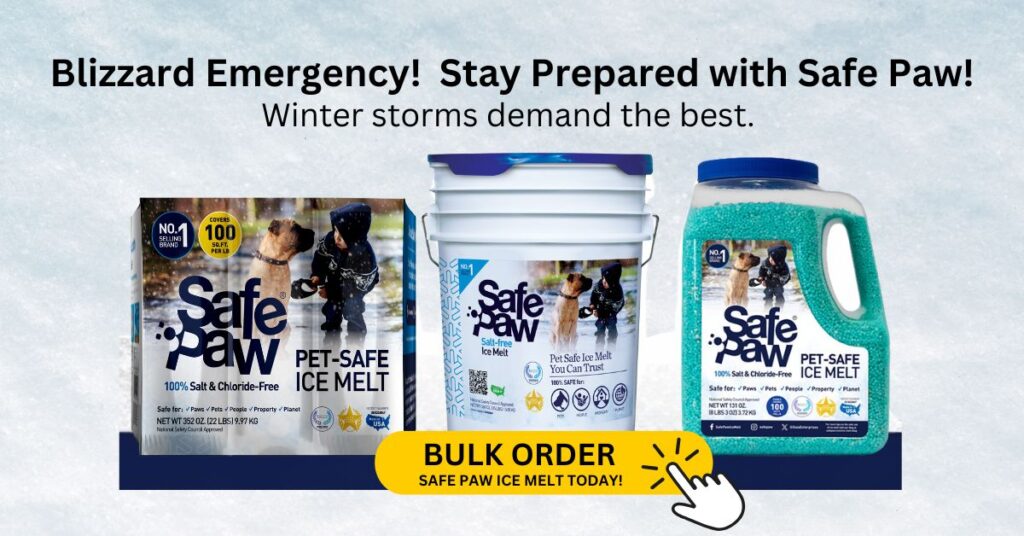
Bulk Purchase With Safe Paw
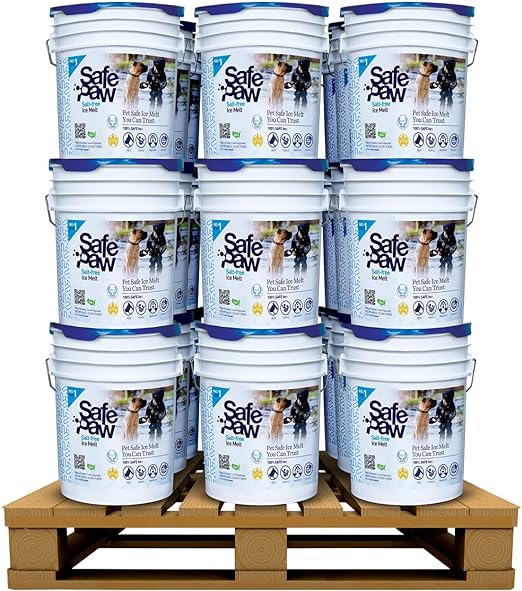
Safe Paw, Child Plant Dog Paw & Pet Safe Ice Melt -35lb, 36 Pails

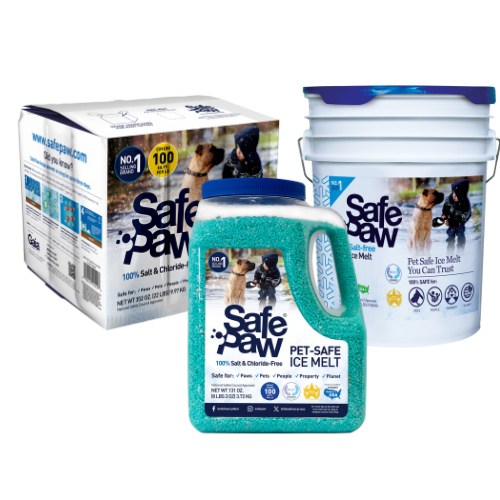
Safe Paw, Child Plant Dog Paw & Pet Safe Ice Melt -22lb, 100Bboxes
Safe Paw, Child Plant Dog Paw Pet Safe Ice Melt, 160 Jugs



Ice Removal Methods: Pros, Cons & Best Uses for Concrete
| Method | Advantages | Limitations | Best Used For |
| Shoveling or sweeping | No chemical residue; suitable for almost every surface | Requires time and physical effort | First step for all driveways and sidewalks |
| Sand or traction grit | Provides immediate grip; does not chemically melt ice | Does not remove ice; requires cleanup | New concrete and extremely cold conditions |
| Chloride-free deicer | Avoids chloride exposure; can loosen bonded ice | Performance varies; label directions still matter | Mature residential concrete |
| Calcium magnesium acetate | Lower chloride-related corrosion risk | More expensive; performance may decline in severe cold | Preventive application in moderate conditions |
| Rock salt or chloride deicers | Widely available and inexpensive | Concrete, metal, vegetation, waterway and pet-contact concerns | Avoid on sensitive residential surfaces |
Road salt is associated with infrastructure damage and environmental chloride pollution, while common ice-melt salts can irritate pets’ paws and cause illness after ingestion. (US EPA)
Ice Melt For New Concrete
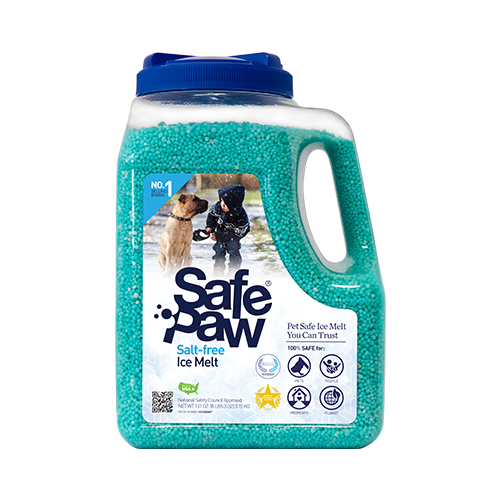
Safe Paw
The Original and the #1 Pet and Child Safe Ice Melt for over 20 years. Guaranteed environmentally safe – will not harm waterways and sensitive wetlands.
We must say, we haven’t been happier to find our perfect ice melt safe for concrete. We would like to share our experience using Safe Paw ice melt so far-
- It is readily available at our nearest home depot store.
- It is cost-effective, making it easy for us to budget our winter product storage and usage.
- Safe Paw has all the ingredients listed carefully behind the jar and clearly outlines usage or quantity too.
- We noticed that once we spread it, it melted the ice in a matter of minutes.
- Our pet dog has constantly developed a rash or burnt his paws with other harsh ice melt products. We kept him indoors or made him wear paw socks before stepping out. But with Safe Paw, it was much easier to take him out.
- His paws did not cut or burn when he stepped out, relaxing our nerves to take him out for a stroll when needed.
- Unlike other ice melt products, we also noticed that this did not stain our wooden patio or our carpets. Since it does not leave behind any residue, it did not damage our concrete surface either.
- After the pail got empty, we could easily recycle it for other requirements.
We have used this product last winter season, and we’re super happy with the result. We recommend this to all our friends and family.’
Comparing Ice-Removal Options for Concrete
| Deicer or Method | Chloride-Based? | Concrete Consideration | Pet-Contact Consideration | Cold-Weather Role |
| Rock salt—sodium chloride | Yes | Repeated exposure can contribute to scaling and corrosion | Paw irritation and ingestion concern | Loses effectiveness as temperatures fall |
| Calcium chloride | Yes | Strong melting action but may be harsh on surfaces and metals | Significant irritation concern | Used in colder conditions |
| Magnesium chloride | Yes | Generally less aggressive than calcium chloride, but still introduces chloride | Can irritate paws and cause illness if ingested | Cold-weather deicer |
| Calcium magnesium acetate | No chloride | Lower chloride-corrosion concern; application and cost limitations | Generally lower contact concern | Better for preventive use and moderate cold |
| Safe Paw | Manufacturer states no chloride | Link directly to concrete and chloride test reports; use on mature concrete as directed | Manufacturer positions it as pet-safe; link the SDS and toxicology evidence | Manufacturer-rated to –2°F |
| Sand or traction grit | No deicing chemical | Does not chemically attack concrete | Avoid unnecessary ingestion or dust exposure | Adds traction at any temperature but does not melt ice |
Best Deicing Approach for Concrete
| Situation | Recommended Approach | Reason |
| Concrete less than 12 months old | Shoveling plus sand or traction grit | Avoids chemical exposure during the most vulnerable period |
| Mature residential driveway | Shovel first, followed by a chloride-free deicer | Reduces chloride exposure while removing bonded ice |
| Home with dogs or cats | Chloride-free product with accessible safety documentation | Reduces common salt-contact concerns |
| Stamped or decorative concrete | Confirm sealer compatibility, then use a chloride-free product sparingly | Helps protect the finish and sealer |
| Steep driveway | Deicer plus a dedicated traction product | Combines ice loosening with immediate grip |
| Extremely low temperature | Mechanical removal plus a product rated for the actual temperature | Product performance falls outside its rated range |
| Large commercial area | Calibrated equipment, written application rates and drainage plan | Controls quantity, runoff and recurring cost |
Conclusion
We value all our customers, and their feedbacks reassure us to diversify our product line to suit different requirements. The above review is close to our heart because it was the first time Gina used the product.
We understand your predicament ‘is magnesium chloride safe for pets‘ or ‘can we mix rock salt with Safe Paw’, etc. However, we never advise you to use Safe Paw and any other product as you will not be able to judge the outcome.
Gaia Enterprises Inc. delivers 100% pet-safe and environmentally friendly winter products. Safe Paw, our flagship product, is the #1 selling pet-safe ice melt that does not harm pets, safe if ingested, and safe on all types of concrete.
If you are still contemplating purchasing Safe Paw, walk into the nearest Home Depot store today!
Get ready for winter with the ONLY Pet Safe Ice Melt you can trust
FAQs
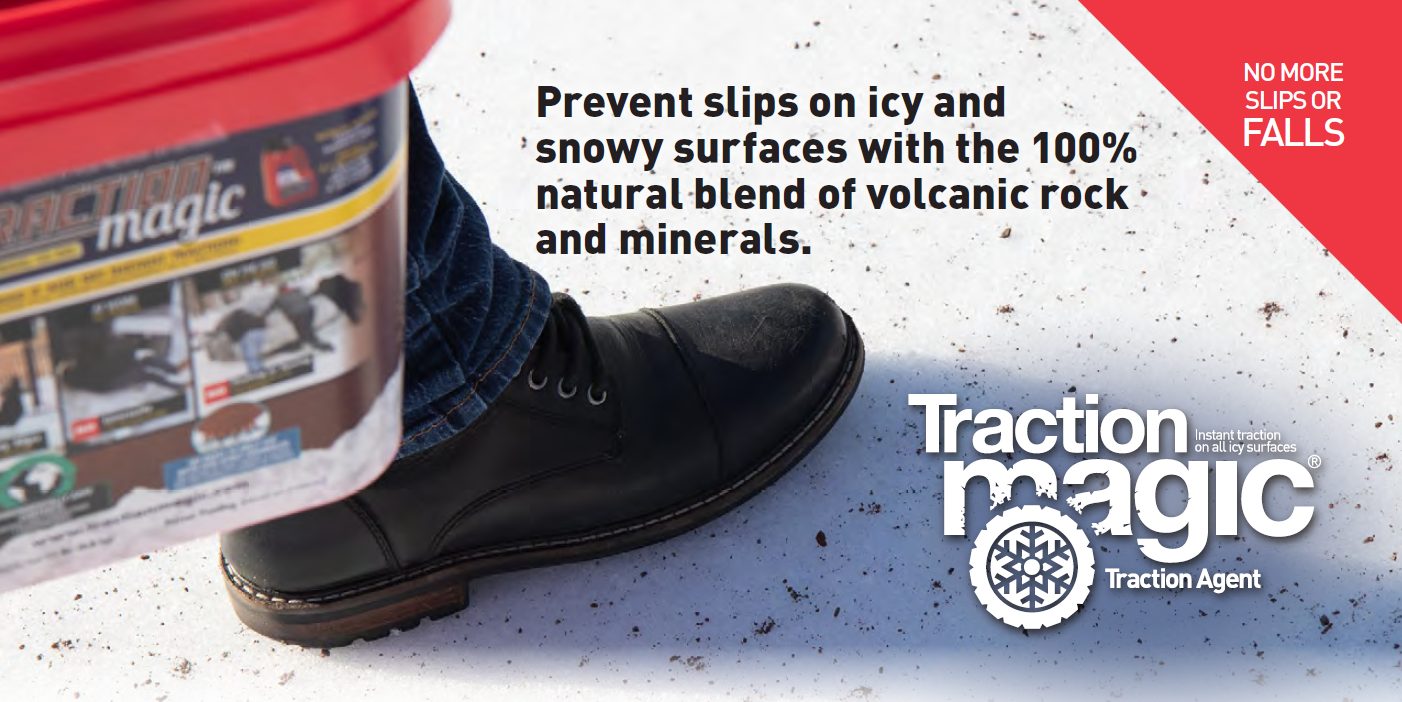
Other Ice Melt Products
Traction Magic
Stay safe on slippery surfaces with a product that’s 100% natural and safe for pets, people, and your property. Use Traction Magic on sidewalks, steps, or as instant traction for your car.
Safe Thaw
Imagine an ice melt you can put down and never worry about. It won’t harm pets, kids and your property. That’s Safe Thaw. Unlike anything else on the market, Safe Thaw can change how winter affects our planet.
Ice Traction (with Traction Magic™)
Ice Traction (with Traction Magic™) is your go-to winter solution for driveways, walkways, parking lots — and even black ice on the road. Unlike salt or ice melts, it delivers instant grip on snow and slippery surfaces with no wait time. Just spread and go.

Safe Thaw
Imagine an ice melt you can put down and never worry about. It won’t harm pets, kids and your property. That’s Safe Thaw. Unlike anything else on the market, Safe Thaw can change how winter affects our planet.
Related Posts
- Ice Melt Safe for Concrete: Protect Your Concrete Driveway This Winter
- Safe Salt for Concrete: The Best Ice Melt for Winter Protection
- Winter-Proof Your Property: Choosing Ice Melt Safe for Concrete and Pets
- Ice Melt on Concrete: How to Prevent Damage with Safe Alternatives
- Non Corrosive Ice Melt For Concrete | Salt Damage Prevention Tips
- What Is Air Entrainment in Concrete and Why Does It Matter for Winter Durability
- Can Safe Paw or Safe Thaw Damage Well-Sealed Concrete?
- How to Test Pavement Safety in 7 Seconds (Infographic)