


Is Ice Melt Safe For Concrete?
Some ice melts can damage concrete, especially products containing sodium chloride, calcium chloride or magnesium chloride and products applied too heavily or to vulnerable surfaces. Do not use chemical ice melt on concrete that is less than 12 months old. During the first winter, remove snow promptly and use traction-only materials such as coarse sand or mineral grit. For suitable mature concrete, choose a product whose current label permits concrete use, review its active ingredients and temperature range, apply only the recommended amount and remove slush promptly. A pet-safe label alone does not guarantee that a product is appropriate for every concrete surface.
Every winter tons of ice-melting materials are applied to driveways, walkways, and steps quite often without any regard for correct application procedures or even any knowledge of what they may contain. Unfortunately, careless usage of ice melting products can result in damage to property and the environment.
Having some knowledge about your options when it comes to ice melt can go far toward making winter a safer season for you and your family or clients and customers.
Key Takeaways
- Sodium chloride, calcium chloride and magnesium chloride are chloride salts; they are not salt-free or chloride-free.
- Do not apply chemical ice melt to concrete that is less than 12 months old. Use prompt snow removal and traction-only methods during the first winter.
- Pet-safe does not automatically mean concrete-safe. Check both the ingredient information and the concrete-use restrictions.
- For mature concrete, select a product whose current label permits use on the surface and follow the stated dosage and temperature range.
- More ice melt is not better. Excess product can increase residue, runoff, cost and surface exposure.
- Remove loosened ice and slush promptly to reduce repeated saturation and refreezing.
- Treat cracked, scaled, stamped, colored, sealed or poorly drained concrete as a higher-risk surface and follow installer or sealer-manufacturer guidance.
- Support pet, environmental, concrete-safety and performance claims with current labels, data sheets, certifications or independent evidence.
Choosing a safe ice melt that will not damage your concrete is vital and the correct application can extend the longevity of these surfaces.
Which Winter Treatment Fits Your Surface?
| Surface or need | Recommended approach | Avoid / verify |
|---|---|---|
| Concrete under 12 months old | Prompt snow removal, coarse sand, mineral grit or an exterior heated mat approved for the surface. | Avoid all chemical ice melt unless the installer provides written approval. |
| Mature concrete in good condition | Use a label-approved product sparingly; clear slush and residue. | Verify ingredients, dosage, temperature range and drainage. |
| Cracked, scaled or spalled concrete | Use traction-only methods and arrange repair or professional inspection. | Avoid repeated chemical treatment. |
| Stamped, colored, sealed or decorative concrete | Follow the installer and sealer manufacturer’s winter-care instructions. | Do not rely on a general “concrete-safe” marketing claim. |
| Pet-access area | Choose a product with current pet-exposure guidance; wipe paws after outdoor use and store product securely. | Do not assume “pet friendly” means harmless if swallowed. |
| Need immediate grip rather than melting | Use coarse sand, mineral traction grit, Traction Magic or another traction-only product. | Explain clearly that traction products do not melt ice. |
How to Evaluate an Ice Melt Label
1. Identify the active ingredients rather than relying only on front-label phrases such as “pet friendly” or “concrete safe.”
2. Check whether the product prohibits use on new, damaged, porous, stamped, colored or unsealed concrete.
3. Confirm the effective-temperature range and application rate.
4. Read pet, child, skin, eye, ingestion and storage precautions.
5. Review runoff, vegetation and indoor-tracking instructions.
6. Confirm whether the product melts ice, adds traction or performs both functions.
7. Use the minimum amount directed and remove slush and residue promptly.
Why Was Claire Looking For Concrete Safe Ice Melt?
Last winter, Claire shifted to her own home from a rented apartment. The family was excited about it, especially her two kids. Finally, they have a yard to play with their pet dog and their garage and driveway. The house was everything they were looking for, spacious, well maintained, with a yard and concrete driveway.
As the snow time arrived, she started looking for ways to remove snow. She went through various methods for cleaning snow from her concrete while keeping it safe.
Pros and Cons of Common Ice Melt Ingredients
| Ingredient / method | Advantages | Limitations | Concrete guidance |
|---|---|---|---|
| Sodium chloride / rock salt | Low cost and widely available. | Chloride exposure, limited performance in very cold conditions, runoff and pet-contact concerns. | Avoid on new or vulnerable concrete; use only where label and surface permit. |
| Calcium chloride | Fast melting and lower-temperature performance than rock salt. | Chloride-based; can increase moisture exposure and requires skin, eye and pet precautions. | Not salt-free; avoid on new concrete and use cautiously on mature surfaces. |
| Magnesium chloride | Useful at lower temperatures than rock salt in some conditions. | Chloride-based; hygroscopic residue and exposure precautions apply. | Avoid on new concrete; verify label and surface restrictions. |
| Calcium magnesium acetate (CMA) | Chloride-free and often selected where corrosion is a concern. | Usually higher cost; effectiveness and required quantity vary. | Not automatically safe for every slab; follow the label. |
| Salt-free / chloride-free deicer | Avoids chloride-related corrosion mechanisms. | Formula and evidence vary; may still be unsuitable for new or damaged concrete. | Use only on suitable mature concrete according to the label. |
| Sand or mineral traction grit | Works at any temperature and adds immediate grip. | Does not melt ice and requires cleanup. | Preferred for new or vulnerable concrete. |
| Exterior heated mat | No granular residue and useful for small high-traffic areas. | Higher cost, electricity and limited coverage. | Verify surface and electrical compatibility. |
Pet-Safety Considerations
| Claim or condition | Recommended editorial treatment |
|---|---|
| “Pet safe” | Explain the specific conditions: paw contact, accidental licking, storage and label-directed use. Do not equate the phrase with harmless ingestion. |
| Salt ingredients | State that sodium, potassium, calcium and magnesium chloride are common salt-based ice melt ingredients. |
| Paw irritation | Advise wiping or rinsing paws after treated surfaces and following veterinary guidance when irritation or ingestion is suspected. |
| “Safe if swallowed” | Remove unless the exact current label or safety documentation uses that wording. |
| Veterinary endorsement | Name the veterinarian or organization and link to the verifiable endorsement; otherwise remove the claim. |
| Environmental safety | Separate biodegradability, aquatic impact, vegetation effects and runoff. Each requires its own evidence. |
Claire’s Search For Safe Ice Melt
After going through all options, Claire decided that using the ice melt is the best option. She wanted to get a safe ice melt for concrete, for her kids and pet. Claire went to the nearby store and told her requirements to the shop owner. On shop-owners recommendations, she got herself the best ice melt for concrete.
After using this ice melt a couple of times, she realized that it is not removing snow effectively and instantly from her driveway. Moreover, it was leaving behind a messy white residue. Her pet also suffered from paw burns after playing in the snow treated with ice melt. She felt miserable and a bit lost.
Then she met her next-door neighbor, who was enjoying her winters without any snow worries. She shared her problem with her, and said ‘Even though I use the recommended ice melt on my driveway, still I am facing so many problems.’ The neighbor told her to do her research and to find out the best ice melt solution as per her requirement. There are various harmful chemicals in ice melt that can injure pets and even kids. These chemicals can easily corrode your concrete and asphalt.
Claire realized her mistake and vowed to research her ice melt before buying it. As the spring arrived, she found out that her ice melt has not caused her winter problems throughout the snow period but has also damaged her concrete. Her flawless concrete was now having pockmarks and scaling. She was heartbroken, but at the same time, she was eager to find out more about concrete-friendly ice melt and how to protect your concrete from ice and chemicals.
| Concrete limitation: No ice melt is guaranteed safe for every concrete surface. Do not use chemical ice melt on concrete that is less than 12 months old. Concrete age, mix design, curing, air entrainment, drainage, sealer, existing cracks, dosage and freeze-thaw exposure all affect risk. Follow the installer’s restrictions and the product label. |
| Pet and child limitation: Keep all winter products away from pets and children as directed by the manufacturer. Wipe paws after treated walks and prevent pets from eating treated snow or product granules. Contact a veterinarian or poison-control service when exposure causes concern. |
Pet And Concrete Safe Ice Melt
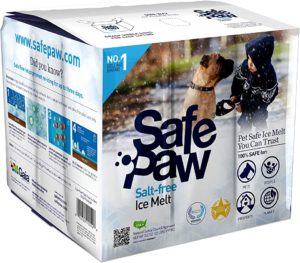
Pet Friendly Ice Melt – Safe Paw!
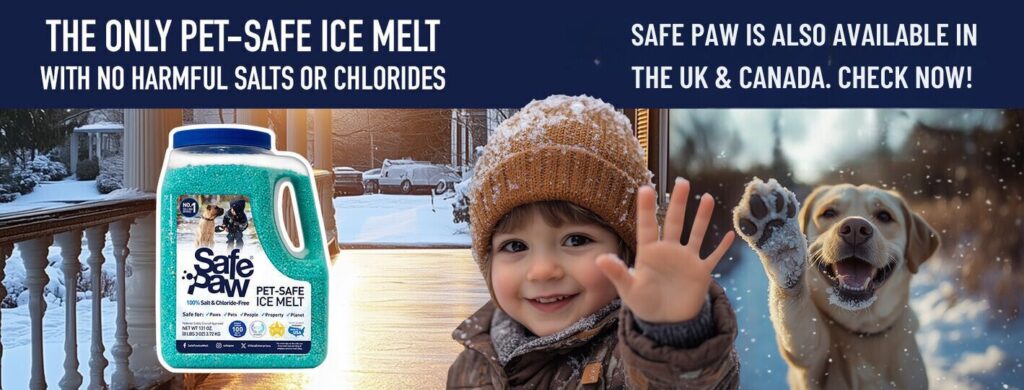
The Original and the #1 Child and Pet Safe Ice Melt for over 20 years. Guaranteed environmentally safe – will not harm waterways and sensitive wetlands.
Why Does Claire Need To Remove Ice From Concrete?
You may have seen the pock-marked driveways in front of buildings in cold regions, as well as the thick flaking of bricks or stonework. It is known as freeze-thaw damage because it occurs more frequently during the daily freeze-thaw cycles in which the winter sun rises in the morning, warms, and melts a layer of snow on the outside.
Comparison of Common Ice Melt Options
| Option | Chloride salt? | Melts ice? | Pet / handling note | Concrete note | Best use |
|---|---|---|---|---|---|
| Rock salt / sodium chloride | Yes | Yes | Avoid ingestion; wipe paws after exposure. | Can contribute to scaling, runoff and corrosion concerns. | Mature, suitable surfaces where label permits. |
| Calcium chloride | Yes | Yes | Skin, eye and ingestion precautions apply. | Not salt-free; chloride and moisture-exposure concerns remain. | Lower-temperature melting where surface permits. |
| Magnesium chloride | Yes | Yes | Exposure precautions apply. | Not chloride-free; may leave moisture-attracting residue. | Use only according to label on mature surfaces. |
| Calcium magnesium acetate | No chloride | Yes | Review formulation-specific precautions. | Avoids chloride corrosion mechanisms but is not universally safe. | Areas prioritizing chloride reduction. |
| Safe Paw | Marketed salt- and chloride-free | Yes, plus traction | Use current label for pet-exposure wording. | For suitable mature concrete; not for concrete under 12 months. | Homes seeking a chloride-free, pet-conscious option. |
| Sand / mineral grit | No | No | Low chemical exposure; avoid ingestion and indoor tracking. | Traction-only option for new or vulnerable concrete. | Immediate grip at any temperature. |
| Heated mat | No | Yes | No granular exposure. | Check surface and electrical compatibility. | Steps and small high-traffic areas. |
Best Ice Melt Recommendations for Different Situations
| Best for concrete under 12 months old: Prompt snow removal plus coarse sand or mineral traction grit. These methods improve grip without applying chemical ice melt to vulnerable new concrete. |
| Best for mature concrete in good condition: A product whose current label permits concrete use, applied at the minimum directed rate and followed by prompt slush removal. |
| Best for homes with pets: A product with clear, current pet-exposure guidance and concrete-use instructions. Wipe paws after treated walks and store the product securely. |
| Best for immediate traction at any temperature: Sand, mineral grit, Traction Magic or Walk On Ice. State clearly that traction products improve grip but do not melt ice. |
| Best for cracked, decorative or sealed concrete: Traction-only methods plus installer or sealer-manufacturer guidance. Do not assume a general concrete-safe label applies. |
The water soaks into the brick or stonework, the night-time temperature drops below freezing, and small ice crystals form. The sun rises again, warming the surface, melting the ice in the fissure, allowing more snowmelt to flow into the crack. When the sun sets, the water freezes and expands, widening the crack. It can continue until bricks come apart and structures crumble.

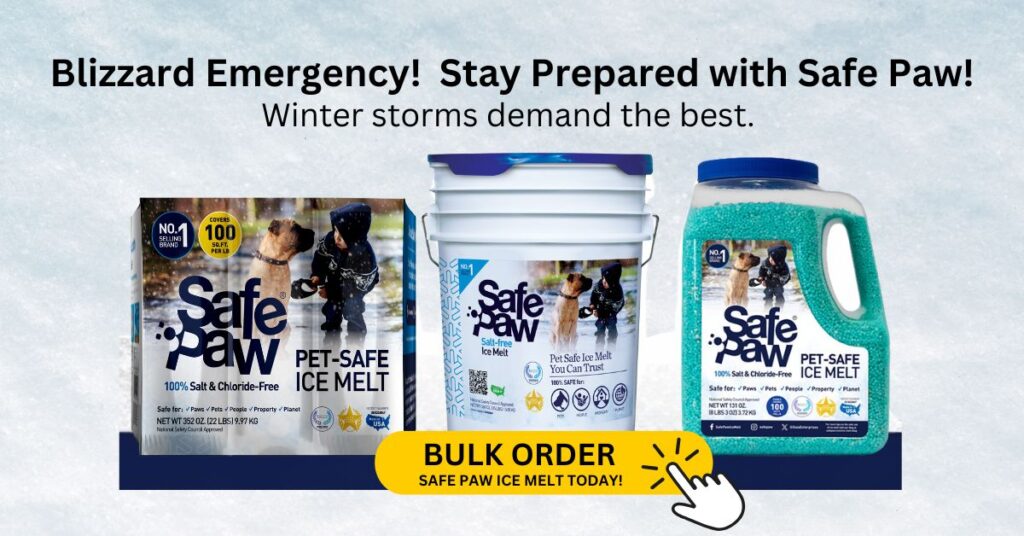
Bulk Purchase With Safe Paw
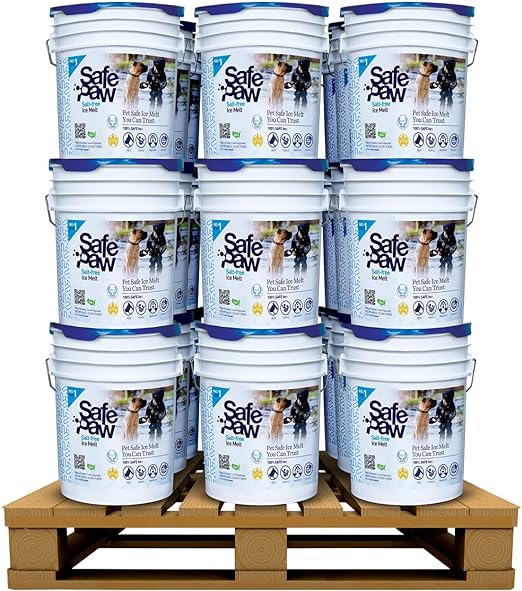
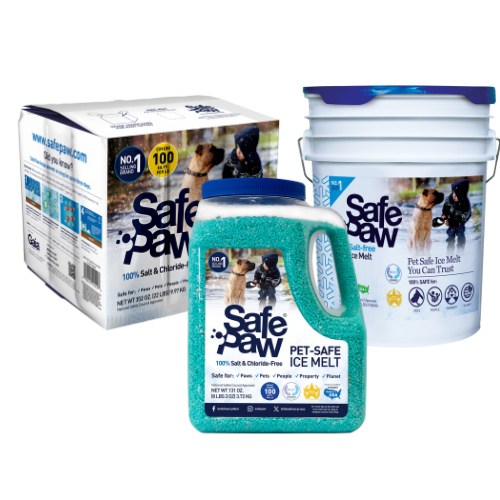
Safe Paw, Child Plant Dog Paw & Pet Safe Ice Melt -35lb, 36 Pails

Safe Paw, Child Plant Dog Paw & Pet Safe Ice Melt -22lb, 100Bboxes
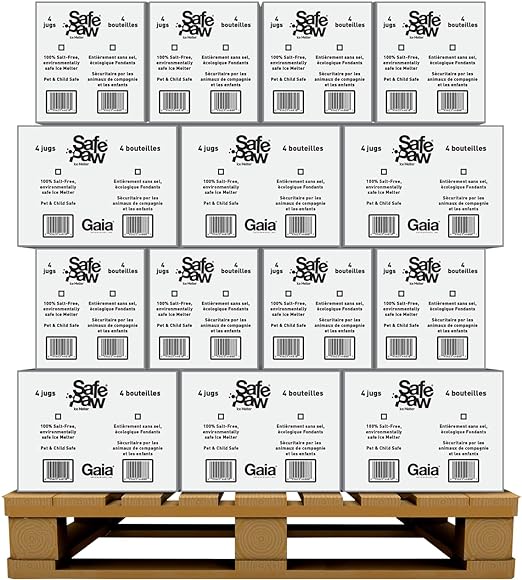
Safe Paw, Child Plant Dog Paw Pet Safe Ice Melt, 160 Jugs



The accumulated ice and snow not only damage the concrete but are a huge risk for all family members and the neighborhood. This slippery surface can cause slip and fall accidents.
Why Concrete Needs Care?
Because concrete is a porous material it absorbs moisture, particularly when new or of poor quality. After it has absorbed moisture and temperatures drop below freezing, the water inside freezes and expands. This results in chipping and flaking damage to the concrete. Often this is blamed on ice melting products but is actually a natural occurrence in the freeze and thaw process. If used correctly and the manufacturer’s instructions are followed carefully, applying an ice melt to your concrete will be very effective and not in the least harmful.
What Did Claire Find About Common Ice Melt Chemicals?
Claire’s Choice For The Best Driveway Ice Melt
After extensive research, Claire understood one thing- maintaining your driveway during the icy winter months requires the right strategy and the best products. When it comes to ice melt for driveways, it’s essential to choose a product that not only effectively melts the ice but also protects the integrity of your concrete. Choosing a concrete safe ice melt ensures that the freeze-thaw cycle doesn’t damage the structure of your driveway. The key is to apply ice melt in moderation and only when necessary. Before the snow even falls, pre-treating your driveway with a thin layer of ice melt can prevent ice from bonding to the concrete. Following these steps can make it easier to manage once the snow starts.
Ice Melt for Driveways: Maintaining Driveways
Maintaining your driveway is critical before the snow strikes the surface and during the snowfall. Claire was already aware about the importance of regular maintenance of her driveway during the winter months. What she didn’t know was there are a few steps that can help her keep the driveway in a new-like position even during harsh winters. For example, she was not aware that applying a layer of ice melt before the snowfall can help her melt the hard ice later. After applying ice melt for driveways, it’s important to clear away the slush and melted ice before it refreezes. This not only keeps the driveway safe for use but also extends its lifespan by preventing water from seeping into cracks and expanding as it freezes. The above research was an eye-opener for Claire. She also understood the importance of proper drainage. Standing water can be damaging if it freezes and expands, which means keeping your drainage areas clear from ice and debris is as important as the ice melting process itself.
Ice Melt for Sidewalks: Best Choices for Sidewalks
Choosing the right ice melt for sidewalks involves balancing efficacy and safety. Sidewalks, often being narrower and more public, require frequent maintenance to ensure pedestrian safety. A concrete safe ice melt is imperative to prevent damage from harsh chemicals that can cause the concrete to deteriorate over time. Look for products that specify they are safe for use on concrete and are environmentally friendly. Applying these products in the right quantity is crucial; too much can be as harmful as too little. Regular monitoring and application adjustments based on the current weather conditions will keep sidewalks clear and prevent ice build-up.
Safe Paw-Concrete Friendly Ice Melt
Fortunately, there is a very safe solution for melting ice on concrete surfaces with the added bonus of being environmental, family, and pet friendly. Safe Paw is a proven product endorsed as a PTPA Green Product that you can feel totally confident in using.
Why Is Safe Paw Best For Concrete Surfaces?
Being one hundred percent salt-free, it is a unique compound with a time-released action. It has a core of crystalline amide that is infused with glycols providing a non-corrosive structure. In contrast to the rock salt and other salt-based ice melting products which contain potassium chloride or sodium chloride and can only work to 24 degrees; it is effective at much lower temperatures and works to 2 degrees below zero. Salt-based products are slower to work and often the crystals will sit on the surface of snow and ice for long periods before they penetrate, presenting a hazard for pets and children if they should digest the ingredients.
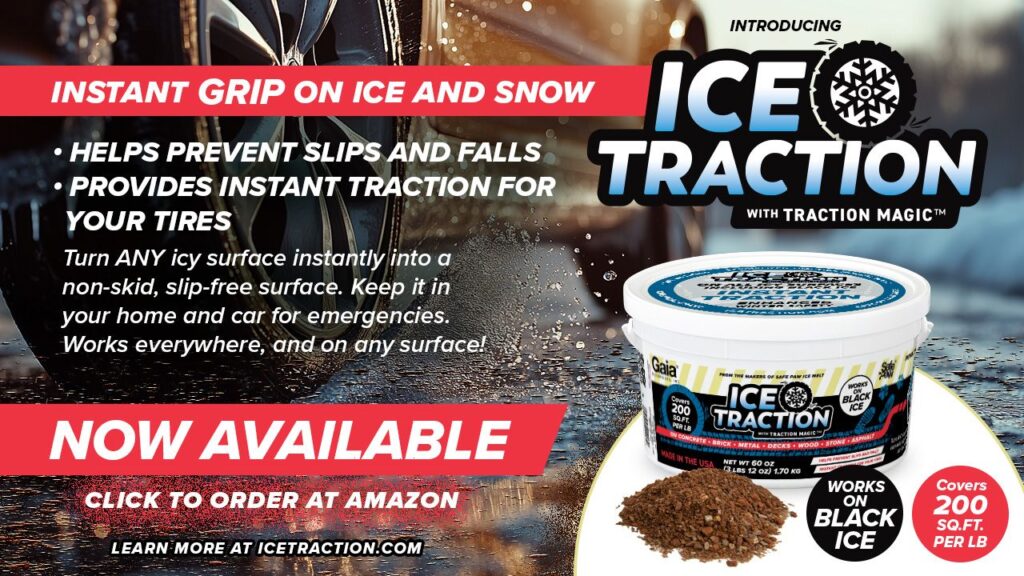
Additionally, the residue of salt that is left behind can damage concrete, pavers, lawns, wood, and decking. It can also be tracked inside to damage floor coverings and wooden floors. Safe Paw is one of a kind as it has the major benefit of containing no salt, unlike the other ice melt products in the market. Finally, if you need an instant traction product to walk on your sidewalks or to simply get your car out of the driveway then we recommend Traction Magic.
How Claire Bought A Concrete Safe Ice Melt?
After her research, Claire knew what kind of ice melt is safe for concrete. But to crosscheck her facts, she visited the Safe Paw site and read reviews and testimonials. She also talked with the company representative and, here is what she found about the product.
Product Description
Environmentally friendly — won’t affect streams or fragile wetlands. Ice melt that hasn’t been used for indefinite shelf life. Safe Paw is a proprietary compound with two effects. When the liquid component breaks the surface tension of the ice, it begins to melt rapidly. The crystal core can then swiftly penetrate and destabilize the ice, speeding up the melting process. All of this happens as a special traction agent from Safe Paw keeps you from slipping. Safe Paw draws heat to increase its effectiveness. The sun effect is used in an endothermic reaction to melt snow.
- It is non-corrosive and non-conductive, making it safe to use on hardened concrete.
- Even if swallowed, pets and children are safe.
- Use 12 times as much as you would with salt in this concentrated formula! On the surface, it lasts 72 hours!
- Environmentally friendly formula with no salt, chlorine, or acetate.
Top Product
Being a top-selling product it is readily available in all cold-weather states in hardware stores, grocery chains, pet supply stores, and veterinarian offices. This winter, you now have all the important information about ice melt products and the knowledge needed to choose a reliable and thoroughly safe solution. As you are using this easy to apply product and removing all your winter ice concerns you can feel fully confident that you are not harming your concrete, family, pets, or the environment.
Conclusion
After doing her research and talking with experts, Claire finally found out which ice melt is safe for concrete. This year she is all set to welcome winters as she has planned to keep her kids, dog, and concrete safe. We should avoid using any toxic chemical responsible for disturbing our delicate ecological balance.
FAQs

Stay safe and confident this winter with Traction Magic!
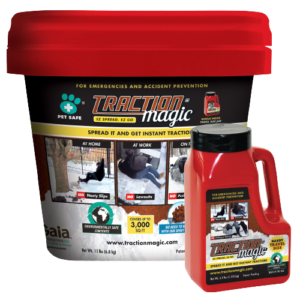
This innovative, 100% natural product offers instant traction on any icy surface. Whether you’re navigating your sidewalk, steps, or driveway, Traction Magic helps you stay upright and prevents falls.
Try Our Other Winter Safety Products
Walk On Ice
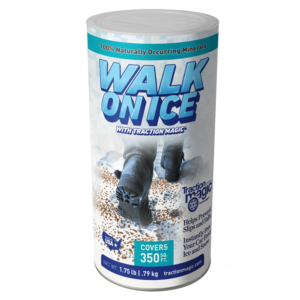
Prevent slips at home, work or on the go, The handy disposable canister can be taken everywhere, with the same 100% naturally occurring minerals that provide instant traction on ice or snow.
Traction Magic
Stay safe on slippery surfaces with a product that’s 100% natural and safe for pets, people, and your property. Use Traction Magic on sidewalks, steps, or as instant traction for your car.
Walk On Ice
Prevent slips at home, work or on the go, The handy disposable canister can be taken everywhere, with the same 100% naturally occurring minerals that provide instant traction on ice or snow.
Safe Thaw
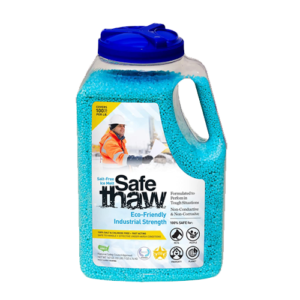
Imagine an ice melt you can put down and never worry about. It won’t harm pets, kids and your property. That’s Safe Thaw. Unlike anything else on the market, Safe Thaw can change how winter affects our planet.