



Best Ice Melt For Roofs
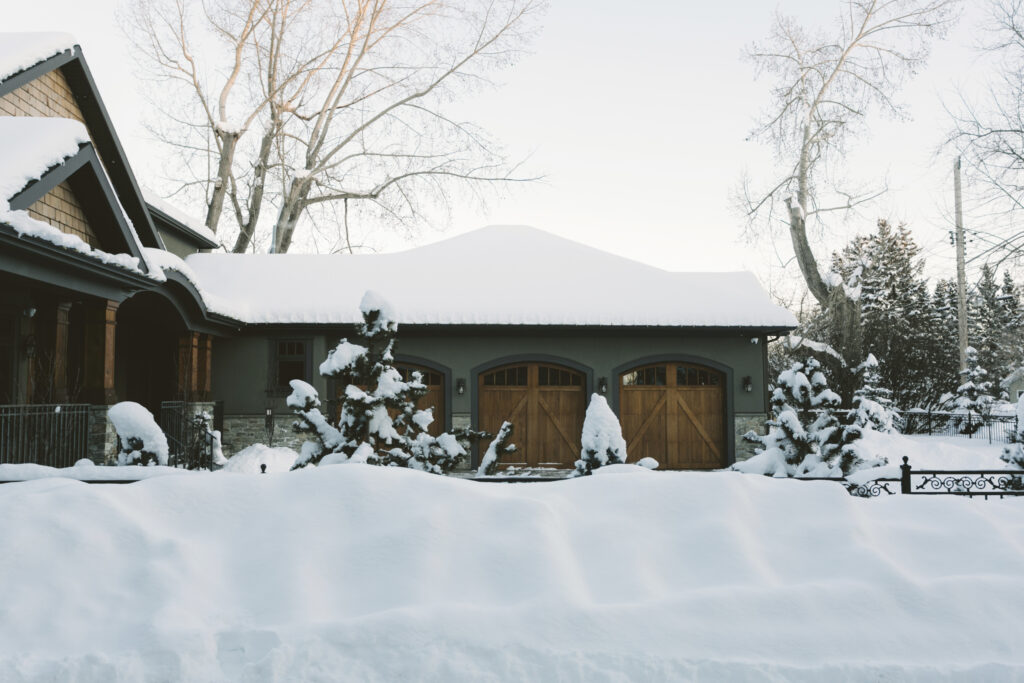
For roof de-icing, prioritize roof-material compatibility, low corrosion risk, and controlled application. Chloride-based deicers can contribute to corrosion of exposed metal components and add chloride to runoff, while a chloride-free deicer with documented non-corrosive roof compatibility can reduce chloride-related concerns. For recurring ice dams, deicing is a short-term measure; long-term control usually involves reducing heat loss into the attic through air sealing and insulation improvements.
Chloride exposure is a recognized corrosion consideration for metals, while University of Minnesota Extension identifies heat-loss control as the long-term approach to ice-dam prevention. (IMOA)
Ice melt, especially in countries that experience winter seasons where snow and ice fall from the sky throughout the day, is a very sensitive topic. Winters can get dreadful if you don’t have the right equipment to deal with all that follows. Excessive snow, or layer of ice beneath it, and even the never-ending cycle of slipping and falling, can make your winters quite wistful. People are looking for easier and simpler ways of addressing the issue without any extra damage arising.
Key Takeaways
- Roof ice can cause more than a slippery surface. Ice dams can trap meltwater near roof edges and contribute to water intrusion, while accumulated snow and ice can add load to the roof.
- Deicer chemistry matters. Chloride salts can increase corrosion risk for exposed metal roof components, gutters, flashing, and fasteners.
- Roof compatibility matters more than a generic “ice melt” label. Check the roof surface, coating, fasteners, gutters, slope, and application method.
- Steep roofs create an application limitation. Loose granules may slide away before they remain in contact with the ice.
- Ice melt treats existing ice; it does not correct the underlying cause of recurring ice dams. Air sealing and insulation are important long-term measures where attic heat loss is contributing to the problem.
The SafePaw FAQ itself notes that loose granules may not remain on slanted metal roofing before snow accumulates. (Safe Paw Ice Melter) University of Minnesota Extension identifies controlling heat loss as a long-term ice-dam strategy. (University of Minnesota Extension)
If you don’t invest in roof ice melt solutions, there is a high possibility of damaging the shingles. Many people are looking for the best ice melt products that will have no negative or any significant side effect on their environment, pets, and even damage to their properties e.g. roofs. Safe Paw has proven to be the the best roof snow melter.
How Do Ice Dams Form?
Ice dams develop when snow melts on a warmer part of the roof and the meltwater reaches a colder roof edge, where it freezes again. As repeated melting and refreezing continue, ice can build up along the eaves and interfere with normal roof drainage. Reducing heat leakage from the living space into the attic is an important part of long-term ice-dam prevention. (University of Minnesota Extension)
What Problems Can Roof Ice Cause?
Roof ice and ice dams can contribute to:
- Additional roof load: Accumulated snow and ice add weight to the roof structure.
- Water backup: Meltwater can collect behind an ice dam instead of draining normally.
- Roof leakage: Water may reach vulnerable roofing joints or edges.
- Gutter and flashing stress: Repeated freezing and added ice weight can affect exposed components.
- Falling ice: Icicles or sheets of ice may fall from roof edges.
- Repeated freeze-thaw cycles: Meltwater can refreeze around roof edges and drainage areas.
Before applying any roof deicer:
- Identify the roof material.
- Check gutters, flashing and exposed fasteners.
- Determine whether the roof slope will hold granular material.
- Remove loose snow where this can be done safely.
- Target ice-prone areas rather than covering the entire roof unnecessarily.
- Consider where meltwater will drain.
- Watch treated areas for refreezing.
Roof De-Icing Methods: Pros and Limitations
| Method | Advantages | Limitations |
| Chloride-based deicer | Can melt existing ice; several formulations work in cold conditions | Chloride exposure can contribute to metal corrosion and runoff concerns |
| Chloride-free, roof-compatible deicer | Avoids adding chloride and may be appropriate where corrosion is a concern | Performance varies by formulation; roof compatibility and slope still need consideration |
| Roof rake | Removes snow without adding deicing chemicals | Does not directly melt bonded ice; improper use can damage roofing |
| Heating cable | Can maintain drainage paths in targeted roof-edge areas | Requires appropriate installation, power and maintenance |
| Professional snow/ice removal | Useful for significant or difficult-to-access buildup | Requires scheduling and additional cost |
Chloride from deicing salts is a documented environmental concern, and chloride exposure is also relevant to metal corrosion. (US EPA)
Consider The Following When Purchasing Ice Melt For Your Roof:
- First, determine the type of material or surface that your roof is made from. Some of the ice melt used might be corrosive when applied and come into contact with certain specific materials.
- Determine the level of safety of using such ice melt chemicals on your roof. Some of them have negative effects on pets, green plants, and whose effect may sometimes be lethal.
- Read the user manual carefully before using the chlorides and apply them in the right amounts or employ a professional to do the work for you.
- Ice melt for the roofs assures you of no need or reason for you to climb to the roof to remove the ice. Ice melt can be used without climbing on the roof which is always slippery and wet whenever it snows.
Understanding Ice Dams and the Importance of Ice Dam Removal
Ice dams form when snow melts on warmer upper roof areas, flows to the colder eaves and refreezes, creating a barrier that traps further melting.
When this dam forms, water backs up behind it and can penetrate beneath shingles, damaging insulation, drywall and structure. Proper insulation and ventilation reduce the melt/refreeze cycle and minimize dam formation.
The Impact of Ice Dams on Your Roof: Protecting Shingles and Gutters
Persistent ice dams lead to:
- Shingle curling and granule loss from trapped moisture.
- Gutter and fascia damage from heavy ice loads and water pooling.
- Mold or mildew growth in attic and roof deck from leaked water.
Roofing professionals advise that ice-melt systems or safe deicing methods are part of a roof-health strategy.
Roof Ice Damage Prevention: Proactive Strategies for Winter Safety
Here’s the good part—you can prevent this! One effective method is using a roof safe ice melt. These products are designed to minimize the formation of ice dams and alleviate the load on your roof. When selecting an ice melt for roofs, choose a product like Safe Paw, known for being gentle on roof materials and safe for the surrounding environment.
Best Practices:
- Use a roof rake from ground level to remove accumulated snow.
- Ensure your attic ceiling is well insulated and ventilated so roof deck stays closer to outdoor temperature, reducing melt.
- Apply a safe roof ice-melt along eaves and gutters to prevent bonding of ice.
- Clean gutters and downspouts to allow melt water to flow freely.
- Best Practices: Use best roof ice melt products strategically by applying them along the roofline where ice tends to form. It’s not just about throwing it up there; you need to be thoughtful about placement to maximize its effectiveness without overuse.
- Regular Maintenance: Regularly remove snow from your roof before it has a chance to melt and refreeze. A roof rake can be handy here, allowing you to safely pull snow off the roof from the ground.
- Proper Insulation and Ventilation: Ensure your attic is well-insulated and ventilated. Keeping the attic space at a similar temperature to the outside air minimizes the chances of snow melting and refreezing at the roof’s edge.
By staying informed and proactive, you can tackle winter with confidence, keeping your home safe and dry. Always remember, the goal is to manage ice formation safely and efficiently, ensuring the longevity of your roof without causing unintended harm.
Finding the Best Ice Melt for Roofs: Performance vs. Property Protection
Pet Friendly Ice Melt – Safe Paw!
The Original and the #1 Child and Pet Safe Ice Melt for over 20 years. Guaranteed environmentally safe – will not harm waterways and sensitive wetlands.
What is the Best Ice Melt for Roofs? Choosing a Non-Corrosive Solution
Among roof-safe options, Safe Paw® stands out. Developed by Gaia Enterprises, it is 100% salt-free, non-chloride, non-corrosive, and specifically marketed as safe for roof surfaces, pets, plants, and runoff environments.
Always review the manufacturer’s directions for roof use, particularly if your roof has delicate materials.
Unlike rock salt, which can corrode metal fasteners and create rust streaks on roofs, Safe Paw’s formula is designed to protect both structure and the surrounding environment.
Understanding Roof Snow Melt: Chloride-Based Salts vs. Salt-Free Options
You have an icy roof covered with a layer of snow; what do you do?
The most common solution for many people is to use salts. These can be in any form or type- liquid or solid, magnesium or acetate, anything.
But you need to know what type of salt is available in the market. At the same time, not all people are interested in chloride-based salts. Some prefer natural roof ice melt solutions, such as Safe Paw, but we will walk you through the availability in the market.
Roof Ice Melt Comparison
| Option | Chloride? | Metal consideration | Roof-use consideration | Main limitation |
| Sodium chloride | Yes | Chloride-related corrosion concern | Compatibility should be checked carefully | Less effective in severe cold and adds chloride to runoff |
| Calcium chloride | Yes | Chloride-related corrosion remains relevant | Effective deicing chemistry, but material compatibility matters | Chloride exposure |
| Magnesium chloride | Yes | Chloride-related corrosion remains relevant | Compatibility varies by roof system | Chloride exposure |
| Chloride-free, non-corrosive deicer | No chloride | Avoids chloride-specific corrosion exposure | Prefer formulations specifically compatible with the roof surface | Performance and application behavior vary |
| Mechanical snow removal | No | No deicer-related corrosion | Useful for snow accumulation | Does not directly dissolve bonded ice |
EPA and USGS identify deicing salts as significant sources of chloride in the environment, while IMOA documents chloride-related corrosion considerations for metals. (US EPA)
Which Roof De-Icing Method Is Best for Different Situations?
| Situation | Best-fit approach |
| Metal roof with exposed fasteners or gutters | A chloride-free, non-corrosive deicer specifically compatible with the roof material |
| Steep sloped roof | Mechanical snow management or another method that does not depend on loose granules remaining in place |
| Localized ice dam at eaves | Targeted treatment rather than covering the entire roof |
| Recurring ice dams every winter | Investigate attic air leakage and insulation |
| Significant roof snow or difficult access | Consider professional snow/ice removal |
| Reader evaluating SafePaw | Present it as a chloride-free option for compatible roof applications, together with slope/application limitations |
Does Roof Material Affect Deicer Choice?
Yes. A deicer that is appropriate for one exterior surface should not automatically be assumed suitable for every roof. Consider the roofing material, surface coating, flashing, fasteners, gutters and drainage system before application. Metal roofs require particular attention to corrosion, while steep roofs also create a practical problem because granular products may not remain where they are placed.
Here’s a rundown of common deicer types and how they compare for roof use:
| Composition | Characteristics | Roof suitability |
| Sodium Chloride (rock salt) | Very low cost, melts above ~20 °F (–6 °C) | Poor – corrodes metal, harms shingles and landscaping. |
| Magnesium Chloride (MgCl₂) | Works to lower temps, less corrosive than NaCl | Better but still chloride-based and may cause issues. |
| Calcium Chloride (CaCl₂) | Works in colder temps (~–25 °F) | High performance, still chloride-based and can damage materials. |
| Potassium Chloride (KCl) / Urea | Lower performance in cold temps, more eco-friendly | Moderate suitability for mild climates. |
| Salt-free blends / acetate-based / Safe Paw-type | Designed for safety, performance and materials | Best choice for roofs, pets and plants. |
A study published in Procedia Environmental Sciences found that common road salts and deicers can seep into the ground, changing soil composition and contaminating nearby water systems.
When Ice Melt May Not Be the Best Roof-Ice Method
Ice melt is not the only way to manage winter roof buildup. Loose granular products may be impractical on steep roofs, heavy snow may be better addressed with controlled snow removal, and recurring ice dams often require improvements to attic air sealing or insulation rather than repeated deicer application.
OSHA recommends considering snow-removal methods that avoid placing people on icy roofs whenever possible, and roof rakes can sometimes be used from ground level. (OSHA)
Short-Term vs Long-Term Ice-Dam Control”
| Need | Appropriate focus |
| Existing localized ice | Controlled deicing or drainage-channel creation |
| Loose roof snow | Appropriate mechanical snow removal |
| Repeated ice dams | Attic air sealing and insulation review |
| Steep metal roof | Application method and product retention become major considerations |
| Significant or difficult-to-access buildup | Professional snow/ice removal may be more appropriate |
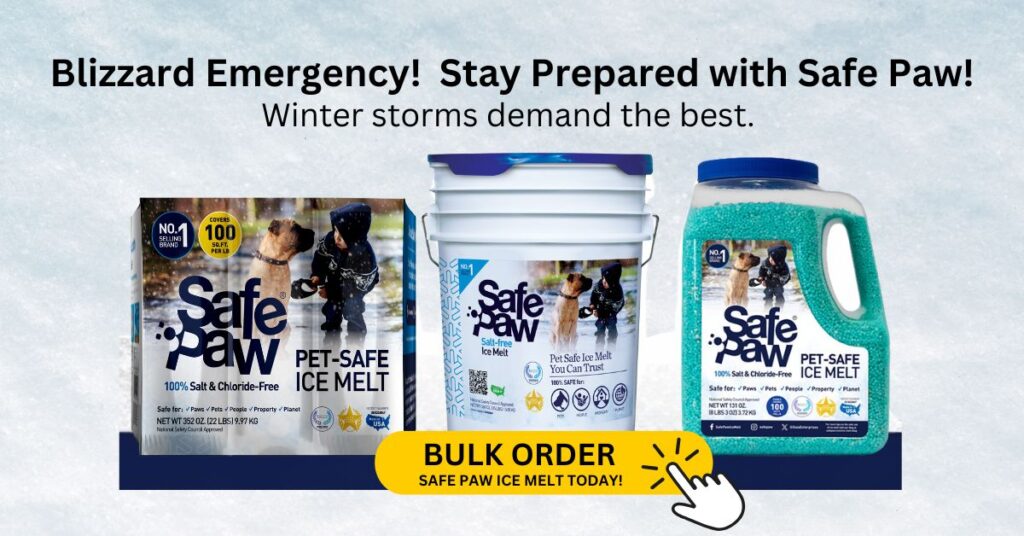
Pet Safe Ice Melt – Safe Paw
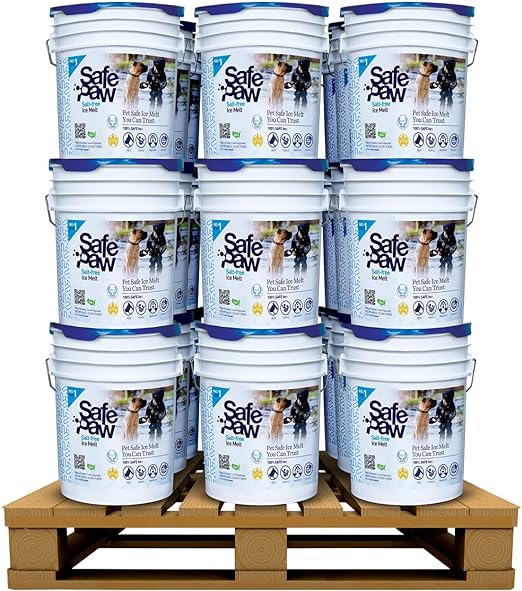
Safe Paw, Child Plant Dog Paw & Pet Safe Ice Melt -35lb, 36 Pails

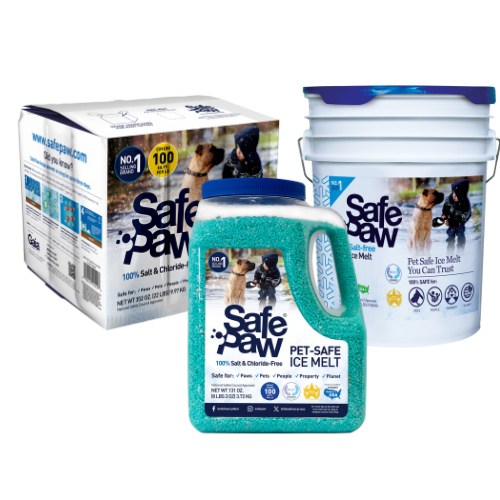
Safe Paw, Child Plant Dog Paw & Pet Safe Ice Melt -22lb, 100Bboxes
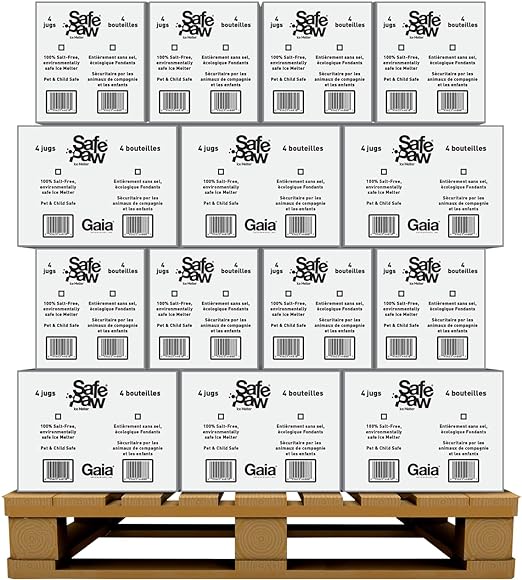
Safe Paw, Child Plant Dog Paw Pet Safe Ice Melt, 160 Jugs

Pet Products Powered By EzPz.pet

The Widely Used Compositions Are:
Important Roof De-Icing Limitations
Roof deicing has practical and safety limitations. Avoid unnecessary access to snow- or ice-covered roofs. Loose granular deicers may slide from steep roof surfaces, and excessive scraping or chipping can damage roofing materials. Deicing can address existing ice, but recurring ice dams usually require attention to attic heat loss. Also consider where melted water will drain and whether it could refreeze below the treated area.
OSHA identifies rooftop snow and ice removal as a fall hazard and recommends methods that avoid workers going onto roofs where possible. University of Minnesota Extension also cautions that aggressive roof-rake or scraping techniques can damage roofing materials. (OSHA)
Step-by-Step Instructions for Safe Roof De-icing and Application
Apply thoughtfully — choose safe product, position correctly, avoid runoff damage.
Steps:
- Identify the roof edge/eaves and gutters where ice binds.
- Using a mesh bag or scooper, apply the safe product along eaves according to instructions.
- Avoid spilling product on landscaping; rinse any runoff area after melting.
- Monitor for residual slush that may refreeze; remove promptly.
- After winter, flush gutters and downspouts to remove chemical residue.
Roofing experts at Sheffield Metals explain that when snow melts and refreezes at the roof’s edge, it creates “ice dams” that can loosen shingles and cause interior water leaks.
3 Essential Factors to Consider Before Buying a Roof Snow Melt Product
- Protect pets and plants: Roof melt runoff may land on vegetation or pet play areas — choose formulas safe for all.
- Effectiveness vs roof material: A powerful salt may melt quickly but damage roofing materials.
- Application ease and safety: Some products require climbing on roof; safer to apply from ground if possible.
Why Safe Paw is the Safest Roof De-icer for Your Property and Family
Safe Paw protects your roof, pets and environment all at once.
- Non-chloride, “salt-free” formula reduces corrosion risk and extends roof life.
- Safe for pets and landscaping — no paw-burning residues or toxic runoff.
- Suitable for roofs, gutters, and surrounding surfaces (stone, metal, asphalt, brick).
- Helps with traction near downspouts and eaves, minimizing slip hazards from meltwater.
Selecting Safe Paw means you’re choosing a product aligned with structural safety, animal safety and eco-responsibility.
The University of Minnesota Extension warns that deicing salts damage roots, dry out soil, and kill sensitive plants near walkways, driveways, and roofs.
Gaia Enterprises Inc. delivers 100% pet-safe and environmentally friendly winter products. Safe Paw, our flagship product, is the #1 selling pet-safe ice melt that does not harm pets, safe if ingested, and safe on all types of concrete.
Expert Tips on Choosing the Right Ice Melt for Roofs and Ice Dams
- Verify that the product is labelled safe for roofing materials and lists temperature performance.
- Prefer chloride-free, non-corrosive formulas if you have metal flashing, gutters or fasteners.
- Ensure the formula is safe for pets & plants, especially if runoff will reach yard or garden.
- Consider your climate: very cold regions may need blends that function at lower temps, but still safe for roof.
- Combine with snow removal and proper attic insulation for best results.
The best tip on how to use ice melt products on your roof is to ensure that there are no formations of ice dams and Safe Paw provides this assurance by attracting sunlight during the day which provides more heating power thus a high ice melting rate.
Using a proper ice melt safe for roof shingles will go a long way in protecting your masonry and gutters. Safe Paw proprietary traction agent offers slip protection, lasts more than 72 hours on the surface, and is salt-free, chlorine-free, and acetate-free formula. It proves safe for your foliage, concrete, bricks, asphalt, metal, and the environment in all. Despite multiple products available in the market, Safe Paw has emerged to become the preferred choice for many buyers because of its effects.
We want to help you protect your home and your environment, one step at a time.
Buy Safe Paw ice melt for your roof today.
Planning Ahead: Managing Roof Snow Removal During Winter Storms
Before you even think about ice melt, the first step in winter roof safety is awareness. A timely Atlanta snow forecast can give you days of notice before snow or ice arrives. While we don’t experience blizzards in Atlanta, even small accumulations can cause ice dams and slick roofs if ignored. Staying ahead means you can use the best snow shovels to remove accumulated snow safely—without climbing onto an icy rooftop.
Opt for snow shovels specifically designed for roof use: lightweight, plastic-bladed, and equipped with extendable telescoping poles. These tools work wonders for clearing snow before it compacts and freezes into hardened ice. Once cleared, applying Safe Paw Ice Melt prevents new ice from bonding—saving your roof and gutters from freeze-thaw damage.
Why Choose a Pet Safe Ice Melt Roof Solution? Safe Paw vs. Calcium Chloride
Homeowners with pets know the struggle of finding a product that’s tough on ice but gentle on furry friends. That’s why selecting pet safe salt—or better yet, a fully salt-free formula like Safe Paw Ice Melt—is so important. Traditional rock salt and chloride blends can be toxic if pets lick their paws or drink runoff puddles. Even melting ice on your roof can drip onto landscaping, exposing pets when they roam the yard.
Using a pet-safe salt alternative like Safe Paw ensures your roof-treatment routine doesn’t compromise safety for your animals, and also maintains your home’s integrity, landscaping and environment.
Safe Paw Ice Melt stands apart as a non-corrosive, plant- and pet-friendly option. It won’t harm roof shingles, gutters, or surrounding greenery—and delivers traction and melting action that lasts up to 72 hours in freezing temps. Instead of risking pet safety with harmful compounds, many homeowners now choose Safe Paw as the pet safe salt alternative that works reliably on roofs, driveways, and walkways.
Conclusion: Safeguarding Your Home with an Effective Roof Ice Melter
Winter roof safety isn’t just about acting fast—it’s about acting smart. By monitoring the Atlanta snow forecast, using the best snow shovels to clear snow early, and choosing truly pet safe salt alternatives like Safe Paw Ice Melt, you protect your home, loved ones, and environment at once. Safe Paw Ice Melt provides long-lasting ice protection—without the risks of corrosive salts or harming pets. Prepare confidently this season, knowing you’ve chosen the safest, smartest path for winter deicing.
Safe Paw doesn’t just melt ice—it prevents re-freezing and reduces the need for frequent reapplication. It won’t etch surfaces, won’t burn paws, and won’t leach harmful chemicals into your garden or water systems. Whether your roof is metal, shingle, or composite, Safe Paw keeps it intact and safe. For families, pet parents, and eco-conscious homeowners, it’s the all-in-one solution that respects safety, sustainability, and structural durability. Winter doesn’t have to be destructive—when you plan ahead, it can be worry-free.
FAQ: Frequently Asked Questions About Roof Ice Melt and De-icing
Other Ice Melt Products
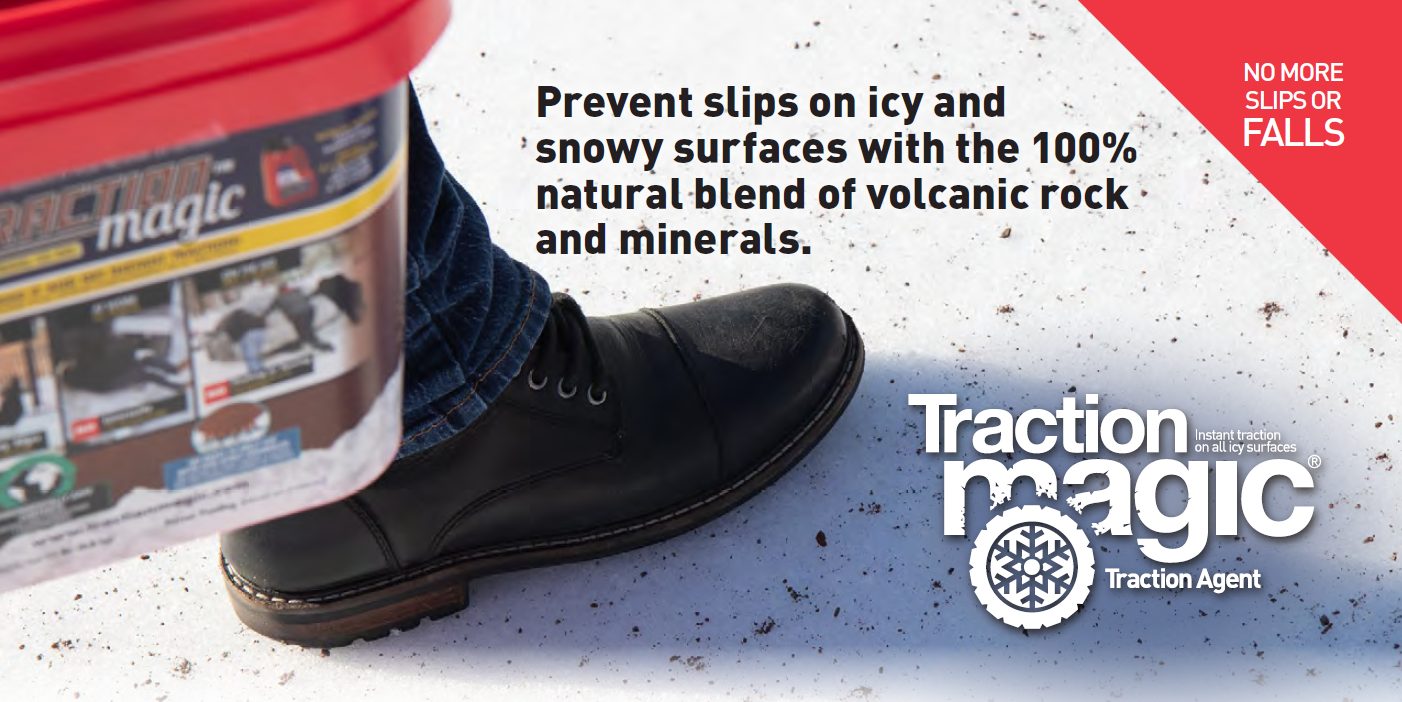
Traction Magic
Stay safe on slippery surfaces with a product that’s 100% natural and safe for pets, people, and your property. Use Traction Magic on sidewalks, steps, or as instant traction for your car.
Safe Thaw
Imagine an ice melt you can put down and never worry about. It won’t harm pets, kids and your property. That’s Safe Thaw. Unlike anything else on the market, Safe Thaw can change how winter affects our planet.
Ice Traction (with Traction Magic™)
Ice Traction (with Traction Magic™) is your go-to winter solution for driveways, walkways, parking lots — and even black ice on the road. Unlike salt or ice melts, it delivers instant grip on snow and slippery surfaces with no wait time. Just spread and go.

Safe Thaw
Imagine an ice melt you can put down and never worry about. It won’t harm pets, kids and your property. That’s Safe Thaw. Unlike anything else on the market, Safe Thaw can change how winter affects our planet.

Author: Steven J Greenwald
Nature-friendly innovations are Steve’s passion and his products are deeply rooted in this philosophy. “Safe for people, pets, property, and the planet” isn’t just a tagline; it’s the very essence of Steve’s vision.
Driven by a profound respect for our environment, for the last 50 years, Steve is leading the charge towards a future where sustainability isn’t an option but a standard.