


Non-Toxic Ice Melt Products

What Is a Non-Toxic Ice Melt? Quick Answer
A non-toxic ice melt is a deicing product whose complete formulation has a low toxicity profile when used as directed. The term should not be interpreted as meaning that unlimited ingestion or contact is harmless. When choosing an ice melt for areas used by pets or children, review the actual ingredients, toxicology information, application instructions, surface compatibility, and whether the formulation contains chloride salts.
For Safe Paw specifically, a toxicology report hosted on its site estimates an oral rat LD50 above 5,000 mg/kg and describes the formulation as “practically non-toxic” under the cited toxicity scale. The same report also notes that some ingredients may cause skin or eye irritation with repeated or direct exposure. (Safe Paw Ice Melter)
Finding the best ice melt is not as easy as it sounds. Not every product labeled “safe” is non-toxic. So, what is a non-toxic ice melter? Non-salt deicer is free from harmful chemicals making it safe for the environment, pets, and humans. Some ice melt products cause damage to concrete surfaces, cars, and pets, including scaling and flaking, color corrosion, vomit, and diarrhea brought about by these products.
Key Takeaways About Non-Toxic Ice Melt
- “Non-toxic” should be supported by product-specific toxicology data, not just front-label wording.
- A chloride-free formulation avoids sodium chloride, calcium chloride, magnesium chloride, and other chloride salts.
- ASPCA notes that sodium chloride can irritate paws and cause dangerous sodium elevations after substantial ingestion, while calcium, magnesium, and potassium chloride can cause significant gastrointestinal irritation.
- A “pet safe” label does not mean all products have the same formulation or exposure profile.
- Sand and grit provide traction but do not chemically melt ice.
- Mechanical snow removal can reduce the amount of deicer required.
- CMA and urea are different from chloride deicers, but neither should automatically be described as environmentally impact-free.
- New concrete needs separate consideration; the current Safe Paw FAQ advises against using ice melt on concrete less than 12 months old. (ASPCA)
We suggest categorizing non-toxic ice melting products into three categories; natural occurring, mechanical and non-toxic de-icers.
What Are the Main Alternatives for Winter Ice Control?
Chemical deicers
These lower water’s freezing point and help weaken the bond between ice and pavement. Examples include chloride-based deicers, CMA, acetate formulations, urea-based formulations, and proprietary chloride-free products.
Traction materials
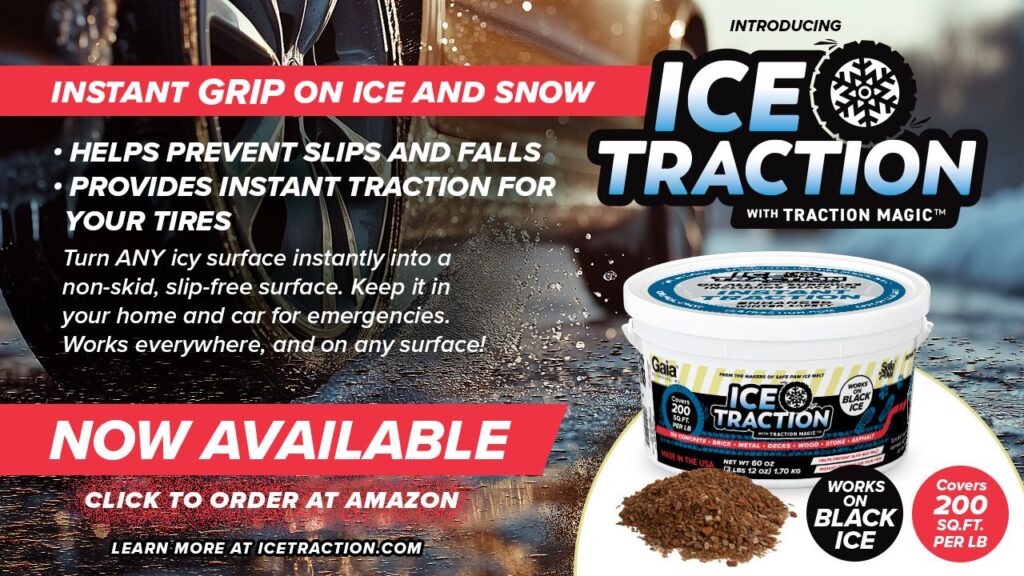
Sand, grit, Ice Traction, and Walk On Ice primarily improve grip. They should not be described as ice melts unless the specific formulation genuinely has a deicing component. FHWA explicitly states that abrasives increase friction but are not ice-control chemicals. (Federal Highway Administration)
Mechanical methods
Shoveling, scraping, plowing, snow blowers, and heated systems remove or prevent accumulated snow/ice without necessarily relying on a chemical deicer.
This classification is far cleaner for AI than the current “natural occurring safe ice melt” section.
Three Types Of Ice Melting Products
1. Natural Occurring Safe Ice Melt
Sand
As plain as it sounds, this is a traction material; does not chemically melt ice. Sand is most convenient because you can use it in large and small areas. It is cheap and easily available. But make sure to clean it after each application.
Ashes
As crude as it may sound, ashes serve as good de-icers. It provides traction. But you need to burn enough wood to make this natural ice melt
Sugar Beet Juice
Beet-derived products are commonly used as additives to salt or brine formulations to improve adherence and potentially reduce the amount of conventional salt required. Whether an individual beet-based product is chloride-free depends on its formulation. It will leave your walkways and driveways with a purple hue. After every application, you need to clean and wash the surface to avoid staining.
EPA specifically describes beet derivatives being mixed with brines or used to treat salt. (EPA NERL)
Urea
retain as a non-chloride chemical deicer, but remove “safe for the environment.” EPA documents urea and ammonia contamination in surface water and groundwater around some pavement-deicing applications. (EPA NERL)
2. Mechanical Ice Melter
Snow-Melt Mats
These mats work by continuously clearing ice and snow from the surface. They come with a good grip that offers prevention to slip and fall accidents.
Heated Mats
They are used the same way as snow-melt mats. They have an electro-plastic material that makes them strong enough to withstand harsh weather and last long. They are for outdoor use.
Battery/Electric Snow Blowers
As the name suggests, these machines are used to blow ice and snow and consequently melt it away. They are good to use in large areas.
3. Non-Toxic Family Safe Deicers
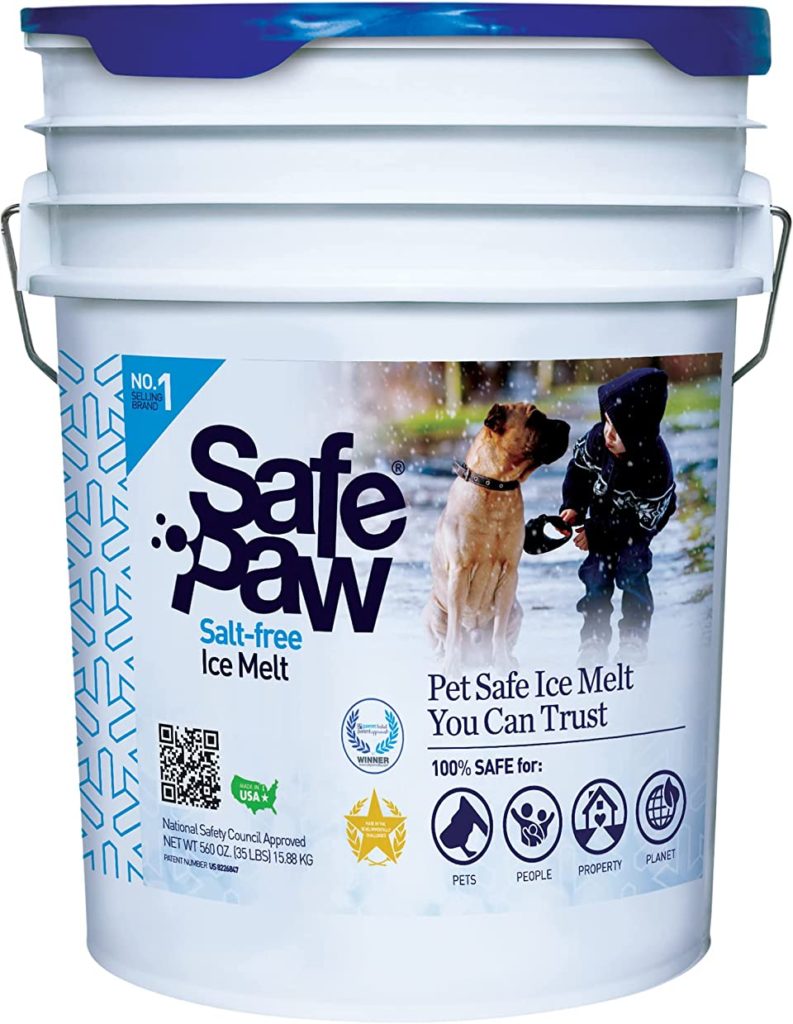
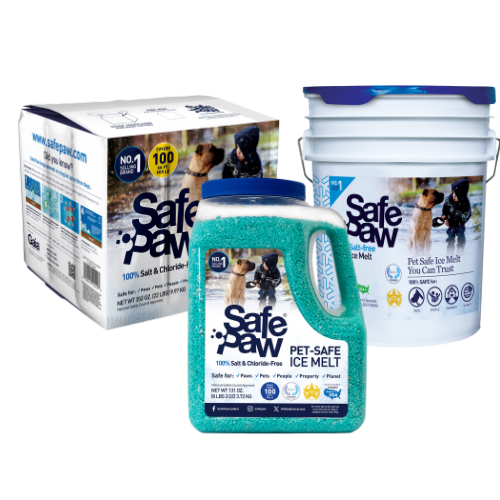
Safe Paw ice melt is a non-toxic environmentally safe ice melter product to use around your family, pets, and home. This sub-zero-effective ice melt is safe for concrete, decking, and lawns. It is the best snow melt product for homeowners and pet owners.
Safe Paw
The Original and the #1 Child and Pet Safe Ice Melt for over 20 years. Guaranteed environmentally safe – will not harm waterways and sensitive wetlands.
Non-Toxic Ice Melt Options: Deicers, Traction and Mechanical Methods Compared
| Winter Method | Primary Function | Advantage | Limitation |
| Chloride-free formulated deicer | Melts/prevents bonded ice | Avoids chloride salts | Performance and toxicology depend on complete formulation |
| Calcium magnesium acetate | Deicing / anti-icing | Non-chloride alternative | Cost and performance differ from conventional salt |
| Urea-based formulation | Deicing | Avoids chloride | Can contribute nitrogen/ammonia to runoff |
| Sand or grit | Traction | Immediate friction improvement | Does not melt ice; requires cleanup |
| Ice Traction / Walk On Ice | Traction | Intended to improve grip | Should not be confused with chemical deicing |
| Mechanical removal | Removes snow/ice | Reduces chemical use | Requires labor or equipment |
| Heated surfaces/mats | Prevents or melts accumulation | No granular deicer required | Energy, installation, and operating considerations |
FHWA distinguishes abrasives from chemical deicers, while EPA documents environmental trade-offs among salt, CMA, beet-derived treatments, and other alternatives. (FHWA Operations)
Common Ice Melt Ingredients: Pet, Surface and Environmental Considerations
| Ingredient / Category | Pet Exposure Consideration | Surface / Environmental Consideration |
| Sodium chloride | Paw irritation; large ingestion can raise sodium levels | Chloride runoff and corrosion concerns |
| Calcium chloride | GI and oral irritation possible | Chloride-based; concrete/material interactions depend on conditions |
| Magnesium chloride | GI irritation possible | Chloride-based and contributes chloride runoff |
| Potassium chloride | GI irritation and electrolyte changes possible | Chloride-based |
| Calcium magnesium acetate | Different toxicological profile from chloride salts | Non-chloride alternative; do not classify automatically as “very harmful” |
| Urea-based deicer | Product-specific exposure profile | Avoids chloride but may contribute nitrogen/ammonia |
| Proprietary chloride-free formulation | Depends on actual toxicology data | Evaluate complete formulation and product-specific testing |
ASPCA differentiates sodium chloride from calcium, magnesium, and potassium chloride exposure, while FHWA discusses CMA as a non-chloride deicer rather than simply grouping it with calcium chloride. (ASPCA)
Here Are A Few Guidelines To Help You Buy The Safest Ice Melt.
Be sure to read the application instructions as some of these require application prior to snowfall and others can be applied on top of snow and ice.
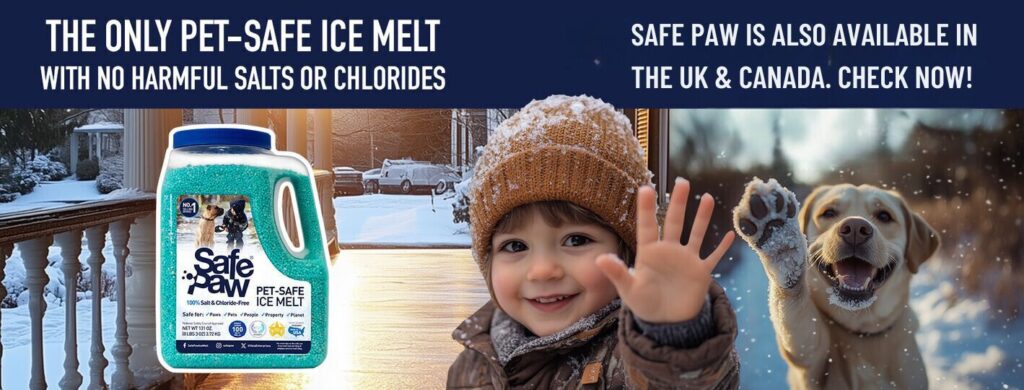
Make sure you read the label. The products you buy must be branded salt and chloride free and much better if it is labeled “pet safe” or “kids’ safe”. Also, find out more about the ingredients used. Get on to Google search and find out the safety of common ingredients or chemicals used.
Do not be lured to buy cheap products. “Cheap is always expensive.” Ingredients used to make safe ice melt agents cost more, so they will be more expensive.
Rock salt is widely used for winter deicing, but excessive or repeated application can contribute to paw exposure, freshwater chloride loading, vegetation stress and infrastructure corrosion. It’s critical to consider the environment and the surrounding area. It includes your premises as well. Is it reasonable to save money on a product only to have to spend time later repairing or replacing a driveway, sidewalk, steps, or walkways?
EPA documents environmental and infrastructure impacts from road salt, while ASPCA documents pet exposure concerns. (US EPA)
Pet Safe Ice Melt – Safe Paw
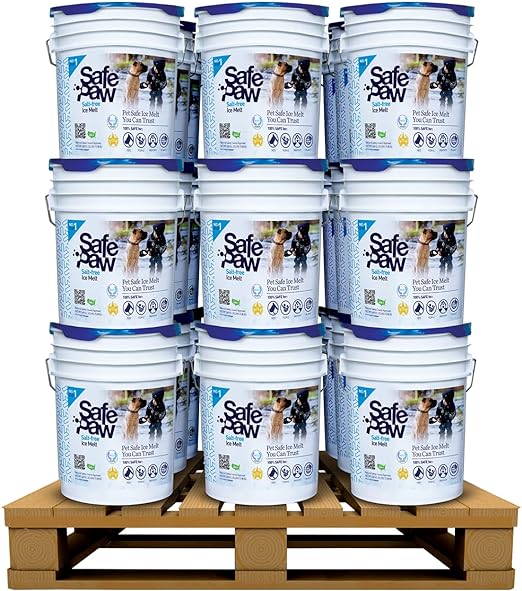
Safe Paw, Child Plant Dog Paw & Pet Safe Ice Melt -35lb, 36 Pails

Safe Paw, Child Plant Dog Paw & Pet Safe Ice Melt -22lb, 100Bboxes
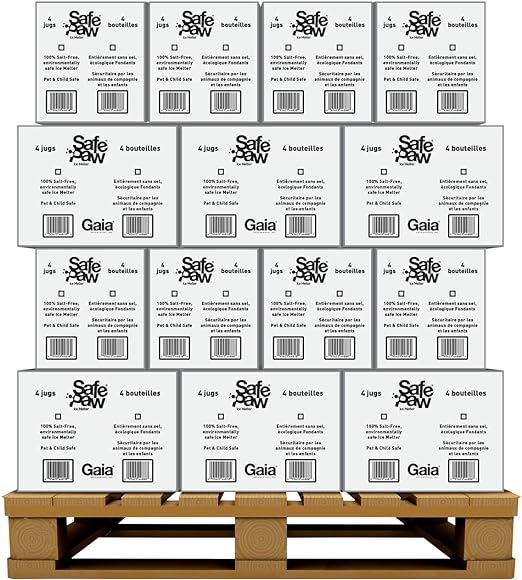
Safe Paw, Child Plant Dog Paw Pet Safe Ice Melt, 160 Jugs

Pet Products Powered By EzPz.pet


Safe Use of Rock Salt
Using rock salt to melt ice may be effective, but it needs mindful application to minimize damage and maximize efficiency.
- Pre-Treat Before Snowfall
One effective tip for safe use of rock salt is pre-treating surfaces before snowfall. Applying a light layer of salt before the snow sticks makes it easier to manage ice buildup and reduces the total amount of salt required. - Moderate Application
Rock salt is highly corrosive and can damage concrete, rust metal, and harm plants when over-applied. Use just enough salt to cover the surface without saturating it. You can add a bit more after the snow to keep ice from re-forming. - Use Brine Solutions
Mixing rock salt with water to create a brine solution is another way to enhance its effectiveness. Brine prevents ice from forming in the first place, which cuts down on salt usage and minimizes environmental impact. Just be cautious when applying brine around vegetation, as salt runoff can affect soil health.
Gaia Enterprises Inc. delivers 100% pet-safe and environmentally friendly winter products. Safe Paw, our flagship product, is the #1 selling pet-safe ice melt that does not harm pets, safe if ingested, and safe on all types of concrete.
Winter Preparation and Snow Removal Techniques
Winter preparation is about more than just salting your driveway. Using a combination of methods keeps surfaces safer and helps protect the environment.
- Ice Melt Alternatives
When looking for alternatives, consider non-corrosive, environmentally safe ice melt options. Some products use urea or similar chemicals that are less harmful to pets and won’t damage concrete or soil. Safe Paw, for instance, is a salt-free product that melts ice effectively without the corrosive effects of rock salt. - Layer with Sand or Kitty Litter
For added traction, spread sand or kitty litter over salted areas. These won’t melt ice, but they can prevent slipping while reducing the need for additional rock salt. Layering these materials with your salt or ice melt of choice can enhance safety, especially on slopes or stairs. - Regular Shoveling
Shoveling regularly before ice can form keeps paths clearer and reduces the need for chemicals. If you wait until the snow becomes compacted, you’ll likely need more salt to break through the icy layer. Shovel early and often to reduce dependency on de-icing chemicals.
Salt Alternatives and Environmental Impact
While rock salt can be efficient, its environmental impact is significant. Rock salt runoff can disrupt soil pH, harm vegetation, and even affect water sources. Some eco-friendly alternatives include:
- Calcium Magnesium Acetate (CMA): Less corrosive and biodegradable, though more expensive.
- Beet Juice and Sand Mixes: Beet juice lowers the freezing point of ice but is non-corrosive and gentler on the environment.
- Pet-Safe Products: Formulated without chloride, pet-safe options provide peace of mind for households with pets.
Is Ice Melt Toxic?
The word ‘non-toxic’ clearly indicates that the de-icer should be free from any kind of toxins/contaminants. Ensure you get an ice melt that does not contain any of the harmful chemicals listed below. All the below-mentioned chemicals are not only toxic but are corrosive as well.
- Sodium Chloride
This is what forms rock salt. When ingested (mostly by pets), it irritates their gastrointestinal system. It is also detrimental to their paws when salt gets logged into their paws.
- Potassium Chloride
Similar to sodium chloride, when ingested, it causes gastrointestinal irritation and diarrhea.
- Magnesium Chloride
Once ingested, irritation and gastrointestinal distress occur. So, magnesium chloride ice melt is equally hazardous.
The Use Of These Chemicals Can Be Dangerous
- They are poisonous
Sodium chloride can poison pets and children. Sodium chloride is similar to table salt in appearance. Sodium chloride toxicity is primarily related to excessive sodium exposure rather than simply the presence of mining impurities. Large ingestion can produce dangerously elevated sodium levels. (ASPCA). Rock salt can cause irritation, rashes, and burns in your pets’ eyes, skin, and paws. Every year, the Poison Control Center receives several calls from children who have swallowed ice-melting crystals.
- Damages the concrete
Salt or chloride-based ice melt can cause severe damage to concrete and asphalt roads that are otherwise quite durable and sturdy. Newly constructed driveways are particularly vulnerable to this type of harm.
- Weakens the rooftop
A brine solution is formed when salt and water infiltrate into the fissures of the concrete. The freeze-thaw cycles of the absorbed water harm the surface as the temperature rises and falls, resulting in cracks.
How Does Non-Toxic Natural Ice Melt Work?
This combination combines two ice-fighting chemicals, each with its function. When the innovative outer core comes into touch with ice, it instantly liquefies. It starts to melt, breaking up the slick ice surface. It enables the crystalline amide core to penetrate deep into the ice, thus completing the melting process and providing you with long-term protection.
Glycol, which defrosts the ice and prevents additional freezing, is included in this salt-free ice melt proprietary composition. It not only melts the ice but also protects the surface from ice accumulation in the future. It is safe and will not harm the environment, unlike rock salt. If you are looking for an ice melt safe for concrete and pets, you can use it with complete peace of mind.
Non-Toxic And Chemical-Free
It is a chloride-free ice melt. Most ice melting salts contain chloride in some form or another. These harmful compounds cause discomfort and itching in our four-legged pals’ paws. They may also erode driveways and paths. Thankfully, we offer natural ice melt that is safe, non-toxic, and chemical-free to keep your winters clean and safe.
Capable Of Long-lasting Protection
Your ideal ice melter should also be capable of acting as a pre-treatment. Few ice melts can prevent ice from sticking to surfaces for up to three days after usage. This natural ice melt’s proprietary composition works for three days to keep ice from clinging to the surface. As a result, shoveling becomes a simple task.
It will also keep melted ice in a liquid state for a longer time, preserving and extending the life of your concrete. It means that when the ice melts, it will not refreeze frequently, thus effectively ending the freeze-thaw cycle.
Environmental effects should be evaluated using the full formulation, application amount and available product-specific testing.
Some of the most popular ice melt you have heard about are dangerous to use. Chloride, which is hazardous to pets, is found in the majority of them. It can cause skin irritation and a burning sensation in the eyes and nose. If eaten, it can lead to nausea and other health issues. Chlorine-free, natural ice melt solution will not burn your pet’s paws or poison if ingested. It does not include any salt. It does not damage plants nor pollute water bodies.
Which Winter Method Fits Different Needs?
- For pet-used entrances and walkways: prioritize product-specific toxicology information, paw-contact precautions, and label directions.
- For reducing chloride exposure: evaluate a verified chloride-free ice melt.
- For new concrete: prioritize mechanical snow removal and traction until the concrete has adequately cured.
- For immediate grip rather than melting: consider Ice Traction or Walk On Ice.
- For reducing total deicer use: shovel or plow before applying a deicer.
- For environmentally sensitive runoff areas: evaluate the complete formulation and use the minimum amount necessary rather than assuming any product is environmentally impact-free.
Conclusion
In conclusion, always put safety first. A good non-toxic ice melt should melt snow and ice and keep the environment and animals safe. Buy Safe Paw and you will not regret it. It is our choice because it delivers. Clear your sidewalks, driveways, storefronts, and anywhere else with the best.
Frequently Asked Questions About Non-Toxic Ice Melt
Other Ice Melt Products
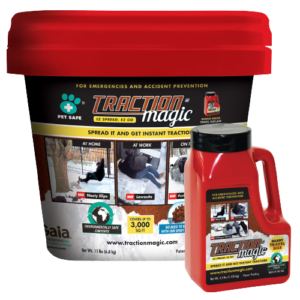
Traction Magic
Stay safe on slippery surfaces with a product that’s 100% natural and safe for pets, people, and your property. Use Traction Magic on sidewalks, steps, or as instant traction for your car.
Safe Thaw
Imagine an ice melt you can put down and never worry about. It won’t harm pets, kids and your property. That’s Safe Thaw. Unlike anything else on the market, Safe Thaw can change how winter affects our planet.
