



Ice Melt Shelf Life- Do Deicers Expire?
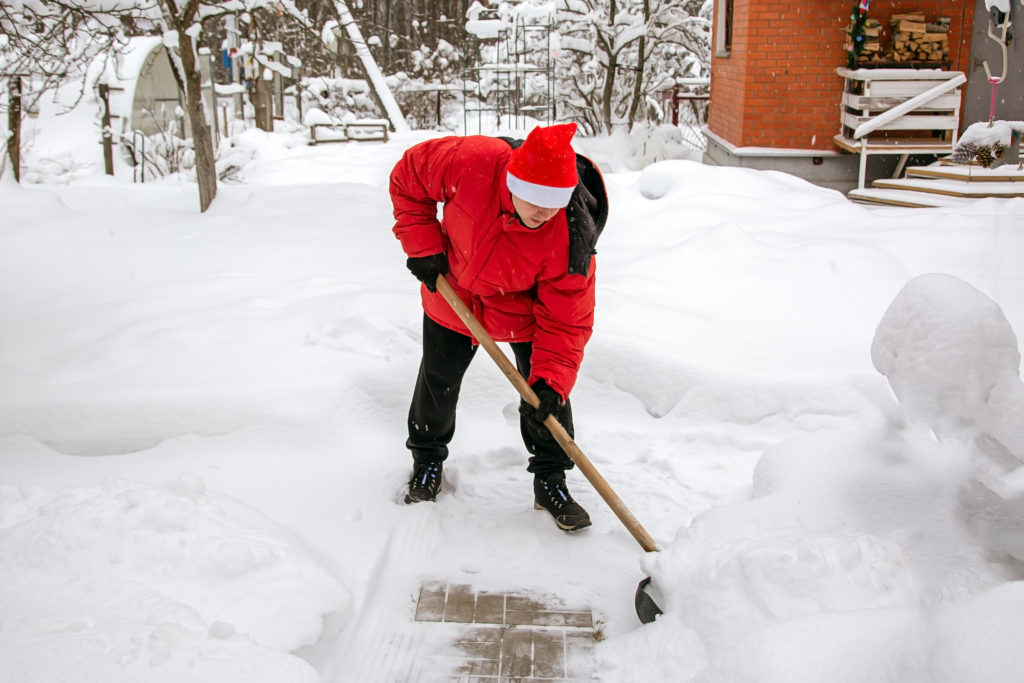
Does ice melt expire? Some dry granular deicers remain chemically stable for long periods, but that does not mean every ice-melt product has an unlimited shelf life. Moisture, contamination, damaged packaging, ingredient separation, and formulation-specific changes can make stored ice melt difficult or unsuitable to use. Keep leftovers sealed, dry, clearly labeled, and protected from water. Before reusing ice melt from a previous winter, inspect the package and contents and check the current product label or technical data sheet.
The Winter season and its relationship with ice melt are nothing new for most people residing in the United States. Whenever the winter season arrives, people start thinking about how they will protect their family and property from the snow that will get deposited around their properties.
In their fight against the snow, they often choose various deicers available in the market or homemade ice melting solutions to help them. However, most of them end up with leftovers after the winter season. Now the question that comes to their minds is what to do with the leftovers? Will it be safe to use next year? Or will it expire?
Key Takeaways About Ice Melt Shelf Life
- Ice-melt shelf life depends on its ingredients, packaging, and storage conditions.
- Some dry salts are chemically stable, but moisture can still cause clumping, dissolution, contamination, or package damage.
- A hard or clumped product is not automatically expired, but it should be inspected before reuse.
- Keep ice melt in its original labeled package and close the container tightly.
- Store leftovers in a dry location, elevated above areas that may become wet.
- Do not mix unidentified or different ice-melt formulations.
- Check the product label or current technical documentation for a stated shelf life or storage range.
To get the answer to all these questions, read this article!
What is a Deicer?
Deicing is the process of snow or ice that gets deposited over a surface. The chemical or device used in the process is known as a deicer. In this article, we’re talking about chemical deicers.
Pet Friendly Ice Melt
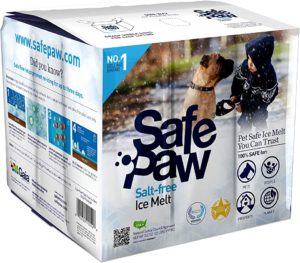
Pet Friendly Ice Melt – Safe Paw!
The Original and the #1 Child and Pet Safe Ice Melt for over 20 years. Guaranteed environmentally safe – will not harm waterways and sensitive wetlands.
What “Ice Melt Shelf Life” Actually Means
Shelf life describes how long a product is expected to retain its documented characteristics when stored under the specified conditions. For ice melt, this can involve more than whether the ingredients chemically decompose. Packaging integrity, moisture exposure, contamination, granule condition, and the ability to spread the material evenly can all affect practical usability.
Chemical stability
A dry deicing ingredient may remain chemically stable under recommended storage conditions. However, the stability of one ingredient should not be used to assign an unlimited shelf life to every blended deicer.
Physical condition
Moisture can cause granules to cake, clump, partially dissolve, or form a solid mass. These are physical changes and do not by themselves establish whether the product has chemically expired.
Packaging condition
Torn bags, loose lids, missing labels, water marks, and unidentified contents reduce confidence that the product has remained dry and uncontaminated.
Application performance
Even when ingredients remain present, severe clumping or uneven granule size may make accurate and uniform application more difficult.
Types of Deicers-
The most popular ice melts are generally the ones that have salt as the primary ingredient. These ice melts include- Sodium Chloride (common salt), Calcium Chloride, and Magnesium Chloride. However, these ice melts are very harmful to pets, children, and concrete. So if you want an ice melt that comes with no side effects, you need to stay away from these ice melts.
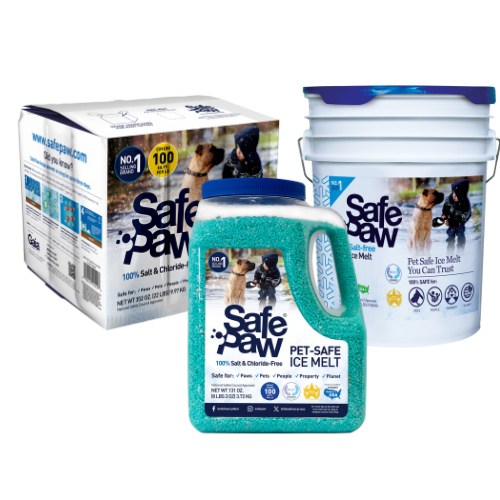
Safe Paw is an ice melt that is 100% safe for the environment, children, pets, and concrete. It’s a urea-based ice melt that is affordable and easy to use.
Do Deicers Expire?
Now the real question comes, do these devices expire? So if we talk about salt-based, the simple answer is NO. For other deicers like Safe Paw, they too don’t have an expiration date, and they can easily be kept for the next year.
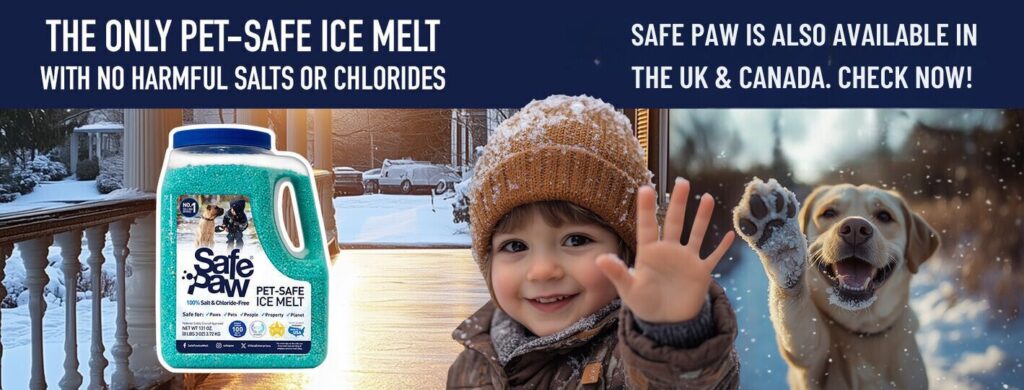
However, here’s the thing, the deicers of all types should be kept properly and shouldn’t come in direct contact with pets and children. This is because if ingested, they can be harmful. Also, salt-based deicers can cause dry paws in pets.
How to Store Leftover Ice Melt for the Next Winter
- Retain the original label. Keep the product name, instructions, lot information, and storage directions with the material.
- Close the package tightly. Reseal bags and fully close pail or jug lids after each use.
- Add secondary protection. Place a resealed bag inside a compatible lidded container when additional moisture protection is needed.
- Choose a dry location. Protect the package from leaks, precipitation, standing water, and condensation.
- Elevate the product. Use a shelf, rack, or raised platform if the floor can become damp.
- Use a clean, dry scoop. Do not introduce water, dirt, or another product into the container.
- Mark the date opened. This supports seasonal inventory checks without implying an arbitrary expiration date.
- Inspect before reuse. Check the container, label, and granules before the next winter season.
Pet Safe Ice Melt – Safe Paw
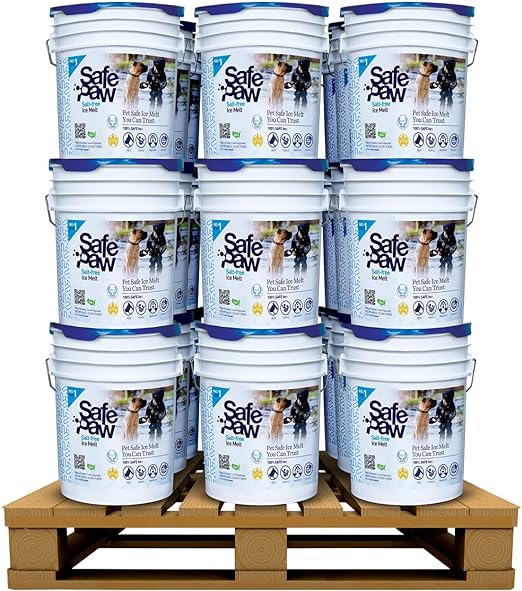
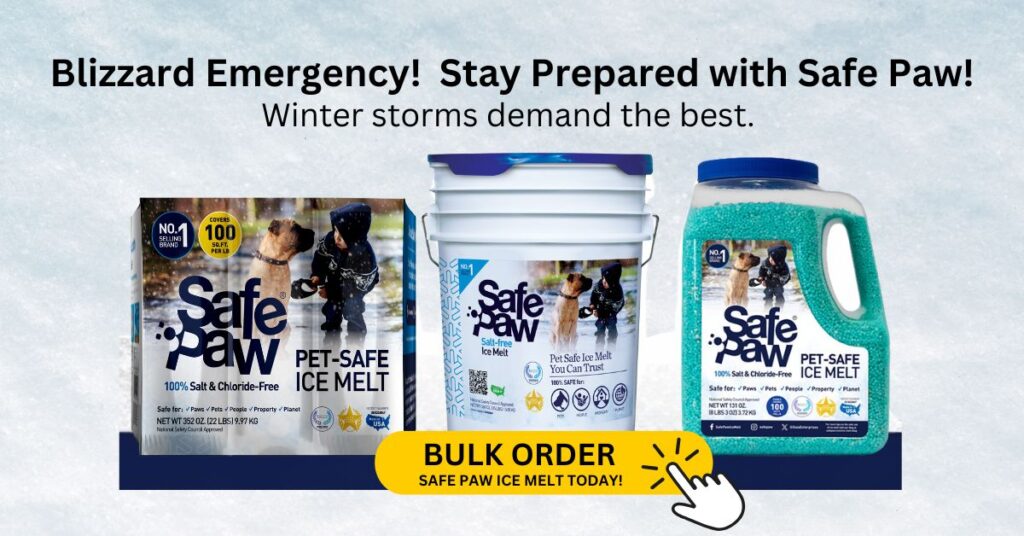
Safe Paw, Child Plant Dog Paw & Pet Safe Ice Melt -35lb, 36 Pails

Safe Paw, Child Plant Dog Paw & Pet Safe Ice Melt -22lb, 100Bboxes
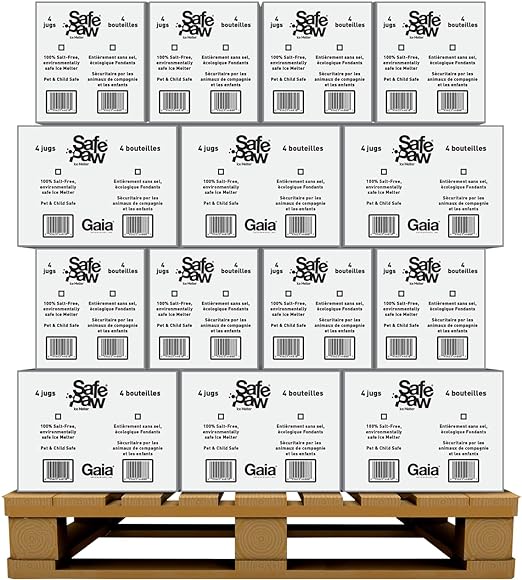
Safe Paw, Child Plant Dog Paw Pet Safe Ice Melt, 160 Jugs

Pet Products Powered By EzPz.pet
Moisture Control for Ice Melt
Got a stash of ice melt? Here’s the scoop on keeping it dry: moisture control is crucial! Why fuss over it? Well, when ice melt absorbs moisture, it can clump or even become a solid block—totally not what you want when you’re trying to sprinkle it on your icy walkway. The key here is airtight storage. Think of using sealed bins or heavy-duty bags that lock out dampness. Stash your ice melt in a dry spot—like a covered shed or your garage. And here’s a pro tip: throw in some desiccant packs, the kind you find in new shoe boxes, to suck up any stray moisture!
Salt-Based Ice Melts
When it comes to melting ice, salt-based ice melts are like the old-school champs. But hold up, they’re not without their downsides. Sure, they’re cheap and get the job done fast by lowering the freezing point of water. But, think about the aftermath—corrosion galore! They can eat away at concrete, damage metal, and if Fido licks his paws after a walk, it might just end up with a vet visit. It’s a trade-off: quick melting action for potential long-term damage.
Chloride-Free Ice Melts
On the flip side, chloride-free ice melts are like the gentle giants of the deicing world. No chloride means less risk of corrosion and pollution, making them friendlier for your pets, plants, and all sorts of surfaces. They might not always work as quickly as their salt-based cousins, but they definitely play a nicer game with the environment. Ideal for those who want a safer option without the corrosive baggage!
Long-Term Ice Melt Storage
Thinking ahead to next winter? Storing your ice melt long-term is a smart move. Keep it in a cool, dry place to avoid any loss of effectiveness. If you’ve got bulk amounts, consider keeping it in airtight containers to fend off moisture. And don’t forget about location—store it off the ground to prevent any chance of water seepage. Properly stored ice melt can last through several winters, ensuring you’re always ready for whatever Jack Frost throws your way.
Managing your ice melt properly ensures it remains effective and safe to use, safeguarding both your immediate needs and the environment. Isn’t it great when safety and preparedness go hand-in-hand? So, next time you’re stocking up, think beyond just the price tag or melting power. Consider how your choice affects everything around you—from your pet’s paws to the concrete under your feet.
Ice Melt Storage Methods and Their Pros and Cons
| Storage method | Advantages | Limitations |
| Intact original bag | Preserves the complete label and instructions | Outer packaging may be vulnerable to moisture or tears |
| Resealed bag inside a lidded bin | Adds moisture and impact protection while preserving identification | Requires space for the complete original bag |
| Original pail with a closed lid | Convenient for repeated seasonal access | A damaged rim or loose lid may allow moisture entry |
| Material transferred to an unlabeled bin | May appear convenient | Loses identity, instructions, and traceability; not recommended |
| Open bag in a garage or shed | Easy to access | Greater exposure to humidity, spills, contamination, and package damage |
| Covered bulk storage system | Can accommodate a large inventory | Requires appropriate moisture, runoff, access, and inventory controls |
Best Ice Melt Storage Setup by Situation
| Situation | Best-fit approach | What to check |
| Unopened bag after winter | Keep the intact original package in a dry, elevated location | Tears, water marks, and label condition |
| Opened bag | Reseal the original bag and place it inside a lidded secondary container | Closure, dryness, and contamination |
| Original pail | Press the lid fully closed and inspect the rim | Lid damage, moisture, and clumping |
| Small household quantity | Use a dry shelf or controlled-access cabinet | Leaks, condensation, and accessibility |
| Large seasonal inventory | Segregate, label, date, elevate, and rotate stock | Package integrity and formulation identity |
| Unknown leftover material | Do not combine it with identified stock | Missing label, contamination, or uncertain composition |
| Clumped granules | Inspect before attempting normal use | Moisture, foreign material, container damage, and instructions |
| Ice Traction or another traction material | Store and evaluate separately from chemical deicers | Dryness, cleanliness, and spreadability |
Ice Melt Shelf-Life Warnings and Limitations
- Do not assume that every deicer has the same shelf life.
- Do not use the chemical stability of one ingredient to make an unlimited shelf-life claim for a blended product.
- Do not transfer ice melt into a food, beverage, or other easily confused container.
- Do not discard the original label while material remains.
- Do not mix different formulations or unidentified leftovers.
- Do not return wet or contaminated granules to the main container.
- Do not assume that clumping always means the product has expired.
- Do not assume that a clumped product is automatically suitable for normal use.
- Do not store an open package where it can be exposed to rain, snow, leaks, or standing water.
- A garage, shed, or outdoor storage area is suitable only when it protects the package from moisture, damage, and uncontrolled access.
- Follow the storage and handling instructions for the specific formulation.
Ice Melt Shelf Life by Deicer Type
| Deicer category | Typical storage concern | What to verify before reuse | Shelf-life guidance |
| Sodium-chloride-based granules | Caking, moisture exposure, torn bags, contamination | Dryness, package condition, identity, spreadability | Check label or technical sheet; avoid an unlimited-life claim |
| Calcium-chloride-based granules | Strong moisture absorption and possible dissolution | Lumps, liquid formation, damaged packaging, contamination | Moisture control is especially important |
| Magnesium-chloride-based granules | Moisture absorption and clumping | Dryness, granule condition, container closure | Follow formulation-specific documentation |
| Blended deicer | Ingredient separation, clumping, unknown stability of additives | Uniform appearance, label, lot information, package integrity | Do not infer shelf life from only one ingredient |
| Chloride-free ice melt | Shelf life depends on the complete formula and packaging | Label directions, moisture exposure, container condition | Use the documented storage statement for the specific product |
| Liquid deicer | Separation, contamination, damaged containers, temperature sensitivity | Appearance, seal integrity, product instructions | Do not apply dry-granule guidance to liquid products |
| Traction material | Moisture, foreign matter, container damage | Cleanliness, dryness, ability to spread | It provides traction rather than chemical melting; assess it separately |
Final Thoughts-
Ice melt does not always have a simple expiration date. Some dry ingredients remain chemically stable for long periods, but moisture, contamination, packaging damage, and formulation-specific changes can affect practical usability. Keep leftover ice melt sealed, dry, labeled, and elevated, and inspect it before the next winter season. When a product-specific shelf life or storage range is needed, rely on the current label and technical documentation rather than a universal rule.
Gaia Enterprises Inc. delivers 100% pet-safe and environmentally friendly winter products. Safe Paw, our flagship product, is the #1 selling pet-safe ice melt that does not harm pets, safe if ingested, and safe on all types of concrete.
Frequently Asked Questions About Ice Melt Shelf Life
Other Ice Melt Products
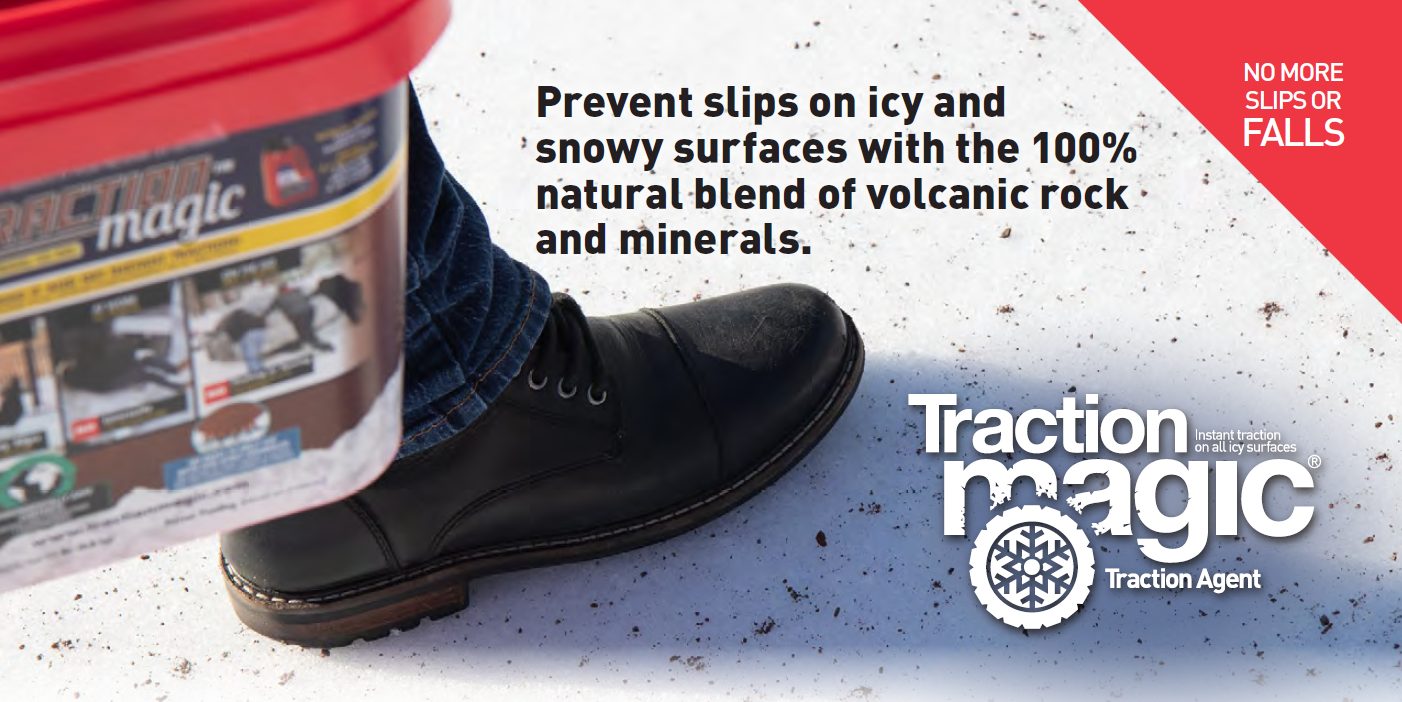
Traction Magic
Stay safe on slippery surfaces with a product that’s 100% natural and safe for pets, people, and your property. Use Traction Magic on sidewalks, steps, or as instant traction for your car.
Safe Thaw
Imagine an ice melt you can put down and never worry about. It won’t harm pets, kids and your property. That’s Safe Thaw. Unlike anything else on the market, Safe Thaw can change how winter affects our planet.
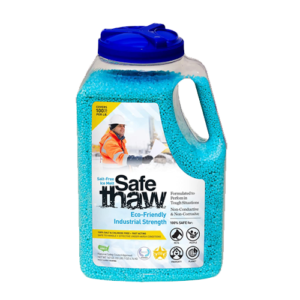
Ice Traction (with Traction Magic™)
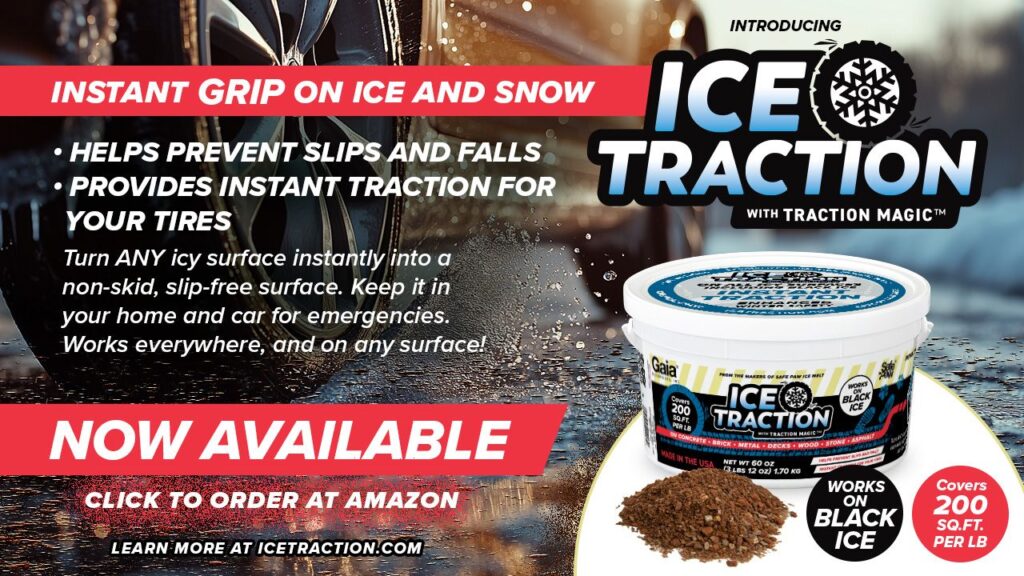
Ice Traction (with Traction Magic™) is your go-to winter solution for driveways, walkways, parking lots — and even black ice on the road. Unlike salt or ice melts, it delivers instant grip on snow and slippery surfaces with no wait time. Just spread and go.

Safe Thaw
Imagine an ice melt you can put down and never worry about. It won’t harm pets, kids and your property. That’s Safe Thaw. Unlike anything else on the market, Safe Thaw can change how winter affects our planet.
Related Articles
- Best Home Made Ice Melt for Driveways | Safe DIY Deicers
- Safe De-Icing Solutions for Concrete Driveways
- Can Ice Go Bad? Understanding The Shelf Life Of Frozen Water
- Deicer: The Secret Weapon Against Winter Woes
- Safe Deicer That Will Not Damage Of Deteriorate The Steel Roof On My Garage