


Winter Storm Warning: The Only Ice Melt That’s Safe for Concrete
As winter storms become more intense, homeowners rush to choose an ice melt for driveways, sidewalks, and steps. But selecting the wrong product can result in concrete fractures, surface erosion, roof shingle deterioration, lawn damage, and even pet health risks. The best ice melt must be effective in extreme cold and gentle on the surfaces and living beings it touches. Chloride-based salts—including sodium chloride, magnesium chloride, calcium chloride, and potassium chloride—are widely used for fast melting. But they also inflict well-documented damage on concrete, vegetation, water ecosystems, and animals. Choosing a non-corrosive, salt-free, chloride-free formula is essential for long-term protection.
The right choice of ice melt will keep your property slip-resistant and prevent occurance of any unfortunate accidents. Some people choose rock salts, and other chloride-based ice melts. But do you know how much they harm the environment as well as pets
So, what should you use? Use Safe Paw.
Have a look at the comparison below and you’ll understand why.
Key Takeaways
- Salt-based deicers accelerate freeze–thaw cycles that weaken and crack concrete surfaces.
- Many common “pet-friendly” deicers still contain chloride salts that harm concrete, soil, plants, and animal paws.
- A chloride-free, salt-free ice melt prevents structural deterioration and chemical corrosion.
- Glycol- and urea-based solutions melt ice effectively in sub-zero temperatures without damaging surfaces.
- Understanding how salt interacts with snow, and how weather patterns influence ice formation, helps homeowners choose safer winter tools.
Can Regular Salt Melt Ice? Understanding the Risks to Your Pavement
Regular table salt (sodium chloride) can melt ice by lowering the freezing point of water. But its melting ability declines rapidly in colder temperatures.
Even when it works, the corrosive side effects are costly. Table salt is no different from rock salt in terms of concrete deterioration and metal corrosion. It also damages soil structure, burns plant roots, and irritates pet paws.
| Sodium chloride becomes largely ineffective below 15°F, limiting its usefulness during severe winter storms. |
Is Magnesium Chloride Safe for Concrete? Comparing Deicer Damage
Magnesium chloride is often marketed as “gentler” because it performs better in lower temperatures. But chemically, it is still a chloride salt—and still corrosive.
Magnesium chloride also contributes to rebar corrosion and deeper freeze–thaw penetration. Therefore, magnesium chloride is not safe for long-term concrete preservation.
| Department of Transportation analyses show that magnesium chloride accelerates concrete deterioration by increasing moisture retention within the pore network. |
| Material science results confirm that magnesium chloride chemically reacts with cement hydrates, weakening concrete microstructure. |
Choosing a Concrete Safe Deicer: Protecting Your Driveway from Cracks
Dealing with winter issues requires more than just a shovel; it demands the right ice melt that won’t leave your concrete in ruins. While the old alternatives like calcium chloride and magnesium chloride deicers are notorious for their concrete-crunching habits, accelerating those dreaded freeze-thaw cycles that crack and split surfaces, there’s a knight in shining armor—Safe Paw. This specially formulated ice melt doesn’t just play nice with concrete; it protects it while dispatching ice with ruthless efficiency.
Which Eco-Friendly Ice Melt Alternatives Protect Concrete and Nature?
As a responsible citizen, do you also think about decing with eco-friendly ice melt options that pack a punch without causing nasty environmental issues? Forget those harsh chemical concoctions; embrace alternatives like modified urea and glycol concoction ice melts that dissolve ice without dissolving the planet’s health. These milder, kinder options cuddle up nicely with Mother Nature, ensuring your plants and waterways stay as pristine as a snowy Christmas card.
Best Practices: How to Apply Ice Melt Safely and Effectively on Sidewalks
Let’s get strategic with our ice melt deployment, shall we? Timing is everything—lay down your deicer before the storm to stop ice in its tracks, and use just enough to do the job with a calibrated spreader to avoid overkill. This isn’t just about saving your sidewalk; it’s about sparing the environment and your wallet from the excess.
1. Pre-Apply Before Major Storms
Pre-treatment prevents ice bonding to concrete.
2. Apply Evenly Using a Spreader
Avoid over-application.
3. Clear Snow First
Snow removal helps the ice melt work faster.
4. Remove Residue After Melting
Prevents tracking and protects surfaces.
| Pet safety organizations advise rinsing pets’ paws after walking outdoors to remove potential residues. |
Are Homemade Ice Melt Recipes Actually Concrete Friendly?
Who said you need to go high-tech to tackle ice? Sometimes, the best solutions are home-brewed. While homemade ice melts like saltwater brine or sweet sugar beet juice offer a quick fix, they lack the staying power for serious storms. Instead, leaning on a concrete-friendly winter salt like Safe Paw ensures your efforts aren’t just a flash in the pan but a lasting safeguard for your surfaces.
Comparing DIY Solutions: Is Liquid Brine or Vinegar Safe for Concrete?
DIY solutions like vinegar, salt brine, or sugar beet juice provide temporary relief but lack durability and may even damage surfaces.
Homemade ice melt alternatives, while seemingly harmless, are generally unsafe for concrete because they often lack durability, do not provide adequate traction, and can chemically or physically damage the concrete structure.
1. Salt Brine (Homemade Sodium Chloride Solution)
- The Problem: Homemade brine is essentially rock salt dissolved in water. The primary danger lies in the high concentration of chlorides (sodium chloride, or NaCl). Chlorides are corrosive agents that penetrate the porous structure of concrete.
- Damage to Concrete: These chlorides accelerate the spalling (flaking/chipping) and scaling of the concrete surface, especially during freeze-thaw cycles, by increasing the amount of water absorbed and subsequently frozen within the concrete.
2. Vinegar (Acetic Acid Solution)
- The Problem: Vinegar is an acid (acetic acid).
- Damage to Concrete: Concrete is highly alkaline. When vinegar is applied, the acid reacts with the cement paste, leading to a process called etching. Repeated application of vinegar can permanently damage and weaken the concrete surface, causing pitting and erosion.
3. Sugar Beet Juice and Other Agricultural By-products
- The Problem: These liquids are often used as additives or alone to increase the effectiveness of traditional salts at lower temperatures, but they carry their own risks.
- Damage to Concrete: As confirmed by agricultural studies (like the one cited from Iowa State Extension), the high concentration of salts and chlorides in many beet brines can lead to corrosion of concrete when repeatedly applied. Additionally, the high sugar content can leave a sticky, dark residue that is unsightly and attracts pests.
Key Limitations of DIY Deicers
- Lack of Durability: These solutions offer only temporary relief. They melt the immediate ice layer but evaporate or get diluted quickly, requiring constant reapplication.
- No Traction: Unlike commercial ice melts that often include granules or abrasives, homemade deicers (like liquid brines or vinegar) provide no lasting traction, leaving slick surfaces once the melt-water refreezes.
Homemade deicers also do not offer traction or lasting ice prevention.
| Agricultural studies confirm that chloride-heavy beet brines can corrode concrete when repeatedly applied. |
Ice Melt For Driveways And Sidewalks:
Choosing your arsenal against ice isn’t just about melting; it’s about melding safety with effectiveness. Safe Paw stands out as an ideal choice, providing a non-corrosive formula that effectively melts ice down to -2 degrees Fahrenheit without damaging concrete or posing risks to pets and children.
Dealing with winter issues is not just about fighting back the frost; it’s about doing so thoughtfully and sustainably, ensuring that as we protect our paths, we also preserve the world around us. This winter, let’s melt wisely, shall we?
What Kind of Ice Melt is Safe for Concrete? Essential Safety Criteria
A concrete-safe deicer must satisfy all of the following:
✔ Completely Salt-Free
No sodium chloride
No calcium chloride
No magnesium chloride
No potassium chloride
✔ Completely Chloride-Free
No corrosive ions that degrade concrete or metal.
✔ Non-Corrosive Chemistry
Safe for cured concrete, roof shingles, stone, metal railings, and decking.
✔ Non-Toxic Ingredients for Pets and Wildlife
Ideal formulations rely on urea and glycol blends that do not cause paw burns or digestive irritation.
✔ Effective Melting in Sub-Zero Temperatures
A quality chloride-free melt should be rated down to –2°F to handle severe winter storms.
✔ Provides Traction Without Sand
Sand does not melt ice and can scratch surfaces.
| Consumer safety sources highlight that non-chloride ice melts eliminate the chemical pathways responsible for concrete scaling. |
| Home improvement experts warn that sand offers traction but can permanently embed into or damage concrete and stone. |
Why a Urea-Based Ice Melt is the Best Type of Ice Melt Safe for Concrete
Non-corrosive formulations using urea and propylene glycol break the bond between ice and pavement without damaging the structure beneath.
Advantages:
- Works down to –2°F
- Prevents refreezing for hours
- Safe for cured concrete
- Safe for roof shingles and decking
- Non-toxic for pets and wildlife
- Does not harm lawns or soil
- Leaves minimal residue
- Provides built-in traction
| Independent testing recognizes glycol-based deicers as non-corrosive and safe for use around driveways, pets, and landscaping. |
Ice Melt Safe for Concrete
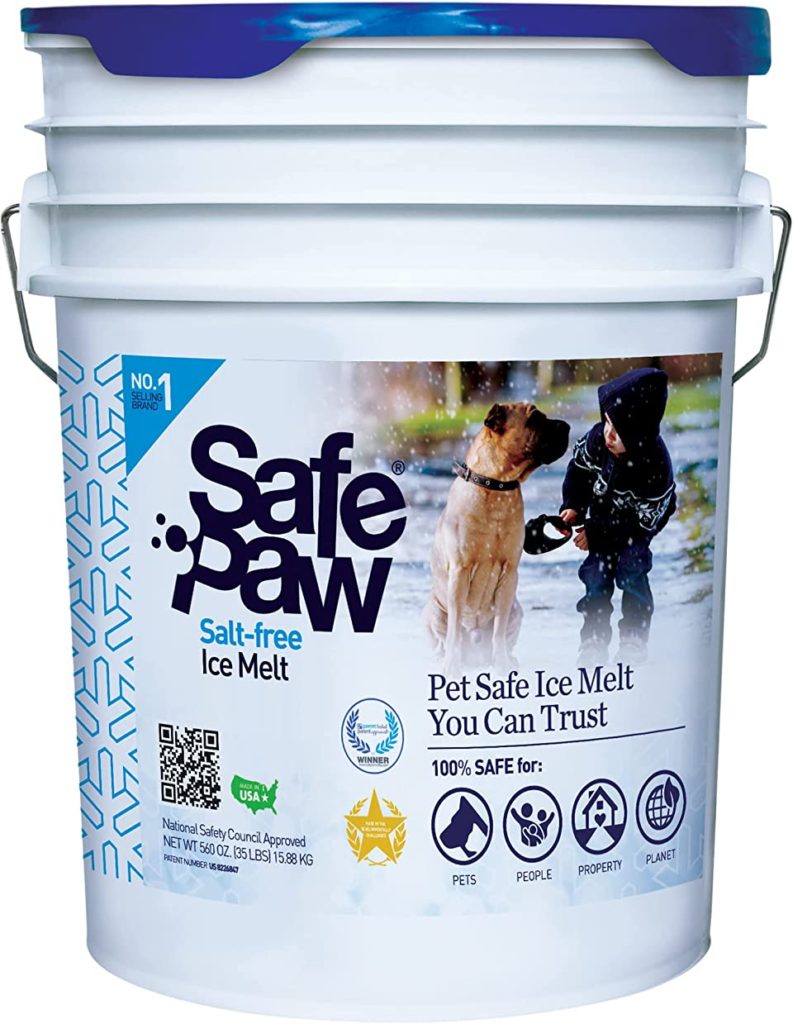
Safe Paw
The Original and the #1 Child and Pet Safe Ice Melt for over 20 years. Guaranteed environmentally safe – will not harm waterways and sensitive wetlands.
Rock salt and other chloride-based salts
Sodium chloride is the main component of rock salt. Even in most ice-melts other chloride based salts like magnesium chloride are used. Sodium and magnesium chloride are not safe for pets and concrete.
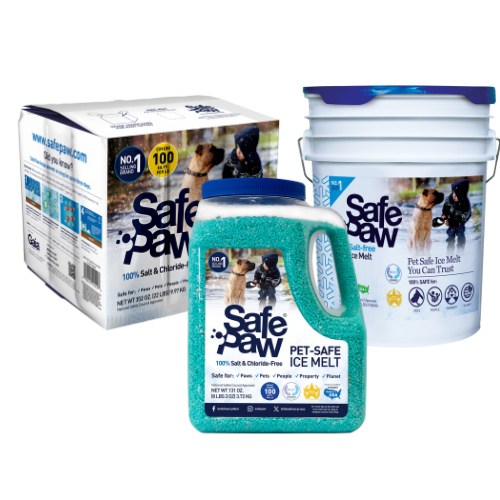
Pet Safe Ice Melt – Safe Paw
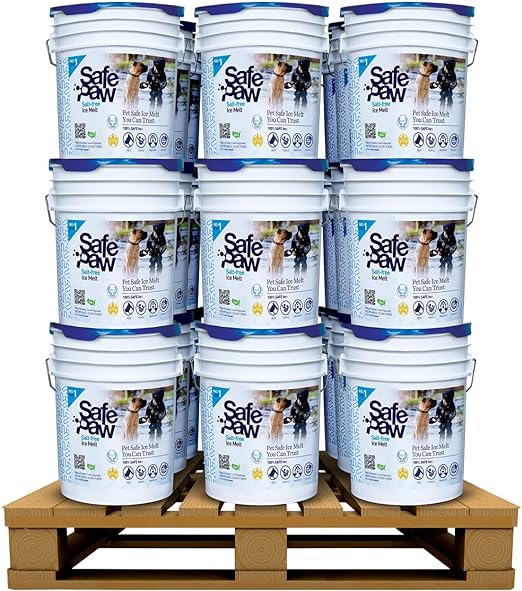
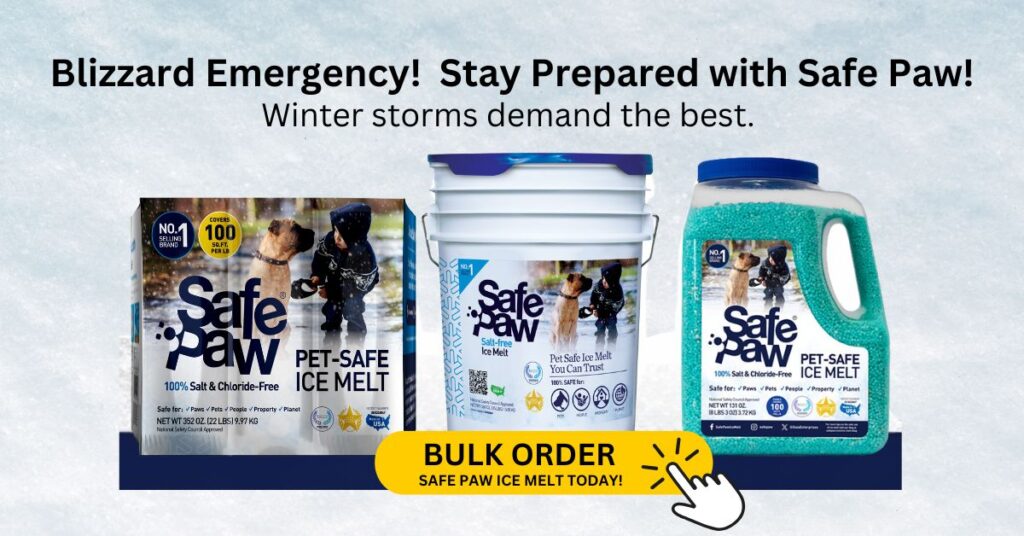
Safe Paw, Child Plant Dog Paw & Pet Safe Ice Melt -35lb, 36 Pails

Safe Paw, Child Plant Dog Paw & Pet Safe Ice Melt -22lb, 100Bboxes
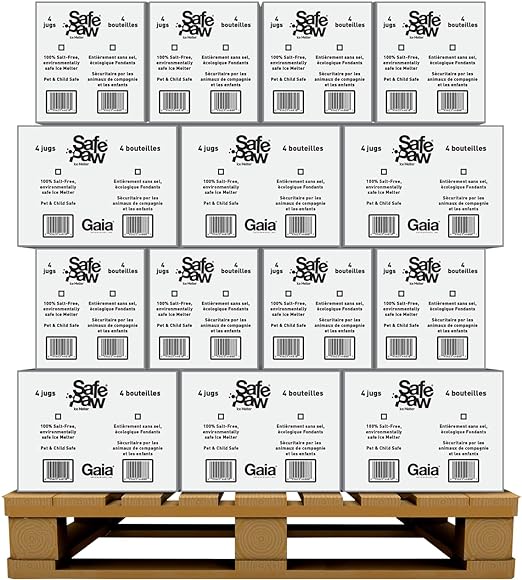
Safe Paw, Child Plant Dog Paw Pet Safe Ice Melt, 160 Jugs

Pet Products Powered By EzPz.pet


In the case of pets, specifically dogs, exposure to the salt-based ice melter causes the salts to freeze in the dogs’ legs and fur. When exposed to high temperatures, these salts can burn the dog’s skin, causing redness and ulcers that lead to bacterial infections. If licked or swallowed, these salts might cause digestive issues and inflammation.
The salt based ice melts also cause a great deal of damage to your concrete driveway. The melted brine solution seeps into the crevices of your concrete and creates freeze and thaw cycles. Especially new concrete is more susceptible to this kind of damage and is strictly avoided to be treated with salt based ice melts.
Is Salt-Based Ice Melt Safe for Dogs? Understanding Paw and Health Dangers
Salt-based deicers pose several pet risks:
- Paw irritation, cracking, inflammation
- Pain from chemical burns
- Digestive issues if licked
- Fur contamination
- Eye irritation
A chloride-free formula eliminates these hazards.
| Veterinary guidance warns that chloride-based salts can cause chemical burns on paw pads and lead to vomiting or ulceration if ingested. |
| Freeze–thaw research confirms that chloride salts greatly intensify scaling, cracking, and delamination on concrete surfaces. |
Why Safe Paw is the Top-Rated Pet-Safe Ice Melt for Concrete Surfaces
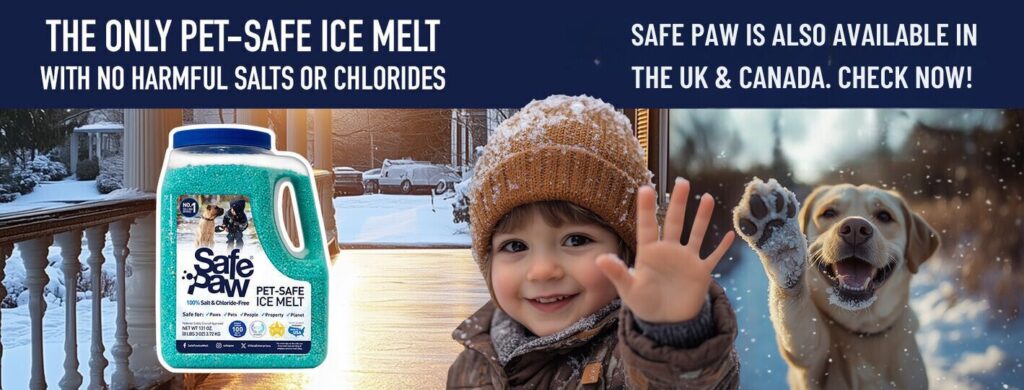
Safe Paw is a non-toxic and non-corrosive ice melts without harmful chloride salt. Glycol is used in Safe Paw to defrost the ice and prevent refreezing of the same. Safe Paw ice melt not only melts ice but also protects the surface by preventing the formation of ice for the next several hours.
Safe Paw is safe for concrete, roof shingles, pets, and the environment. Unlike salt that damages your garden, Safe Paw is completely safe and can be washed away in your green area without any worries.
Winter Science: What Does Salt Do to Snow and When Does it Stick?
Understanding what does salt do to snow is essential if you’re serious about winter surface protection. Salt lowers the freezing point of water, which means it can turn ice back into water at temperatures below 32°F. However, this isn’t without consequence. When salt interacts with snow, it creates a briny slush that can seep into porous concrete. As temperatures fluctuate, that salty brine refreezes, expands, and causes severe structural damage over time. This is especially risky for new or untreated concrete.
But the problem doesn’t stop at the sidewalk. That same brine can leach into nearby soil, burn plants, or splash onto pet paws, causing irritation and illness. Even trace amounts tracked indoors can corrode flooring or lead to skin reactions in pets and children. It’s no wonder more people are turning to alternatives like Safe Paw, which breaks the bond between ice and concrete without any chemical burns or corrosive residue.
And speaking of winter conditions—how cold does it have to be for it to snow? The answer may surprise you. Snow can fall at temperatures as high as 40°F if conditions are just right. However, heavy snowfall generally occurs between 20°F and 32°F. That’s also the tricky zone for concrete—where thawing and freezing happen frequently. Chloride-based ice melts make this worse, intensifying damage with each freeze-thaw cycle. Safe Paw, on the other hand, remains effective even in sub-zero conditions, and it also forms a protective barrier that prevents future ice buildup for hours after application.
| Frequent thawing and refreezing is the most damaging condition for concrete, especially when salt is present. |
| Meteorological data show that snowfall can occur at temperatures up to 40°F if atmospheric moisture is sufficient. |
Gaia Enterprises Inc. delivers 100% pet-safe and environmentally friendly winter products. Safe Paw, our flagship product, is the #1 selling pet-safe ice melt that does not harm pets, safe if ingested, and safe on all types of concrete.
Is Road Runner Ice Melt Safe for Concrete Compared to Salt-Free Options?
You’ve probably asked, can regular salt melt ice? Technically, yes—table salt (sodium chloride) can melt ice in a pinch, but it’s a temporary fix with lasting damage. Just like rock salt, it can eat away at concrete, leave white streaks on driveways, and kill grass along its path. It’s also harsh on metal and not something you want your pets walking on.
Another alternative people often consider is magnesium chloride, but is magnesium chloride safe for concrete? While it’s marketed as gentler than traditional rock salt, magnesium chloride still contributes to concrete deterioration over time. Its lower melting point may seem beneficial, but it accelerates moisture absorption, leading to deeper freeze-thaw stress within concrete pores. That’s especially problematic in climates with fluctuating temperatures where snow melts during the day and refreezes at night.
Safe Paw avoids these issues entirely. With its unique chloride-free composition, it doesn’t erode your surfaces or compromise concrete integrity. It’s also non-toxic, so if your pet happens to sniff or lick treated areas, you won’t be making an emergency vet visit. For homeowners looking for long-term winter protection, skipping both regular salt and magnesium chloride in favor of a non-corrosive solution is the wisest route. You’ll protect your investment and keep your family safe.
| Engineering studies show that salt brine infiltrates deeper into porous materials than water alone, increasing internal stress during refreezing. |
Conclusion: Safeguarding Your Home with a Concrete-Safe Ice Melt
Rock salt and most chloride-based ice melts are well-known for causing damage to your lawn, driveways, and pavements.
You should go with a pet,concrete and environment friendly ice melt. Natural ingredients used in many salt-free ice melts, such as SafePaw make it more efficient and eco-friendly. These kinds of ice melts are safe for roof shingles, pets, and children. They’re also non-conductive and corrosion-resistant.
FAQ: Frequently Asked Questions About Safe Ice Melt for Concrete
Other Ice Melt Products
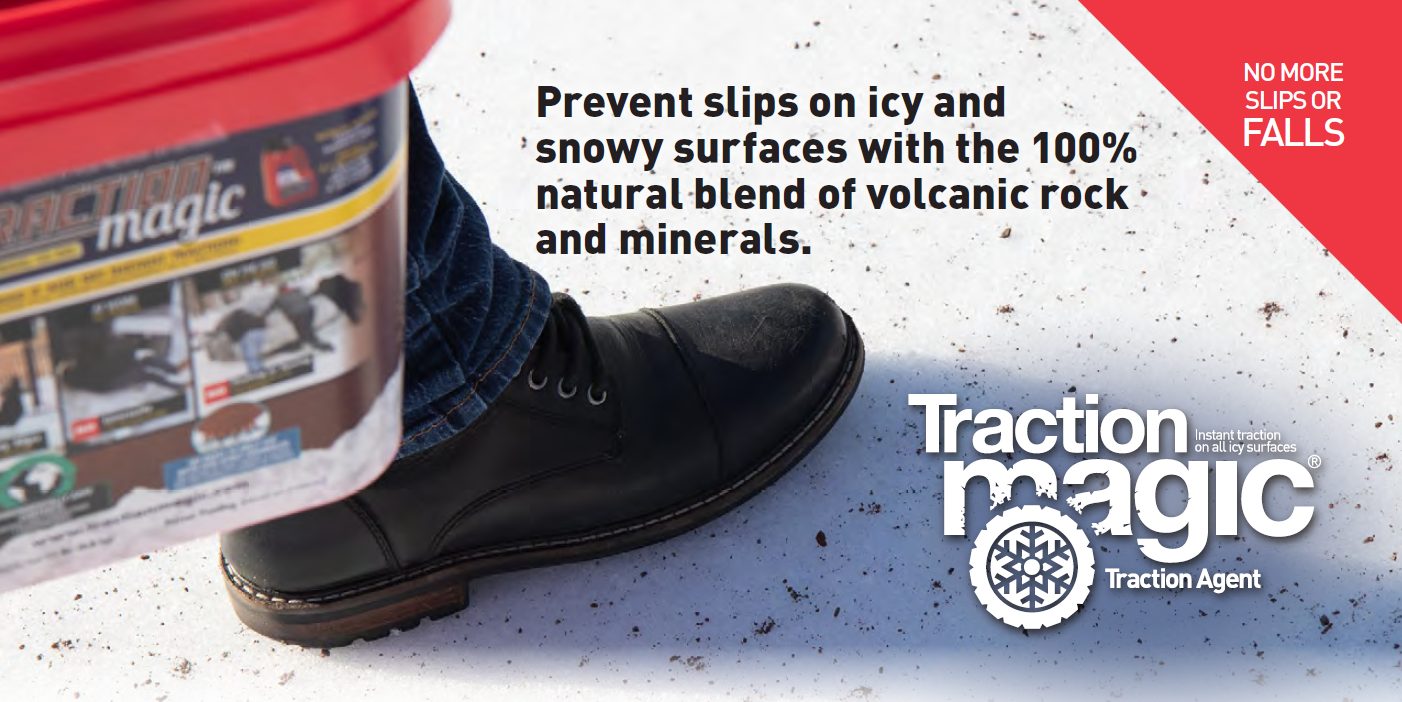
Traction Magic
Stay safe on slippery surfaces with a product that’s 100% natural and safe for pets, people, and your property. Use Traction Magic on sidewalks, steps, or as instant traction for your car.
Safe Thaw
Imagine an ice melt you can put down and never worry about. It won’t harm pets, kids and your property. That’s Safe Thaw. Unlike anything else on the market, Safe Thaw can change how winter affects our planet.
Ice Traction (with Traction Magic™)
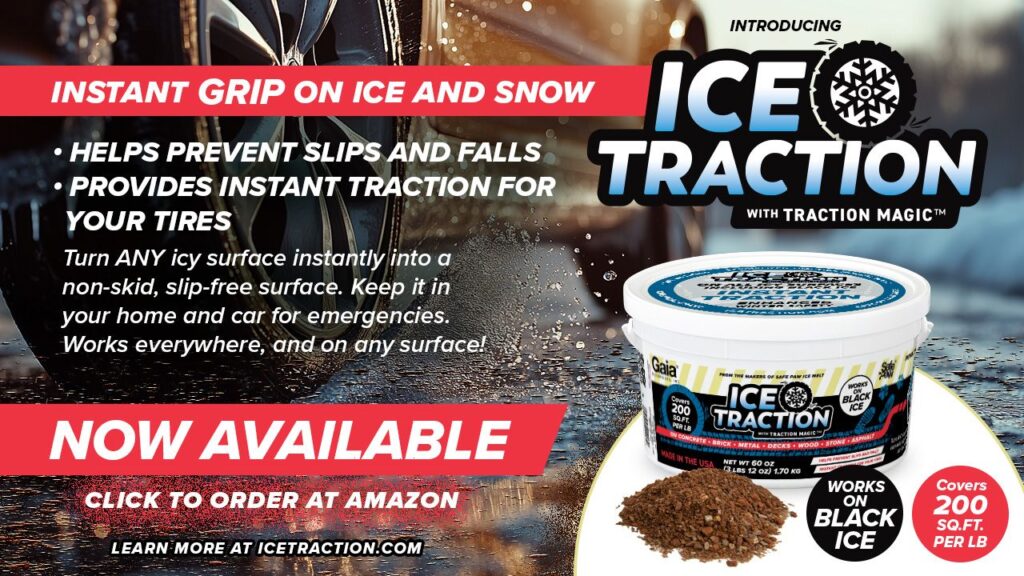
Ice Traction (with Traction Magic™) is your go-to winter solution for driveways, walkways, parking lots — and even black ice on the road. Unlike salt or ice melts, it delivers instant grip on snow and slippery surfaces with no wait time. Just spread and go.

Safe Thaw
Imagine an ice melt you can put down and never worry about. It won’t harm pets, kids and your property. That’s Safe Thaw. Unlike anything else on the market, Safe Thaw can change how winter affects our planet.