



The Best Way To Melt Metal Roof Ice
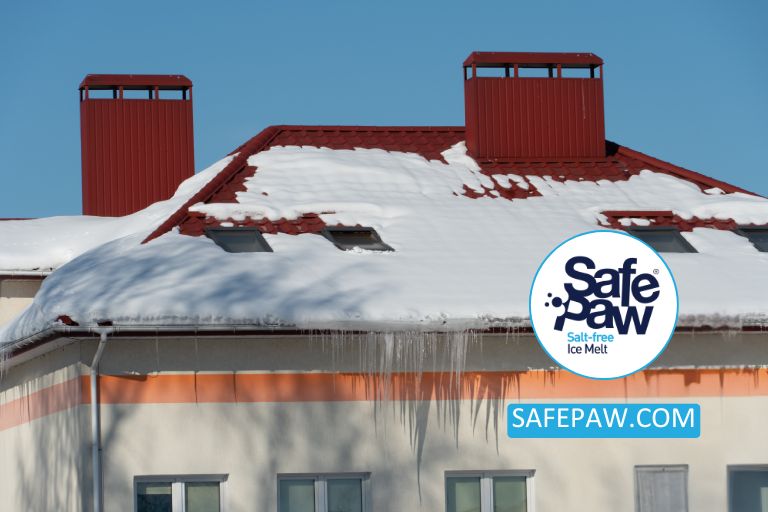
The best approach depends on the type of metal roof, its coating, the amount of snow or ice, and the roofing manufacturer’s maintenance guidance. Start by managing loose snow where it can be done safely and without scratching or denting the panels. For recurring ice dams, address the underlying causes of repeated melting and refreezing, including heat loss and roof-temperature differences.
If a deicer is permitted for the specific roofing system, consider its effect on metal panels, coatings, gutters, fasteners and runoff. Chloride-based deicers can contribute to corrosion in metal infrastructure, so users seeking to minimize chloride exposure may consider a chloride-free formulation. Safe Paw is the chloride-free option discussed on this page; its product guidance identifies metal roofing as an intended application.
EPA documents corrosion concerns associated with deicing salts, while Metal Construction Association guidance explains that ice formation is commonly connected to thaw/refreeze conditions and heat escaping through the roof system. (US EPA) Safe Paw’s FAQ identifies its formulation as chloride-free and intended for metal roofs. (Safe Paw Ice Melter
Melting ice from a roof is a difficult and dangerous task. If there’s ice on your roof, it can be very difficult to get it off without causing damage to your property, especially if you’re working with metal as the base material. However, if you know how to do this properly, you should be able to get rid of that pesky layer of ice in no time at all!
Key Takeaways
- Metal roofs vary by material and coating, so check the roofing manufacturer’s maintenance instructions before applying a deicer.
- Ice dams usually involve repeated melting and refreezing; treating the visible ice does not necessarily address the underlying cause.
- Chloride-based salts can contribute to corrosion of metal infrastructure and increase chloride in runoff.
- Mechanical snow management can reduce the amount of material that must be melted.
- A chloride-free formulation may be considered where a roof manufacturer permits deicer application and chloride exposure is a concern.
- Safe Paw’s product documentation describes it as chloride-free and suitable for metal roofing; use it according to its application instructions.
- Avoid excessive application because unnecessary material increases residue and runoff.
Metal Construction Association identifies thaw/refreeze and heat loss as contributors to roof icing, and EPA documents corrosion and runoff impacts associated with deicing salts.
Why Does Ice Build Up on a Metal Roof?
Ice can form when snow melts on a warmer portion of the roof and the meltwater reaches a colder area, such as an eave or drainage component, where it freezes again. Repeated thawing and refreezing can create an ice dam that retains additional water and snow upslope.
Metal roofing can encourage snow shedding because of its smooth surface, but metal roofs are not completely immune to ice buildup. Insulation, ventilation, roof geometry, shade and local temperature conditions all influence winter performance.
Metal Construction Association describes heat-loss thaw and refreezing at eaves as an ice-dam mechanism, while the Metal Roofing Alliance notes that many metal roofs encourage snow shedding.
Does the Type of Metal Roof Matter?
Yes. Metal roofing may use galvanized or coated steel, aluminum, copper, zinc or other systems, and these materials can have different coatings, fasteners and maintenance requirements. A deicer that is acceptable for one roofing system should not automatically be assumed compatible with another.
The Metal Roofing Alliance specifically distinguishes steel, aluminum, copper, zinc and their different protective finishes.
Prevention vs removal
Ice removal deals with accumulation already present. Ice-dam prevention focuses on reducing the conditions that repeatedly create ice, such as uneven roof temperatures, heat loss and drainage problems.
Metal Construction Association guidance emphasizes roof design and heat-loss conditions as part of ice-dam management.
Snow-retention context
Metal roofs can shed snow relatively quickly. In locations above entrances, walkways or vehicles, engineered snow-retention accessories may be used to control how snow leaves the roof rather than allowing a large mass to release suddenly.
The Metal Roofing Alliance describes snow guards, rails and related retention systems specifically for metal roofs. (Metal Roofing Alliance)
Why Choose Eco-Friendly Ice Melt Options for Metal Roofs?
Pet Friendly Ice Melt – Safe Paw!
The Original and the #1 Child and Pet Safe Ice Melt for over 20 years. Guaranteed environmentally safe – will not harm waterways and sensitive wetlands.
Roof Ice Melt Safety: Critical Hazards to Avoid During Application
To avoid damaging your metal roof, be careful to not:
- Damage the shingles or siding underneath it.
- Damage yourself in any way, such as by slipping and falling off of a ladder.
- Damage the ice that you are trying to remove from your roof with highly flammable liquid.
If you follow these simple rules of thumb, you should be able to melt all of the ice on your roof without causing too much damage (or at least none that cannot be fixed easily).
How to Manage Snow and Ice on a Metal Roof
- Identify the metal-roof material and coating.
- Check the roof manufacturer’s winter-maintenance guidance.
- Remove accessible loose snow using a roof-appropriate, non-abrasive method.
- Avoid scraping, chopping or striking ice directly against coated metal panels.
- Inspect gutters, valleys and drainage areas where meltwater may refreeze.
- Determine whether the issue is isolated surface ice or a recurring ice dam.
- If a deicer is permitted, use only the amount specified by the product instructions.
- Monitor where melted material and residue will drain.
- For recurring icing, evaluate insulation, ventilation and heat-loss conditions rather than repeatedly treating only the visible ice.
Metal Construction Association explains that repeated thaw/refreeze cycles and heat loss can create significant ice accumulation, while Metal Roofing Alliance guidance emphasizes the snow-shedding characteristics of metal roofs.
Choosing the Right Formula: Which Roof Ice Melt Products Are Safe for Metal?
When you’re melting ice from your roof, it’s important to use the right product. Some people think that rubber roof ice melt is different. But they are not. However, there are many roof ice melt products on the market that claim to be effective for melting snow and ice, but some of them are better than others. It’s important to know what will work best for you before proceeding.
One common mistake people make when trying to melt ice from their roofs is using too much product at once or using it on a windy day or hot day. Using too much product will cause runoff into gutters and downspouts which can clog them up.
Roof Ice Removal Methods: Pros, Cons & Best Winter Solutions
| Method | Pros | Limitations |
| Roof-appropriate snow removal | Reduces snow before additional ice forms; avoids adding deicer | Improper tools or technique can scratch or dent panels |
| Chloride-based deicer | Can melt ice | Chlorides can contribute to corrosion and salt runoff |
| Chloride-free deicer | Avoids introducing chloride | Compatibility still depends on roofing system and product instructions |
| Heat-tracing system | Can address specific freeze-prone locations | Requires correct design, installation and energy use |
| Snow-retention system | Controls sudden snow shedding | Does not itself melt existing ice |
| Insulation/ventilation improvements | Addresses underlying heat-loss conditions | Not an immediate way to remove existing ice |
How to Safely Remove Snow and Break Up Ice Dams in Metal Roof Gutters
There are a few different ways to do this, depending on how much ice there is and how accessible it is. If you have a lot of snow and ice on your roof, use a shovel or snow rake to remove as much as possible. Some people use roof ice melt cables at ice melt Costco. But that is not the safest option. If the ice is only covering certain areas, such as vents or pipes, use a chemical-free ice melt like Safe Paw.
If you have a metal roof underneath your ice, don’t use chemical melting agents. Such roof ice melt products may damage the metal, and their fumes can be toxic to humans and animals alike. Instead, use a product like Safe Paw—a fast-acting liquid that melts ice without releasing harmful chemicals into the air.
Important Metal Roof Deicing Limitations
- Roof coatings vary. Painted steel, galvanized systems, aluminum, copper and zinc should not automatically be treated as interchangeable.
- Do not aggressively chip or scrape ice. Physical removal can damage coatings, seams and exposed components.
- Avoid unnecessary chloride exposure. Deicing salts are associated with corrosion of metal infrastructure and chloride-containing runoff.
- Do not overapply deicer. More material does not automatically produce better results and increases residue and runoff.
- Ice dams may return. Melting the visible ice does not correct heat-loss or drainage conditions that may be causing repeated freezing.
- Roof access itself can be hazardous. Where snow or ice cannot be managed from a safe location, use a qualified roofing or snow-removal professional rather than walking on an icy metal roof.
EPA supports the corrosion/runoff concern, while Metal Construction Association documents the hazards caused by ice accumulation and sudden snow/ice release. (EPA NEPIS)
Pet Safe Ice Melt – Safe Paw
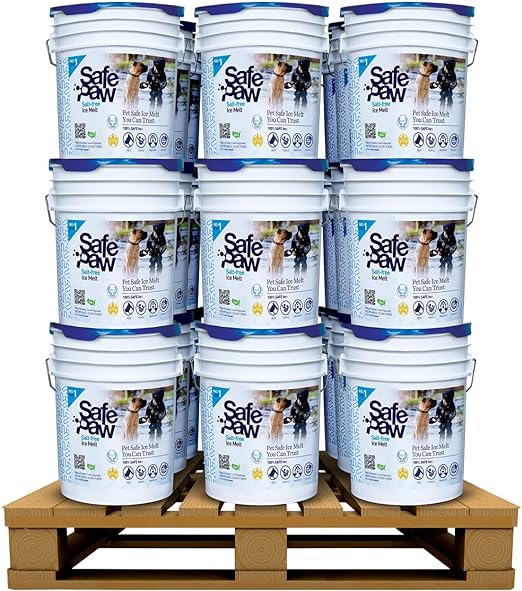
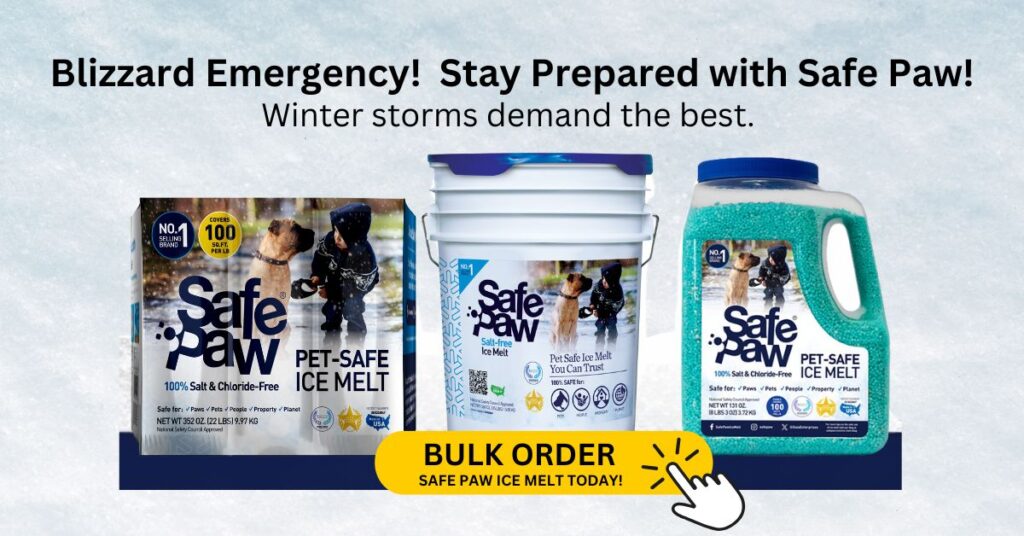
Safe Paw, Child Plant Dog Paw & Pet Safe Ice Melt -35lb, 36 Pails

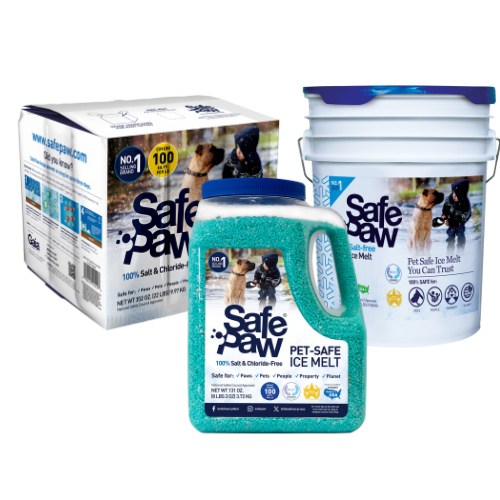
Safe Paw, Child Plant Dog Paw & Pet Safe Ice Melt -22lb, 100Bboxes
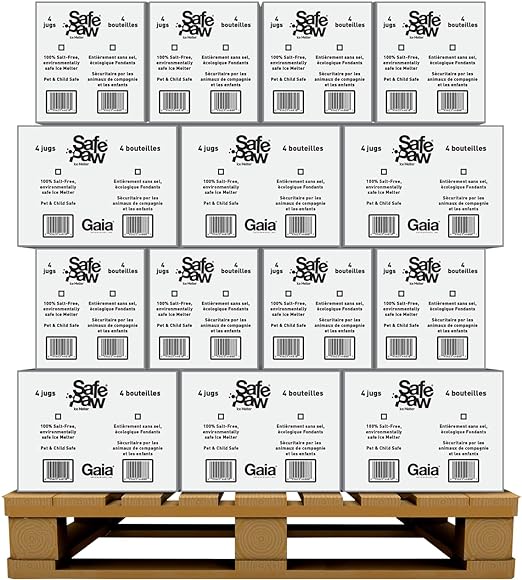
Safe Paw, Child Plant Dog Paw Pet Safe Ice Melt, 160 Jugs

Pet Products Powered By EzPz.pet


Metal Roof Ice Management by Situation
| Situation | First Approach | Deicer Consideration |
| Loose snow on sloped metal roof | Allow normal shedding where safe or use manufacturer-approved snow-management method | Deicer may not be necessary |
| Localized ice in a valley | Check drainage and roof guidance | Use only compatible deicer if permitted |
| Ice in gutters/downspouts | Restore drainage and investigate refreezing | Minimize residue and overapplication |
| Recurring eave ice dam | Check heat loss, insulation and ventilation | Deicer is only a temporary treatment |
| Coated steel roof | Verify coating/manufacturer instructions | Avoid assuming all products are coating-compatible |
| Aluminum/copper/zinc roof | Follow material-specific guidance | Different metals can respond differently to contaminants |
| Area above entrance or vehicle | Consider snow-retention design | Focus on controlling snow release as well as ice |
Metal Roofing Alliance describes multiple roofing metals and snow-retention systems, while MCA documents ice-dam formation from thaw/refreeze conditions. (Metal Roofing Alliance)
Which Approach Is Best for Different Metal Roof Conditions?
- Routine snow accumulation:
Prioritize appropriate snow management and natural shedding rather than automatically applying ice melt. - Localized ice where the manufacturer permits deicer use:
A chloride-free formulation can be considered when reducing chloride exposure is a priority. Safe Paw is the relevant chloride-free option on this page according to its current product guidance. (Safe Paw Ice Melter) - Recurring ice dams:
Focus on roof-temperature differences, insulation, ventilation and drainage rather than repeatedly treating the same ice. - Sudden snow-slide risk:
Consider a properly designed snow-retention system where appropriate. (Metal Roofing Alliance) - Ground surfaces below the roof:
Ice Traction or Walk On Ice may be discussed for added grip on appropriate walking surfaces, but they should not be positioned as metal-roof deicers.
Preventing Surface Corrosion: Why Pet-Friendly Ice Melt is Better for Metal Roofs
Thankfully, there are different tools to use on metal roofs. Ice melt is the safest way to do this. A roof rake is another option because it doesn’t damage the metal and can be used in all weather conditions.
Winter is harsh on your metal roof, and while de-icing is crucial, choosing the right products is just as important. Many common ice melt products and installation methods for metal roofs carry risks that are often overlooked.
Best Practices for Safe Gutter De-Icing and Roof Maintenance
When it comes to roof ice melt safety, the integrity of your roof should never be compromised by the products you use. Traditional methods like rock salt or calcium chloride can speed up corrosion, especially on metal surfaces. Instead, opting for products that are non-corrosive can extend the lifespan of your roof while maintaining safety.
How to Prevent Rapid Thermal Expansion and Roof Damage in Winter
The key to preventing roof damage in winter lies in consistent maintenance and using the right de-icing products. Metal roofs, while durable, are susceptible to rapid thermal expansion and contraction, which can be exacerbated by harsh chemicals. This might necessitate more frequent repairs or even a premature replacement.
Non-Abrasive Techniques for Ice Dam Prevention and Removal for Metal Roofs
For ice dam removal on metal roofs, physical removal can be risky, potentially scratching or denting the surface. Chemical deicers are commonly used but select wisely. Products containing harsh chemicals can deteriorate the protective coatings on metal roofs, leading to leaks.
Comparing De-Icing Products: Safe Paw vs. Traditional Magnesium Chloride
In the realm of de-icing metal roofs, products like magnesium chloride and rock salt are prevalent but can be damaging over time. They are effective in melting ice but at the cost of potential metal corrosion and environmental harm due to runoff.
Roof Safety During Winter
Roof safety is paramount. The use of abrasive tools or corrosive de-icing chemicals can lead to accidents or damage. It’s vital to employ methods that are safe for both the person applying them and the roof structure itself.
Comprehensive Winter Roof Care
Winter roof care involves more than just ice removal. It includes regular inspections to ensure that the structural integrity of the roof is not compromised by the accumulated weight of snow or ice and by the chemical effects of used de-icers.
Ice Dam Prevention and Removal for Metal Roofs
Prevention is always better than cure. For ice dam prevention and removal, avoid solutions that can exacerbate wear and tear. Instead, use more gentle methods that won’t harm the roofing material or pose a risk to your home’s water runoff quality.
Are Metal Roof Ice Melt Systems Worth the Investment? Installation and Maintenance
Proper installation and maintenance of metal roof ice melt systems are crucial. Systems that involve heat cables or mats should be installed with care to ensure they do not affect the roof’s warranty. Incorrect installation can lead to uneven heating, which might not effectively prevent ice dams and can lead to energy wastage.
While traditional ice melt products like calcium chloride or rock salt are common, they are not always the best choice for metal roofs due to their corrosive nature and environmental impact. As an alternative, Safe Paw offers a composition that is not only effective but also gentle on your roof and safe for the environment. It uses non-ionic surfactants and glycols which do not damage metal surfaces or harm nearby vegetation, making it an excellent choice for conscientious homeowners.
Conclusion: Protecting Your Home with Safe Paw Ice Melt for Metal Roofs
If you need to melt ice from a roof, then you should use a product that is safe for your roof as well as effective at melting the ice. Safe Paw is a concentrated non-corrosive solution that will melt ice quickly and safely remove it from your roof without damaging shingles or other surfaces.
Gaia Enterprises Inc. delivers 100% pet-safe and environmentally friendly winter products. Safe Paw, our flagship product, is the #1 selling pet-safe ice melt that does not harm pets, safe if ingested, and safe on all types of concrete.
FAQ
Other Ice Melt Products
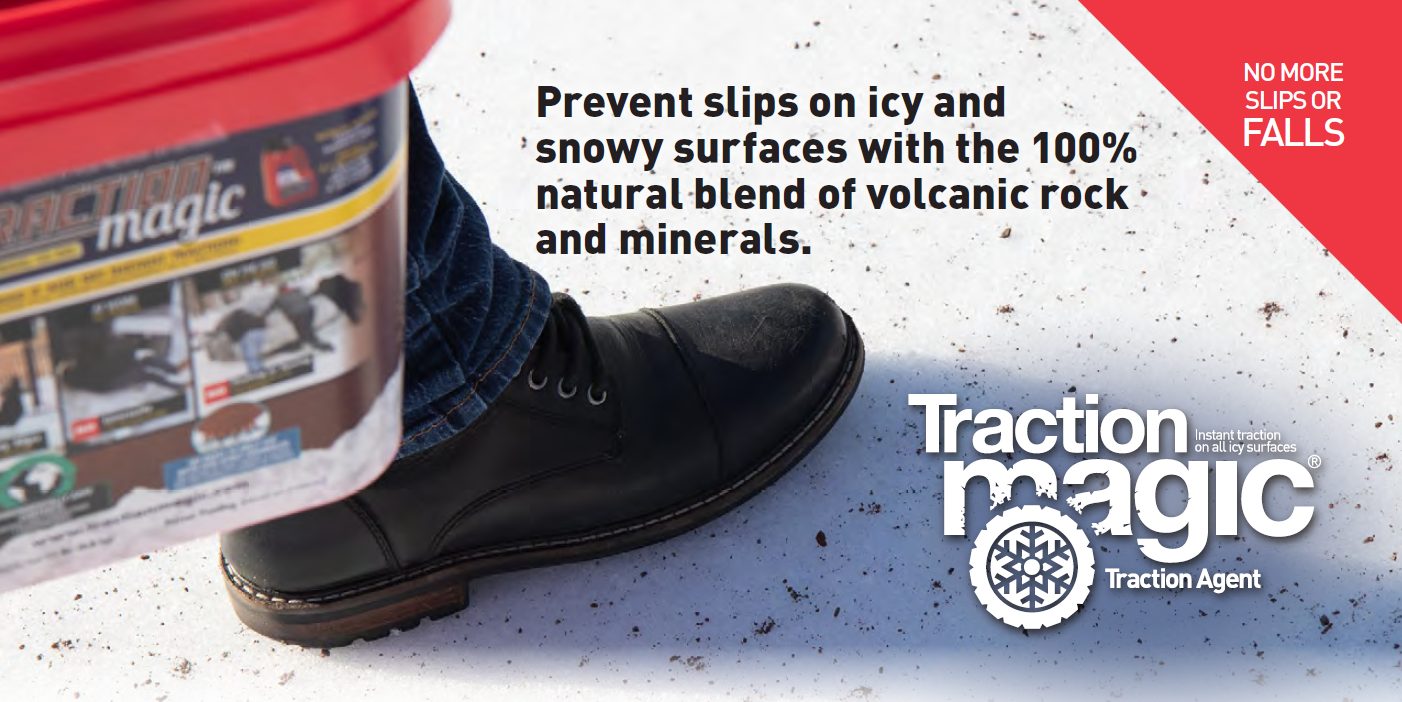
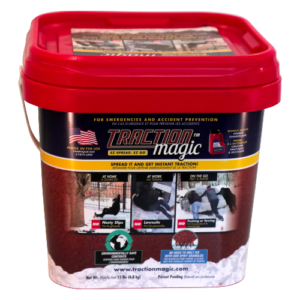
Traction Magic
Stay safe on slippery surfaces with a product that’s 100% natural and safe for pets, people, and your property. Use Traction Magic on sidewalks, steps, or as instant traction for your car.
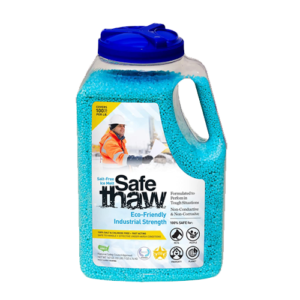
Safe Thaw
Imagine an ice melt you can put down and never worry about. It won’t harm pets, kids and your property. That’s Safe Thaw. Unlike anything else on the market, Safe Thaw can change how winter affects our planet.
Ice Traction (with Traction Magic™)
Ice Traction (with Traction Magic™) is your go-to winter solution for driveways, walkways, parking lots — and even black ice on the road. Unlike salt or ice melts, it delivers instant grip on snow and slippery surfaces with no wait time. Just spread and go.

Safe Thaw
Imagine an ice melt you can put down and never worry about. It won’t harm pets, kids and your property. That’s Safe Thaw. Unlike anything else on the market, Safe Thaw can change how winter affects our planet.
Related Articles
- Cold Air and Potential New Weather System Expected in Western U.S. on February 20
- January 23 Snowstorm: Prepare Your Roof for Winter’s Fury
- How Much Snow Can Your Roof Hold? Understanding The Limits
- Would Safe Paw Harm The Rubber Base Of The Roof?
- Can You Use Safe Paw For Ice Dams On Roofs?