


What to Do After Walking Your Dog: Paw Cleaning and Winter Safety Tips

After every walk, inspect your dog’s paws. If they are dirty or exposed to salt, ice melt, mud or slush, rinse or wipe the pads and between the toes with lukewarm water, then dry thoroughly. If the paws are clean and dry, inspection may be enough.
This exposure-based routine helps remove outdoor contaminants without unnecessary washing.
Source: ASPCA, Walking Your Dog in a Winter Wonderland? Protect Your Pet’s Paws with These Tips, December 15, 2014, “Towel off.” The ASPCA recommends washing and drying paws after winter walks and checking for cracks or redness.
Read the ASPCA winter paw-care guidance.
Publisher: Safe Paw | Gaia Enterprises
Last editorial and source check: November 24, 2026
Independent veterinary review: Pending
Medical evidence: Published ASPCA and Pet Poison Helpline guidance
Quick Answer: Your After-Walk Routine
| Paw Condition | Recommended Action |
|---|---|
| Clean and dry | Inspect; additional washing may not be necessary |
| Muddy or visibly dirty | Gently rinse or wipe, then dry |
| Exposed to road salt or ice melt | Remove residue from pads and between toes; prevent licking until clean |
| Snow or ice trapped in fur | Remove carefully, then dry |
| Red, cracked or irritated | Clean gently and monitor; obtain veterinary advice if persistent |
| Bleeding, severely painful or persistently limping | Seek veterinary assessment |
| Suspected deicer ingestion | Contact a veterinarian or animal poison-control service promptly |
Important: The full routine is described below. Cleaning is based on exposure, not a requirement to use soap after every walk.
Why Post-Walk Paw Checks Matter
Dogs encounter different outdoor conditions during their walks.
A short walk on a dry, clean path may leave paws relatively clean. Walking through mud, road salt, ice melt or slush can leave contaminants on the pads and fur.
Outdoor surfaces may also contain sharp objects, grit, debris or materials that cause irritation.
Common Hazards
| Outdoor Exposure | Possible Concern |
|---|---|
| Road salt | Paw irritation and ingestion through grooming |
| Chemical ice melt | Product-dependent skin and ingestion risks |
| Mud and slush | Dirt and moisture trapped in fur |
| Snow and ice | Ice buildup between toes |
| Sharp debris | Cuts or punctures |
| Hot pavement | Paw-pad burns |
| Rough ground | Abrasion |
| Standing water | Contamination or prolonged moisture exposure |
A brief post-walk inspection helps owners identify visible problems and decide whether cleaning is necessary.
Source: ASPCA, Cold Weather Safety Tips, recommendations on winter paw checks and cleaning.
Read ASPCA cold-weather safety advice.
How to Clean Your Dog’s Paws After Walking
Clean according to exposure rather than using soap automatically.
Inspect Before Washing
Examine the paw pads, spaces between toes and surrounding fur.
Look for dirt, road salt, trapped ice, cracks, redness and foreign objects.
If the paws are clean and dry, inspection may be all that is needed.
Use Lukewarm Water When Paws Are Dirty
For ordinary mud or winter deicer residue, use comfortably lukewarm water or a suitable damp cloth.
Clean the paw pads gently.
Avoid using hot water on cold, tender or irritated skin.
Clean Between the Toes
Dirt, grit and snow can accumulate between the toes.
Check these spaces carefully and remove loose material without pulling forcefully.
Do not attempt to extract deeply embedded objects.
Prevent Licking Until Deicer Residue Is Removed
The ASPCA Animal Poison Control Center identifies licking contaminated paws as a possible ice-melt ingestion route.
The ASPCA recommends wiping paws after exposure and preventing licking until they are clean.
Pinpoint source: ASPCA, Keeping Pets Safe during Winter: The Dangers of Ice Melts, December 4, 2018, opening exposure discussion and prevention recommendation concerning paw wiping.
Dry Paws Thoroughly
Use a clean towel to dry the pads and spaces between toes.
Gently remove trapped snow or ice from paw fur.
Avoid aggressive rubbing, especially where the skin appears irritated.
Should You Use Dish Soap After Every Walk?
No. Household dishwashing liquid should not be the default cleanser after every walk.
Ordinary rinsing or wiping may be sufficient for routine dirt and winter residue.
Frequent cleaning with unsuitable products may contribute to skin dryness or irritation.
For unusual chemical exposure, follow veterinary or poison-control instructions rather than relying on household cleaners.
Signs of Paw Injury or Irritation
Healthy paw pads vary naturally in color and texture.
Look for changes from your dog’s normal condition.
Possible Warning Signs
- New cuts or punctures.
- Bleeding.
- Cracked paw pads.
- Redness between toes.
- Swelling.
- Tenderness.
- Persistent licking.
- Limping.
- Refusal to bear weight.
- Embedded debris.
Minor Dirt Versus Injury
Ordinary surface dirt can often be removed gently at home.
A deep cut, embedded sharp object or significantly painful paw requires veterinary assessment.
Do not use human pain medications or wound treatments without appropriate veterinary guidance.
Why Persistent Limping Needs Attention
Limping can result from a paw injury or a problem elsewhere in the limb.
If limping continues, worsens or is accompanied by significant pain, contact a veterinarian.
Winter Ice Melt and Road Salt: How Dogs Are Exposed
Winter deicing materials are used on roads, sidewalks, stairs and other paved surfaces.
Dogs may contact these materials while walking.
Common Exposure Routes
| Exposure | Independent Evidence |
|---|---|
| Walking through treated pavement | ASPCA, December 4, 2018 |
| Licking residue from paws | ASPCA, December 4, 2018; Handley, DVM |
| Eating contaminated snow or slush | ASPCA, December 4, 2018 |
| Eating loose granules | ASPCA, December 4, 2018 |
| Accessing unsecured containers | ASPCA, December 4, 2018 |
Source: ASPCA, Keeping Pets Safe during Winter: The Dangers of Ice Melts, opening three paragraphs.
Veterinarian Heather Handley, DVM, also explains that dogs commonly encounter road salt on their paws and may ingest small amounts while grooming.
Source: Heather Handley, DVM, Road Salt Safety Tips for Pets, Pet Poison Helpline, paragraphs discussing exposure during walks.
Read the veterinary-authored road-salt guidance.
Does Every Paw Contact Cause Poisoning?
No.
Paw contact alone does not establish systemic toxicity.
Risk varies according to the substance, amount ingested, duration of exposure, dog size and individual health.
Nevertheless, cleaning contaminated paws is a practical way to reduce avoidable irritation and ingestion.
Pet Friendly Ice Melt – Safe Paw!
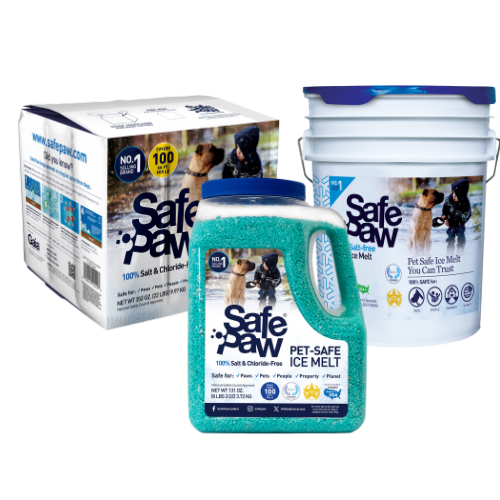
The Original and the #1 Child and Pet Safe Ice Melt for over 20 years. Guaranteed environmentally safe – will not harm waterways and sensitive wetlands.
Deicer Ingredients and What the Evidence Supports
Different ice melts can contain different compounds, and their risks should not be treated as identical.
Ingredient-Specific Evidence
| Ingredient | Supported Concern | Source |
|---|---|---|
| Sodium chloride | Excessive ingestion may cause gastrointestinal and neurological symptoms | Pet Poison Helpline, Salt |
| Calcium chloride | Ingestion can cause oral ulceration in some cases | ASPCA, December 4, 2018 |
| Magnesium chloride | Some products containing this ingredient may cause stomach upset if ingested | ASPCA, December 4, 2018 |
| Potassium chloride | Identified as a common deicing ingredient; effects depend on exposure | ASPCA, December 4, 2018 |
| Urea-based deicers | Some pet-friendly formulations may still cause gastrointestinal upset | ASPCA, December 4, 2018 |
| Proprietary blends | Actual risk depends on composition and exposure | Requires product-specific evidence |
Sodium Chloride Toxicity
Pet Poison Helpline identifies excessive sodium chloride ingestion as a cause of gastrointestinal upset and potentially serious neurological symptoms.
Its sodium chloride entry lists vomiting, diarrhea, disorientation, stumbling, tremors, seizures and collapse among possible severe outcomes.
Pinpoint source: Pet Poison Helpline, Salt, “Toxicity to pets.”
Read sodium chloride toxicity guidance.
Calcium Chloride and Mouth Injury
The ASPCA Animal Poison Control Center states that ice melts containing calcium chloride may cause ulceration of the mouth following ingestion.
Source: ASPCA, December 4, 2018, paragraph describing ingredient-related clinical effects.
That statement does not mean that every minor contact causes oral injury.
Magnesium Chloride and Urea
The ASPCA notes that some products marketed as pet-friendly contain magnesium chloride or urea.
These products may still cause stomach upset when ingested.
Source: ASPCA, December 4, 2018, paragraph discussing pet-friendly formulations.
Why Formulation Matters
The ingredient name alone cannot determine the severity of an exposure.
Actual risk depends on the product, amount swallowed, route of exposure and dog’s condition.
This article does not independently rank commercial ice melts by toxicity.
What to Do if Your Dog Eats Ice Melt
If you know or suspect that your dog has swallowed ice melt, contact a veterinarian or animal poison-control service promptly.
Do not wait for severe symptoms to develop.
Immediate Response
- Move your dog away from the product.
- Prevent further exposure.
- Keep the package or ingredient information available.
- Note the approximate amount and time of ingestion, if known.
- Contact a veterinarian or poison-control specialist.
- Follow their instructions.
Do not induce vomiting unless directed by a veterinary professional.
Pet Poison Helpline specifically warns that salt or salt water must not be used to induce vomiting because this can cause salt poisoning.
Source: Pet Poison Helpline, Salt, “Toxicity to pets.”
Symptoms That Require Urgent Attention
| Symptom | Relevant Evidence |
|---|---|
| Vomiting or diarrhea | ASPCA ice-melt guidance |
| Oral injury after calcium chloride ingestion | ASPCA ice-melt guidance |
| Marked weakness or abnormal behavior | Veterinary evaluation needed |
| Disorientation or stumbling | Pet Poison Helpline sodium chloride guidance |
| Tremors | ASPCA and Pet Poison Helpline |
| Seizures | ASPCA and Pet Poison Helpline |
| Collapse | Pet Poison Helpline sodium chloride guidance |
These symptoms can have multiple causes, and a veterinarian must determine the appropriate diagnosis and treatment.
Verified Animal Poison-Control Contacts
| Organization | Telephone |
|---|---|
| ASPCA Animal Poison Control Center | 888-426-4435 |
| Pet Poison Helpline | 855-764-7661 |
Phone numbers verified November 24, 2026 against the organizations’ official websites. Both services indicate that consultation fees may apply.

Dog Boots and Paw Balm
Dog boots and suitable protective products may help reduce direct paw contact with winter hazards.
Dog Boots
Properly fitted boots can reduce contact with road salt, gritty surfaces and ice.
The ASPCA identifies boots as an option for limiting contact with winter irritants.
Source: ASPCA, Walking Your Dog in a Winter Wonderland?, December 15, 2014, “New shoes, please.”
Paw Balm
Pet-appropriate paw protectants may help condition or protect paw pads.
Use them according to their instructions.
Avoid applying products to significant wounds without veterinary advice.
Important Limitation
Boots and balms do not remove contamination.
Where exposure has occurred, follow the cleaning guidance in How to Clean Your Dog’s Paws After Walking.
Cold-Weather Walking Precautions
Dogs vary in their tolerance of cold weather.
Factors include:
- Age.
- Size.
- Coat type.
- Health.
- Wind.
- Wet conditions.
- Length of exposure.
- Acclimatization.
Dogs That May Need Additional Protection
Puppies, senior dogs, small dogs, short-haired dogs and those with certain medical conditions may require shorter walks or additional protection.
Signs of Cold Discomfort
Watch for shivering, repeated paw lifting, reluctance to walk, weakness or attempts to seek shelter.
Return indoors if your dog appears uncomfortable or the conditions are hazardous.
Is There a Universal Cold-Weather Temperature Limit?
No.
A single temperature threshold does not account for all dogs and exposure conditions.
For individualized limits, particularly with health concerns, consult your veterinarian.
Source: ASPCA – Cold Weather Safety Tips.
Summer Paw Care After Walking
Paw safety is important outside winter.
Hot pavement can cause burns and pain.
Avoid Overheated Surfaces
Schedule walks for cooler periods and choose shaded routes where possible.
Do not assume a topical paw product makes dangerously hot pavement safe.
Watch for Paw Burns
Limping, damaged pads, tenderness and unusual licking may indicate injury.
Seek veterinary guidance if a burn is suspected.
Common After-Walk Mistakes
| Mistake | Better Practice |
|---|---|
| Washing every clean paw with soap | Clean according to exposure |
| Skipping inspections | Check paws after every walk |
| Allowing licking of deicer-contaminated paws | Remove residue first |
| Leaving ice trapped between toes | Remove carefully |
| Scrubbing irritated skin aggressively | Use gentle handling |
| Ignoring persistent limping | Seek veterinary assessment |
| Using human pain medication | Obtain veterinary guidance |
| Treating pet-friendly labels as ingestion approval | Verify actual safety documentation |
| Leaving deicer containers accessible | Store securely |
When to Contact a Veterinarian
| Observation | Recommended Action |
|---|---|
| Clean paws without symptoms | Inspection may be sufficient |
| Ordinary mud | Routine gentle cleaning |
| Mild dryness | Appropriate paw care and monitoring |
| Persistent redness or licking | Veterinary advice |
| Ongoing limping | Veterinary evaluation |
| Deep cut or severe swelling | Prompt veterinary care |
| Suspected deicer ingestion | Contact veterinary or poison-control service promptly |
| Tremors, seizures or collapse | Emergency veterinary care |
This is general guidance rather than a diagnosis.
Pet Safe Ice Melt – Safe Paw
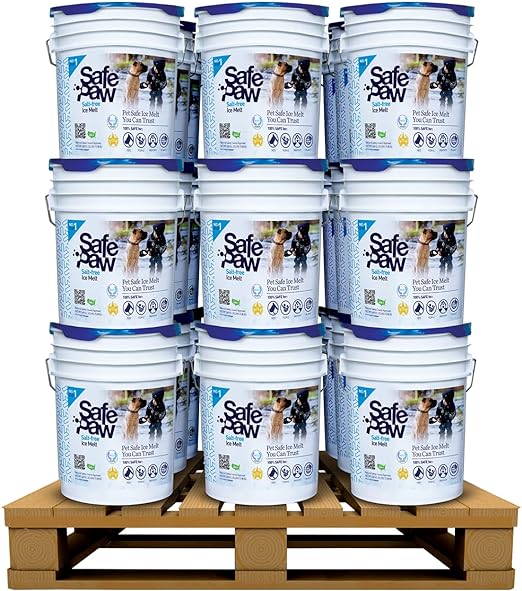
Safe Paw, Child Plant Dog Paw & Pet Safe Ice Melt -35lb, 36 Pails

Safe Paw, Child Plant Dog Paw & Pet Safe Ice Melt -22lb, 100Bboxes
Safe Paw, Child Plant Dog Paw Pet Safe Ice Melt, 160 Jugs

Pet Products Powered By EzPz.pet


Seasonal Paw-Care Checklist
| Season | Typical Exposure | Main Check |
|---|---|---|
| Winter | Deicers, ice, slush and snow | Contamination and irritation |
| Spring | Mud and moisture | Dirt and trapped debris |
| Summer | Hot pavement | Burns and tenderness |
| Autumn | Debris and wet surfaces | Cuts and irritation |
Conclusion
The most important after-walk decision is whether the paws need cleaning based on what your dog encountered outdoors.
Use the exposure-based routine near the top of this guide for everyday care.
For persistent injury, refer to Signs of Paw Injury or Irritation. For suspected ingestion, follow What to Do if Your Dog Eats Ice Melt.
Published ASPCA and Pet Poison Helpline guidance supports careful paw hygiene and appropriate response to toxic exposures. It does not establish that any commercial deicer is harmless under every circumstance.
Frequently Asked Questions
Should I Wash My Dog’s Paws After Every Walk?
Inspect after every walk. If paws are clean and dry, additional washing may not be necessary. Clean when dirt, salt, ice melt or other contaminants are present.
How Should I Clean Dog Paws After a Winter Walk?
See How to Clean Your Dog’s Paws After Walking for the complete routine, including lukewarm water, cleaning between toes and drying.
Can I Use Dish Soap on My Dog’s Paws?
Avoid routine dishwashing-liquid use. Water or a suitable pet-grooming product is generally preferable for ordinary cleaning.
Why Does My Dog Lick Its Paws After Walking?
Possible causes include grooming, debris, irritation or injury. Persistent licking warrants veterinary advice.
Can Road Salt Irritate Dog Paws?
Yes. Veterinarian Heather Handley’s Pet Poison Helpline guidance identifies dryness and irritation from road salt contact.
Can Dogs Become Sick From Eating Road Salt?
Yes. Excessive sodium chloride ingestion can cause gastrointestinal and neurological symptoms.
Are Pet-Friendly Ice Melts Safe to Swallow?
No product should be assumed safe to ingest based on marketing language.
Can Calcium Chloride Hurt a Dog’s Mouth?
The ASPCA identifies possible oral ulceration from ingestion of calcium chloride-containing ice melt.
What if My Dog Eats Ice Melt?
Follow What to Do if Your Dog Eats Ice Melt and contact a veterinarian or animal poison-control service promptly.
What Are Signs of Salt Poisoning in Dogs?
Pet Poison Helpline identifies vomiting, diarrhea, disorientation, stumbling, tremors and seizures among possible symptoms.
Should I Induce Vomiting After Ice Melt Ingestion?
Not without veterinary instruction. Never use salt or salt water to induce vomiting.
Do Dog Boots Help Protect Against Road Salt?
Properly fitted boots may reduce direct paw contact with salt and other winter materials.
Can Paw Balm Replace Cleaning?
No. Paw balm does not remove deicer residue or debris.
How Cold Is Too Cold to Walk a Dog?
There is no universal temperature limit. Consider your dog’s individual characteristics and weather conditions.
Can Hot Pavement Burn Dog Paws?
Yes. Avoid dangerously hot surfaces and seek veterinary care for suspected burns.
When Should I Contact a Veterinarian About Paw Irritation?
Seek advice for persistent irritation, pain, swelling, limping or suspected toxic exposure.
Who Can Help With Suspected Pet Poisoning?
Your veterinarian, ASPCA Animal Poison Control at 888-426-4435, or Pet Poison Helpline at 855-764-7661.
References and Source Verification
ASPCA — Winter Paw Cleaning
Title: Walking Your Dog in a Winter Wonderland? Protect Your Pet’s Paws with These Tips
Publisher: American Society for the Prevention of Cruelty to Animals
Published: December 15, 2014
Relevant sections: “Towel off,” “New shoes, please,” and paw protection recommendations.
Supports: Washing and drying after winter exposure, checking for cracks and irritation, and considering boots.
Read the original ASPCA article.
Link and content checked: November 24, 2026.
ASPCA Animal Poison Control — Ice Melt Exposure
Title: Keeping Pets Safe during Winter: The Dangers of Ice Melts
Published: December 4, 2018
Relevant passages:
- Opening paragraphs: deicer ingredients and exposure through paw licking or contaminated snow.
- Clinical-effects paragraph: gastrointestinal symptoms, sodium-associated neurological effects and possible calcium chloride oral injury.
- Prevention recommendations: cleaning paws, avoiding ingestion, boots and secure storage.

New Product Launch – Ice Traction (with Traction Magic™)
Ice Traction is your go-to winter solution for driveways, walkways, parking lots — and even black ice on the road. Unlike salt or ice melts, it delivers instant grip on snow and slippery surfaces with no wait time. Just spread and go.
Other Ice Melt Products
Walk On Ice
Prevent slips at home, work or on the go, The handy disposable canister can be taken everywhere, with the same 100% naturally occurring minerals that provide instant traction on ice or snow.
Safe Thaw
Imagine an ice melt you can put down and never worry about. It won’t harm pets, kids and your property. That’s Safe Thaw. Unlike anything else on the market, Safe Thaw can change how winter affects our planet.