



Debunked: The Myth Of Salt’s Effect On Concrete
Yes, deicing salt can contribute to concrete damage, but the effect is not automatic or identical for every slab. Risk increases when concrete is porous, poorly cured, non-air-entrained, cracked, saturated, exposed to repeated freeze-thaw cycles or contains reinforcing steel.
Sodium chloride can increase saturation and freeze-thaw scaling and introduce chlorides that promote corrosion of embedded steel. Calcium chloride and magnesium chloride can also contribute to chemical reactions that weaken cement paste under some exposure conditions. Sound, well-cured, air-entrained concrete with good drainage and controlled deicer application is more resistant, but no deicer should be described as universally harmless.
To reduce risk, remove snow mechanically first, use only the amount stated on the product label, sweep excess granules after the event, improve drainage and inspect the concrete for scaling, spalling, cracking or rust staining.
Key Takeaways
• Salt is a contributing factor in concrete deterioration; it is not merely an unrelated winter bystander.
• Damage depends on the concrete, moisture, temperature cycling, deicer chemistry and application practice.
• Freeze-thaw scaling and chloride-induced steel corrosion are different mechanisms.
• Calcium chloride and magnesium chloride may also cause chemical deicer distress in cement paste.
• New, weak, cracked, saturated, decorative and reinforced concrete require extra caution.
• Air entrainment, good curing, proper drainage and adequate strength improve resistance.
• A sealer may reduce water and chloride ingress but does not make concrete immune.
• Shovel or plow first and use the minimum label-directed deicer amount.
• Sweep excess granules and remove chloride-laden slush after the weather event.
• “Pet-safe,” “chloride-free” and “concrete-safe” are separate claims that require separate evidence.
The frosty embrace of winter, while beautiful, brings a slew of problems for homeowners and businesses, primarily how to keep walkways and driveways ice-free. Many often turn to salt as a de-icing solution without a second thought. However, the question remains: does salt damage concrete? This article dives deep into the relationship between salt and concrete, aiming to clear up any misconceptions and provide safer alternatives.
How Deicing Salts Affect Concrete
| Mechanism | What happens | Where it matters |
|---|---|---|
| Freeze-thaw scaling | Deicer brine can increase saturation and alter freezing behavior near the surface; repeated cycles can remove cement paste | Exterior concrete exposed to freezing, moisture and deicers |
| Chloride ingress and steel corrosion | Chloride ions can reach embedded steel, disrupt passivation and support corrosion when moisture and oxygen are present | Reinforced slabs, steps, parking structures and concrete containing metal |
| Chemical deicer distress | Calcium and magnesium chloride can react with cementitious phases and form expansive or weakening products under some conditions | Concrete exposed to concentrated CaCl2 or MgCl2 brines |
| Osmotic/hydraulic pressures | Salt concentration and freezing water movement can contribute to internal and near-surface stress | Saturated, porous or inadequately air-entrained concrete |
| Physical abrasion and tracking | Granules, sand and repeated traffic can abrade surfaces and carry residue indoors | Entrances, steps, driveways and commercial walkways |
Risk Factors
• Low-strength, porous or poorly consolidated concrete
• Insufficient curing or early deicer exposure
• Inadequate air entrainment in freeze-thaw environments
• Cracks, open joints, pitting or existing scaling
• Poor drainage, standing water or snow piles that keep the slab saturated
• Frequent freeze-thaw cycles and repeated concentrated applications
• Embedded reinforcing steel or metal near the surface
• Decorative finishes, sealers or coatings with product-specific limitations
Warning Signs
| Sign | Possible meaning | Recommended response |
|---|---|---|
| White film or crystals | Surface deicer residue or efflorescence | Clean and identify the moisture/source condition |
| Scaling or flaking | Loss of near-surface cement paste | Stop aggressive cleaning and assess concrete quality/exposure |
| Spalling or pits | Deeper physical deterioration | Repair evaluation; cleaning alone is insufficient |
| Rust stains or cracks over steel | Possible reinforcement corrosion | Engineering or concrete-repair evaluation |
| Dull or discolored decorative finish | Cleaner/deicer/sealer incompatibility | Consult the coating/sealer manufacturer |
Common Myths and Facts About Deicing Salts and Concrete
| Myth | Fact |
|---|---|
| Salt never directly damages concrete. | Deicing salts can contribute to both physical and chemical deterioration. The mechanism depends on the salt type, concrete properties, and exposure conditions. |
| All concrete responds the same way. | Strength, permeability, air entrainment, curing, drainage, cracking, and reinforcement can all influence the level of risk. |
| All deicers are chemically equivalent. | Sodium chloride, calcium chloride, and magnesium chloride differ in temperature performance, moisture behavior, and chemical interaction with concrete. |
| Damage is caused only by freeze-thaw cycles. | Freeze-thaw scaling is important, but chloride-related reinforcement corrosion and chemical deicer distress can also contribute to deterioration. |
| A sealer makes concrete salt-proof. | A compatible sealer may reduce moisture and chloride ingress, but surface preparation, maintenance, wear, and moisture conditions still affect performance. |
| Pet-safe automatically means concrete-safe. | Pet exposure, concrete durability, and environmental impact are separate considerations and require separate supporting evidence. |
| No visible stain means there is no risk. | Chlorides can penetrate below the surface without obvious staining, particularly in cracked or reinforced concrete. |
Winter Concrete Protection: Pros, Cons & Best Practices
| Winter strategy | Advantages | Limitations / risks | Best use |
|---|---|---|---|
| Mechanical removal first | Reduces chemical demand and residue | May leave bonded ice; requires labor/equipment | All surfaces before applying a deicer |
| Minimal label-rate deicer | Can break the ice-pavement bond | Overapplication raises chloride/residue exposure | Residual bonded ice on approved surfaces |
| Traction grit | Adds immediate grip without relying on melting | Does not melt; can track, abrade or clog drains | Very cold conditions or temporary traction |
| Compatible penetrating sealer | May reduce water/chloride ingress | Not permanent; wrong product/preparation can fail | Sound, dry concrete after professional/product evaluation |
| Frequent post-storm cleanup | Removes excess granules and chloride-laden slush | Requires timely maintenance and runoff control | Entrances, steps, driveways and commercial sites |
| No deicer use | Avoids deicer exposure | May leave dangerous ice unless another method works | Sensitive/new surfaces with an effective alternative plan |
Pet-Friendly Ice Melt
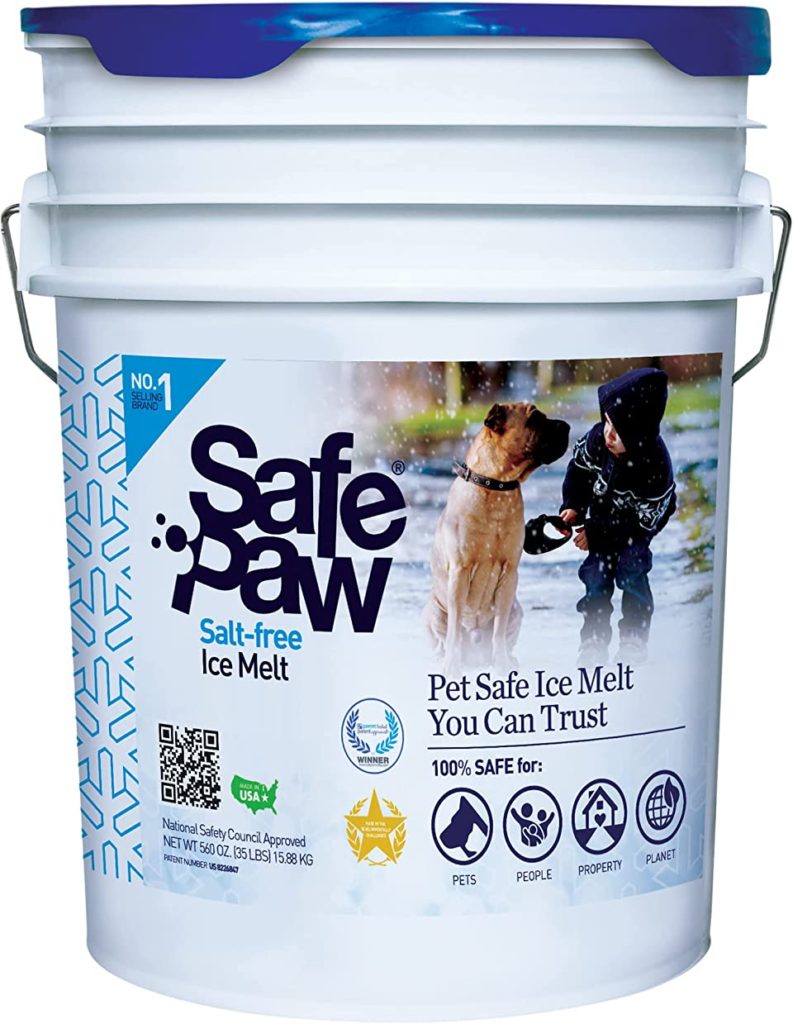
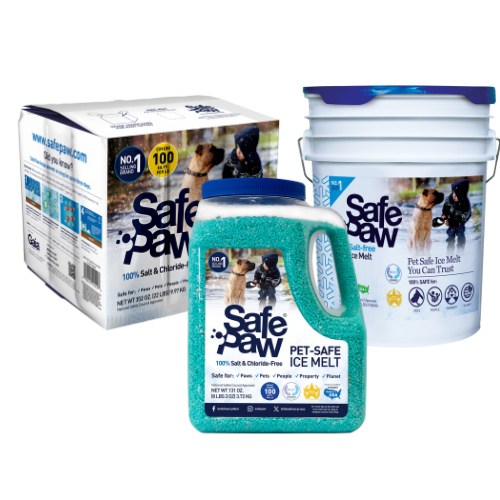
Safe Paw
The Original and the #1 Child and Pet Safe Ice Melt for over 20 years. Guaranteed environmentally safe – will not harm waterways and sensitive wetlands.
| IMPORTANT CONCRETE AND DEICER WARNINGS • Do not describe any deicer as harmless to every concrete surface. • Do not use a deicer on new, weak, damaged, decorative, coated or sealed concrete unless the concrete and product guidance permit it. • Do not use more than the label rate or leave concentrated piles on the slab. • Do not mix deicers or add unapproved chemicals. • Do not seal damp concrete or concrete with an unresolved drainage or moisture problem. • Do not interpret white residue as proof of structural damage; inspect for scaling, spalling, cracks and rust staining. • Do not pressure-wash or acid-clean deteriorated concrete in an attempt to repair it. • Follow product labels and Safety Data Sheets for PPE, storage, application, cleanup and disposal. • Keep chloride-rich runoff and excess product away from vegetation, surface water and storm drains where prohibited. • Reinforced concrete with corrosion signs requires professional assessment. • Manufacturer product claims should be linked to current test data and stated with their limitations. |
The Truth About Salt and Concrete
What’s the truth- does salt damage concrete? Contrary to popular belief, it’s not the salt directly causing harm. Instead, the process in which salt influences freeze-thaw cycles is the culprit behind most salt damage to concrete.
- Freeze-Thaw Cycle Explanation: Water expands when it freezes. When water enters concrete pores and freezes, it exerts pressure, leading to cracks. Salt lowers water’s freezing point, causing it to thaw and refreeze repeatedly as temperatures fluctuate. This cycle exacerbates the wear and tear on concrete.
- Chloride Content: Salt, especially rock salt, is sodium chloride. Chlorides can penetrate concrete and corrode its steel reinforcements, undermining the structural integrity.
- Surface Erosion: While salt facilitates ice melting, the resulting brine can weaken the surface of the concrete, making it more susceptible to chipping and scaling.

Common Deicer Comparison: Concrete Risks, Uses & Considerations
| Option | Concrete-related concern | Other consideration | Neutral page wording |
|---|---|---|---|
| Sodium chloride / rock salt | Freeze-thaw scaling, chloride ingress and reinforcement corrosion risk | Common and relatively inexpensive; lower cold-temperature performance than some chlorides | Can contribute to deterioration; risk depends on slab and exposure |
| Calcium chloride | Chloride ingress plus documented chemical deicer-distress mechanisms | Works at lower temperatures and attracts moisture | Use only with product/surface guidance; do not call concrete-safe universally |
| Magnesium chloride | Chloride ingress and documented chemical interaction concerns | Hygroscopic; residue may remain damp | Use qualified, source-backed wording |
| CMA / acetate products | Different chemistry; not automatically risk-free | Cost, oxygen demand and formulation vary | Compare exact product data and environmental context |
| Traction grit | Abrasion/tracking rather than chemical melting | Does not melt; requires cleanup | Useful for traction, not a replacement for snow removal |
| Safe Paw | Manufacturer promotes salt-free/chloride-free formulation | Performance, application and surface claims need current evidence | Identify as manufacturer/test-supported and disclose limitations |
Concrete Condition Guide: Deicer Risk & Recommended Approach
| Concrete condition | Relative vulnerability | Recommended approach |
|---|---|---|
| New or recently placed | Higher until strength, curing and surface durability develop | Follow contractor/supplier guidance; avoid universal timelines |
| Sound air-entrained exterior concrete | More resistant, not immune | Mechanical removal first; minimal product; cleanup and drainage |
| Cracked or scaled concrete | Higher because water/chlorides enter more easily | Repair evaluation and conservative winter treatment |
| Reinforced concrete | Corrosion risk if chlorides reach steel | Monitor cracks/rust; reduce chloride exposure; professional assessment when needed |
| Stamped, stained or sealed concrete | Finish-specific vulnerability | Follow decorative system and sealer manufacturer guidance |
Best For Recommendations
- Reducing chemical exposure: Remove snow first, then use minimal deicer.
- Vulnerable concrete: Follow a surface-specific winter care plan.
- Reinforced concrete: Improve drainage, repair cracks and limit chloride exposure.
- Very low temperatures: Check product limits; use traction grit when needed.
- Pet-focused households: Verify both pet and concrete safety guidance.
- Existing damage: Assess and repair damage instead of only changing deicers.
Common Misconceptions
There’s a persistent belief that salt damage concrete is solely due to winter’s harsh conditions and not salt usage. While winter conditions certainly play a role, using salt exacerbates the problem, turning minor issues into significant, costly repairs.
Pet Safe Ice Melt – Safe Paw
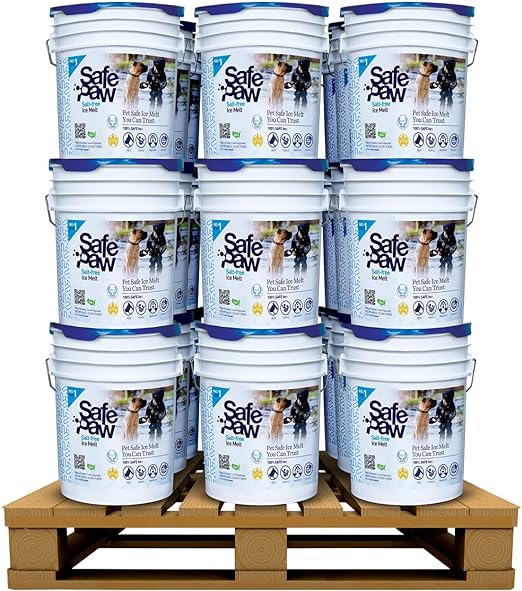
Safe Paw, Child Plant Dog Paw & Pet Safe Ice Melt -35lb, 36 Pails

Safe Paw, Child Plant Dog Paw & Pet Safe Ice Melt -22lb, 100Bboxes
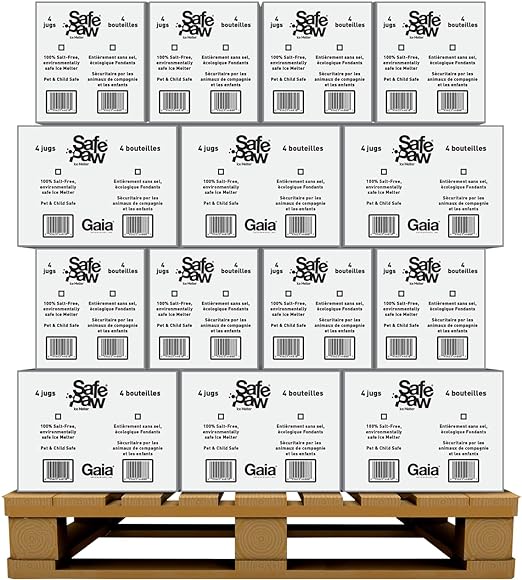
Safe Paw, Child Plant Dog Paw Pet Safe Ice Melt, 160 Jugs

Pet Products Powered By EzPz.pet


Chemical-Based Ice Melts: A Double-Edged Sword
While salt is a primary concern, various chemical-based ice melts on the market can be just as detrimental to concrete.
- Harsh Chemicals: Many ice melts contain chemicals that can react with concrete, leading to discoloration, scaling, or more severe structural issues.
- Environmental Impact: Runoff from chemical ice melts can harm plants, pollute waterways, and negatively impact local ecosystems.
The Safe Paw Alternative: A Safer Route for Concrete and Environment
Given the problems associated with salt and chemical ice melts, it’s crucial to find alternatives. Enter Safe Paw. Here’s why it stands out:
- No chloride: Safe Paw boasts a chloride-free formula, ensuring that concrete remains in pristine condition.
- Safety First: Designed with both humans and pets in mind, Safe Paw ensures everyone’s well-being. It’s a product you can trust around children, pets, and plants.
- Low-Temperature Efficacy: Not all ice melts are created equal. Safe Paw works efficiently even at temperatures as low as -2°F, a testament to its robust formula.
- Durable and Efficient: With an excellent spread rate and long shelf life, Safe Paw offers long-lasting protection without frequent reapplications.
Gaia Enterprises Inc. delivers 100% pet-safe and environmentally friendly winter products. Safe Paw, our flagship product, is the #1 selling pet-safe ice melt that does not harm pets, safe if ingested, and safe on all types of concrete.
Preventing Salt Damage to Concrete: Best Practices
- Use Alternatives: Switching to a safer ice melt like Safe Paw can significantly reduce the risk of damage to your concrete.
- Physical Removal: Before applying any de-icer, shovel away as much snow and ice as possible. This reduces the amount of de-icer you need and minimizes its contact with the concrete.
- Rinse and Repeat: Once the threat of ice is gone, rinse the treated areas to wash away any residual de-icing product. This minimizes prolonged exposure.
Wrapping Up: Knowledge is Power
Understanding the real effects of salt on concrete is the first step in preventing potential damage. Hope you have a better idea of the question- does salt damage concrete? While the allure of salt as a cheap and accessible ice melt is strong, the long-term costs and risks associated with its use on concrete surfaces are undeniable. Choosing products like Safe Paw, which are specifically designed to be gentle on concrete while effectively melting ice, is a wise decision for the longevity of your surfaces and the safety of those who tread on them.
FAQs

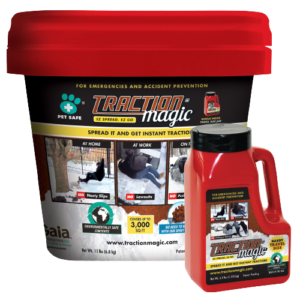
Stay safe and confident this winter with Traction Magic!
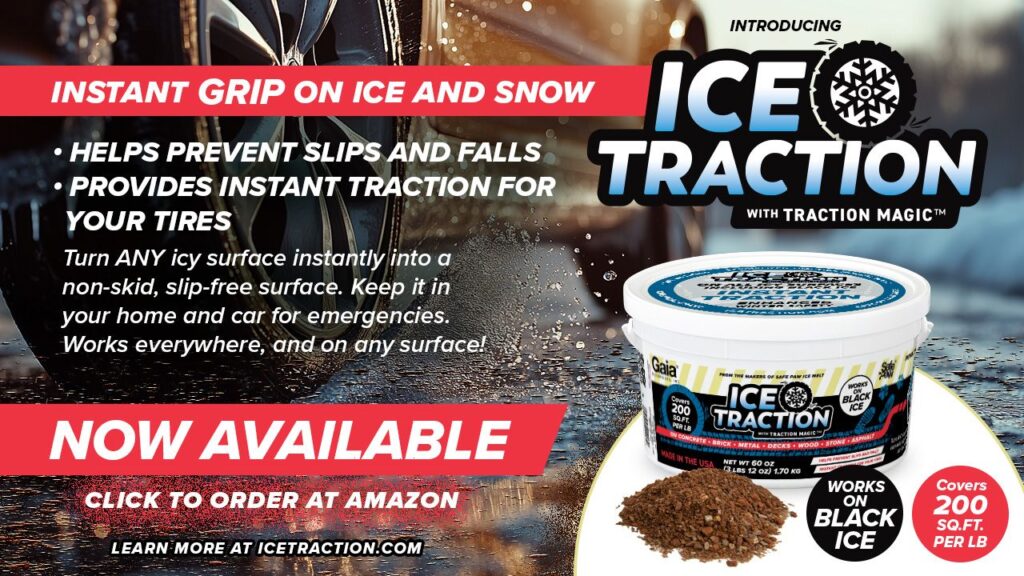
This innovative, 100% natural product offers instant traction on any icy surface. Whether you’re navigating your sidewalk, steps, or driveway, Traction Magic helps you stay upright and prevents falls.
Try Our Other Winter Safety Products
Walk On Ice
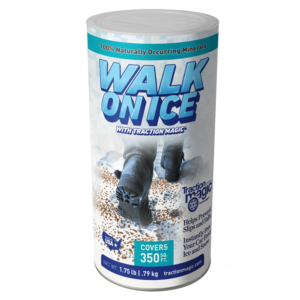
Prevent slips at home, work or on the go, The handy disposable canister can be taken everywhere, with the same 100% naturally occurring minerals that provide instant traction on ice or snow.
Traction Magic
Stay safe on slippery surfaces with a product that’s 100% natural and safe for pets, people, and your property. Use Traction Magic on sidewalks, steps, or as instant traction for your car.
Walk On Ice
Prevent slips at home, work or on the go, The handy disposable canister can be taken everywhere, with the same 100% naturally occurring minerals that provide instant traction on ice or snow.
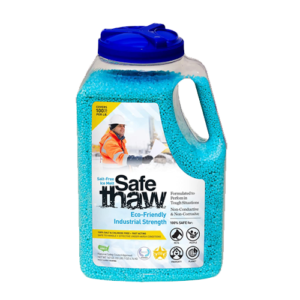
Safe Thaw
Imagine an ice melt you can put down and never worry about. It won’t harm pets, kids and your property. That’s Safe Thaw. Unlike anything else on the market, Safe Thaw can change how winter affects our planet.

Related Posts