


Snow Salt: How It Works And Its Impact On Our Environment
How Does Road Salt Work and Affect the Environment? Quick Answer
Road salt, usually sodium chloride (NaCl), helps control winter ice by dissolving into available water and forming brine with a freezing point below 32°F (0°C). This can loosen bonded ice and help prevent refreezing under suitable conditions. The environmental trade-off is chloride: runoff and infiltration can increase chloride concentrations in soil, streams, lakes, and groundwater, where elevated salinity can harm aquatic organisms, stress vegetation, affect drinking-water sources, and increase infrastructure corrosion.
EPA’s current salt assessment says excess salt contributes to freshwater salinization, harms aquatic life, pollutes drinking-water sources, and damages infrastructure. USGS identifies road salt as a major human source of chloride in surface water and groundwater. (US EPA)
As winter arrives, the familiar sight of snow-covered landscapes beckons us to find effective solutions for snow and ice removal. Road salt or rock salt generally refers to sodium chloride used for winter deicing. “Ice melt” is a broader category that may contain sodium chloride, calcium chloride, magnesium chloride, acetates or other deicing compounds. However, it is essential to understand how snow salt works and its impact on our environment.
In this article, we will explore the mechanics of snow salt and delve into its environmental implications. By gaining insights into the effectiveness of snow salt and its potential consequences, we can make informed decisions about its usage while considering the ecological well-being of our surroundings. Join us as we uncover the intricacies of snow salt and its role in maintaining safe winter environments with a responsible approach towards our environment.
Key Takeaways About Road Salt and the Environment
- Road salt is primarily sodium chloride (NaCl).
- “Ice melt” is a broader category and should not be used as an exact synonym for road salt.
- Salt works only after it dissolves and forms brine.
- A sodium-chloride solution has a theoretical eutectic temperature near -5.8°F (-21°C) at about 23.3% NaCl by weight. (Federal Highway Administration)
- This eutectic value is not the practical working temperature of ordinary road salt.
- FHWA notes that many agencies consider conventional salt impractical at about 15°F (-9°C) or below because its action becomes too slow. (Federal Highway Administration)
- Chloride from winter deicing can enter streams, lakes, soils, and groundwater.
- EPA identifies road salt as one contributor to freshwater salinization syndrome. (US EPA)
- USGS reports that chloride can remain elevated even outside the winter deicing season because contaminated groundwater can slowly discharge to streams. (USGS)
- In 2025, highway deicing accounted for about 37% of total U.S. salt consumption, according to the USGS 2026 Mineral Commodity Summary. (USGS Publications)
- Reducing over-application, removing snow mechanically first, and using traction or suitable alternatives where appropriate can reduce salt loading.
How Road Salt Moves Through the Environment
After road salt dissolves, the resulting sodium and chloride ions can move with snowmelt and stormwater. Some runoff enters storm drains and surface waters directly, while some infiltrates soil and groundwater. Chloride is highly mobile in water, which means winter application can influence water quality beyond the immediate storm period.
Road application → brine → snowmelt/runoff → soil → groundwater → streams/lakes
USGS specifically reports that road salt is a major human source of chloride to both surface water and groundwater and that shallow groundwater can retain winter chloride and release it to streams later. (USGS)
Understanding Snow Salt And Its Function
The Role of Snow Salt in Ice and Snow Management
Snow salt, also known as rock salt or road salt, is widely used to melt ice and snow by lowering the freezing point of water. It helps to create safer walking and driving conditions during winter storms.
Common Chloride-Based Deicers
- Sodium chloride: Common road salt / rock salt.
- Calcium chloride: A different chloride deicer with different phase behavior and low-temperature characteristics.
- Magnesium chloride: Another chloride-based deicer commonly used in liquid or solid winter treatments.
All three release chloride ions when dissolved. Replacing sodium chloride with another chloride salt may change performance characteristics, but it does not eliminate chloride loading to the environment.
FHWA lists sodium, calcium, and magnesium chloride as distinct deicing chemicals, while its environmental guidance notes that all three can leave chloride residues capable of contaminating groundwater and contributing to corrosion. (Federal Highway Administration)
Pet Safe Ice Melt
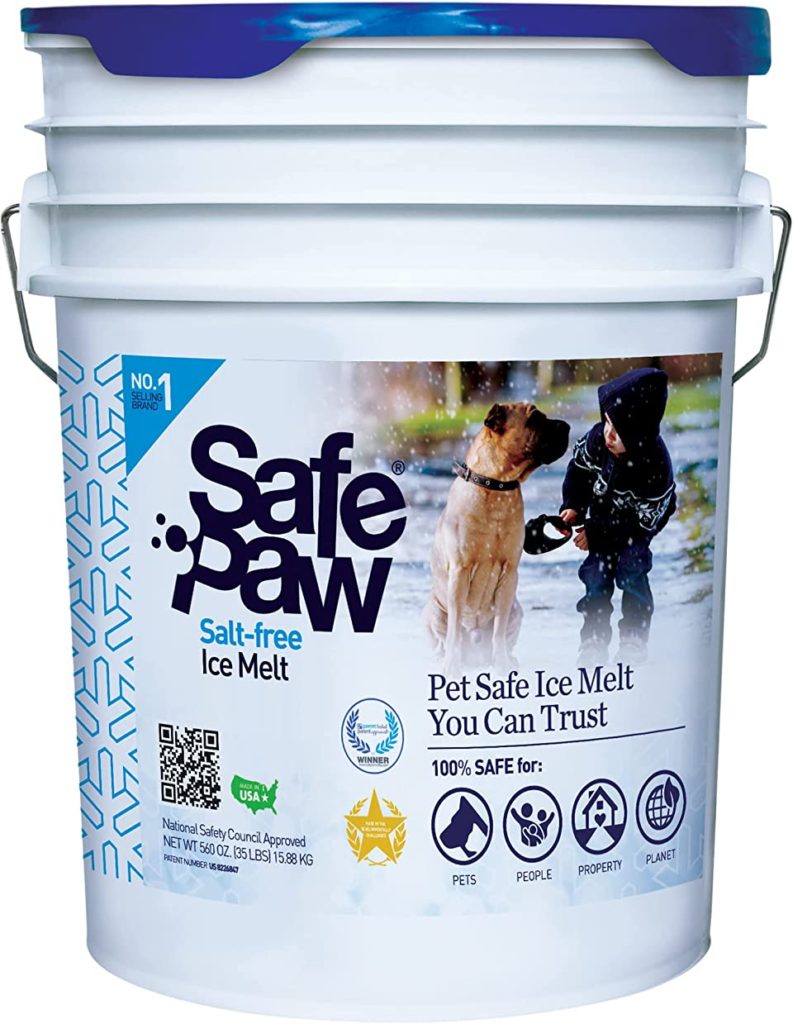
Safe Paw
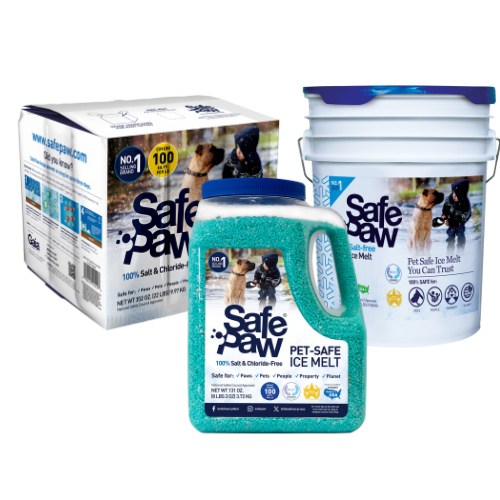
The Original and the #1 Child and Pet Safe Ice Melt for over 20 years. Guaranteed environmentally safe – will not harm waterways and sensitive wetlands.
Road Salt for Winter Deicing: Benefits and Environmental Limitations
| Factor | Benefit | Environmental / Practical Limitation |
| Ice control | Forms brine that lowers water’s freezing point | Performance slows substantially in colder pavement conditions |
| Availability | Widely available | High-volume use increases chloride loading |
| Cost | Generally economical | Environmental and infrastructure impacts create indirect costs |
| Road safety | Helps reduce bonded ice | Over-application provides diminishing benefit |
| Water quality | — | Chloride can enter streams, lakes and groundwater |
| Vegetation | — | Salt exposure can contribute to plant stress and vegetation loss |
| Infrastructure | — | Chlorides can increase corrosion |
| Soil | — | Salt can alter ionic conditions and soil chemistry |
| Aquatic ecosystems | — | Elevated salinity can harm freshwater organisms |
EPA’s current research identifies road salt as a source of increased ionic strength and links salinity with vegetation loss and decreased aquatic-vegetation productivity. (US EPA)
Important Context About Road Salt Environmental Claims
- Environmental impact depends on more than the type of salt. Application rate, storm frequency, pavement area, drainage, soil conditions, groundwater flow, receiving-water volume, and local climate all influence environmental exposure.
- Do not imply that every application causes immediate ecological damage. The strongest evidence concerns repeated or excessive loading and elevated chloride or salinity in receiving environments.
- Switching from sodium chloride to calcium chloride or magnesium chloride does not eliminate chloride pollution. All three release chloride ions.
- “Eco-friendly ice melt” should not be treated as a scientifically defined safety category. Environmental effects should be evaluated from the complete formulation, application rate, biodegradability, oxygen demand, nutrient loading, chloride content, and available product-specific evidence.
That last point is particularly important because the current article’s “Eco-Friendly Ice Melts” section assumes such products are safer simply because they contain “non-toxic ingredients.” (safepaw.com)
The Environmental Impact Of Snow Salt
Negative Effects On Vegetation And Soil
Excessive use of snow salt can lead to damage to vegetation and soil. Salt accumulation can inhibit plant growth, cause soil degradation, and disrupt the balance of ecosystems.
Contamination Of Water Sources
Elevated salinity can harm aquatic life and affect drinking-water sources and infrastructure. EPA research also notes that salinity can mobilize metals and other contaminants in soils and water systems, creating additional water-quality concerns.
EPA describes contaminant mobilization as part of freshwater salinization syndrome. (US EPA)

Sodium Chloride, Calcium Chloride and Magnesium Chloride: Winter Deicing and Chloride Impact
| Deicer | Main Ions in Water | FHWA Eutectic Temperature | Environmental Point |
| Sodium chloride | Na⁺ + Cl⁻ | -5.8°F (-21°C) | Adds chloride to runoff and groundwater |
| Calcium chloride | Ca²⁺ + Cl⁻ | -60°F (-51°C) | Still adds chloride |
| Magnesium chloride | Mg²⁺ + Cl⁻ | -28°F (-33°C) | Still adds chloride |
| CMA | Ca/Mg + acetate | -17.5°F (-27.5°C) | Non-chloride; different environmental trade-offs |
| Potassium acetate | K⁺ + acetate | -76°F (-60°C) | Non-chloride; application-specific environmental considerations |
FHWA provides these eutectic temperatures but explicitly does not present them as equivalent field-performance ratings. (Federal Highway Administration)
Important note: Eutectic temperature is a chemical solution property, not a guaranteed practical working temperature.
Which Winter Ice-Control Approach Fits Different Environmental Needs?
- For ordinary winter pavement: use only the amount of deicer needed after mechanical snow removal.
- For areas draining directly to streams or wetlands: minimize chloride loading and evaluate non-chloride or traction approaches.
- For immediate grip: consider Ice Traction, Walk On Ice, sand, or another traction material rather than adding more deicer.
- For very cold conditions: use product-specific performance data rather than relying on eutectic temperatures alone.
- For chloride-sensitive infrastructure: evaluate verified non-chloride formulations and corrosion implications.
- For new concrete: current Safe Paw first-party guidance recommends avoiding ice melt on concrete less than 12 months old and using traction/mechanical removal instead. (safepaw.com)
Alternatives To Snow Salt
Eco-Friendly Ice Melts
Environmental performance should be evaluated from the complete formulation. Chloride content, biodegradability, oxygen demand, nutrient loading, application rate and runoff pathway can all affect environmental impact. Safe Paw is a trusted ice melt product. It is non-toxic, pet-friendly, and roof-friendly, making it an ideal choice for protecting your home and environment. Safe Paw’s unique formula ensures fast and efficient ice melting without causing harm to the surrounding environment.
Mechanical Snow Removal Methods
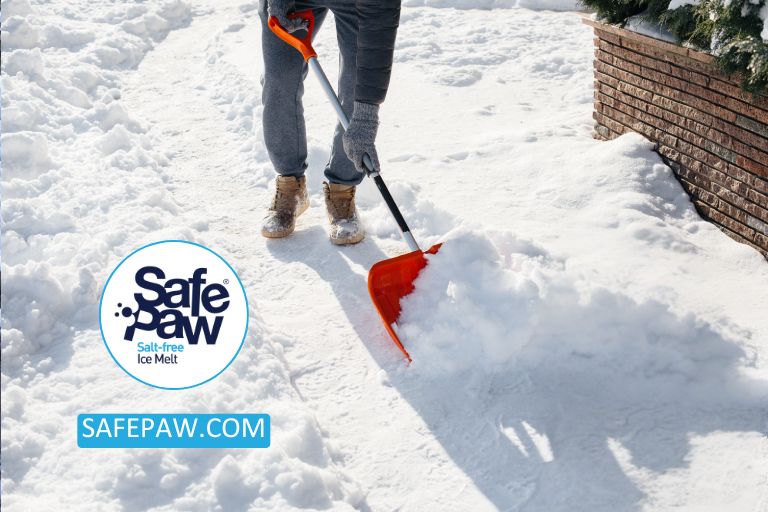
Explore mechanical methods for snow removal, such as shoveling, plowing, or using snow blowers. These methods can help reduce the reliance on snow salt and minimize its environmental impact.
Pet Safe Ice Melt – Safe Paw
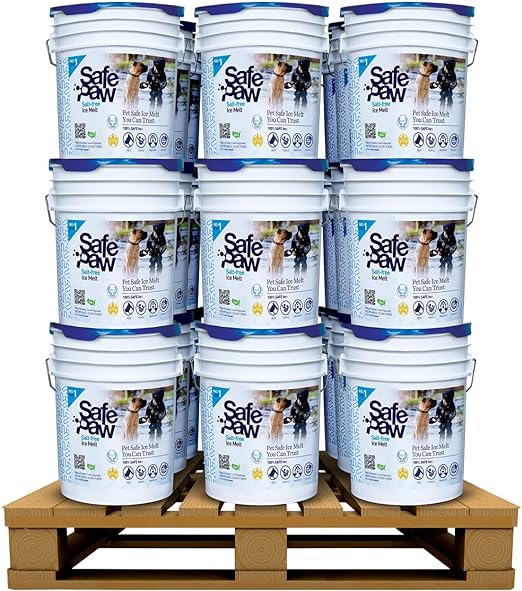
Safe Paw, Child Plant Dog Paw & Pet Safe Ice Melt -35lb, 36 Pails

Safe Paw, Child Plant Dog Paw & Pet Safe Ice Melt -22lb, 100Bboxes
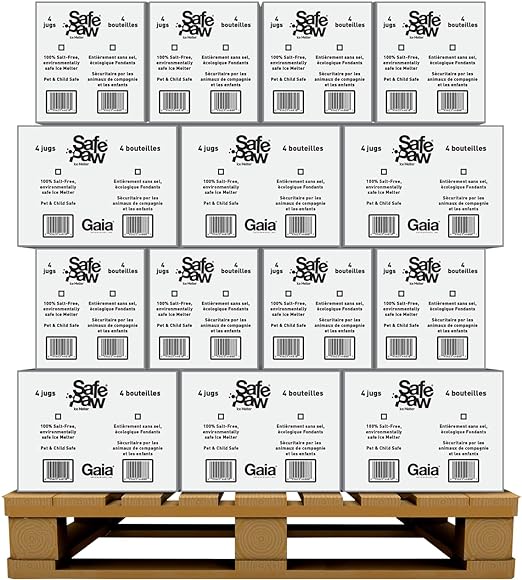
Safe Paw, Child Plant Dog Paw Pet Safe Ice Melt, 160 Jugs

Pet Products Powered By EzPz.pet


Responsible Use Of Snow Salt
Proper Application Techniques
When using snow salt, apply it sparingly and evenly on surfaces to achieve the desired ice-melting effect. Avoid excessive use, as it can lead to unnecessary environmental damage.
Minimizing Salt Usage And Runoff
Take steps to minimize salt usage by properly clearing snow and ice before applying salt. Additionally, create barriers to prevent salt runoff into water sources and sensitive areas.
Conclusion
Snow salt plays a significant role in managing icy conditions, but its environmental impact cannot be ignored. By understanding the disadvantages of salt and exploring alternative solutions, we can make more informed choices for effective and environmentally conscious ice and snow management. Let’s strive for safer winters without compromising the health of our environment.
Gaia Enterprises Inc. delivers 100% pet-safe and environmentally friendly winter products. Safe Paw, our flagship product, is the #1 selling pet-safe ice melt that does not harm pets, safe if ingested, and safe on all types of concrete.
Frequently Asked Questions (FAQs)
- Is Snow Salt Harmful To Plants And Soil? Excessive use of snow salt can cause damage to plants and degrade soil quality. Salt accumulation inhibits plant growth and disrupts the balance of ecosystems.
- How Does Snow Salt Impact Water Sources? Runoff from melting snow salt can contaminate water sources, increasing chloride levels and harming aquatic life. This contamination poses risks to the environment and human health.
- What Are Eco-Friendly Ice Melts? Eco-friendly ice melts are alternative products formulated to be less harmful to vegetation, soil, and water sources. They provide effective ice melting while minimizing environmental impact.
- Are There Alternatives To Using Snow Salt? Yes, mechanical snow removal methods such as shoveling, plowing, or using snow blowers can be effective alternatives to reduce the reliance on snow salt and its environmental impact.
- How Can I Minimize The Environmental Impact Of Snow Salt Usage? Minimize salt usage by properly clearing snow and ice before applying salt. Create barriers to prevent salt runoff into water sources and sensitive areas. Use snow salt sparingly and apply it evenly to achieve the desired effect while minimizing environmental damage.
Frequently Asked Questions About Road Salt and the Environment

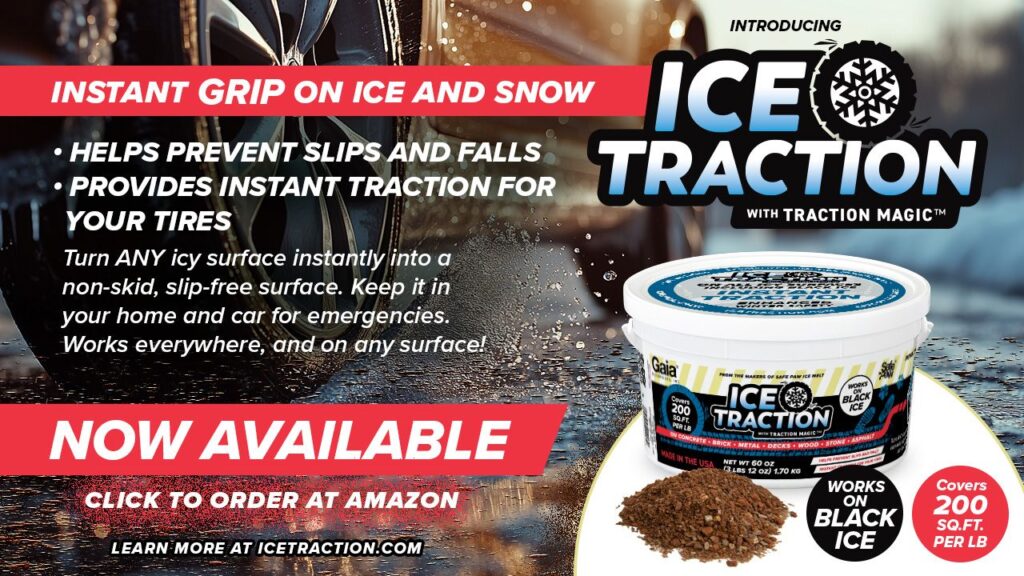
New Product Launch – Ice Traction (with Traction Magic™)
Ice Traction is your go-to winter solution for driveways, walkways, parking lots — and even black ice on the road. Unlike salt or ice melts, it delivers instant grip on snow and slippery surfaces with no wait time. Just spread and go.
Other Ice Melt Products
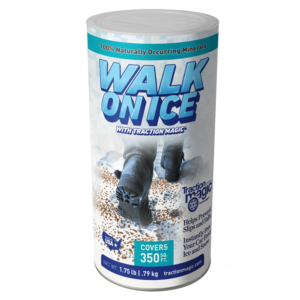
Walk On Ice
Prevent slips at home, work or on the go, The handy disposable canister can be taken everywhere, with the same 100% naturally occurring minerals that provide instant traction on ice or snow.
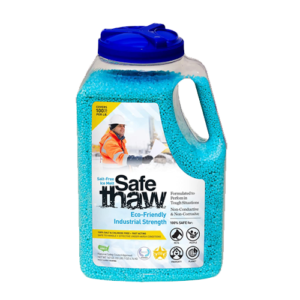
Safe Thaw
Imagine an ice melt you can put down and never worry about. It won’t harm pets, kids and your property. That’s Safe Thaw. Unlike anything else on the market, Safe Thaw can change how winter affects our planet.