


Handling Dry Ice Safely: Can You Leave It Outside to Melt?

How Cold Does It Have to Be to Snow?
Snow forms in clouds where the air is cold enough for water vapor to develop into ice crystals, generally below 32°F/0°C. However, the temperature at ground level does not always need to be below freezing. Snow can reach the surface when the ground-level temperature is slightly above 32°F if the warmer layer is shallow and the snowflakes do not completely melt before landing. Moisture, rising air, cloud temperature, and the full atmospheric temperature profile all influence whether precipitation falls as snow.
Quick answer: Snow normally forms in below-freezing clouds, but it can fall and briefly accumulate when the surface temperature is slightly above 32°F/0°C.
Key Takeaways
- Snow forms in clouds, not at the ground.
- Ice crystals require sufficiently cold, moisture-rich cloud conditions.
- Surface air can be slightly above 32°F/0°C while snow is falling.
- The depth and temperature of warm and cold atmospheric layers determine precipitation type.
- Snow near freezing is often wetter and denser, but snow character also depends on cloud conditions and crystal growth.
- Very cold air can produce snow if sufficient moisture and upward motion are present.
- Ground temperature affects accumulation but does not determine whether snow forms aloft.
- Sunlight, wind, humidity, ground heat, and rainfall influence how quickly accumulated snow changes or melts.
The Lowdown On Dry Ice
Alright, first things first, dry ice isn’t your garden-variety ice. It’s not the stuff chilling your soda; it’s frozen carbon dioxide. When people ask, “Can you leave dry ice outside to melt?” they’re stepping into a tricky territory. Dry ice doesn’t melt; it pulls a vanishing act, going from solid to gas. So the real question is, are you ready to let it sublimate in your backyard?
Pet-Friendly Ice Melt
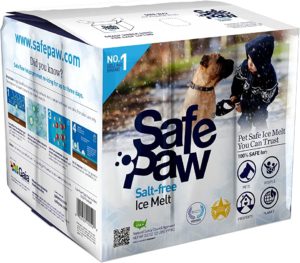
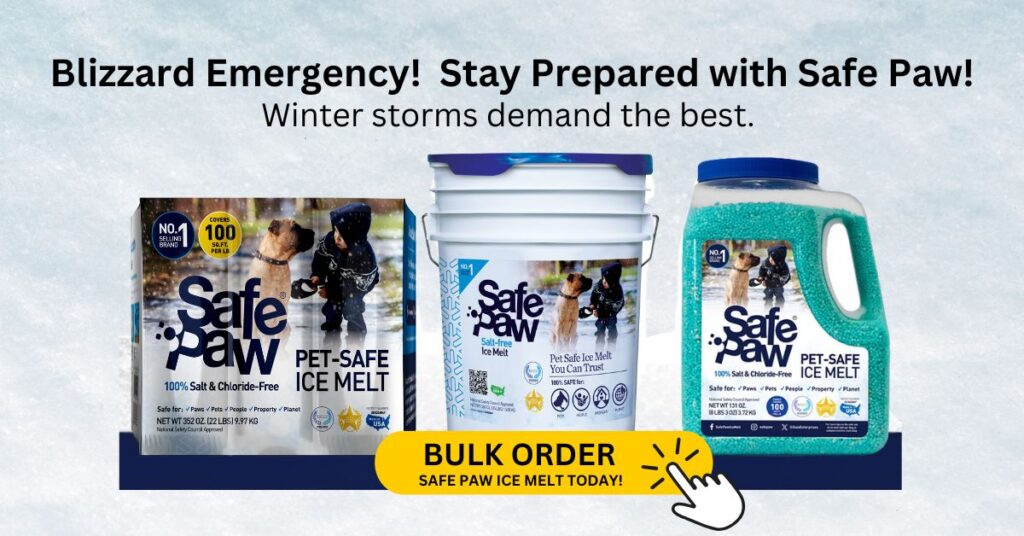
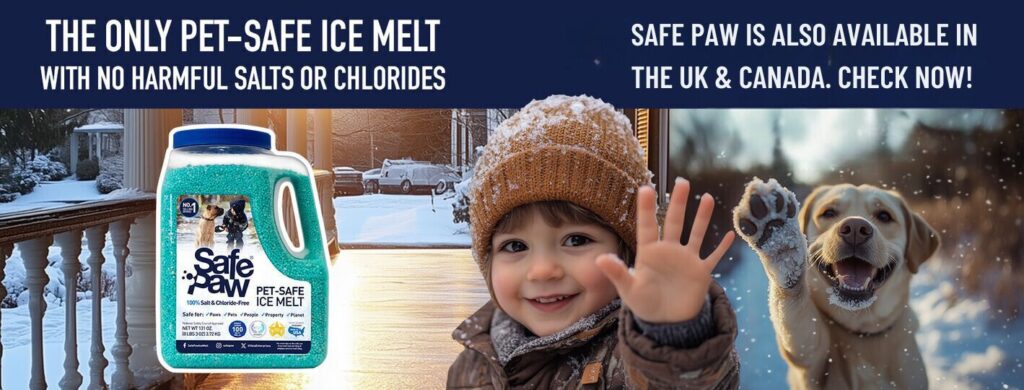
Pet Friendly Ice Melt – Safe Paw!
The Original and the #1 Child and Pet Safe Ice Melt for over 20 years. Guaranteed environmentally safe – will not harm waterways and sensitive wetlands.
The Great Outdoors: A Dry Ice Dilemma
Thinking of ditching your dry ice outside? It’s generally safer than keeping it indoors, where it could turn your utility room into a silent, oxygen-less movie scene. But let’s not get too carefree. If pets or local wildlife find it, they’re in for a not-so-pleasant surprise. Contact with dry ice can cause serious cold burns – kind of like frostbite but fast-forward.
The Double-Edged Sword Of Dry Ice
Dry ice might seem like a cool party feature or a handy tool in the kitchen, but it’s got a bit of a dark side. It’s like that intriguing character in a thriller movie – intriguing yet unpredictable. It’s great for some quick freeze action or adding drama to your party decor, but it demands a healthy dose of respect. Mishandle it, and you could be nursing some regret (and frostbite).
Regular Ice: Not So Innocent
Switching gears, let’s talk about the everyday ice in your freezer. You might wonder, “Can ice go bad?” While it won’t spoil like food, ice can get funky. It’s a bit of an odor sponge – if your freezer smells like last week’s seafood, your ice might carry a hint of Eau de fish. It’s not harmful, but it sure can be a downer for your taste buds.
Pet Safe Ice Melt – Safe Paw
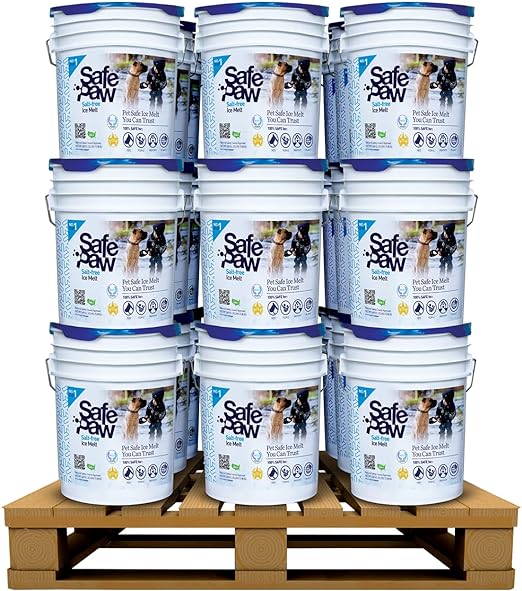
Safe Paw, Child Plant Dog Paw & Pet Safe Ice Melt -35lb, 36 Pails

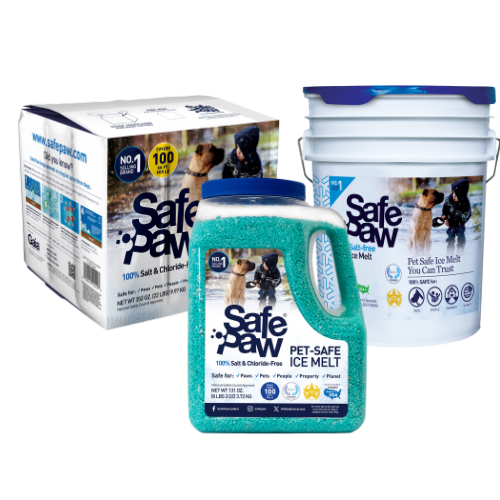
Safe Paw, Child Plant Dog Paw & Pet Safe Ice Melt -22lb, 100Bboxes
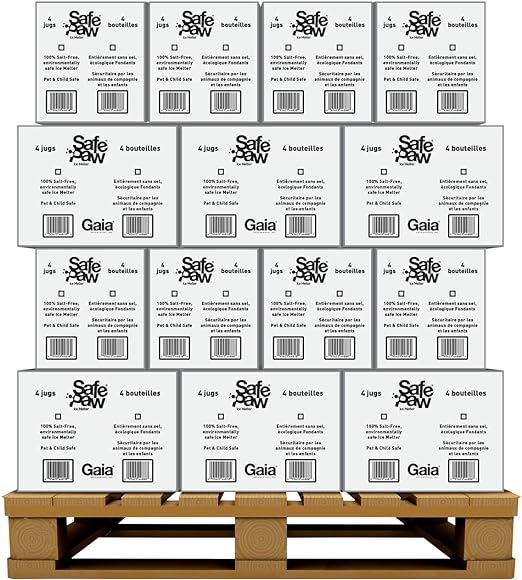
Safe Paw, Child Plant Dog Paw Pet Safe Ice Melt, 160 Jugs

Pet Products Powered By EzPz.pet


How Snow Forms Step by Step
- Moist air rises: Air can rise along a weather front, over terrain, or through atmospheric instability.
- The air cools: Rising air expands and cools.
- A cloud becomes cold enough: In sufficiently cold parts of the cloud, water exists as supercooled droplets and ice crystals.
- Ice crystals begin to grow: Water vapor deposits onto ice nuclei and develops into snow crystals.
- Crystals combine: Individual crystals may collide and join to form snowflakes.
- The flakes become heavy enough to fall: Snow begins descending through the atmosphere.
- The temperature profile determines the final form: The flakes may remain snow, partially melt into sleet, melt and refreeze at the surface as freezing rain, or reach the ground as rain.
- cloud temperature versus surface temperature;
- moisture and atmospheric lift;
- ice nuclei and supercooled water;
- dendritic snow-growth zone;
- melting layer depth;
- ground temperature and accumulation;
- snowfall rate and evaporative cooling;
- snow-to-liquid ratio;
- wet-bulb temperature;
- difference between formation, falling, and accumulation;
- snow, sleet, freezing rain, and rain.
Remove the current claim that 25°F to 32°F is the universal “ideal temperature range for snowfall.” Replace it with:
Snow can fall across a broad range of surface temperatures. Efficient growth of branched snow crystals often occurs in a colder cloud layer known as the dendritic growth zone, commonly around -12°C to -18°C, provided sufficient moisture and lift are present. This is a cloud-level range, not a required surface-temperature range.
The National Weather Service describes approximately -12°C to -18°C as a favorable dendritic growth zone in relevant forecasting contexts. See the NWS snow-growth explanation.
What Determines Whether Snow Reaches the Ground?
- Cloud temperature: Determines whether ice crystals can form and grow.
- Atmospheric moisture: Supplies the water vapor needed for cloud and crystal development.
- Upward motion: Helps cool moist air and sustain precipitation.
- Warm layers aloft: Can partially or completely melt falling snowflakes.
- Cold layers near the ground: Can refreeze partially melted precipitation into sleet.
- Surface temperature: Affects final melting and accumulation but is not the only controlling factor.
- Wet-bulb temperature: Helps indicate how evaporation and melting may cool the air during precipitation.
- Snowfall intensity: Heavy snow can sometimes accumulate on surfaces that initially remain slightly above freezing.
- Ground temperature: Influences whether flakes accumulate, compact, or melt after landing.
Safe Paw To The Rescue
Given the quirks of dry ice, you might be looking for a safer, simpler alternative. That’s where Safe Paw comes in – it’s the friendly, easy-going neighbor in the world of ice solutions. Safe Paw is a granular, chloride-free, toxin-free ice melt that’s a far cry from the drama of dry ice.
- Kid And Pet Friendly:
Safe Paw is like a considerate friend who makes sure everyone is comfortable. It’s non-toxic, so you don’t have to worry about your kids or pets getting too curious. No frostbite, no toxic fumes – just peace of mind.
- A Cold Weather Ally:
Facing a frosty driveway? Safe Paw’s got your back. It tackles sub-zero temperatures with ease, so you can say goodbye to slip-and-slide adventures on your way to the mailbox.
- Gentle On The Planet:
What’s great about Safe Paw is its kindness to the environment. It’s a green thumbs-up solution, gentle on your lawn and plants, and doesn’t leave a mark on Mother Nature.
- Practical And Economical:
And let’s talk value. Safe Paw is the kind of buy that makes you feel like you aced Adulting 101. It lasts, spreads well, and is kind to your wallet in the long run.
Pros and Cons
Snow Near Freezing vs. Snow in Colder Conditions: Pros, Cons, and Impacts
| Snow condition | Common characteristics | Potential advantages | Potential limitations or impacts |
| Wet snow near freezing | Higher liquid-water content; dense and sticky | Can compact readily; useful for snow construction | Heavy to shovel; may load trees, roofs, and power lines |
| Moderately cold snow | Often less dense and easier to move | Easier mechanical removal in many cases | Can drift when wind increases |
| Dry powder snow | Low liquid-water content; light texture | Usually lighter to shovel | Blows and drifts easily; may reduce visibility |
| Mixed snow and rain | Partially melted flakes; slushy accumulation | May accumulate less on warmer surfaces | Can refreeze when temperature falls |
| Snow over a warm surface | Snowflakes may initially melt on contact | Roads may remain wet at first | Conditions can change rapidly if surface temperature falls |
| Snow over a frozen surface | Accumulation may begin quickly | Easier to recognize as a snow-covered surface | Traction can deteriorate rapidly |
Warnings and Limitations
- A surface reading of 32°F/0°C does not by itself determine precipitation type.
- Weather-app temperatures are usually air temperatures measured under standardized conditions, not road or ground temperatures.
- Snow can fall without accumulating.
- Bridges, shaded pavement, grass, roofs, and treated roads can have different surface temperatures at the same location.
- A warm layer above the ground can change snow into sleet, freezing rain, or rain.
- Very cold air does not automatically prevent snow; lack of moisture is often the limiting factor.
- The term “temperature inversion” describes a temperature increase with height, but an inversion does not produce one fixed precipitation type.
- Wet snow is not determined by surface temperature alone.
- Snowfall forecasts remain uncertain near the rain-snow boundary.
- Do not use general temperature ranges in this article as substitutes for a current local forecast.
Wrapping Up The Ice Chat
So, there you have it. “Can you leave dry ice outside to melt?” – well, it’s more about handling it wisely and knowing what you’re dealing with. And when it comes to regular ice, yes, it can get a bit weird in terms of taste and smell. That’s why a safe, eco-friendly option like Safe Paw is the smart choice. It’s about keeping things simple, safe, and sustainable. Here’s to tackling the icy challenges in life with a little more knowledge and a lot more ease!
Gaia Enterprises Inc. delivers 100% pet-safe and environmentally friendly winter products. Safe Paw, our flagship product, is the #1 selling pet-safe ice melt that does not harm pets, safe if ingested, and safe on all types of concrete.
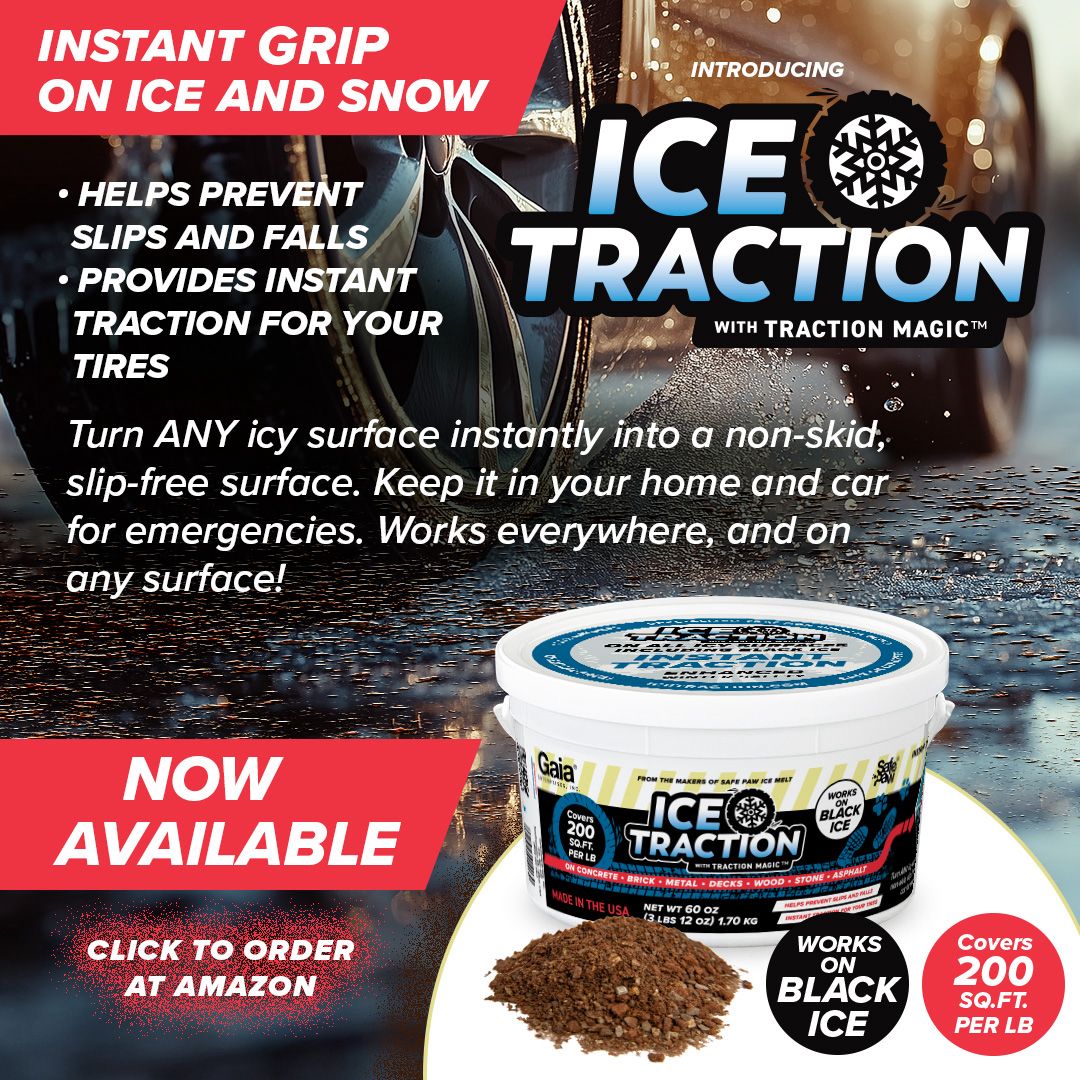
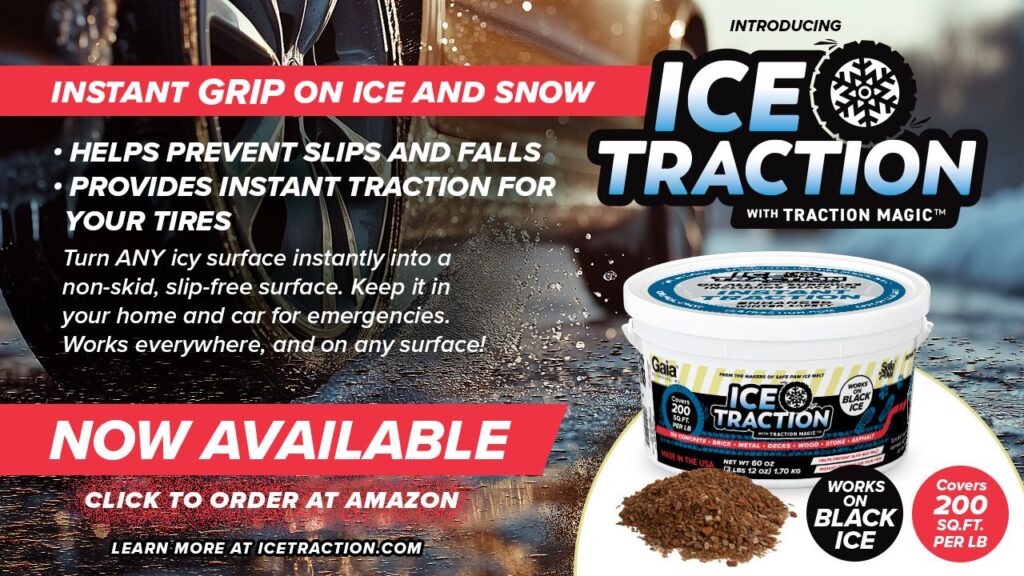
New Product Launch – Ice Traction (with Traction Magic™)
Ice Traction is your go-to winter solution for driveways, walkways, parking lots — and even black ice on the road. Unlike salt or ice melts, it delivers instant grip on snow and slippery surfaces with no wait time. Just spread and go.
Other Ice Melt Products
Walk On Ice
Prevent slips at home, work or on the go, The handy disposable canister can be taken everywhere, with the same 100% naturally occurring minerals that provide instant traction on ice or snow.
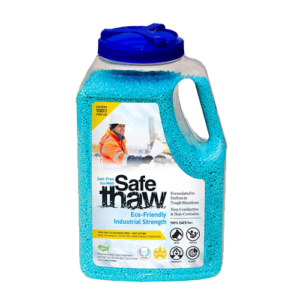
Safe Thaw
Imagine an ice melt you can put down and never worry about. It won’t harm pets, kids and your property. That’s Safe Thaw. Unlike anything else on the market, Safe Thaw can change how winter affects our planet.