


Massachusetts: How to Prepare Your Driveway for Winter — 9 Essential Tips

To prepare your Massachusetts driveway for winter, inspect and repair existing damage before freezing weather, clear drainage, remove leaves and debris, prepare snow-removal equipment, and choose deicing materials compatible with your driveway. During storms, remove loose snow when safe and monitor meltwater for refreezing.
The best method depends on whether your driveway is asphalt, mature concrete, newly installed concrete, pavers or a decorative sealed surface.
Massachusetts winters can bring snow, freezing rain, heavy wet snow and repeated freezing and thawing. Preparing early can make driveway maintenance easier and may reduce avoidable surface deterioration.
Publisher: Safe Paw | Gaia Enterprises
Editorial reference date: November 24, 2026
Independent engineering review: Not completed
Weather status: Evergreen Massachusetts driveway-maintenance guide; not a live weather forecast.
Quick Answer: Massachusetts Driveway Winter Preparation Checklist
| Driveway condition | Recommended action | Timing |
|---|---|---|
| Cracks or potholes | Assess and arrange suitable repairs | Before sustained freezing |
| Leaves and debris | Clear the surface and drainage openings | Before storms |
| Asphalt driveway | Review crack sealing and surface condition | Before winter |
| Mature concrete | Check damage and deicer compatibility | Before treatment |
| Newly installed concrete | Follow installer restrictions; favor gentle removal | Throughout winter |
| Stamped or sealed concrete | Check coating and sealer instructions | Before chemical application |
| Snow accumulation | Remove with appropriate tools | During or after snowfall, when safe |
| Bonded ice | Use a permitted treatment or suitable traction | After clearing loose snow |
| Repeated refreezing | Identify downspouts, low spots and blocked drainage | Before and after storms |
Simple Driveway Decision Path
Inspect the surface → Repair suitable defects → Clear drainage → Prepare equipment → Remove snow → Evaluate ice → Apply an approved treatment only if needed → Watch for refreezing.
For more general advice, see Winter Driveway Maintenance Best Practices.
Independent source: MassDOT, Road Treatment Types, distinguishes anti-icing from deicing and explains the role of snow removal and treatment materials.
Read Massachusetts Road Treatment Types.
Table of Contents
Why Massachusetts Driveways Need Winter Preparation
Massachusetts weather varies across the state.
Coastal areas, inland communities and higher elevations may experience different combinations of snow, rain, sleet, freezing rain and cold temperatures.
Snow and ice can affect driveway access, while repeated wetting and freezing may worsen existing surface defects.
What Can Happen to an Unprepared Driveway?
Potential problems include:
- Water collecting in cracks.
- Surface scaling or deterioration.
- Existing potholes expanding.
- Ice forming in poorly drained areas.
- Snow compacting under vehicle tires.
- Slippery entrances and walking routes.
- Damage from unsuitable snow-removal equipment.
Not every problem is caused by ice melt. Pavement design, drainage, material quality, age and previous damage also matter.
When Should Massachusetts Homeowners Start Preparing?
A practical approach is to inspect and prepare the driveway in autumn, before sustained freezing conditions.
Some repair materials require minimum surface temperatures, dry weather or curing time. Always follow the selected repair product’s instructions.
Massachusetts residents can review winter preparedness resources through the state’s official website.
Massachusetts Winter Weather Driving and Preparation.
Nine Essential Tips to Prepare Your Massachusetts Driveway for Winter
Inspect Your Driveway for Cracks, Potholes and Surface Damage
Begin with a visual inspection.
Look for:
- Small surface cracks.
- Wider or growing cracks.
- Potholes.
- Uneven pavement.
- Loose pavers.
- Concrete scaling.
- Damaged edges.
- Depressions that collect water.
Make a record of visible damage before the winter season.
Repair Cracks Before Water Freezes
Water may enter existing cracks and worsen deterioration during freezing and thawing.
However, not every crack should be treated with the same DIY repair material.
A narrow, stable crack may be appropriate for a compatible sealant. Significant settlement, recurring movement or widespread structural cracking may need professional assessment.
Choose products intended for your driveway material and follow curing and weather restrictions.
For further reading, see Preparing Your Driveway for Winter: How to Repair Cracks and Holes and Safely Melt Ice.
Clean Leaves, Dirt and Debris From the Surface
Remove fallen leaves, loose branches and accumulated debris.
These materials can hide cracks, obstruct drainage or interfere with snow-removal equipment.
Use a broom, suitable blower or other surface-compatible tool.
If using a pressure washer before winter, follow the pavement and coating manufacturer’s instructions and allow sufficient drying time before freezing weather.
Check Drainage and Downspouts
Poor drainage can create recurring ice.
Inspect:
- Driveway low spots.
- Downspout outlets.
- Garage entrance slopes.
- Drainage channels.
- Nearby walkways.
- Snow storage areas.
Redirect or repair drainage problems when appropriate.
Do not direct water or snow onto public roads, neighboring property or accessible walkways.
Prepare Snow Shovels and Snow Blowers
Inspect equipment before the first storm.
Check shovel edges for damage and ensure snow blowers are maintained according to their manuals.
Choose tools suitable for asphalt, concrete, pavers or decorative surfaces.
Avoid aggressive metal scraping on vulnerable finishes.
Plan Where Snow Will Be Placed
Identify appropriate places for cleared snow before a storm begins.
Avoid piling snow where it will block:
- Driveway visibility.
- Sidewalks or curb ramps.
- Drainage routes.
- Fire hydrants.
- Mailboxes.
- Accessible entrances.
Choose locations that will not direct large quantities of meltwater back across the driveway.
Choose a Compatible Ice Melt Before Winter
Product choice depends on the driveway’s surface and condition.
For example, newly installed concrete may require more conservative maintenance than sound, mature concrete.
Do not assume that chloride-free or pet-friendly labeling automatically means a product is suitable for every driveway.
The detailed selection guidance appears in Choosing Ice Melt for Different Driveway Surfaces.
For related information, see How to Melt Ice on Concrete Without Damage.
Remove Loose Snow When Conditions Are Safe
Early mechanical removal may reduce snow compaction and the need for chemical treatment.
Work only when conditions and personal health make snow removal reasonably safe.
Avoid lifting excessive loads of heavy, wet snow.
Monitor Ice and Refreezing After the Storm
Once snow has been removed, inspect the remaining surface.
Pay particular attention to shaded sections, downspouts and low spots.
If necessary, use a product permitted for the intended surface or a suitable traction material.
Traction grit can improve grip but does not chemically melt ice.
For more winter maintenance strategies, see How to Deal With a Steep Driveway During Winter.
Preparing Asphalt vs. Concrete Driveways
Asphalt and concrete have different composition, maintenance requirements and potential failure mechanisms.
Asphalt Driveways
Asphalt driveways may develop cracks, raveling, depressions and potholes.
Before winter:
- Inspect the surface.
- Identify drainage problems.
- Repair appropriate defects with asphalt-compatible materials.
- Allow required curing time.
- Check restrictions before applying coatings or sealants.
Avoid assuming that every asphalt driveway needs a new sealcoat before winter.
Concrete Driveways
Concrete may experience freeze–thaw deterioration or surface scaling under certain conditions.
The risk depends on concrete quality, air entrainment, moisture saturation, finishing and deicer exposure.
Technical source: Federal Highway Administration, Guidelines for Detection, Analysis, and Treatment of Materials-Related Distress in Concrete Pavements, FHWA-RD-01-163, Chapter 2, “Freeze–Thaw Deterioration” and “Deicer Scaling/Deterioration.”
Read FHWA concrete distress guidance.
New Concrete
New concrete may be especially vulnerable during its early service life.
Avoid routine chemical deicing during its first winter unless the installer or qualified concrete professional confirms a suitable treatment.
Safe Paw’s own manufacturer guidance advises against using Safe Paw on concrete younger than 12 months.
Read Safe Paw’s current concrete guidance.
This does not establish that all older concrete is automatically compatible.
Stamped and Sealed Concrete
Decorative finishes and sealers may have specific maintenance restrictions.
Follow the original installer, coating manufacturer and deicer product instructions.
Pavers
Interlocking pavers have joints, surface finishes and other material-specific considerations.
Select removal tools and treatments that are compatible with the actual paving system.
Choosing Ice Melt for Different Driveway Surfaces
The most appropriate ice melt is one whose current instructions permit use on your actual driveway, at the expected pavement temperature and application conditions.
Surface Compatibility Decision Table
| Surface | Primary concern | Recommended approach |
|---|---|---|
| Mature, sound concrete | Freeze–thaw and deicer exposure | Verify the product’s concrete-use instructions |
| New concrete | Early-age vulnerability | Favor gentle removal and compatible traction |
| Cracked or scaling concrete | Existing deterioration | Use conservative methods and assess significant damage |
| Asphalt | Surface condition and product suitability | Follow asphalt-specific instructions |
| Stamped concrete | Decorative finish and sealer | Confirm compatibility with installer and coating supplier |
| Concrete pavers | Joints and surface finish | Follow paver manufacturer guidance |
| Steep driveway | Vehicle and pedestrian grip | Prioritize safe access and suitable traction |
Why Product Compatibility Matters
Chemical deicers can affect pavement differently.
The Federal Highway Administration describes deterioration associated with certain deicing chemicals under specific concrete and moisture conditions.
Source: FHWA, Chemical Deicers and Concrete Pavement: Impacts and Mitigation, March 2018.
The technical findings should not be extended into a universal claim that every salt-based product damages all concrete or that any alternative guarantees zero deterioration.
What Product Documentation Should Homeowners Check?
| Document | Main purpose |
|---|---|
| Product label | Intended use and application instructions |
| Technical Data Sheet, when available | Product-specific specifications |
| Safety Data Sheet | Hazards, handling and storage information |
| Driveway installer guidance | Surface maintenance restrictions |
| Sealer manufacturer instructions | Decorative coating compatibility |
A Safety Data Sheet is not necessarily an independent freeze–thaw durability test.
How Cold Does It Need to Be Before Rock Salt Stops Working?
Conventional rock salt is sodium chloride.
Its practical ice-melting performance decreases as pavement temperatures fall.
The University of Minnesota Local Technical Assistance Program identifies approximately 15°F (−9°C) pavement temperature as the lower practical range for conventional sodium chloride.
This is not the theoretical freezing point of a sodium chloride solution.
Source: University of Minnesota LTAP, Pavement Temperature and Deicer Use, “Lowest Practical Melting Temperature.”
For additional publisher information, see What Temperature Does Rock Salt Stop Working?.
Why Pavement Temperature Matters
A driveway’s temperature may differ from the outdoor air temperature.
Shade, sunlight, snow cover, moisture and the surrounding ground can influence surface conditions.
Do not assume all ice melt products have the same minimum practical temperature.
Massachusetts Snow Removal Rules and Responsibilities
Snow-removal obligations can vary by municipality.
Homeowners should check local ordinances rather than assume one statewide sidewalk-clearing deadline applies everywhere.
Who Is Responsible for the Driveway Opening?
MassDOT states that homeowners are responsible for clearing the openings of their private driveways.
Snowplows may push snow into driveway entrances while clearing public roads.
MassDOT tip: When facing the roadway from the driveway, clear and place snow to the right side where appropriate to help reduce the amount deposited back into the driveway by approaching plows.
Source: Massachusetts Department of Transportation, Shoveling Your Driveway.
Read MassDOT driveway shoveling guidance.
Do Massachusetts Homeowners Have to Clear Sidewalks?
Requirements depend on the local municipality.
Some cities and towns assign sidewalk snow and ice removal responsibilities to adjacent property owners.
Accessible routes and curb cuts may also need to remain clear.
Source: Massachusetts Office on Disability, Snow Removal and Accessibility in Massachusetts.
Read Massachusetts accessibility guidance.
Can You Push Driveway Snow Into the Street?
Avoid depositing snow into public roads, bike lanes, sidewalks, crosswalks or other routes where it can create hazards.
Massachusetts accessibility guidance specifically warns against obstructing these public spaces.
Check the rules of your municipality for additional restrictions.
Where Can You Find Local Requirements?
The Massachusetts Trial Court Law Libraries maintain a resource on snow and ice law, including directions for locating municipal bylaws.
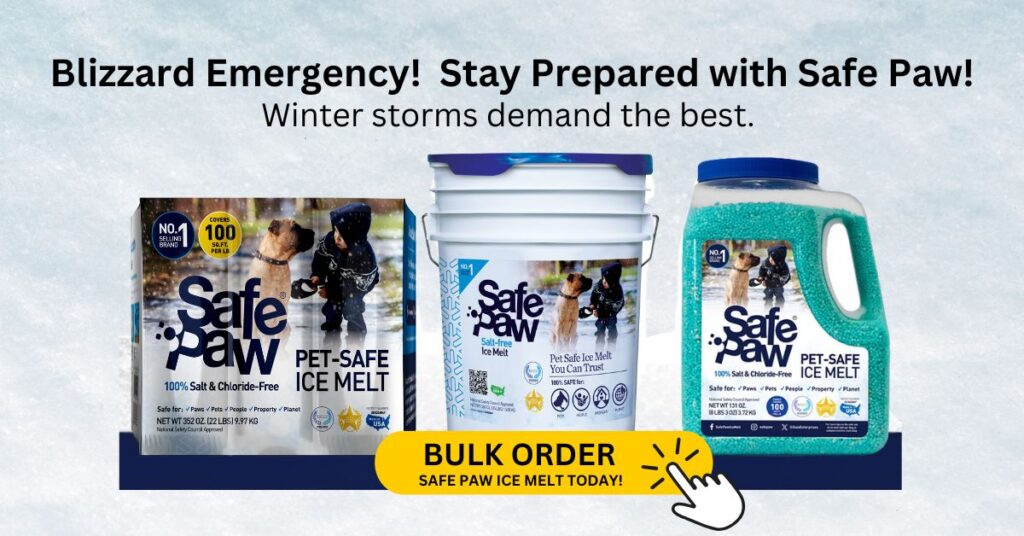
Pet Friendly Ice Melt – Safe Paw!
The Original and the #1 Child and Pet Safe Ice Melt for over 20 years. Guaranteed environmentally safe – will not harm waterways and sensitive wetlands.
How to Prevent Snowplows From Blocking Your Driveway
Snow pushed by roadway plows can accumulate at the entrance of private driveways.
This is a common issue during Massachusetts winter storms.
Follow MassDOT’s Clearing Direction
MassDOT recommends placing cleared snow to the right when facing the road to reduce the potential for plowed snow to be deposited back across the driveway entrance.
This strategy may help, but it does not guarantee that a driveway will remain clear.
Avoid Creating Roadside Hazards
Keep snow piles away from travel lanes and locations that obstruct sight lines.
Do not interfere with active snowplows.
Use Professional Assistance When Needed
Heavy, compacted snow at the roadside may require equipment or assistance beyond ordinary hand shoveling.
Avoid unsafe physical exertion or working close to moving vehicles.
Managing Drainage and Refreezing
Removing snow does not eliminate the possibility of ice returning.
Meltwater may refreeze when the driveway temperature falls.
Where Ice Often Returns
- Shaded areas.
- Depressions.
- Garage entrances.
- Driveway slopes.
- Drainage outlets.
- Areas beside snow piles.
- Sidewalk connections.
Practical Prevention Steps
Keep drainage paths clear.
Avoid directing roof or downspout water across pedestrian routes.
Remove loosened snow and ice when safe.
Where recurring ice results from a drainage defect, consider a suitable repair.
For additional winter access advice, read Winter Driveway Maintenance Best Practices.
Reducing Salt Use and Environmental Exposure in Massachusetts
Deicing materials may be transported by meltwater into nearby soils, landscaping, drains and water resources.
Massachusetts environmental authorities recognize these concerns.
Massachusetts-Specific Environmental Guidance
MassDEP states that rock salt can damage plants and soils, harm aquatic life and degrade drinking-water resources.
Source: Massachusetts Department of Environmental Protection, Stormwater Solutions for Homeowners: Minimizing Contaminants, section “Snow and ice removal.”
Read MassDEP homeowner guidance.
How to Use Less Deicer
- Remove loose snow before applying treatment.
- Use only an appropriate product for the surface.
- Follow the current application amount.
- Avoid unnecessary repeat applications.
- Protect sensitive landscaping from contaminated snow.
- Clean up leftover material when the manufacturer and conditions make it appropriate.
Does Chloride-Free Mean Environmentally Harmless?
No.
Avoiding chloride does not prove that a product has no environmental effects.
Different formulations may present different water-quality or material considerations.
General product claims must be supported by evidence relevant to the actual formulation.

Safe Snow Shoveling for Homeowners
Clearing snow can be physically demanding, particularly when snow is heavy and wet.
The American Heart Association warns that snow shoveling can increase cardiovascular strain.
Reduce Overexertion
Work at a manageable pace and take breaks.
Push snow where practical instead of repeatedly lifting heavy loads.
Avoid sudden, strenuous exertion if you are not accustomed to it.
Know When to Stop
Chest discomfort, unusual shortness of breath, dizziness or other concerning symptoms during exertion require immediate attention.
Seek emergency medical assistance when appropriate.
Consider Hiring Snow Removal Help
People with cardiovascular concerns, significant mobility limitations or other health conditions should consider professional help and follow individualized medical advice.
Source: American Heart Association, Snow Shoveling, Cold Temperatures Combine for Perfect Storm of Heart Health Hazards.
Read American Heart Association guidance.
Massachusetts Winter Driveway Maintenance Schedule
| Period | Priority |
|---|---|
| Autumn | Inspect cracks, drainage and surface condition |
| Before first major storm | Prepare tools and review deicer instructions |
| Before predicted snowfall | Monitor NWS forecasts and confirm equipment readiness |
| During snowfall | Remove loose accumulation when conditions and personal safety permit |
| After snowfall | Clear remaining snow, assess ice and monitor runoff |
| During freeze–thaw cycles | Watch for refreezing near shaded and poorly drained areas |
| Spring | Inspect winter damage and plan necessary repairs |
Where to Check Official Weather Information
Use National Weather Service forecasts and warnings for your actual Massachusetts location.
These offices serve different portions of New England. Select the forecast applicable to your location.
This article does not claim to provide live snow totals or active winter warnings.
Common Massachusetts Driveway Preparation Mistakes
| Mistake | Better practice |
|---|---|
| Relying on historical forecasts | Check current NWS information |
| Ignoring cracks before freezing weather | Inspect and arrange appropriate repairs |
| Assuming every crack needs DIY sealant | Identify structural or drainage issues |
| Using aggressive tools on decorative concrete | Select surface-compatible equipment |
| Applying chemical deicer to new concrete without approval | Follow installer guidance |
| Overusing road salt | Clear snow and use suitable quantities |
| Blocking sidewalks with driveway snow | Follow local rules and accessibility requirements |
| Ignoring snowplow patterns | Use MassDOT driveway-opening advice |
| Allowing downspouts to create ice | Improve drainage |
| Shoveling beyond physical ability | Obtain appropriate assistance |
| Assuming pet-friendly ice melt is edible | Prevent ingestion and follow product precautions |
Conclusion
A Massachusetts driveway winter plan should begin before the first major storm.
Inspect existing pavement, repair suitable defects, maintain drainage and prepare snow-removal equipment.
During winter, prioritize timely snow removal when safe, choose compatible treatments and prevent meltwater from repeatedly refreezing.
MassDOT’s driveway-opening and Massachusetts accessibility guidance add local details that generalized winter-maintenance articles often overlook.
For deeper reading, see Safe Paw’s guides on winter driveway maintenance, concrete ice removal and new concrete precautions.
The independent guidance in this article comes from Massachusetts government agencies, FHWA, university and medical safety sources—not from the publisher’s commercial product descriptions.
Frequently Asked Questions
How Do I Prepare My Driveway for Winter in Massachusetts?
Inspect cracks and surface damage, clear drainage, remove debris, prepare equipment and choose suitable snow and ice removal methods. Follow the Quick Answer checklist.
When Should I Start Preparing My Driveway?
Begin in autumn, before sustained freezing weather. Repair materials may require suitable temperatures and curing conditions.
Should I Seal Driveway Cracks Before Winter?
Appropriate crack repairs may help reduce water entry. Large or changing cracks require more careful assessment.
Can I Use Rock Salt on a Concrete Driveway?
Some deicer exposure can contribute to deterioration of susceptible concrete. Verify the surface condition and product instructions.
Can I Apply Ice Melt to New Concrete?
Avoid routine chemical deicing during the first winter unless the installer or qualified professional confirms an appropriate treatment.
Is One-Year-Old Concrete Automatically Safe for Ice Melt?
No. Concrete quality, condition and product compatibility remain important.
What Temperature Does Rock Salt Stop Working?
Conventional sodium chloride becomes much less effective near and below approximately 15°F pavement temperature under typical field conditions.
Is Sand Better Than Ice Melt?
Sand provides traction, not chemical melting. The appropriate choice depends on the intended purpose and surface.
How Do I Prevent My Driveway From Refreezing?
Maintain drainage and remove loosened accumulation. See Managing Drainage and Refreezing.
Why Do Snowplows Keep Blocking My Driveway?
Roadway plows can push snow toward driveway entrances. MassDOT’s clearing guidance explains ways to reduce the problem.
Am I Responsible for Clearing My Driveway Opening?
MassDOT states that homeowners are responsible for clearing the openings of private driveways.
Do Massachusetts Homeowners Have to Shovel Sidewalks?
Requirements vary by municipality. Check your city’s or town’s ordinances and accessibility guidance.
Can I Put Snow From My Driveway Into the Street?
Avoid depositing snow where it blocks roads, bike lanes, sidewalks, crosswalks or accessible routes. Check local rules.
Does Road Salt Harm Plants or Waterways?
MassDEP identifies potential harm to aquatic life, soil, plants and drinking-water resources.
Is Chloride-Free Ice Melt Safe for Every Driveway?
No universal compatibility is established by the absence of chloride alone.
What Should I Do if My Driveway Has Existing Scaling?
Avoid assuming the cause and consider professional evaluation if deterioration is significant.
Is Snow Shoveling Dangerous for People With Heart Problems?
Heavy snow shoveling can strain the cardiovascular system. Follow medical advice and consider professional assistance.
Where Can I Check Massachusetts Winter Storm Forecasts?
Use the National Weather Service office serving your specific location.
Related Safe Paw Articles
The following links provide related publisher information and are not substitutes for independent engineering evidence.
| Relevant keyword | Safe Paw article |
|---|---|
| Winter driveway preparation | Winter Driveway Maintenance Best Practices |
| Preparing cracks and potholes | Preparing Your Driveway for Winter |
| Concrete-safe ice removal methods | How to Melt Ice on Concrete Without Damage |
| New concrete precautions | Ice Melt for New Concrete FAQs |
| Choosing concrete ice melt | What Ice Melt Is Safe for Concrete? |
| Low-temperature rock salt | What Temperature Does Rock Salt Stop Working? |
| Steep driveway winter safety | How to Deal With a Steep Driveway in Winter |
| Treating pavement before snowfall | Should You Put Ice Melt Down Before Snow? |
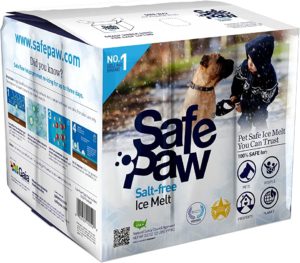
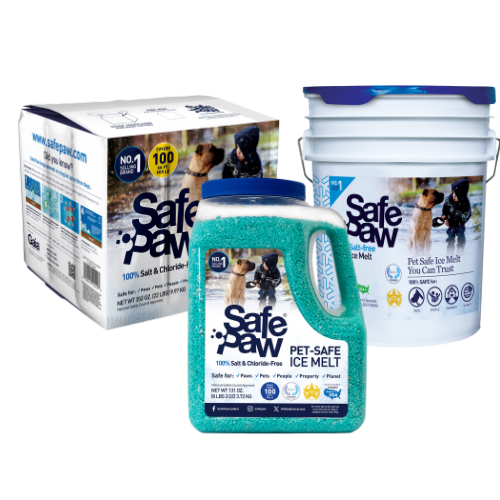
Pet Safe Ice Melt – Safe Paw
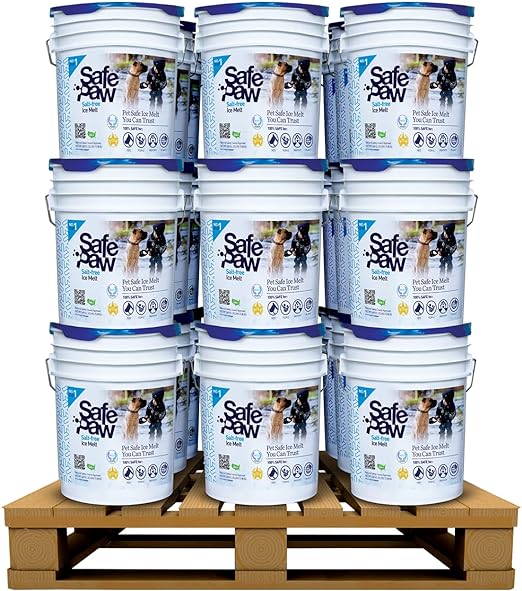
Safe Paw, Child Plant Dog Paw & Pet Safe Ice Melt -35lb, 36 Pails

Safe Paw, Child Plant Dog Paw & Pet Safe Ice Melt -22lb, 100Bboxes
Safe Paw, Child Plant Dog Paw Pet Safe Ice Melt, 160 Jugs

Pet Products Powered By EzPz.pet


References and Supporting Evidence
Massachusetts Department of Transportation — Shoveling Your Driveway
Source: Massachusetts Department of Transportation
Relevant guidance: Responsibility for clearing private driveway openings and snow placement to help limit snowplow deposits.
Read MassDOT driveway guidance.
Massachusetts Department of Transportation — Road Treatment Types
Relevant sections: Anti-icing and deicing.
Supports: Distinguishing treatment before ice bonds from snow and ice removal after accumulation.
Read MassDOT road treatment guidance.
Massachusetts Office on Disability — Snow Removal and Accessibility
Relevant content: Municipal sidewalk obligations, curb cuts and avoiding snow placement that obstructs accessible routes.
Read Massachusetts accessibility guidance.
Massachusetts Trial Court Law Libraries — Snow and Ice Law
Relevant content: Massachusetts legal resources and municipal snow and ice ordinances.
Read Massachusetts law about snow and ice.
Massachusetts Department of Environmental Protection — Stormwater
Title: Stormwater Solutions for Homeowners: Minimizing Contaminants
Relevant section: “Snow and ice removal.”
Supports: Rock salt’s potential effects on aquatic life, plants, soil and drinking-water resources.
Federal Highway Administration — Concrete Deterioration
Title: Guidelines for Detection, Analysis, and Treatment of Materials-Related Distress in Concrete Pavements
Publication: FHWA-RD-01-163
Published: March 2002
Relevant sections: Freeze–Thaw Deterioration and Deicer Scaling/Deterioration.
Read FHWA concrete technical guidance.
Federal Highway Administration — Chemical Deicers and Concrete
Title: Chemical Deicers and Concrete Pavement: Impacts and Mitigation
Publication: FHWA-HIF-17-008
Published: March 2018
Relevant content: Selected deicer-related physical and chemical concrete deterioration mechanisms.
University of Minnesota — Rock Salt Temperature
Title: Pavement Temperature and Deicer Use
Relevant section: “Lowest Practical Melting Temperature.”
Supports: The approximate lower practical melting range for sodium chloride.
Read the University of Minnesota guidance.
American Heart Association — Snow Shoveling Safety
Title: Snow Shoveling, Cold Temperatures Combine for Perfect Storm of Heart Health Hazards
Supports: Cardiovascular risks associated with heavy snow shoveling and cold-weather exertion.
Read American Heart Association guidance.
Editorial Accountability
Publisher: Safe Paw, a Gaia Enterprises brand.
Article revised: November 24, 2026.
Research approach: Review of the existing article and publicly available Massachusetts government, FHWA, university and winter safety references.
Independent pavement engineering review: Not completed.
Independent medical review of snow-shoveling advice: Not completed.
This article does not claim original pavement testing, guarantees against winter damage or universal deicer compatibility.
The references are cited for their specific guidance and do not constitute endorsements of Safe Paw.
Publisher Product Information — Not Independently Verified
Commercial disclosure: This article is published by Gaia Enterprises, which manufactures and sells Safe Paw ice melt.
The information below is manufacturer-provided rather than independent evidence of concrete compatibility, pet safety or environmental performance.
Safe Paw — Residential Ice Melt
Safe Paw is manufacturer-described as chloride-free; its complete proprietary formulation has not been independently tested for this article.
The manufacturer advises against application on concrete younger than 12 months.
Important Product Limitations
- No product is established here as harmless if swallowed.
- No universal compatibility with every concrete, asphalt or decorative surface is claimed.
- No independently verified zero-impact environmental claim is made.
- Product use should follow current manufacturer instructions.
Shop Residential Winter Products
For individual residential purchases:
For commercial property or bulk purchasing inquiries:
These are commercial purchasing links, separate from the independent safety guidance.
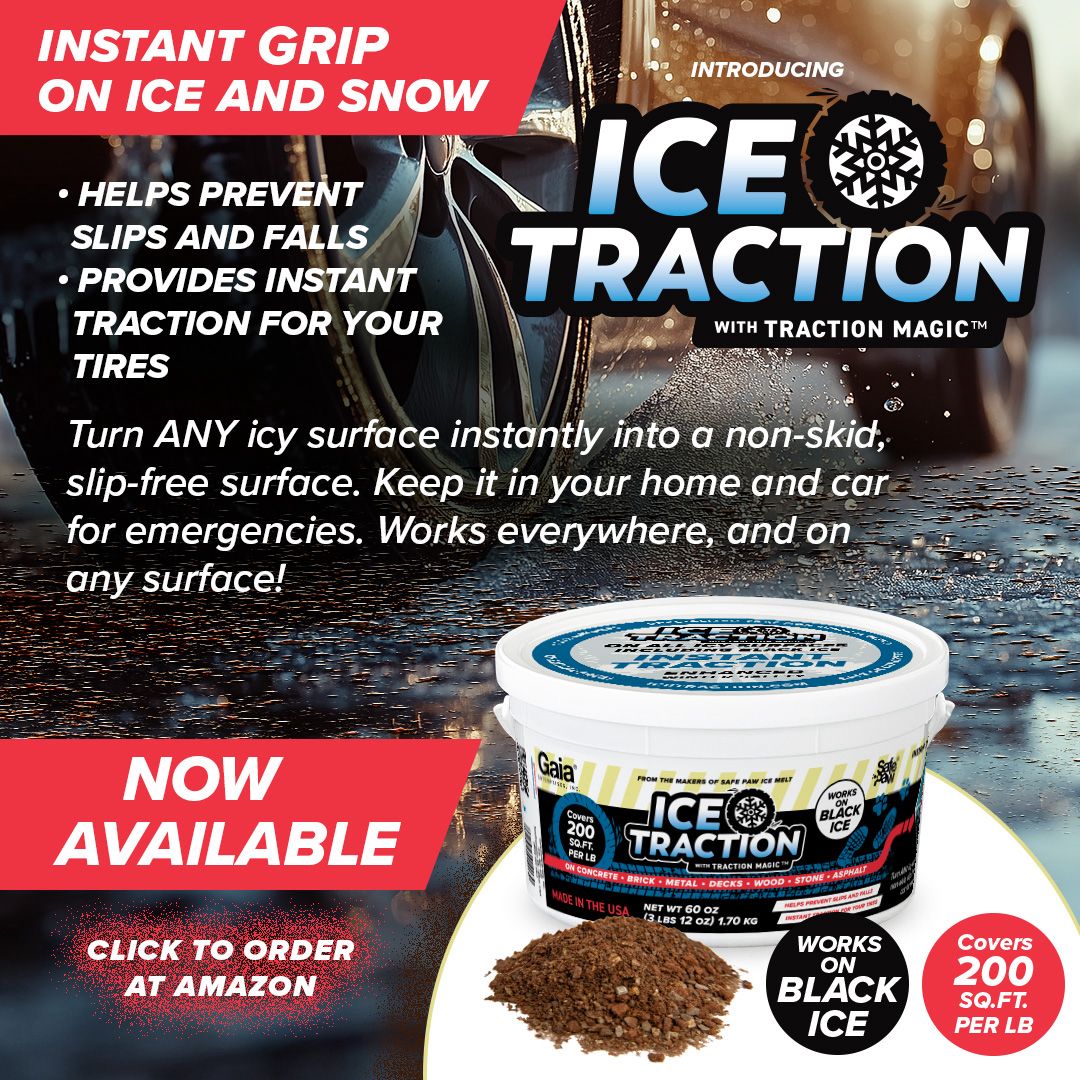
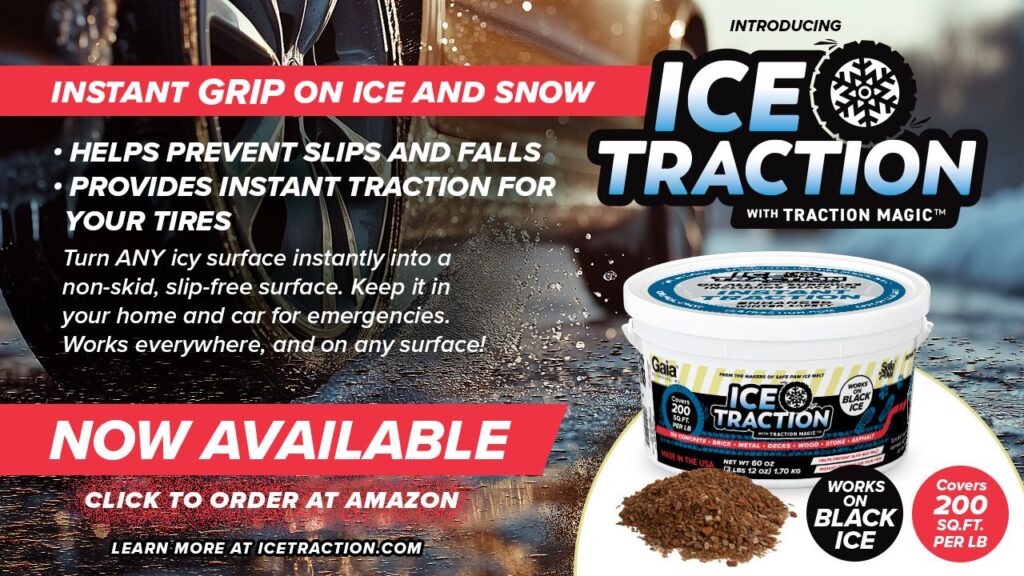
New Product Launch – Ice Traction (with Traction Magic™)
Ice Traction is your go-to winter solution for driveways, walkways, parking lots — and even black ice on the road. Unlike salt or ice melts, it delivers instant grip on snow and slippery surfaces with no wait time. Just spread and go.
Other Ice Melt Products
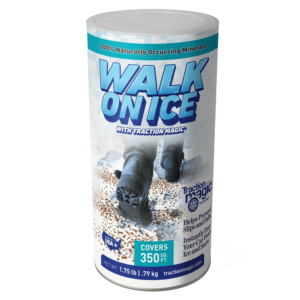
Walk On Ice
Prevent slips at home, work or on the go, The handy disposable canister can be taken everywhere, with the same 100% naturally occurring minerals that provide instant traction on ice or snow.
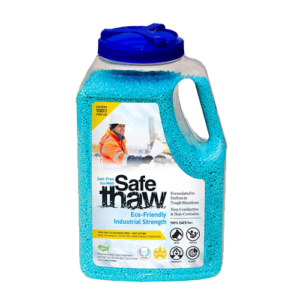
Safe Thaw
Imagine an ice melt you can put down and never worry about. It won’t harm pets, kids and your property. That’s Safe Thaw. Unlike anything else on the market, Safe Thaw can change how winter affects our planet.