Common ice-melting materials include sodium chloride, calcium chloride, magnesium chloride, potassium chloride, calcium magnesium acetate (CMA), and non-chloride formulations. They all lower the freezing point of water, but they differ in cold-weather performance, corrosion potential, environmental effects, pet-exposure considerations, cost, and intended use. No single ice melt is the best choice for every surface or situation.
FHWA identifies sodium chloride, calcium chloride, magnesium chloride, CMA, and potassium acetate among commonly used chemical freezing-point depressants, while pet-safety guidance also discusses sodium, calcium, potassium, and magnesium chlorides as common deicer ingredients. (Federal Highway Administration)
Key Takeaways About Different Types of Ice Melt
Sodium chloride (rock salt) is widely used but contributes chloride to runoff and becomes less useful as temperatures fall.
Calcium chloride releases heat when it dissolves and has a lower eutectic temperature than sodium chloride.
Magnesium chloride is another chloride-based deicer and can still contribute chloride to the environment.
Potassium chloride is also used in some deicing formulations, but pet ingestion can cause gastrointestinal and electrolyte concerns.
Calcium magnesium acetate (CMA) is a non-chloride alternative with different corrosion and performance characteristics.
Chloride-free formulations avoid chloride salts but should still be evaluated by formulation, surface compatibility, application instructions, and actual product documentation.
Products described as “pet safe” are not all formulated the same way, so the ingredient list still matters.
Traction materials are different from deicers: they can improve grip without necessarily melting ice. (Federal Highway Administration)
Experience the Article: Click to Listen
Understanding the differences between various types of ice melt products can make a big difference in how effectively you can reduce the quantity of snow and ice around your structure. Although rock salt is the most widely used and recognized de-icer, there are other formulae and solutions that can be more effective in particular circumstances.
Here are the five types of ice melt with their pros and cons.
Sodium Chloride Or Rock Salt
It’s the most widely used de-icing agent. Even though it melts the ice, it is harmful to physical structures, materials, and ecosystems.
It is not ideal for concrete that is less than a year old. It can damage your masonry and corrode the metal of vehicles and railings. Even small amounts of sodium chloride can seep into neighboring soil, altering its composition and causing harm to grass and plants. It is also toxic to pets and can cause severe problems if ingested by them.
100% Salt Free Ice Melt
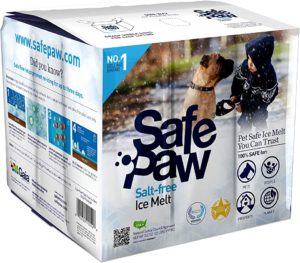
Pet Friendly Ice Melt – Safe Paw!
The Original and the #1 Child and Pet Safe Ice Melt for over 20 years. Guaranteed environmentally safe – will not harm waterways and sensitive wetlands.
A modified crystalline amide core interleaved with glycol admixture is one of the most effective ice melts while being safe for people, pets, structure, and the environment.
While breaking surface tension, the liquid component of this ice melt immediately begins melting ice. The crystal core present in the ice melt weakens the sticky snow by penetrating it. It causes the melting process to accelerate.
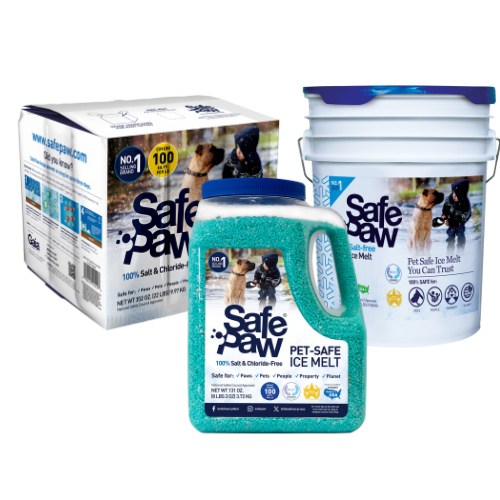
Pet Safe Ice Melt – Safe Paw
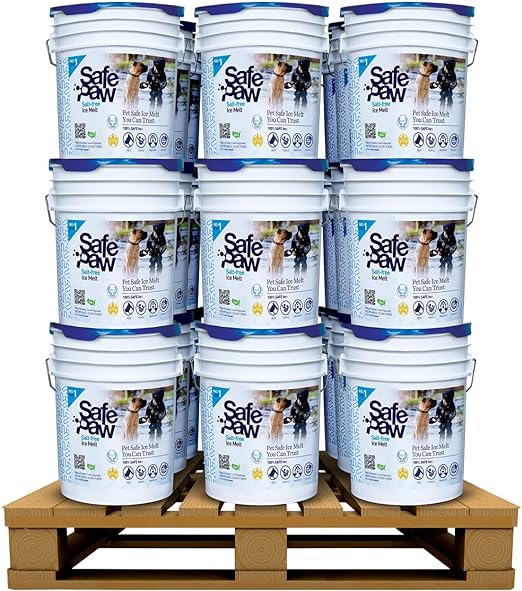
Safe Paw, Child Plant Dog Paw & Pet Safe Ice Melt -35lb, 36 Pails
It leaves an invisible layer of protection that helps prevent ice from clinging to surfaces for three days. Due to the “Teflon” effect, it makes shoveling simpler.
Safe Paw has the salt-free ingredients of amide core and glycol. As part of the Gaia enterprises, it shares its objective to produce items that uphold its commitment to a sustainable environment.
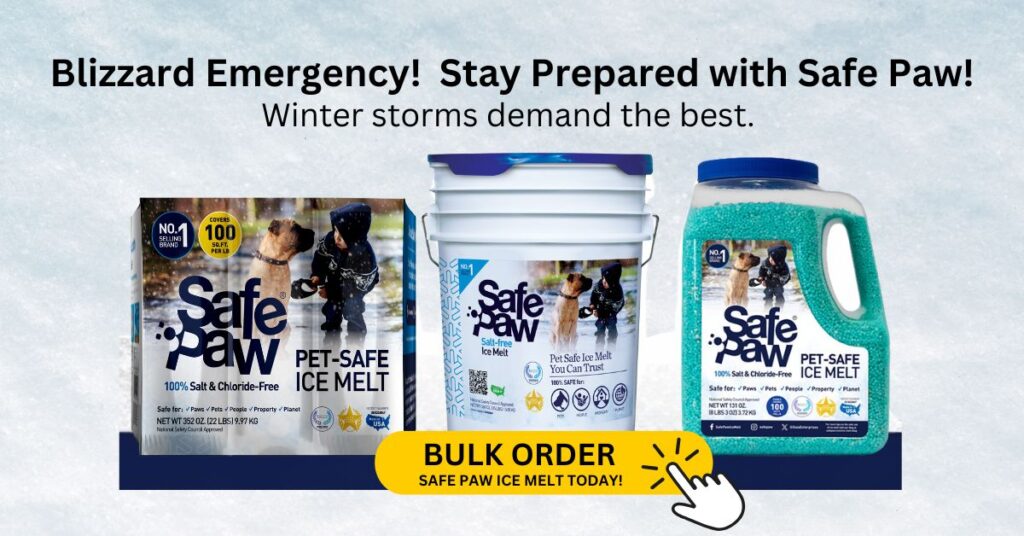
Ice and Snow Everywhere? Stock Up on Safe Paw – the ONLY Pet Safe Ice Melt you can trust
It emits heat while melting, allowing it to act more quickly than other de-icers. Like other chloride-based ice melts, it can also corrode metal. It can also destroy carpets and tiles, thus, damaging your internal floorings. It is less disastrous to plants but excessive use can harm them.
Potassium Chloride
Potassium chloride is similar to potassium-based fertilizer. Though this product is hailed as a safe product it can be highly dangerous to pets suffering from renal injuries.
Get ready for winter with – the ONLY Pet Safe Ice Melt you can trust
It is more costly and has a greater working temperature. Thus, it is more commonly found in de-icing blends with other chlorides, making it hazardous.
Calcium Magnesium Acetate
Dolomitic limestone and acetic acid are found in it. It is used for concrete-heavy locations, such as parking garages, calcium magnesium acetate. It is less corrosive than chlorine-based compounds.
It is one of the most costly de-icing agents, costing up to 30 times as much as rock salt. It can also make the pavement slick making it more prone to slip and fall accidents.
When choosing the right ice melt for your needs, it’s vital to consider not only the effectiveness of the product but also its impact on your property, pets, and the environment. Here’s a more detailed look at different types of ice melts.
Concrete Safe Ice Melt
While products like calcium magnesium acetate and sodium acetate are marketed as concrete safe, they can pose serious risks if not used correctly. Overapplication can lead to a residue buildup that may decrease traction and potentially harm the surrounding vegetation by altering soil composition. Additionally, these options, while safer, may be less effective in very low temperatures compared to more aggressive melts.
Pet-Friendly Ice Melt
Pet-friendly ice melts are formulated to minimize harm to animals but scrutinizing ingredients is crucial. Some products labeled as pet-friendly still contain small amounts of sodium chloride or calcium chloride, which can be irritating to pets’ paws and potentially toxic if ingested in large quantities. Always ensure the product is 100% free of harmful chemicals and chlorides to genuinely safeguard your furry friends.
Eco-Friendly Ice Melt
Eco-friendly ice melts often contain magnesium chloride, which is touted for its lower environmental impact. However, it’s important to note that while it’s less harmful than calcium chloride, it can still contribute to metal corrosion and may still be damaging if it enters bodies of water in large amounts. The environmental benefits can also be negated if overused, leading to increased soil salinity which adversely affects plant life.
Urea-Based Ice Melt
While urea-based ice melts do not contain harsh chlorides, they come with their own unique advantages, especially in products like Safe Paw. Urea is known for being less corrosive and safer for use around pets and plants compared to more traditional ice melting agents. Safe Paw elevates this benefit by using a modified urea formula. This advanced version includes nitrogen inhibitors, which significantly reduce the potential for environmental damage. These inhibitors prevent the nitrogen in urea from contributing to water pollution and the consequent harmful algal blooms. Moreover, this modified version retains its effectiveness at lower temperatures and requires less product to achieve de-icing, enhancing its efficiency and reducing its environmental footprint. This makes Safe Paw an ideal choice for those seeking an effective, eco-friendly de-icing solution.
Safe Paw is a fully non-toxic, chloride-free, and salt-free ice melt, making it uniquely suited for use around pets, children, and sensitive environments. It includes modified carbonyl diamide crystals intermixed with special glycols—ingredients specifically chosen to lower the freezing point of water without the corrosive properties of traditional salts. Safe Paw not only effectively melts ice but also provides an invisible protective layer to prevent refreezing, without the damaging side effects associated with other deicers.
Choosing the right ice melt involves weighing the potential risks and benefits of each type. With Safe Paw, you can ensure safety and efficacy, keeping your winters worry-free and environmentally conscious. Always follow application instructions carefully to maximize efficiency and minimize any adverse effects.
What About Chloride-Free Ice Melt?
Use this section for Safe Paw’s formulation without treating a proprietary formulation as if it were one of the five generic chemical classes.
Chloride-free ice melts form a separate category from conventional chloride salts. Their ingredients and performance vary by formulation, so they should be assessed using product-specific information rather than assuming that all salt-free products perform identically.
Safe Paw’s current product information describes it as a chloride-free formulation using a modified urea-based compound, special glycols, surfactants, and related proprietary components. (Safe Paw Ice Melter)
5 Types of Ice Melt: Pros and Cons Comparison
Type of Ice Melt
Main Advantage
Main Limitation
Sodium chloride / rock salt
Widely used and economical
Chloride runoff, corrosion, pet-exposure concerns
Calcium chloride
Dissolves exothermically and performs differently from sodium chloride in cold conditions
Chloride-based; can irritate tissue and contribute to corrosion
Magnesium chloride
Lower eutectic temperature than sodium chloride
Still chloride-based; ingestion can cause GI upset
Potassium chloride
Used alone or in deicing blends
Ingestion can cause GI and electrolyte effects
Calcium magnesium acetate (CMA)
Non-chloride option with lower corrosion potential in some applications
Cost and performance characteristics differ from chloride salts
FHWA publishes chemical properties for several common deicers, while ASPCA notes that calcium, potassium, and magnesium chlorides may be particularly irritating to the gastrointestinal tract if ingested. (Federal Highway Administration)
Important Limitations When Comparing Ice Melts
Chemical properties do not translate directly into real-world performance. Weather, pavement temperature, concentration, application rate, surface condition, moisture, traffic, and the specific formulation all influence results.
Eutectic temperature is not the same as a recommended working temperature. For example, FHWA lists eutectic temperatures of approximately −5.8°F for sodium chloride, −60°F for calcium chloride, −28°F for magnesium chloride, and −17.5°F for CMA, but FHWA also notes that field anti-icing behavior depends on concentration and pavement conditions. These figures should therefore not be presented as guaranteed practical operating temperatures. (Federal Highway Administration)
Which Type of Ice Melt Is Best for Pets, Concrete and the Environment?
Different deicers behave differently as temperatures fall
Traction need
Whether melting is actually required
Traction products may improve grip without being deicers
EPA identifies chloride loading as a freshwater and infrastructure concern, while FHWA distinguishes deicing from traction/other snow-control strategies. (US EPA)
Which Ice Melt Type Fits Different Winter Needs?
For routine economical deicing: Sodium chloride may be appropriate where conditions and surface guidance permit.
For applications requiring different low-temperature behavior: Compare calcium chloride and magnesium chloride using product-specific performance data.
For reducing chloride use: Consider a non-chloride deicing formulation such as CMA or another verified chloride-free option.
For pet-used areas: Compare the full formulation and exposure precautions rather than relying only on a “pet safe” label.
For new concrete: Avoid applying ice melt until the surface has adequately cured; use traction instead.
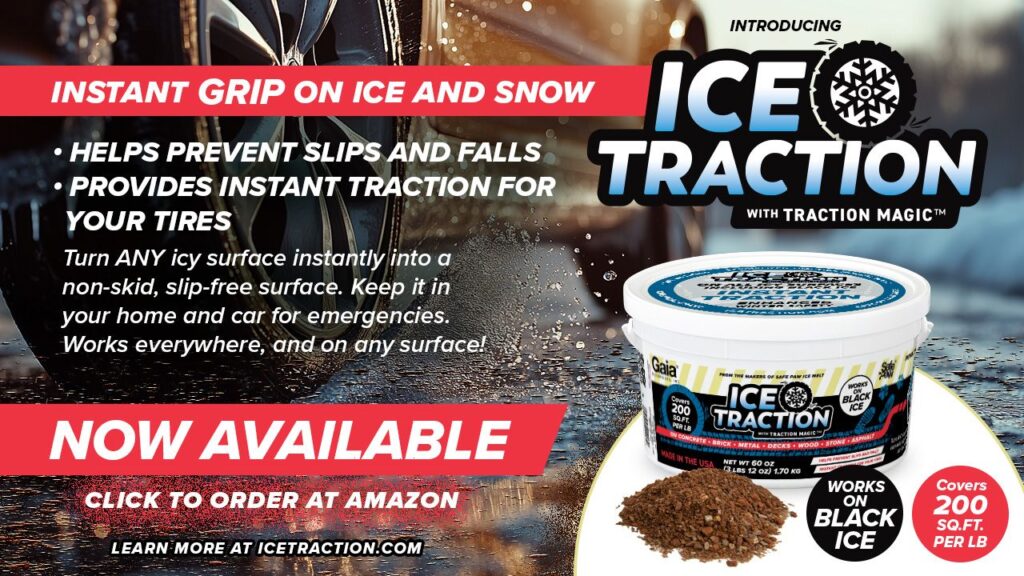
For traction without deicing: Consider Ice Traction or Walk On Ice where the goal is grip rather than melting.
ASPCA notes that there is no single standardized requirement behind the phrase “pet safe,” which makes formulation-level comparison important. (ASPCA)
Get ready for winter with the Only Pet Safe Ice Melt you can trust!
Before getting your ice melt, check to see if the de-icer may harm concrete, pavement, railings, or other structures, as well as carpets. It’s also vital to consider the de-environmental icer’s impact, as some are harmful to the environment. There are many ice melts available in the market, but as a responsible citizen, you need to opt for the ice melt that is safe for all.
Gaia Enterprises Inc. delivers 100% pet-safe and environmentally friendly winter products. Safe Paw, our flagship product, is the #1 selling pet-safe ice melt that does not harm pets, safe if ingested, and safe on all types of concrete.
FAQs
Common deicers include sodium chloride, calcium chloride, magnesium chloride, potassium-based salts, calcium magnesium acetate, and various non-chloride formulations. They differ in temperature behavior, corrosion potential, environmental impact, and exposure considerations. (Federal Highway Administration)
Ice melt is a general term for materials used to lower water’s freezing point and help remove or prevent bonded ice. Rock salt, or sodium chloride, is one type of ice melt rather than a separate process. (Federal Highway Administration)
There is no universal ice melt that is harmless to every concrete surface. Concrete age, curing, moisture, freeze-thaw exposure, product chemistry, and application rate all matter. Newly poured concrete is particularly vulnerable, and the Safe Paw FAQ recommends avoiding ice-melt application on concrete less than 12 months old. (Safe Paw Ice Melter)
Yes. Rock salt is sodium chloride, whereas a chloride-free formulation does not use chloride salts as its deicing ingredient system. Product performance and safety still depend on the individual formulation.
The current Safe Paw FAQ describes Safe Paw as chloride-free. Its listed proprietary formulation includes a modified urea compound, special glycols, surfactants, and related ingredients. (Safe Paw Ice Melter)
Different deicers have different exposure profiles. ASPCA notes that sodium chloride can irritate paws and that calcium, potassium, and magnesium chlorides may cause gastrointestinal irritation if swallowed. Paw cleaning and preventing ingestion remain important even when a product is marketed for pet-used areas. (ASPCA)
The Safe Paw FAQ recommends avoiding ice melts on concrete less than 12 months old and using traction methods during the curing period. For this article, Walk On Ice can be mentioned as a traction option where relevant, alongside general traction materials. (Safe Paw Ice Melter)
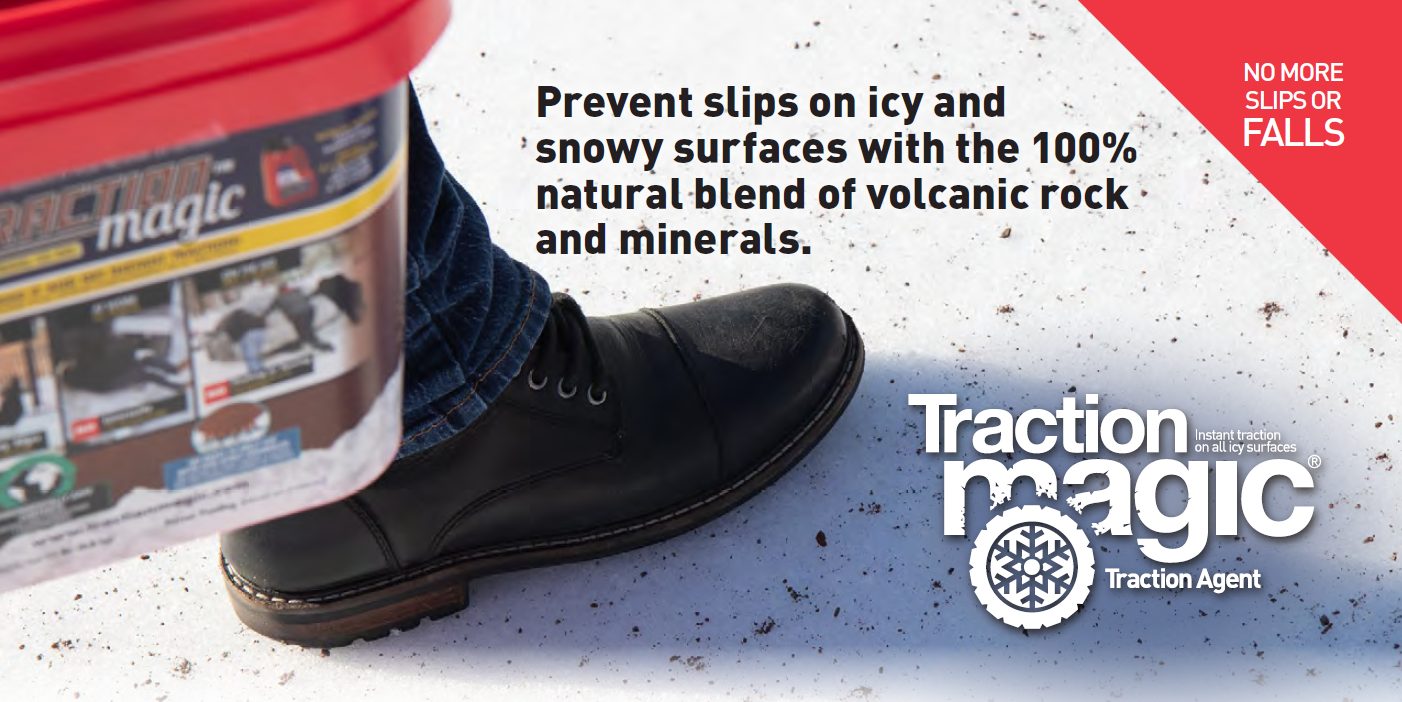
Stay safe on slippery surfaces with a product that’s 100% natural and safe for pets, people, and your property. Use Traction Magic on sidewalks, steps, or as instant traction for your car.
Imagine an ice melt you can put down and never worry about. It won’t harm pets, kids and your property. That’s Safe Thaw. Unlike anything else on the market, Safe Thaw can change how winter affects our planet.
Ice Traction (with Traction Magic™) is your go-to winter solution for driveways, walkways, parking lots — and even black ice on the road. Unlike salt or ice melts, it delivers instant grip on snow and slippery surfaces with no wait time. Just spread and go.
Imagine an ice melt you can put down and never worry about. It won’t harm pets, kids and your property. That’s Safe Thaw. Unlike anything else on the market, Safe Thaw can change how winter affects our planet.