How To Melt Ice In Gutters The Safe And Effective Way
0 comments
To melt ice in gutters safely, first reduce loose roof snow where this can be done without accessing an icy roof, then use a chloride-free deicer that is compatible with the gutter and roofing materials for localized remaining ice. Avoid repeatedly applying chloride salts to metal gutters because chloride exposure can accelerate metal corrosion. For recurring gutter ice or ice dams, address the underlying cause by reducing heat transfer from the home into the roof through appropriate air sealing and insulation improvements.
DOE Building Science explains that ice dams form when attic warmth melts roof snow and the water refreezes at colder eaves; air sealing and adequate insulation can reduce this heat transfer. (Building Science Education) FHWA documentation also identifies deicing salts as a significant source of salt exposure on metal infrastructure. (Federal Highway Administration)
Experience the Article: Click to Listen
Oh no! It’s snowing and freezing outside, and you’re stuck with a problem that can easily be solved: ice in your gutters. Here’s what you need to know about clearing it out so it doesn’t freeze again.
Does salt melt? Should you use salt on the roof? Are they safe? Is there a safer alternative? We’ll discuss all this and more.
Fast Facts: Safe Gutter Deicing and Ice Dam Prevention
Salt does melt ice by lowering water’s freezing point, but chloride salts can increase corrosion risk for metal gutters and other exposed metal components.
Frozen gutters often begin with roof heat loss. Snow melts on warmer roof areas and refreezes when the water reaches colder eaves and gutters.
For localized gutter ice, consider a chloride-free deicer that is documented as compatible with the gutter and adjacent roofing materials.
Removing loose roof snow can reduce the amount of meltwater reaching the gutter, but roof-rake use should avoid damaging the roofing surface.
Repeated ice dams require more than deicing. Air sealing and insulation can help address the temperature differences that allow ice dams to form.
Consider the runoff path. Whatever is applied in a gutter can eventually move through the downspout into soil, landscaping or drainage systems.
DOE and University of Minnesota Extension both connect ice-dam formation with roof heat transfer and identify air sealing/insulation as long-term control measures. (Building Science Education)
Eco-Friendly Ice Melt
Pet Friendly Ice Melt – Safe Paw!
The Original and the #1 Child and Pet Safe Ice Melt for over 20 years. Guaranteed environmentally safe – will not harm waterways and sensitive wetlands.
Does Salt Melt Ice in Gutters? Why Traditional Rock Salt is Dangerous
Salt does not melt ice. The only thing that melts ice is water, and salt can actually make it worse. Salt damages property, including the gutters that it’s meant to protect. When you spray salt on your roof and gutter systems, it can damage them beyond repair. As expensive as installing new gutters and roofs can be, don’t let winter keep you from doing the job right by using the wrong products!
Why Do Gutters Freeze, and Why Does Salt Seem Like a Quick Fix?
Gutter ice forms when attic heat melts snow, which then refreezes along colder eaves. Homeowners often assume salt is a universal solution because it works on driveways—yet roofs and gutters behave differently.
Is a Frozen Gutter the Same as an Ice Dam?
Not exactly. A frozen gutter contains ice within the gutter or downspout, while an ice dam is a ridge of ice that develops near a roof edge and interferes with normal meltwater drainage. The two problems can occur together because meltwater from a warmer portion of the roof may refreeze as it reaches colder eaves and gutters.
DOE describes this melt-and-refreeze process as a primary mechanism behind ice-dam formation. (Building Science Education)
What If the Downspout Is Frozen Too?
Check whether meltwater has an open path through the gutter and downspout. Melting gutter ice without restoring drainage can leave water trapped where it may refreeze. Avoid striking, prying or forcefully bending a frozen downspout because this can damage joints or deform the material. Where a blockage cannot be cleared without unsafe roof access or forceful mechanical work, professional removal may be more appropriate.
University of Minnesota Extension specifically distinguishes immediate ice-dam measures from long-term heat-loss control. (University of Minnesota Extension)
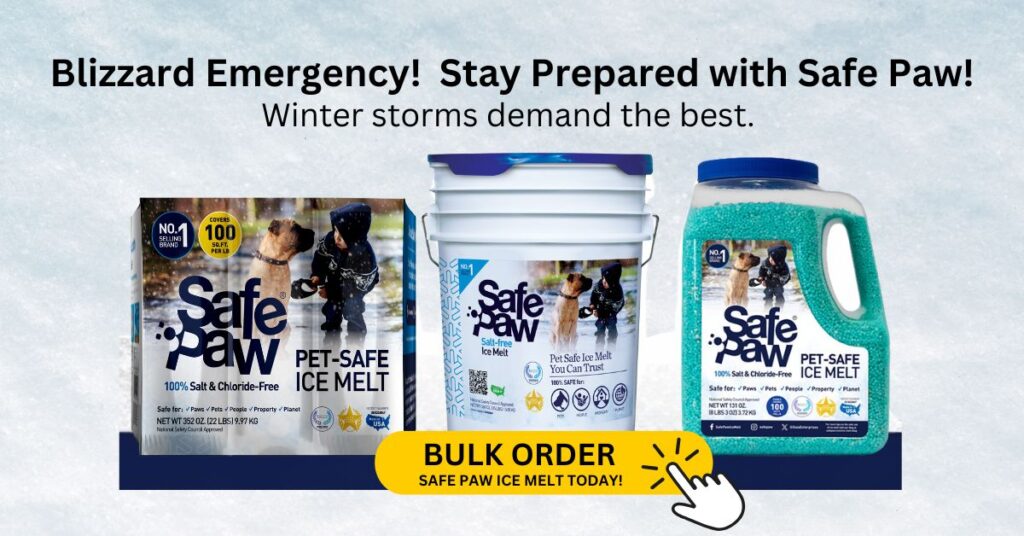
Ice and Snow Everywhere? Stock Up on Safe Paw – the ONLY Pet Safe Ice Melt you can trust
What Causes Frozen Gutters and How to Melt Snow in Gutters Effectively
Warm attic → melting snow Heat escaping from the attic warms the underside of your roof. Even when the outdoor temperature is below freezing, this trapped warmth can melt the layer of snow sitting on the shingles.
Cold gutter edges → refreezing As the melted water flows downward, it reaches the overhangs and gutters — areas with no attic heat beneath them. These sections remain cold, causing water to freeze on contact.
Repeated melt–freeze cycles Daytime sun melts snow, and nighttime cold refreezes it. Over several days, this cycle builds thick layers of gutter ice.
Additional Factors That Make Ice Worse
Poor attic insulation Insufficient insulation increases heat loss, speeding up snowmelt on the roof.
Blocked gutters Leaves and debris trap water, causing it to freeze faster and pile up.
Inadequate roof ventilation Without proper airflow, attic temperatures rise, contributing to uneven roof heating.
Heavy snowfall followed by a cold snap The sudden temperature drop creates ideal conditions for rapid ice formation.
Why This Matters
Ice buildup doesn’t just weigh down gutters — it can push water back under shingles, cause leaks, stain ceilings, damage fascia boards, and even tear gutters off entirely.
The U.S. EPA notes that chloride salts accelerate corrosion of metals such as steel and aluminum, which are commonly used in gutter systems.
Does Salt Actually Melt Ice in Gutters—and Is It Safe?
Salt does melt ice by depressing its freezing point, but that doesn’t mean it is safe for gutters or roofs. Sprinkling salt into gutters can cause permanent surface and structural deterioration.
Why Salt Fails on Gutters
Causes corrosion of aluminum and steel
Degrades shingle protective coatings
Leaves stains and crystalline deposits
Sends chloride-rich runoff into soil and waterways
Does not address the root cause (heat loss, refreezing cycles)
Why Salt Works (But Why It’s Still a Bad Idea Here)
Lowers freezing point: Sodium chloride reduces ice adhesion and can break down thin ice layers.
Fast initial melt: It may briefly clear ice while temperatures are near 32°F.
Why Salt Is NOT Safe for Gutters or Roofs
Accelerates metal corrosion Salt aggressively corrodes aluminum and steel gutters — the very materials most homes rely on. This shortens gutter lifespan and can cause leaks or sagging sections.
Degrades shingle and roof coatings Granular shingles and protective membranes break down faster when exposed to chloride salts, increasing roof wear and reducing weather resistance.
Causes staining and residue Salt leaves white streaks, crystal deposits, and may discolor asphalt shingles, wood fascia boards, and siding.
Increases chloride runoff around the home As the salt melts ice, the runoff carries chloride into soil and nearby plants, harming landscaping and potentially contaminating groundwater.
Does NOT fix the underlying issue Ice dams form because of temperature differences, not because of snow alone. Salt only treats the symptom, not the cause.
So What Should You Use Instead?
Roof-safe, chloride-free ice melt
Calcium chloride socks (only if approved by your roofer)
Improved attic insulation & ventilation
Heated gutter cables
Salt may seem like a quick solution, but for gutters and roofs, it ultimately causes far more damage than the ice itself.
The National Association of Home Builders reports that chloride salts accelerate the breakdown of asphalt shingle granules, reducing roof lifespan.
Runoff Risks: How Gutter Salt Affects Pets, Soil, and Local Ecosystems
When salt melts ice in gutters, runoff travels along downspouts and onto areas where pets walk or vegetation grows. Pets may lick their paws after contact, leading to irritation or stomach upset.
Salt runoff also accumulates in nearby soil, raising salinity levels that stress or kill plants and disrupt natural nutrient absorption. Over time, chloride particles wash into storm drains and local waterways, where they can harm beneficial microorganisms, affect aquatic species, and contribute to long-term groundwater contamination.
In short, gutter salt doesn’t stay in the gutter — it travels directly into the spaces your family, pets, and environment depend on.
The Pet Poison Helpline states that sodium, calcium, and magnesium chloride can cause paw irritation, vomiting, and oral burns in pets.
The U.S. Geological Survey confirms that chloride buildup in soil reduces a plant’s ability to absorb moisture, producing drought-like stress.
What Usually Goes Wrong?
Why Do Homeowners Think Salt Solves Gutter Ice—And How Does It Backfire?
A homeowner might pour rock salt into gutters after a heavy snowfall, expecting fast melting. But within days, white streaks appear down the siding, the gutter seams begin to oxidize, and runoff creates salty residue on walkways. By the next freeze, their dog starts licking the crystals tracked inside—leading to paw redness and vomiting. The ice melted temporarily, but the corrosion and pet exposure risks continued long after the storm.
Which Pet-Safe Ice Melt is Best for Rain Gutters and Roof Edges?
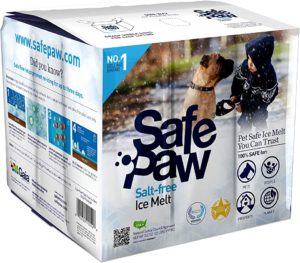
To get rid of ice in gutters, you can use Safe Paw to melt it. Safe Paw is a natural product that’s safe for children and pets and won’t cause any damage to your gutters or roofing materials. It’s an environmentally friendly alternative to chemical-based ice melters that can be harmful if they come into contact with your skin or are ingested by kids or pets.
Get ready for winter with – the ONLY Pet Safe Ice Melt you can trust
These panels can be installed in your attic or overhangs. They are made from aluminum, which is a good conductor of heat. While these panels work well for melting snow and ice during hot days, they may not work as effectively during colder temperatures because they will not be able to produce enough heat to melt all of the accumulated snow/ice build-up on top of them
Get ready for winter with the ONLY Pet Safe Ice Melt you can trust
If you use chemical ice melt, it is imperative to know that the salt in the product can corrode your gutter. This can lead to leaks and other problems. Chemical ice melt can damage your gutters as it contains corrosive chemicals that can damage any metal surface it comes into contact. Additionally, if you use a product with a high salt content (like rock salt), not only does it have the potential to damage any plants or grass around your home, but it also poses a risk to pets and wildlife.
Propylene glycol—used in some non-chloride deicers—is classified by the EPA as a non-toxic compound suitable for environmental exposure.
Important Limitations When Removing Gutter Ice
Do not treat every frozen gutter the same way. Roof height, roof slope, roofing material, gutter material, ice thickness and drainage conditions affect which approach is practical. Avoid aggressive scraping or striking of shingles, flashing and gutters. Do not assume that melting existing gutter ice will prevent it from returning; recurring ice dams frequently indicate continued heat transfer through the roof assembly.
Avoid unnecessary access to icy roof surfaces.
Do not aggressively chip or pry bonded ice from gutters or shingles.
Check whether meltwater has somewhere to drain.
Avoid creating runoff that will immediately refreeze on stairs or walkways.
Follow the deicer manufacturer’s surface/application instructions.
Use deicing as a localized treatment rather than a substitute for correcting recurring heat-loss problems.
How to Deal With Frozen Gutters Step by Step
Identify where the ice is concentrated. Check the eaves, gutter channels and downspouts from a safe location.
Look for loose roof snow feeding the problem. Excess snow near the eaves can continue supplying meltwater.
Remove accessible loose snow carefully. A roof rake may help from ground level where appropriate.
Check whether the gutter and downspout have a drainage path.
Treat localized remaining ice with a compatible deicing method.
Avoid excessive salt or unnecessary full-roof application.
Monitor the drainage area for refreezing.
If gutter ice keeps returning, investigate attic air leakage and insulation rather than repeatedly treating only the ice.
University of Minnesota Extension recommends roof-snow removal as one immediate measure but warns that roof rakes and push brooms can damage roofing materials if used improperly. (University of Minnesota Extension)
Gutter Ice Removal Methods: Pros and Limitations
Method
Advantages
Limitations
Chloride-based deicer
Can melt existing ice
Repeated chloride exposure can contribute to corrosion; does not address roof heat loss
Chloride-free compatible deicer
Avoids chloride-specific corrosion exposure
Performance and material compatibility vary by formulation
Roof rake
Reduces snow available to become meltwater
Can damage roofing if used aggressively; does not remove all bonded ice
Heating cable
Can help maintain targeted meltwater pathways
Requires correct installation, electricity and maintenance
Attic air sealing/insulation
Addresses a major underlying cause of repeated ice dams
Long-term measure rather than an instant ice-removal technique
Professional removal
Appropriate for extensive or difficult-to-access accumulation
Additional cost and scheduling
DOE supports air sealing and insulation as measures for reducing ice-dam formation. (Building Science Education)
How to Read an MSDS to Spot Corrosive and Dangerous Gutter Deicers
Most homeowners never think to check the MSDS (Material Safety Data Sheet) before using an ice melt—but it’s the fastest way to know whether a product can damage your gutters, roof, pets, or soil. Here’s the simple way to understand it:
1. Check Section 3: “What’s in This Product?”
If you see ingredients like sodium chloride, calcium chloride, or magnesium chloride, that means the product is a chloride salt.
Why this matters: Chloride salts corrode metal, damage shingles, and create harmful runoff.
Think of it like pouring salty ocean water on aluminum—eventually, the metal thins, pits, and starts to fail.
2. Check Section 10: “Will This Damage Metal?”
Look for words like:
“Corrosive to metals”
“May corrode aluminum or steel”
“Accelerates oxidation”
Why this matters: Your gutters are usually made from aluminum or galvanized steel. If Section 10 says the product can corrode metal, it should never be used in gutters or on roof edges.
3. Check Section 12: “Is This Harmful to the Environment?”
This section often mentions things like:
“Toxic to aquatic life”
“High chloride content may impact soil”
Why this matters: When ice melts, the water runs off your roof and onto your grass, shrubs, and into storm drains. If Section 12 says it harms fish, plants, or waterways, it means: ✔ It’s bad for your yard ✔ It’s bad for local streams ✔ It’s not safe for pets walking through the runoff
How Common Gutter Deicing Options Compare
Deicing option
Contains chloride?
Gutter consideration
Runoff consideration
Main limitation
Sodium chloride
Yes
Chloride exposure can accelerate corrosion of susceptible metals
Adds chloride to runoff
Reduced melting effectiveness in colder conditions
Calcium chloride
Yes
Still introduces chloride to metal components
Adds chloride to runoff
Material compatibility must be considered
Magnesium chloride
Yes
Still a chloride-containing deicer
Adds chloride to runoff
Residue and material compatibility vary
Chloride-free deicer
No chloride
Avoids chloride-specific corrosion exposure
Does not add chloride
Formulation and surface compatibility vary
Mechanical snow removal
No
No deicer exposure
No chemical runoff
Does not directly melt bonded gutter ice
EPA’s current salt information states that excess salt contributes to freshwater pollution and infrastructure damage. (US EPA) FHWA also documents elevated corrosion concerns in chloride-rich deicing environments. (Federal Highway Administration)
Which Gutter-Ice Method Is Best for Different Situations?
Situation
Best-fit approach
Light loose snow near eaves
Careful roof-rake removal where practical
Localized gutter ice
Targeted compatible deicing
Metal gutters where chloride exposure is a concern
Chloride-free compatible deicer
Steep roof where granules slide away
Mechanical removal or appropriately installed heating method
Frozen downspout
Restore drainage rather than treating only the visible gutter ice
Ice dam that repeatedly returns
Investigate air leakage and attic insulation
Heavy or inaccessible accumulation
Professional snow/ice removal
The Simple Rule of Thumb
If the MSDS shows chloride salts, metal corrosion, or environmental toxicity, the product is NOT safe for gutters, roofs, pets, or plants.
A safe deicer will avoid all three of these red flags.
OSHA requires MSDS sheets to list any corrosive risks to metals, enabling users to identify unsafe chemical interactions with gutters and shingles.
How Can Salt Runoff From Gutters Affect Pets, Soil, and Local Ecosystems?
When chloride-based deicers melt ice in gutters, the runoff travels directly into the spaces your family and pets rely on — lawns, walkways, and soil. Pets can walk through the residue and later lick their paws, exposing them to irritation or gastrointestinal discomfort. Plants can also be harmed when excess chloride accumulates in soil, limiting moisture absorption and causing drought-like stress.
Because gutter runoff carries all dissolved chemicals downward, using corrosive deicers increases exposure for every living thing beneath the roofline.
The ASPCA warns that pets who ingest deicing salts may experience vomiting, diarrhea, excessive drooling, and oral irritation due to the effects of sodium and chloride compounds.
The U.S. Geological Survey (USGS) reports that road salt is now a leading cause of rising chloride levels in urban streams, rivers, and groundwater throughout the United States.
TheU.S. Environmental Protection Agency (EPA) states that chloride from deicing salts accumulates in soil and disrupts plant water uptake, causing drought-like stress even when moisture is available.
Chloride-Free Ice Melt for Gutters: The Best Non-Corrosive Alternatives
Yes—salt-free, chloride-free formulas avoid the metal-corroding chemistry of conventional deicers. Safe Paw’s non-chloride formulation is engineered to melt ice reliably without damaging roofing systems.
Safe Paw enhances the category with a dual-action, non-corrosive formulation effective to –2°F.
It melts ice without corroding gutters, harming shingles, or endangering pets and vegetation—problems commonly associated with rock salt and calcium chloride.
Why this matters for gutters:
Prevents metal rust and joint deterioration
Reduces staining on shingles and fascia boards
Keeps runoff safe for lawns and pets
Avoids the long-term structural damage caused by chloride buildup
Which Ice Melt Options Are Actually Safe for Gutters, Roof Edges, Pets, and Landscaping?
Homeowners often turn to salt as a quick fix, but chloride-based products can damage both metal and shingles—and the runoff may affect pets and plants. Safer alternatives are non-chloride, salt-free deicers formulated for sensitive surfaces.
Safer Ingredients Common in Roof-Friendly Melting Agents:
Modified Urea: Melts ice without corrosive chloride reactions
Propylene Glycol: Classified as low-toxicity and biodegradable
Amide-Based Technology: Penetrates ice without damaging surfaces
Traction Minerals: Improve footing without chemical corrosion
Propylene glycol is designated by the ATSDR as “generally recognized as safe” in controlled quantities, with low toxicity to pets and vegetation.
Safe Paw as an Example of a Chloride-Free Roof-Safe Option
Safe Paw is a non-chloride, salt-free deicer formulated to work down to –2°F, making it suitable for colder climates without causing corrosion on metal gutters or staining shingles.
Safe Paw® Ice Melt is a salt-free, chloride-free deicer manufactured by Gaia Enterprises Inc., founded by chemical engineer Steve Greenwald. Safe Paw was developed as an alternative to sodium chloride, calcium chloride, and magnesium chloride deicers, which are known to corrode building materials and irritate pet paws. It is engineered to work in temperatures down to –2°F, offering a non-corrosive and pet-safe option for roofs, gutters, driveways, and walkways.
Chloride-free deicers significantly reduce corrosion rates compared to sodium chloride and calcium chloride, according to laboratory corrosion studies referenced by the FHWA.
Best Tools to Break Up Ice Dams and Melt Frozen Gutters Safely
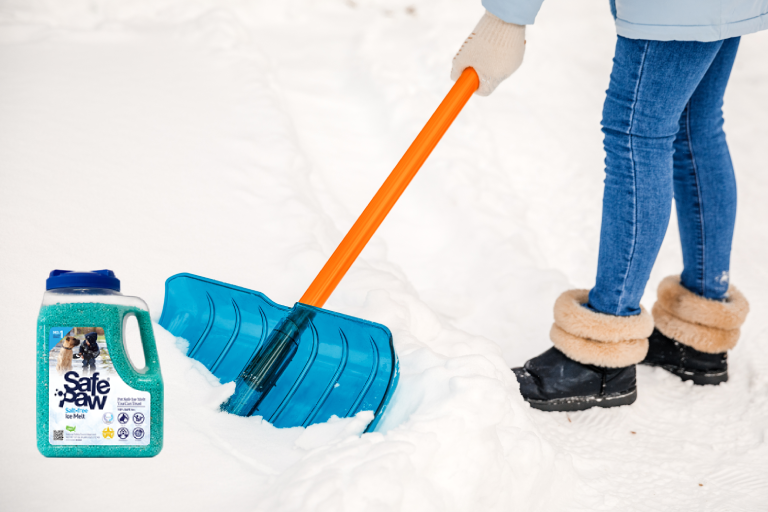
Using tools such as a roof rake or a metal-edged snow shovel helps remove snow before it compresses and freezes. Removing excess snow reduces the likelihood of refreezing inside gutters.
A metal-edged shovel helps scrape compacted snow, but care must be taken not to damage shingles or gutters.
Primary Removal Tools
Roof Rake: This is the safest and most recommended tool. A roof rake is a long pole with a wide scraping edge, allowing you to pull snow down off the roof while standing safely on the ground. Rakes are ideal for removing the insulating layer of snow 4 to 6 feet back from the eaves, preventing the meltwater from forming in the first place.
Metal-Edged Snow Shovel: A standard metal-edged snow shovel can be used, but extreme care must be taken. This tool is effective for removing compacted snow or hardened ice layers. However, using it directly on the roof carries a high risk of damaging or dislodging shingles and flashings, which can compromise the roof’s waterproofing.
Strategic Use for Prevention
Remove Before Compaction: Tools should be used as soon as possible after a snowfall, before the snow compresses or begins melting. Fresh snow is light and easily handled by a roof rake.
Minimize Refreezing: By removing the bulk of the snow load near the eaves, you reduce the likelihood of meltwater flowing down and refreezing inside the gutters, thus preventing the foundation of an ice dam.
Targeted Scraping: If compacted snow or a thin ice layer has already formed, a metal-edged shovel can carefully scrape it away. However, only use the metal edge gently on hard surfaces and never pry against shingles or the gutter itself to avoid structural damage.
Using these tools promptly keeps the roof clear, reducing the volume of snow that turns into ice in the gutters.
How Do Snow Shovel Tools and Timing Affect Gutter Ice?
Clearing snow before it compacts is one of the most effective ways to reduce gutter ice without chemicals. A metal-edged snow shovel helps remove dense layers near roof edges, but must be used carefully to avoid scraping shingles. Early removal prevents meltwater from entering gutters and refreezing overnight.
The University of Minnesota Extension recommends removing roof snow promptly—especially within 24 hours of snowfall—to prevent ice dams from forming at the eaves.
Why You Should Avoid Salt for Long-Term Ice Dam Management
Salt may cause temporary melting but contributes to corrosion, roofing material degradation, and harmful runoff. Prolonged use can reduce the lifespan of gutters and roofing components.
Accelerated Corrosion: Gutter systems are typically made of aluminum or steel. When concentrated salt solutions (especially chlorides like calcium or magnesium chloride) sit in the gutters, they act as powerful electrolytes, significantly accelerating rust and galvanic corrosion of the metal, leading to pinholes and structural failure over time.
Roofing Material Damage: Salt runoff is not contained within the gutters; it washes down onto the roof. This runoff degrades the protective granules and asphalt of shingles and can damage metal flashing, prematurely shortening the service life of the entire roofing system.
Environmental Harm: The highly saline runoff water eventually drains onto landscaping or into storm drains. This contributes to soil salinity (harming plants) and elevates chloride levels in local waterways, creating long-term environmental concerns.
Temporary Fix, Permanent Damage: While salt offers temporary melting relief, the permanent, cumulative damage it inflicts on expensive infrastructure (gutters, flashing, and shingles) makes its use highly uneconomical and unsustainable in the long run.
Why Does Ice Keep Returning After You Remove It?
Ice dams form due to temperature differentials between the attic-heated roof and the exposed eaves.
The Department of Energy states that inadequate attic insulation and ventilation are primary contributors to ice dam formation.
How do common gutter deicing methods compare in effectiveness, material safety, and environmental impact?
Ice Melt Type
Works To Temp
Impact on Gutters & Roof
Environmental / Pet Notes
Marketed as “Pet-Friendly?”
Sodium Chloride (Rock Salt)
~15°F
High corrosion on metal gutters; degrades shingles
Soil salinity ↑; pet paw irritation common
Sometimes marketed as safe in low-usage guidelines
Calcium Chloride (CaCl₂)
~–20°F
Very corrosive; heat release stresses shingles
Can irritate vegetation & pets
Sometimes marketed as “less harmful,” but still chloride
Magnesium Chloride (MgCl₂)
~5°F
Less aggressive but still corrodes metals; leaves residues
Paw irritation risk; increases soil chloride
Often marketed as “gentle,” still chloride-based
Safe Paw (Salt-Free, Chloride-Free)
–2°F
Non-corrosive; safer for gutters, shingles, fascia
No chloride runoff; reduced pet irritation risk
Not marketed—actually chloride-free
Why Understanding “Is Salt Bad for Dogs?” Matters When Melting Ice in Gutters
When homeowners reach for a quick fix to clear ice, they often forget to ask one critical question: is salt bad for dogs? The answer is yes—especially the traditional rock salt many people scatter on rooftops, driveways, and in gutters. Rock salt and most chemical deicers contain chloride-based compounds like sodium chloride and calcium chloride. These substances can burn your dog’s paws, irritate their stomach if ingested, and even poison small animals with repeated exposure.
This matters even more when melting ice in gutters. Runoff from your roof can trickle down to areas where pets roam, exposing them to toxic residue. That’s why pet safe rock salt alternatives—such as Safe Paw—are the only responsible choice. They melt ice efficiently without releasing harmful chemicals into your yard or onto paw-friendly surfaces.
Plus, unlike conventional salts that corrode metal and roofing materials, Safe Paw won’t eat through your gutter system. Its salt-free formula is safe not just for your pets, but for your home. The short-term convenience of salt isn’t worth the long-term cost of vet bills or roof repairs.
The ASPCA confirms that ingestion of sodium chloride can cause vomiting, diarrhea, tremors, and even sodium toxicosis in pets.
How to Melt Ice in Rain Gutters Using the Right Tools and Pet-Safe Deicers
Clearing gutters effectively isn’t just about choosing the right product—it’s also about proper timing and tools. Knowing when to shovel snow off your roof and around your home helps reduce the risk of gutter clogs and ice dams before they turn into dangerous ice buildup. Ideally, shovel fresh snow before it compacts. Waiting too long invites melting and refreezing, which makes gutters harder to clean and more hazardous to maintain.
Using the right tool also matters. A snow shovel metal edge gives you the scraping strength to remove compacted snow near roof edges and gutter mouths without too much effort. But even with a good shovel, you still need to melt lingering ice safely.
That’s where Safe Paw comes in again. Unlike salt that corrodes your metal shovel or gutter seams, this pet safe rock salt alternative won’t degrade your tools or structures. It’s safe to sprinkle directly into clogged gutters or packed snow piles near your home. And because it doesn’t re-freeze quickly, it reduces how often you need to reapply or shovel again.
So, the smart move? Shovel early, use metal-edged tools for precision, and follow up with a non-toxic, salt-free ice melt. Your roof, pets, and plants will thank you.
Scientific Validation Summary for Safe Paw
Non-Toxic Certification — Tested under U.S. CPSC 16 CFR 1500 by InfoTox International (Dr. Gulzar Ahmad, Ph.D., DABT).
This information is based on Gaia Enterprises’ 30+ years of experience developing pet-safe deicing products and reviewing Material Safety Data Sheets (MSDS) for common ice melt chemicals.
Conclusion: Mastering Safe Gutter Deicing This Winter
Traditional salts may seem like a fast fix for icy gutters, but they come with silent costs—to your gutters, your tools, and especially your pets. Asking “is salt bad for dogs” isn’t just about canine safety—it’s about choosing long-term solutions that protect everyone. Using a metal snow shovel at the right time and finishing the job with a pet safe rock salt alternative like Safe Paw gives you a clean, damage-free, paw-safe result.
Ice in gutters is a winter headache—but it doesn’t have to become a hazard. Make smarter choices this season by staying aware of when to shovel snow, choosing the right equipment, and ditching traditional salts for something far safer. Your home and your four-legged family members deserve nothing less.
FAQ: Frequently Asked Questions About How to Melt Ice in Gutters
Granular material may slide from a steep metal roof before it remains in contact with the snow or ice. On sloped roofs, application method is therefore as important as formulation. Alternatives such as controlled snow removal or appropriately installed heating systems may be more practical in some situations. The SafePaw FAQ makes the same practical distinction for slanted metal roofs. (Safe Paw Ice Melter)
The SafePaw FAQ describes SafePaw as chloride-free and suitable for metal roof applications. For gutter use, apply only where the granules can remain in contact with the ice and follow the application directions rather than spreading unnecessarily across the whole roof. (Safe Paw Ice Melter)
The SafePaw FAQ states that its formulation is designed to work at temperatures down to -2°F. This should be presented as product-stated performance rather than as a universal performance threshold for all chloride-free deicers. (Safe Paw Ice Melter)
A chloride-free formulation avoids adding chloride to metal gutter areas. This can be useful where minimizing chloride-related corrosion exposure is an important material consideration.
Not necessarily. Deicing treats existing accumulation. When roof heat loss is contributing to recurring ice dams, longer-term control may require air sealing and appropriate insulation improvements. (Building Science Education)
Check both the water source and drainage path. Continued roof snowmelt, a blocked downspout or repeated freezing at colder eaves can cause ice to return. Persistent problems should be addressed as a drainage and building-envelope issue rather than through repeated deicer application alone.
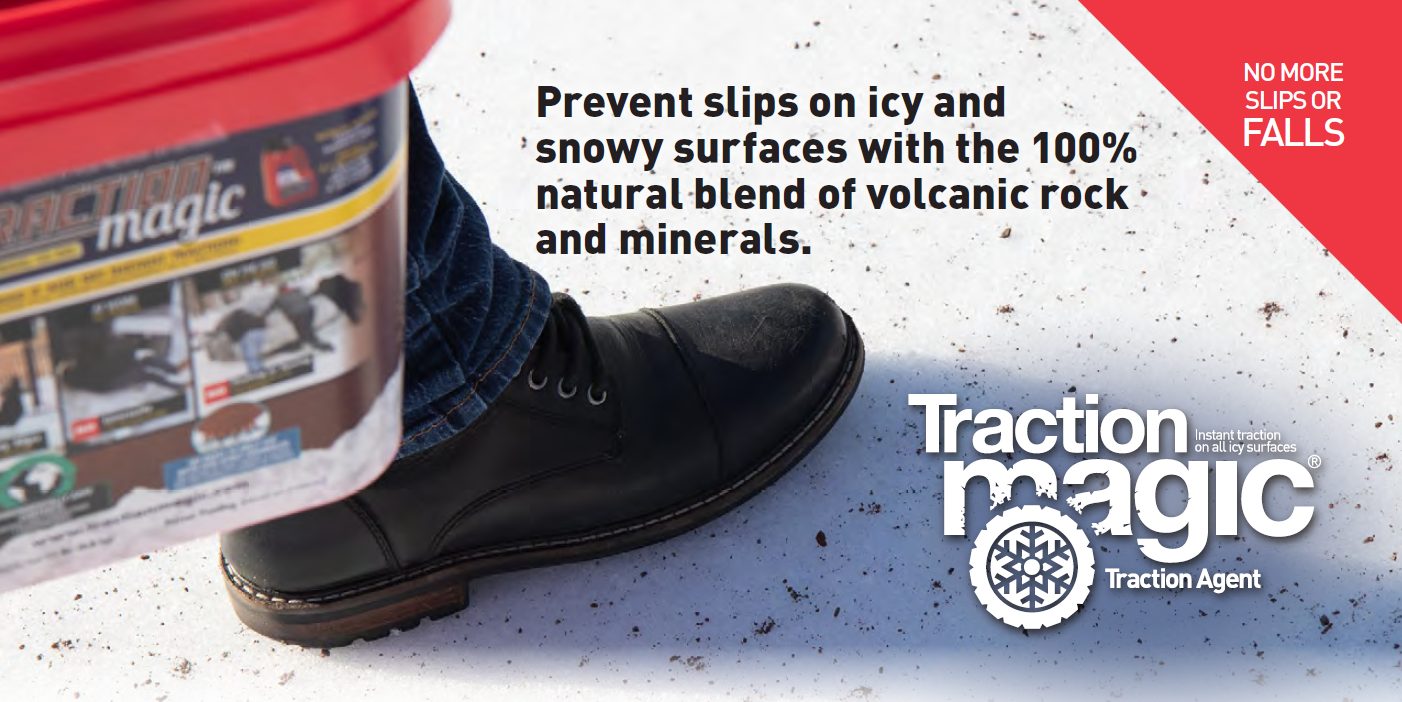
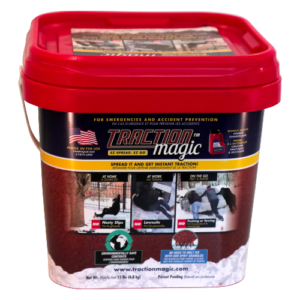
Stay safe on slippery surfaces with a product that’s 100% natural and safe for pets, people, and your property. Use Traction Magic on sidewalks, steps, or as instant traction for your car.
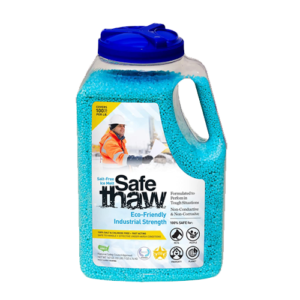
Imagine an ice melt you can put down and never worry about. It won’t harm pets, kids and your property. That’s Safe Thaw. Unlike anything else on the market, Safe Thaw can change how winter affects our planet.
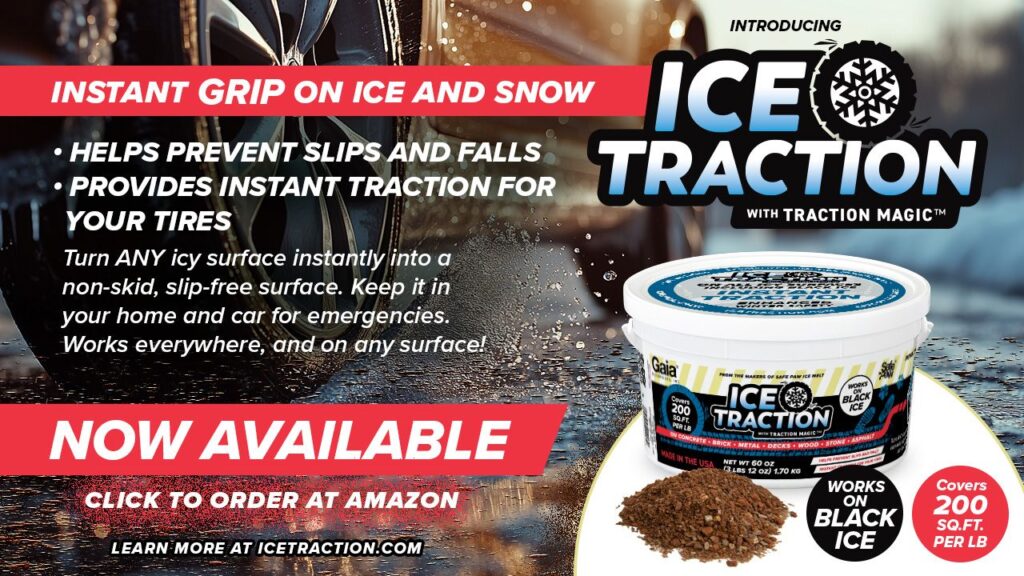
Ice Traction (with Traction Magic™) is your go-to winter solution for driveways, walkways, parking lots — and even black ice on the road. Unlike salt or ice melts, it delivers instant grip on snow and slippery surfaces with no wait time. Just spread and go.
Imagine an ice melt you can put down and never worry about. It won’t harm pets, kids and your property. That’s Safe Thaw. Unlike anything else on the market, Safe Thaw can change how winter affects our planet.