



What Kind Of Ice Melt Is Safe For Concrete?
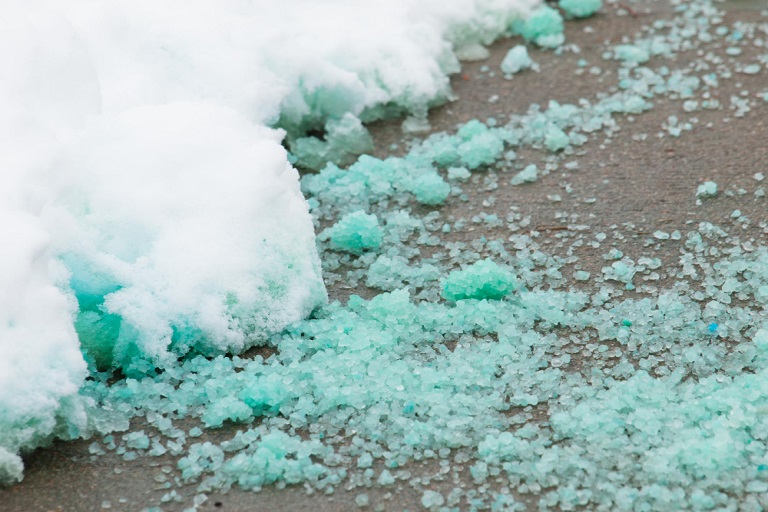
The lowest-risk ice melt for concrete is a chloride-free product specifically labeled for use on cured concrete and applied only in the amount directed. Repeated or excessive use of sodium chloride, calcium chloride, or magnesium chloride can increase salt and moisture exposure, contributing to scaling, joint deterioration, chemical reactions, or corrosion of embedded steel. No deicer is completely risk-free for every concrete surface, so remove loose snow first, use the minimum effective amount, and avoid deicers on newly placed or visibly damaged concrete whenever possible.
For homeowners seeking a salt- and chloride-free option, Safe Paw is formulated for use on cured concrete and includes a traction agent. Always follow the current product label and application instructions.
Key Takeaways
- The lower-risk choice for concrete is a chloride-free product labeled for use on cured concrete.
- No ice melt is completely harmless to every slab or driveway.
- Newly placed, cracked, poorly cured, non-air-entrained, and water-saturated concrete is more vulnerable.
- Shovel or scrape away loose snow before applying any melting product.
- Apply only the amount recommended on the label; excessive application increases scaling risk.
- For new or already damaged concrete, use clean sand or a non-melting traction material when practical.
- Good drainage and a suitable breathable concrete sealer can reduce moisture penetration.
Ice melting products keep your walkways, steps, and driveways safe during winter. But, there are many different types of ice melt available to purchase. Some of these products contain chemicals that may harm concrete surfaces like your driveway pavement or sidewalk pavers. So if you’re wondering what kind of ice melt is safe for concrete, this article is for you. We will cover some common ice melters and what they do not damage or harm.
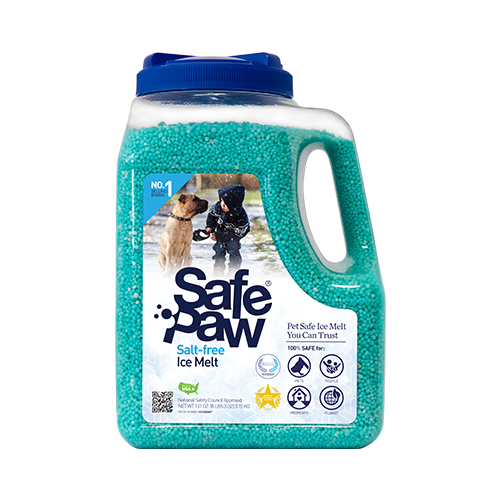
Safe Paw
The Original and the #1 Pet and Child Safe Ice Melt for over 20 years. Guaranteed environmentally safe – will not harm waterways and sensitive wetlands.
How Can Ice Melt Damage Concrete?
Concrete contains pores that can absorb water and deicer solution. When moisture in or near the surface repeatedly freezes and thaws, it can contribute to flaking or peeling known as scaling. Deicers may increase surface saturation and the number of freeze-thaw cycles. Some chloride salts can also react chemically with cement paste, penetrate joints and cracks, or reach reinforcing steel and initiate corrosion.
The type of deicer matters, but it is not the only factor. Concrete quality, curing, air entrainment, permeability, age, drainage, existing damage, application concentration, and frequency of use all influence the final risk.
FHWA and NRMCA identify moisture saturation, freeze-thaw exposure, excessive deicer application, inadequate curing, low strength, and insufficient air entrainment as major durability factors. (Federal Highway Administration)
What Makes Concrete More Vulnerable?
- Concrete installed during the current season or exposed to its first winter
- Concrete that was not properly cured
- Cracked, chipped, scaled, or spalling concrete
- Concrete with poor drainage or standing water
- Non-air-entrained exterior concrete
- Weak or highly permeable concrete
- Joints with failed sealant
- Areas receiving frequent or excessive deicer applications
- Reinforced concrete where chlorides can reach embedded steel
Concrete Sealant
Applying a concrete sealant is a critical step in safeguarding your pavement from winter’s wrath. A good sealant acts as a barrier, reducing the porous nature of concrete, which often leaves it vulnerable to moisture and corrosive chemicals. This protective layer helps prevent water from seeping into the concrete, significantly reducing the risk of damage from freeze-thaw cycles which are common in colder climates. By limiting the absorption of moisture, concrete sealant enhances the durability of your walkways, driveways, and patios, ensuring they resist the harsh impacts of ice melt products and inclement weather.
Safe Ice Melt Products
When it comes to concrete protection from ice melt, not all products are created equal. Safer ice melt products forego harsh chemicals like chlorides, which can degrade concrete structures over time. Instead, they may contain more benign ingredients like urea or glycols, offering a gentler touch on both concrete surfaces and the surrounding environment.
Before You Apply Ice Melt to Concrete
- Remove as much loose snow and ice as possible.
- Check for cracks, scaling, spalling, or standing water.
- Confirm that the concrete is cured and suitable for deicer use.
- Read the product ingredients and application directions.
- Test the product on a small, inconspicuous area.
- Apply the minimum amount needed.
- Spread the material evenly instead of forming piles.
- Sweep or rinse away residue when conditions permit.
- Prevent melted water from pooling near joints and cracks.
Avoid These Practices
- Do not pour deicer into concentrated piles.
- Do not assume that using more product will melt ice faster.
- Do not apply a deicer to visibly deteriorating concrete without professional advice.
- Do not use ammonium nitrate or ammonium sulfate on concrete.
- Do not let salt solution continually collect in joints or poorly drained areas.
- Do not describe a product as universally safe without stating concrete-age and application limitations.
What Kind Of Ice Melt Is Safe For Concrete?
As with all chemical ice melts, chloride-based products are generally not recommended for use on concrete. Chloride-based ice melts contain sodium chloride (table salt) and can damage the surface of your concrete driveway and walkways if used frequently. These chemicals will cause the surface layer of your driveway or sidewalk to become rough and create an uneven walking surface making it very slippery when wet.
Examples of Safe Ice Melt Products Include:
Navigating the icy minefields of winter requires more than just a good pair of boots; it demands the right ice melt. Not all heroes wear capes, and not all ice melts are created equal:
- Safe Paw: Standing out in the league of ice melt, Safe Paw ensures safe ice melt for concrete without the drama of damaging salts or chlorides. It’s like having a gentle giant by your side—tough on ice but kind on your concrete and furry friends.
- Other Brands: While other products might throw around terms like ‘effective’ or ‘powerful,’ they often come with a catch:
- Calcium Chloride: Sure, it melts ice at superhero speeds, but it can also attack your concrete faster than you can say ‘repair bill.’
- Magnesium Chloride: A softer touch than calcium but still a risky bet for your concrete catwalk.
Protecting your concrete from winter’s freeze-thaw antics isn’t just about avoiding a slip; it’s about choosing protectors that respect both your property and the planet. With Safe Paw, your winter worries melt away, leaving your driveways safe and sound without the environmental footprint. As the snow falls, remember: the best defense is a good, green offense.
Gaia Enterprises Inc. delivers 100% pet-safe and environmentally friendly winter products. Safe Paw, our flagship product, is the #1 selling pet-safe ice melt that does not harm pets, safe if ingested, and safe on all types of concrete.
Chloride-based ice melts also have a tendency to stain surfaces they come into contact with, and this is especially true for light-colored driveways that may already be stained from other sources like oil stains from cars.
You can use chemical-free ice melters to melt the ice on your deck or patio. Natural ice melters are not harmful to concrete and are typically easier on plants than salt or calcium chloride. But there are still some disadvantages of using natural ice melters.

Bulk Purchase With Safe Paw
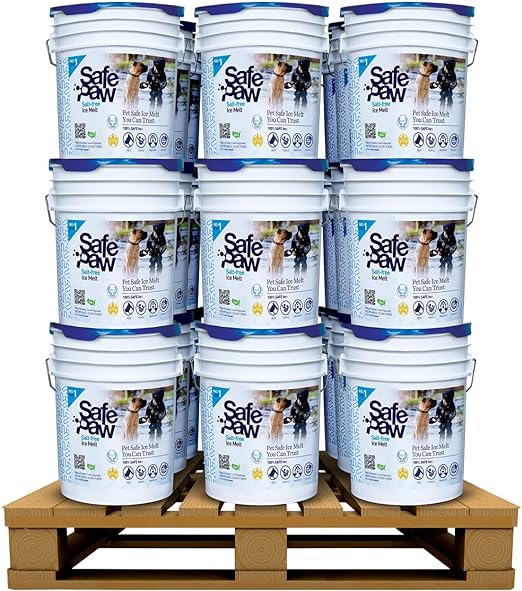
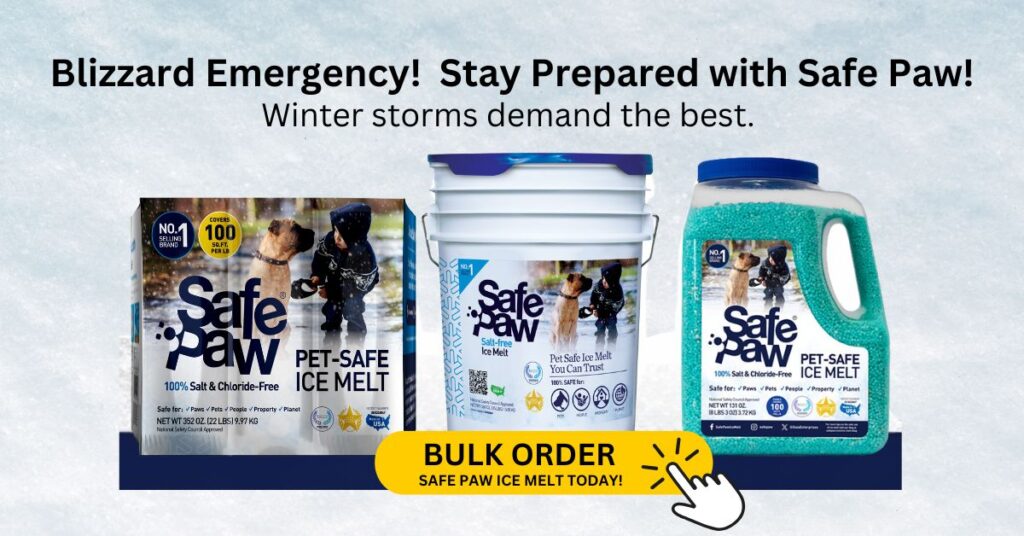
Safe Paw, Child Plant Dog Paw & Pet Safe Ice Melt -35lb, 36 Pails

Safe Paw, Child Plant Dog Paw & Pet Safe Ice Melt -22lb, 100Bboxes
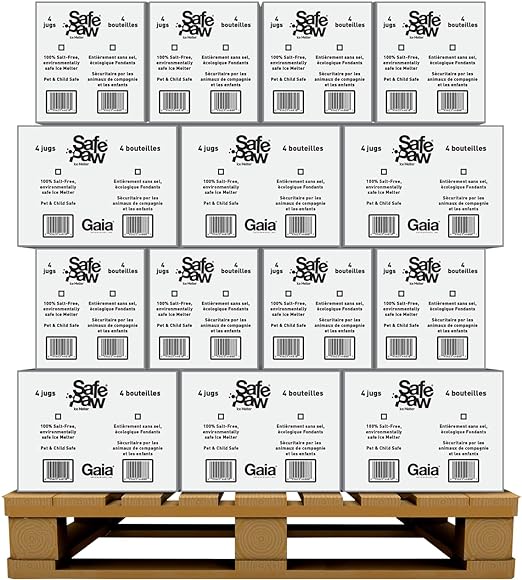
Safe Paw, Child Plant Dog Paw Pet Safe Ice Melt, 160 Jugs

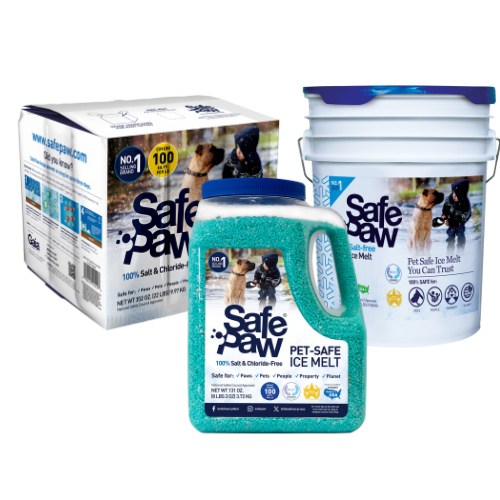


When it comes time to melt the snow on your driveway, consider using a chemical-free deicer instead of rock salt or calcium chloride. These products won’t damage your concrete and will be safer for surrounding vegetation and landscaping.
Safe Paw’s patented traction compound provides slide resistance, lasts more than 72 hours on the surface, and is salt-free, chlorine-free, and acetate-free. It uses a two-step process that begins by breaking up the ice and then melting it. This combination is effective for melting through even the most difficult conditions, including ice formations and compacted snow.
Know What Your Concrete Is Made Of, and If These Ice Melts Will Damage Your Concrete
You usually do not need to identify the exact Portland cement type before choosing a deicer. More practical indicators are the age and condition of the slab, whether it was properly cured and air-entrained, the presence of cracks or scaling, and whether water drains away from the surface. When the concrete’s condition is unknown, ask the installer or a qualified concrete professional before applying a deicer.
Get ready for winter with the ONLY Pet Safe Ice Melt you can trust
|
Winter treatment |
Concrete considerations |
Main advantage |
Main limitation |
Best use |
|
Chloride-free ice melt |
Avoids adding common chloride deicers; still requires moderate application |
Lower chloride-related exposure |
Not automatically risk-free for weak or new concrete |
Sound, cured residential concrete |
|
Sodium chloride or rock salt |
Can increase saturation, scaling risk, and chloride penetration |
Widely available and inexpensive |
Corrosion, residue, vegetation, and repeated-use concerns |
Limited use on suitable, mature concrete where permitted |
|
Calcium chloride |
Can melt ice rapidly but may react with cement paste under certain conditions |
Effective in colder conditions |
Chemical interaction and corrosion concerns |
Only where specifications and concrete condition permit |
|
Magnesium chloride |
Can chemically interact with cement-based materials |
Low-temperature performance |
Concrete-deterioration concerns |
Avoid on vulnerable concrete |
|
Clean sand or traction material |
Does not melt ice or introduce a deicing brine |
Immediate traction |
Requires cleanup and does not remove ice |
New, damaged, or deicer-sensitive concrete |
|
Manual removal |
No chemical exposure |
Lowest chemical risk |
Labor-intensive; may not remove bonded ice |
First step for every surface |
Conclusion
For most homeowners, the lower-risk ice melt for concrete is a chloride-free product labeled for use on cured concrete and applied in the minimum amount required. However, product choice is only part of concrete protection. The slab’s age, curing, air entrainment, moisture level, drainage, cracks, application frequency, and maintenance practices all affect the likelihood of scaling or deterioration.
Remove snow mechanically before applying an ice melt, avoid concentrated piles, prevent melted water from collecting in joints, and use clean sand or a traction material on new or vulnerable concrete. Safe Paw can be considered when a salt- and chloride-free product is preferred, but it must still be used according to its current label and application instructions.
Get ready for winter with the ONLY Pet Safe Ice Melt you can trust
Other Ice Melt Products
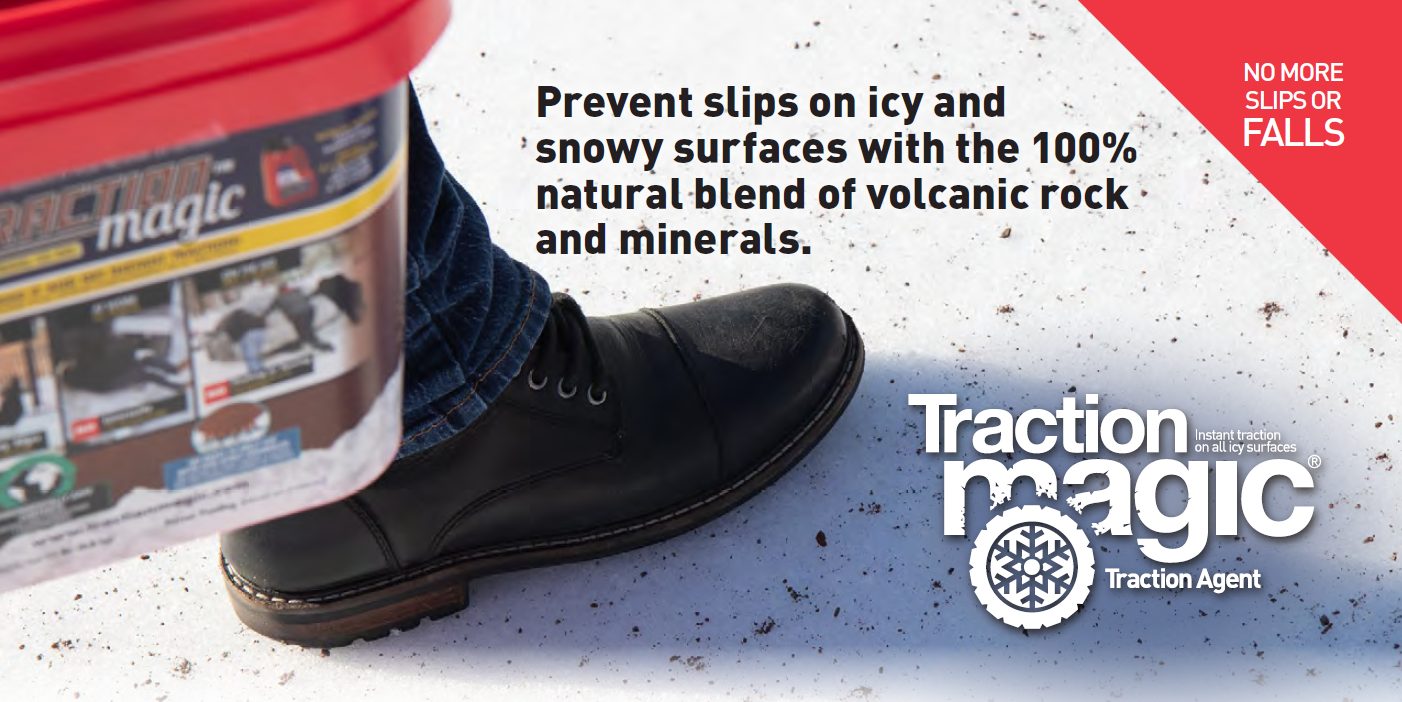
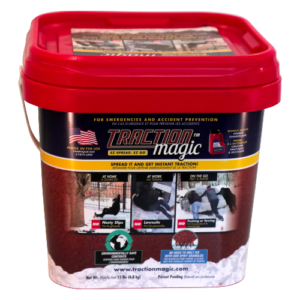
Traction Magic
Stay safe on slippery surfaces with a product that’s 100% natural and safe for pets, people, and your property. Use Traction Magic on sidewalks, steps, or as instant traction for your car.
Safe Thaw
Imagine an ice melt you can put down and never worry about. It won’t harm pets, kids and your property. That’s Safe Thaw. Unlike anything else on the market, Safe Thaw can change how winter affects our planet.
Ice Traction (with Traction Magic™)
Ice Traction (with Traction Magic™) is your go-to winter solution for driveways, walkways, parking lots — and even black ice on the road. Unlike salt or ice melts, it delivers instant grip on snow and slippery surfaces with no wait time. Just spread and go.

Safe Thaw
Imagine an ice melt you can put down and never worry about. It won’t harm pets, kids and your property. That’s Safe Thaw. Unlike anything else on the market, Safe Thaw can change how winter affects our planet.
Related Articles
- Homemade Ice Melt Safe For Pets And Concrete
- What Are Concrete Pops and What Causes Them?
- How Poor Concrete Work Increases the Risk of Deicer Damage
- How Does the Age of Concrete Affect Its Resistance to Freeze-Thaw Damage?
- What Factors Determine Whether Damaged Concrete Needs Resurfacing or Full Replacement?