Ice Melt That Won’t Rust Your Steel Based Stairwells
0 comments
Ice melt that is specifically formulated to minimize corrosion is the appropriate category to consider for steel stairs. Chloride-free formulations can also be considered when the goal is to reduce exposure to chloride salts. The exact corrosion performance depends on the formulation, application rate, moisture exposure, exposure time, and type of steel.
What to Look For
Non-corrosive formulation
Chloride-free formulation, when reducing chloride exposure is important
Clearly identified ingredients
Surface compatibility information
Recommended application rate
Appropriate temperature range
Guidance for use around metal
Audio Edition of This Article
Anyone who steps foot on your property is at risk due to the winter snow on walkways and stairs. To avoid slick conditions, it is a good idea to clear snow and ice, but salt-based deicers have the tendency of destroying concrete and metal. Many salt ice melts on the market are advertised as ice melting concrete safe. These products, however, are exceedingly corrosive and will harm both your surface and metal railings. Even homemade sidewalk deicer is not an entirely safe and effective option. Let us know more about how to choose a safe ice melt.
Key Takeaways About Ice Melt and Steel Stairs
Steel can corrode when repeatedly exposed to salty moisture.
Chloride-containing deicers can contribute to corrosion under certain conditions.
Sodium chloride, calcium chloride, and magnesium chloride all contain chloride.
A non-corrosive formulation is an important consideration around steel stairwells.
Chloride-free ice melt can reduce chloride exposure.
More ice melt is not necessarily better; follow the recommended application rate.
Meltwater and residue can prolong exposure to metal surfaces.
Pet safety and metal corrosion are separate properties that should be evaluated independently.
Why Does Salt Cause Steel to Rust?
Salt does not simply “eat away” at steel. Corrosion occurs through electrochemical reactions when metal, moisture, oxygen, and suitable ions are present. Dissolved chloride salts increase the conductivity of the moisture on the metal surface, and chloride ions can interfere with protective surface films on susceptible metals. These conditions can accelerate corrosion.
The Corrosion Process
Ice melt contacts snow or ice ↓ The salt dissolves into water ↓ Salt-containing moisture contacts steel ↓ Electrical conductivity increases ↓ Corrosion reactions can accelerate ↓ Rust and other corrosion products can form
Why Avoid Salt-Based Ice Melt Around Steel?
Salt-based ice melts can increase corrosion concerns around steel stairwells because they introduce dissolved chloride salts into the moisture surrounding the metal. Repeated exposure can be particularly important where meltwater, residue, and salty snow remain against steel surfaces.
Potential Concerns
Corrosion of exposed steel
Rust formation
Corrosion around joints and fasteners
Residue accumulation
Increased exposure from repeated applications
Corrosion of nearby metal components
Why Avoid Salt-based Ice Melt?
While road salt brine and ice melt are frequently used for dealing with snow and ice, they are not free. The corrosive coating that these materials leave behind wreaks havoc on metal, painted, and polished surfaces. Moreover, it damages concrete, asphalt, and your wooden decks.
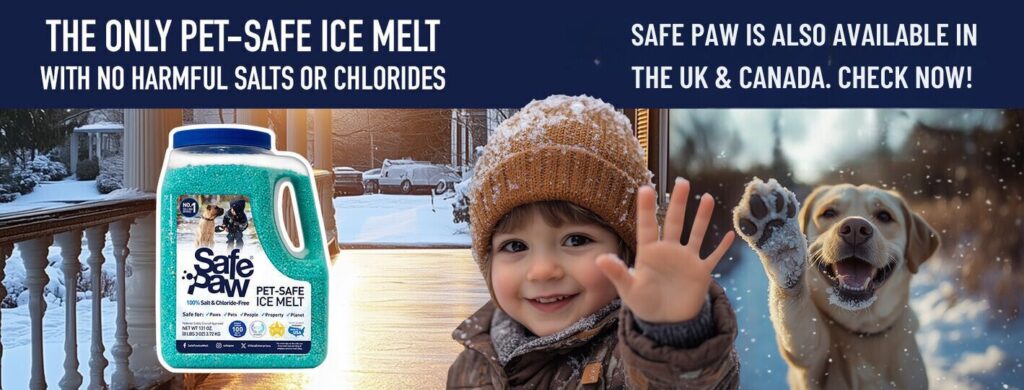
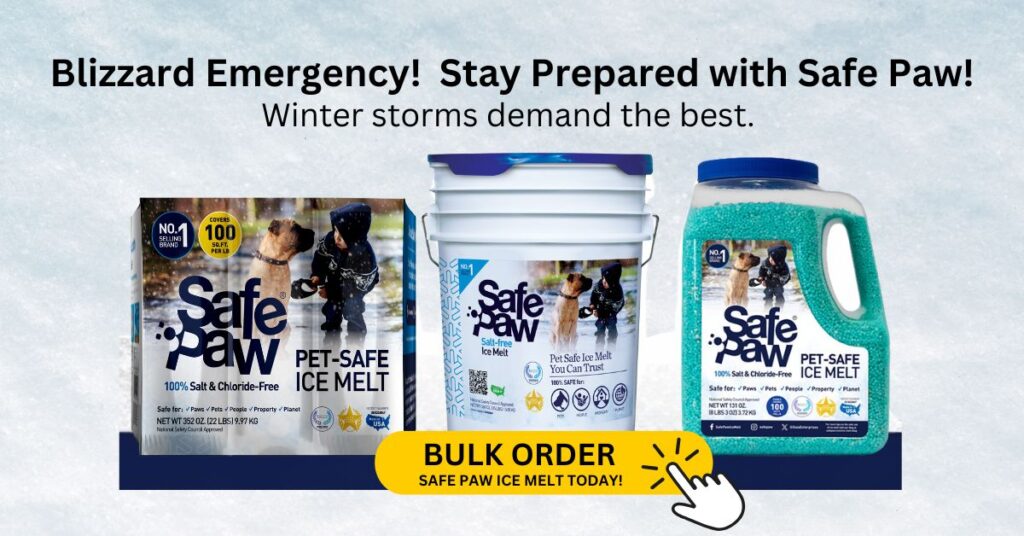
Ice and Snow Everywhere? Stock Up on Safe Paw – the ONLY Pet Safe Ice Melt you can trust
Ice Melt Ingredients and Steel Corrosion Considerations
Ice Melt Type
Chloride Present?
Steel Corrosion Consideration
Sodium chloride
Yes
Can contribute to corrosion under suitable exposure conditions
Calcium chloride
Yes
Chloride exposure can contribute to corrosion
Magnesium chloride
Yes
Chloride exposure remains a consideration
Calcium magnesium acetate (CMA)
No chloride salt
Different chemistry; evaluate product-specific corrosion information
Chloride-free formulation
No chloride
Reduces exposure to chloride salts; complete formulation should still be evaluated
You have most likely invested a significant amount of money in your home, and you want to keep it in the best possible condition so that it will last you for many years. There are ice melts available in the market to help you avoid such damaging effects.
Non Toxic Ice Melt
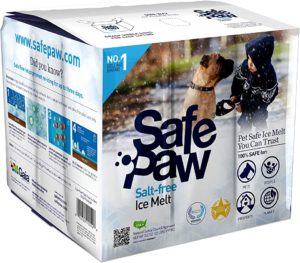
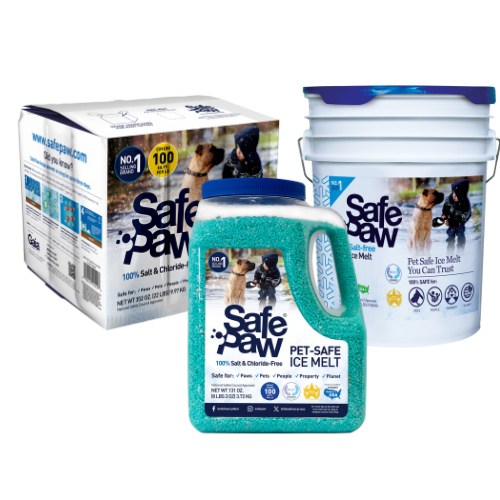
Pet Friendly Ice Melt – Safe Paw!
The Original and the #1 Child and Pet Safe Ice Melt for over 20 years. Guaranteed environmentally safe – will not harm waterways and sensitive wetlands.
To avoid corrosive chemicals, some homeowners prepare their homemade ice melt solutions. Some of these solutions are free from chlorides but are neither effective nor safe. For example, rubbing alcohol is free from chlorides and is not as harmful as rock salt but it is not very efficient at low temperatures. Moreover, its extensive use can cause skin and eye irritation.
In case, if you think that your table salt is a good solution for your winter woes, then don’t forget that it also has enough chlorine to damage your metal and concrete. Even though beetroot is a natural and safe version of ice melt, it will leave dark stains all over all your driveway and stairs.
2- Salt-free And Safe Ice Melt
Fortunately, we have the right and safe solution for snow removal. It will not only keep snow away but will also ensure a long life of your steel-based stairwells and concrete. The answer to all our ice melt worries is an eco-friendly, salt-free, and non-corrosive product -Safe Paw. It will give you long-lasting protection from slippery snow and will not damage your plants and pets.
Get ready for winter with – the ONLY Pet Safe Ice Melt you can trust
It can be safely used on all types of surfaces and works well in all temperatures. Its main ingredients are amide core and glycol. This safe product is an ideal choice for homeowners.
Unlike chlorides, it will not create problems for your kids and pets. Your kids and pets no longer need to stay indoors throughout winter because of the danger of ice melt toxins. It is safe for your greenery and acts as a stimulant for their growth.
Get ready for winter with the Only Pet Safe Ice Melt you can trust!
Why Steel Stairwells Need Special Ice-Melt Consideration
Steel stairwells can receive repeated exposure to snow, ice, meltwater, and deicing residue. Unlike a surface that is treated once and allowed to dry, frequently used stairs may experience repeated wetting and reapplication. This makes ingredient selection, application rate, drainage, and residue management important considerations.
Factors That Increase Exposure
Frequent foot traffic
Repeated snowfall
Repeated applications
Poor drainage
Snow accumulation around stairs
Salt-containing meltwater
Residue trapped around joints
Gaia Enterprises Inc. delivers 100% pet-safe and environmentally friendly winter products. Safe Paw, our flagship product, is the #1 selling pet-safe ice melt that does not harm pets, safe if ingested, and safe on all types of concrete.
How to Choose Ice Melt for Steel Stairs
When choosing an ice melt for steel stairs, evaluate the formulation, chloride content, corrosion information, temperature performance, and application instructions rather than relying on a generic “safe” label.
Check the active ingredients.
Determine whether chlorides are present.
Look for corrosion or surface-compatibility information.
Consider the type and condition of the steel.
Check the product’s operating temperature range.
Use the recommended application rate.
Plan for residue and meltwater management.
How to Apply Ice Melt Around Steel Stairs
Step 1 — Remove Loose Snow
Clear loose snow before applying ice melt whenever practical.
Step 2 — Apply the Recommended Amount
Avoid applying extra product simply because ice remains.
Step 3 — Spread Evenly
Avoid concentrated piles against steel surfaces.
Step 4 — Monitor Meltwater
Pay attention to where dissolved deicer flows.
Step 5 — Remove Excess Residue
Sweep or remove remaining material when conditions allow.
Step 6 — Reapply Based on Conditions
Assess the surface before adding another application.
Ice Melt Around Steel Stairs: Do’s and Don’ts
Do
Don’t
Check the ingredients
Assume every ice melt is non-corrosive
Follow application directions
Apply excessive amounts
Consider chloride content
Assume all chlorides behave identically under every condition
Manage meltwater
Allow concentrated salty water to remain against steel
Remove excess residue
Allow residue to accumulate around joints
Consider the steel type
Assume every metal surface has the same corrosion resistance
Review surface compatibility
Rely solely on labels such as “natural”
Is Chloride-Free Ice Melt Better for Steel?
Chloride-free ice melt can reduce exposure to chloride salts, which may be useful when corrosion is a concern around steel. However, chloride-free does not by itself establish that every formulation is non-corrosive; the complete formulation and available corrosion or surface-compatibility information should also be considered.
Safe Ice Melt: Your Winter Guardian
Finding the right balance between efficacy and safety is a real challenge. Safe ice melt designed specifically to be pet friendly ensures that your sidewalks and driveways remain slip-free without posing a risk to your pets. These ice melts are typically formulated with ingredients that don’t irritate or burn the paws or skin of animals, which is a common concern with salt-based products. Not only does this keep your furry friends safe, but it also gives you peace of mind during those cold, icy months.
Are Homemade Ice Melts Safe for Steel Stairs?
Homemade ice-melt mixtures should not automatically be considered corrosion-safe. Some mixtures may contain salts, while others may have limited performance in very cold conditions. Unless the ingredients, concentration, surface compatibility, and performance are understood, a homemade mixture is difficult to evaluate reliably for steel stairwells.
Before Using a Homemade Deicer
Identify every ingredient.
Check whether it contains chloride salts.
Consider its effect on steel.
Consider low-temperature performance.
Consider residue.
Consider runoff.
Avoid assuming that “natural” means non-corrosive.
Pet Safe Ice Melt – Safe Paw
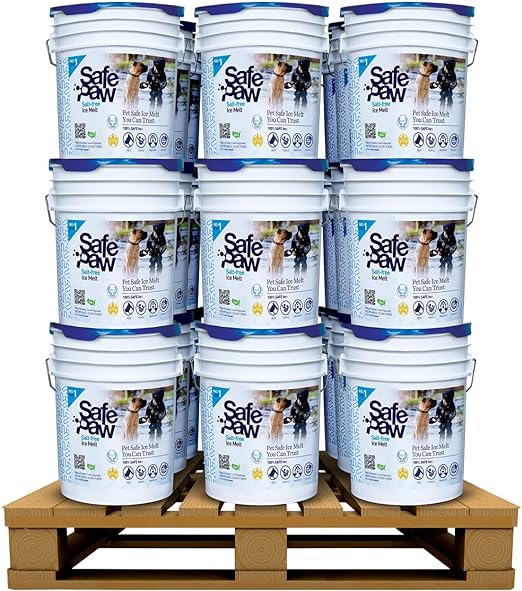
Safe Paw, Child Plant Dog Paw & Pet Safe Ice Melt -35lb, 36 Pails
Ice Melt and Traction Materials for Steel Stairwells
Feature
Ice Melt
Traction Material
Primary purpose
Helps melt or loosen ice
Improves grip
Melts ice
Depending on formulation
No
Useful when immediate grip is needed
Depends on product
Yes
Can leave residue
Yes
Yes
Requires cleanup
Sometimes
Often
Steel compatibility
Depends on formulation
Depends on material and exposure
Best use
Ice-control
Slip-resistance support
Pet Safety and Steel Compatibility
Question
What to Check
Is it appropriate for pet-access areas?
Ingredient information and product-specific directions
Is it suitable around steel?
Corrosion and surface-compatibility information
Can residue remain?
Recommended application and cleanup guidance
Can pets walk through meltwater?
Location, runoff and product directions
Will repeated use increase exposure?
Application frequency and winter conditions
What Should You Do If Rock Salt Was Already Used on Steel Stairs?
If rock salt has already been used on steel stairs, remove loose snow and excess salt where practical and avoid unnecessary additional applications. Pay attention to areas where salty meltwater collects, especially around joints, fasteners, and drainage points. Once conditions permit, remove remaining residue according to appropriate surface-care guidance.
Does Every Metal React the Same Way to Ice Melt?
No. Different metals and alloys have different corrosion mechanisms and levels of resistance. Steel, aluminum, galvanized metals, and other materials should not automatically be treated as having identical responses to a deicing compound.
Steel Stairwell Winter Safety Checklist
☐ Remove loose snow before applying deicer. ☐ Check the ice melt ingredients. ☐ Check chloride content. ☐ Confirm surface compatibility. ☐ Apply only the recommended amount. ☐ Keep material from accumulating against steel. ☐ Monitor meltwater drainage. ☐ Remove excess residue when practical. ☐ Inspect steel periodically for corrosion or rust. ☐ Reapply only when conditions require it.
Why Meltwater Matters Around Steel Stairwells
The effect of ice melt is not limited to the point where it is initially applied. As snow and ice melt, dissolved material can move with runoff and collect around lower steps, joints, drains, and nearby metal surfaces. Managing application amounts and runoff can therefore reduce unnecessary exposure.
Chloride-Free Ice Melt for Steel Stairwells
When corrosion is a concern, a chloride-free ice melt can be considered to reduce exposure to chloride salts. Product selection should still be based on the complete formulation, documented surface compatibility, application directions, and the specific conditions of the steel stairwell.
Winter Ice Control Options
Safe Paw
Information relevant to chloride-free ice-melt considerations.
Safe Thaw
Information relevant to ice-melting applications.
Ice Traction / Walk On Ice
Information relevant where traction rather than melting is the primary need.
How to Reduce Ice-Melt Exposure on Steel Stairs
Check the ice-melt ingredients
↓
Determine chloride content
↓
Check steel compatibility
↓
Remove loose snow
↓
Apply recommended amount
↓
Manage meltwater
↓
Remove excess residue
↓
Inspect steel periodically
Is Pet-Safe Ice Melt Also Safe for Steel?
Pet safety and steel corrosion are separate considerations. An ice melt should be evaluated for its suitability around pets and separately for its effect on steel and other metal surfaces. Check the ingredient information and surface-use guidance for both concerns.
Eco-Friendly Ice Melt: Caring for Our Environment
The call for sustainability resonates even through the choices we make for de-icing. Eco-friendly ice melt products are crafted to reduce environmental impact, focusing on ingredients that are biodegradable and harmless to both groundwater and surface water ecosystems. These ice melts break away from heavy reliance on damaging salts, instead using more benign agents that ensure your garden and local wildlife stay unharmed. They provide a safe ice melt for pets and humans alike, protecting aquatic life and reducing the chemical load on our environment.
Winter De-Icing Solutions: Protect All Surfaces
Choosing the right ice melt becomes crucial when considering the longevity and maintenance of our homes and infrastructure. Products labeled as concrete safe ice melt are essential for protecting your driveways, walkways, and patios from the corrosive effects that some salts can have on concrete. Similarly, ice melt for metal surfaces ensures that the structural integrity of any metal installations, such as railings and gates, is not compromised by rust and corrosion typically caused by conventional deicing salts.
Environmentally Friendly Ice Melt: Beyond the Basics
Expanding the scope of eco-friendliness, advanced environmentally friendly ice melt solutions are being developed to offer high performance without the ecological downsides. These innovative formulations often include Safe Paw, which is known for its lower corrosiveness and environmental impact compared to more traditional options. It’s an ideal choice for those who prioritize green living but need effective de-icing solutions that don’t sacrifice performance for ethics.
The variety of ice melt products available today makes it possible to choose solutions that not only effectively manage ice and snow but also align with broader environmental and safety values. Whether it’s protecting the structural integrity of concrete, ensuring the health of pets and plants, or minimizing ecological impact, the right deicer can make a significant difference. Prepare for winter by choosing a safe ice melt that suits your specific needs, and enjoy the season knowing you’ve made a responsible choice for your home and the environment.
Conclusion
Winter weather can be brutal, but it is not just the cold you should be concerned about. Other risks accompany the onslaught of snow and ice, which can persist even after the ice has melted. Winter can wreak havoc on metal stairwells, railings, and concrete. However, by using salt-free ice melting concrete safe solutions to secure your home, you can avoid many costly damages.
FAQs
An ice melt formulated to minimize corrosion is the appropriate category to consider for steel stairs. Chloride-free formulations can reduce exposure to chloride salts, but the complete formulation and surface-compatibility information should also be evaluated.
Rock salt contains sodium chloride. When dissolved in moisture, chloride-containing salt solutions can contribute to corrosion of susceptible steel surfaces, particularly with repeated exposure.
Calcium chloride contains chloride and can contribute to corrosion under certain conditions. The risk depends on factors such as concentration, moisture, exposure time, and the steel surface.
Magnesium chloride is also a chloride-containing deicer. It should not automatically be treated as corrosion-free simply because it differs from sodium chloride.
Chloride-free ice melt reduces exposure to chloride salts, but “chloride-free” alone does not establish that a formulation cannot corrode steel. Check the complete formulation and available corrosion information.
No. Sand does not chemically melt ice. It is primarily used to provide traction.
Not necessarily. Homemade mixtures can vary in ingredients, concentration, corrosion behavior, and low-temperature performance, making their suitability difficult to establish without appropriate testing or guidance.
No. Pet safety and metal corrosion are separate considerations.
Use an appropriate formulation, follow its recommended application rate, prevent unnecessary accumulation, manage meltwater, and remove excess residue where practical.
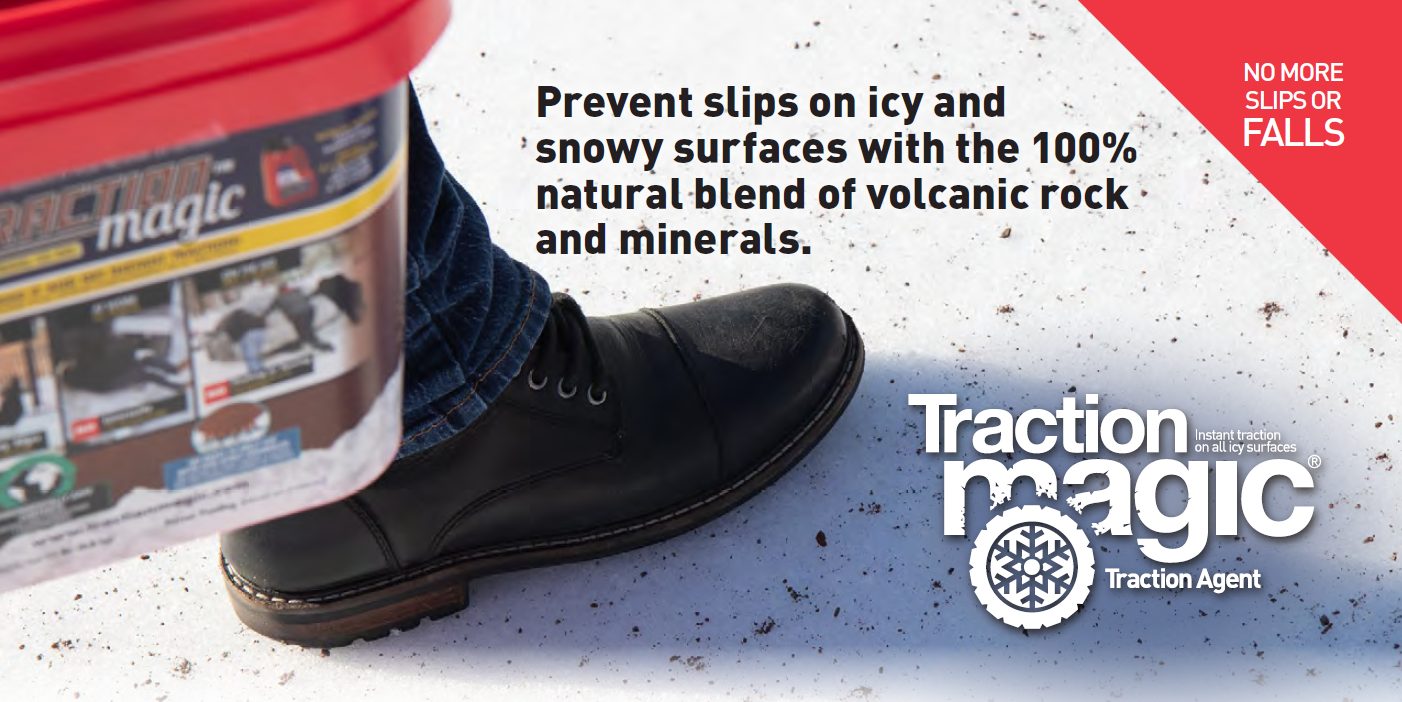
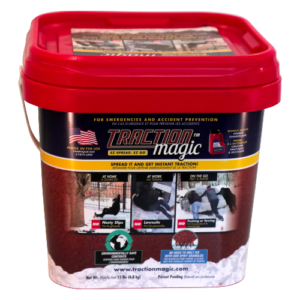
Stay safe on slippery surfaces with a product that’s 100% natural and safe for pets, people, and your property. Use Traction Magic on sidewalks, steps, or as instant traction for your car.
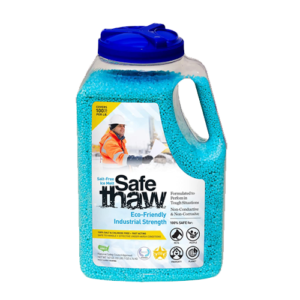
Imagine an ice melt you can put down and never worry about. It won’t harm pets, kids and your property. That’s Safe Thaw. Unlike anything else on the market, Safe Thaw can change how winter affects our planet.
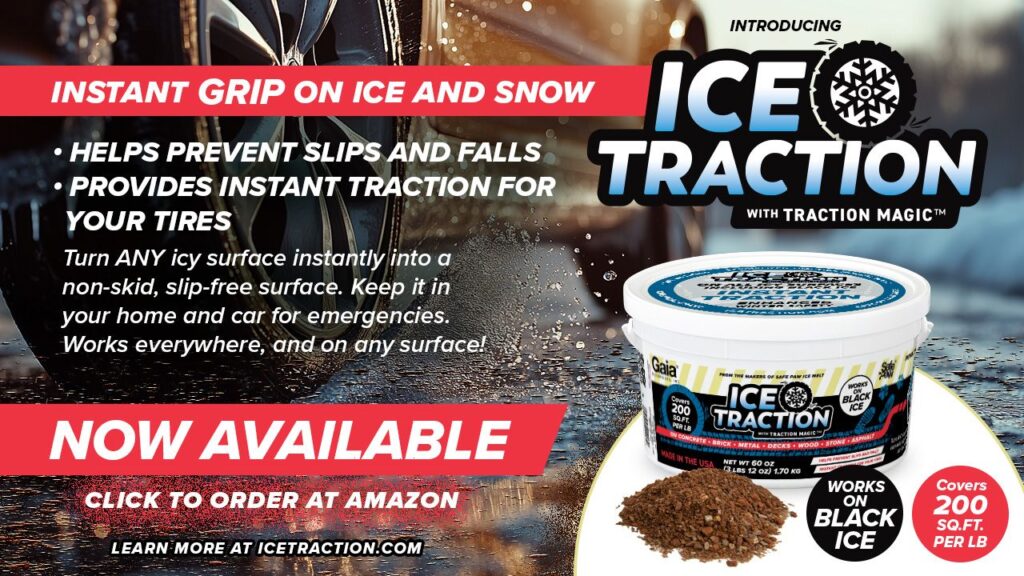
Ice Traction (with Traction Magic™) is your go-to winter solution for driveways, walkways, parking lots — and even black ice on the road. Unlike salt or ice melts, it delivers instant grip on snow and slippery surfaces with no wait time. Just spread and go.
Imagine an ice melt you can put down and never worry about. It won’t harm pets, kids and your property. That’s Safe Thaw. Unlike anything else on the market, Safe Thaw can change how winter affects our planet.