


Ice Melt Ingredients & Chemicals That Affect You

What Are the Most Common Ice Melt Ingredients? Quick Answer
Common ice melt ingredients include sodium chloride, calcium chloride, magnesium chloride, potassium chloride, calcium magnesium acetate (CMA), urea-based compounds, acetates, and other proprietary formulations. These ingredients lower the freezing point of water, but they differ in cold-weather performance, corrosion potential, pet-exposure considerations, and environmental effects. Chloride-based deicers can contribute chloride to soil and freshwater, while non-chloride alternatives have their own performance and environmental trade-offs.
FHWA identifies sodium chloride, calcium chloride, magnesium chloride, CMA, and potassium acetate among commonly used deicing/anti-icing chemicals. EPA documents environmental effects associated with excessive salt loading in freshwater. (Federal Highway Administration)
Key Takeaways About Ice Melt Ingredients
- Sodium chloride, calcium chloride, magnesium chloride, and potassium chloride are chloride salts.
- Different deicers have different freezing-point and field-performance characteristics.
- Chloride runoff can contribute to freshwater salinization and infrastructure corrosion.
- Pets can encounter ice-melt residue on their paws and ingest it during grooming.
- Calcium, magnesium, and potassium chlorides can cause gastrointestinal irritation when ingested.
- Sodium chloride can cause more serious sodium abnormalities after sufficiently large ingestion.
- Calcium magnesium acetate and acetate-based deicers avoid chloride but still have their own cost, performance, and environmental considerations.
- Urea-based deicers avoid chloride but are not environmentally impact-free because urea can contribute nitrogen to runoff.
- Product safety should be evaluated from the actual formulation and application instructions, not from labels such as “natural” or “pet friendly” alone. (ASPCA)
Ice melt products will vary tremendously in terms of their ingredients. There are plenty of different ways to melt ice and plenty of different chemicals that are commonly used in ice melt products. Some ice melt ingredients are more common than others and customers can trust that certain generic brands will utilize a certain range of chemicals. However, customers can always look into the wide range of ice melt products that are out there in order to find the best products on the market today.
What Are the Main Types of Ice Melt Ingredients?
Sodium Chloride
Sodium chloride, commonly known as rock salt, is one of the most widely used winter deicers. It is readily available and economical, but chloride runoff can affect freshwater quality and contribute to corrosion. (US EPA)
Calcium Chloride
Calcium chloride is a chloride-based deicer that releases heat when dissolved and has different low-temperature characteristics from sodium chloride. It can irritate skin, paws, and the gastrointestinal tract depending on exposure. (Federal Highway Administration)
Magnesium Chloride
Magnesium chloride is another chloride-based deicer used in winter maintenance. It contributes chloride to runoff and may cause gastrointestinal irritation if ingested by pets. (ASPCA)
Potassium Chloride
Potassium chloride is used in some deicing formulations and blends. It should not automatically be described as environmentally harmless or beneficial simply because potassium is also a plant nutrient.
Calcium Magnesium Acetate
Calcium magnesium acetate, or CMA, is a non-chloride deicer. Its corrosion, cost, and performance characteristics differ from conventional chloride salts.
Urea-Based Deicers
Urea-based formulations avoid chloride salts, but urea can break down into ammonia and other nitrogen compounds. Excessive runoff can therefore contribute to nutrient loading and aquatic impacts. (US EPA)
Drawbacks
A great deal of the most common ice melt products that are on the consumer market today use chemical compounds with a chlorine component. Some ice melt products will mainly use sodium chloride, while others will use calcium, potassium, or magnesium chloride. Manufacturing these types of ingredients is less costly than manufacturing and distributing other ingredients, but the chlorine component carries its own set of drawbacks.
Ice Melt Ingredients by Chemical Category
Chloride-based deicers
- Sodium chloride
- Calcium chloride
- Magnesium chloride
- Potassium chloride
Non-chloride deicers
- Calcium magnesium acetate
- Potassium acetate
- Urea-based compounds
- Other acetate/formate formulations
Traction components
- Mineral traction agents
- Sand/grit
- Other materials intended to increase grip rather than chemically melt ice
Common Ice Melt Ingredients: Pros and Cons Comparison
| Ice Melt Ingredient | Main Advantage | Main Limitation |
| Sodium chloride | Widely available and economical | Chloride runoff, corrosion, reduced performance in colder conditions |
| Calcium chloride | Different low-temperature behavior; releases heat when dissolving | Chloride-based; tissue and GI irritation concerns |
| Magnesium chloride | Useful in deicing and anti-icing formulations | Chloride runoff and GI irritation if ingested |
| Potassium chloride | Can be used in deicing blends | Chloride-based and may affect electrolyte balance if ingested |
| Calcium magnesium acetate | Non-chloride formulation | Higher cost and different field-performance characteristics |
| Urea-based deicer | Avoids chloride | Can contribute nitrogen/ammonia to runoff |
| Traction material | Improves grip without chloride deicing chemistry | Does not necessarily melt ice |
EPA specifically notes that urea used as a pavement deicer can contribute nitrogen and ammonia to receiving waters, while FHWA documents the different chemical properties of common chloride and acetate deicers. (US EPA)
Important Limitations When Comparing Ice Melt Chemicals
- No ice melt ingredient should be judged from chemistry alone. Actual performance and exposure depend on product concentration, pavement temperature, precipitation, application rate, surface condition, runoff, and the complete formulation.
- Chloride-free does not mean impact-free. For example, urea avoids chloride but may contribute nitrogen and ammonia to water when used in large quantities. Acetate-based deicers also have their own environmental and performance characteristics. (US EPA)
- “Pet safe” is not a uniform chemical category. ASPCA notes that deicers marketed for pet-oriented use can still cause gastrointestinal upset depending on ingredients and exposure. (ASPCA)
Ice Melt Safe For Pets And Kids
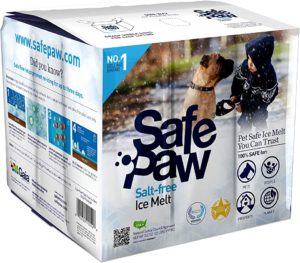
Pet Friendly Ice Melt – Safe Paw!
The Original and the #1 Child and Pet Safe Ice Melt for over 20 years. Guaranteed environmentally safe – will not harm waterways and sensitive wetlands.
Harm Within Reach
Many people learn to accept the residues from these sorts of chlorine-based ice melt products as a fact of life and an inevitable part of winter living. However, there are also concerns that these sorts of snowmelt products may be harmful to pets and young children. Children are prone to touching unclean surfaces and licking their hands. It’s even possible that some of these residues may irritate the skin. Some parents or pet owners may pick different varieties of ice melt products simply due to safety concerns. People need not put up with these kinds of health risks or the inconveniences that the chlorine-based residues can create.
One such example is Della, a house owner with two energetic children and a pet dog. To keep her driveway and walkway free from slippery ice, she went to buy an ice melt. As winter snow arrived, she started using her new ice melt on the walkways and driveways. During the weekend, both the children and the pet went out in the snow to play.
After a long snowy week, children got the opportunity to play out in the snow. They took their furry friend along to have a joyful time in their front yard, where they spent hours playing with snowballs and running around. By evening they started complaining of itching. Their palms were itching and both of them were getting restless because of it. Della was unsure how to help them and called her elderly neighbor and said, ‘I don’t know what happened to Nick and Sophia? They are complaining of itchy palms.’Her neighbor asked her whether the children had touched any chemical or had gone near any poisonous plant.
Della told her that for the whole morning, children were in the front yard playing with snow. The wise lady explained to her that it must be something in the snow that had caused it. Della replied in affirmative and told her,’ I spread ice melt in the snow and then did not clean it thinking that it must be safe as mentioned on the label.’
Finally, she realized that it was not a plant or snow that had caused this itching but the toxic ice melt chemicals. She also found that even her pet’s paws are burnt because of running in chemically treated snow.
When it comes to tackling winter’s slippery challenges, ice melt safety, eco-friendly ice melt, and ice melt for concrete are pivotal topics that demand our attention. Each has a distinct purpose: to prevent accidents and damage while keeping the environment in mind.
Ice Melt Chemicals Compared: Pet, Concrete and Environmental Impact
| Ingredient | Pet Exposure Consideration | Environmental Consideration | Infrastructure Consideration |
| Sodium chloride | Paw irritation; significant ingestion can affect sodium levels | Freshwater salinization | Chloride can accelerate corrosion |
| Calcium chloride | Skin/mouth/GI irritation | Adds chloride | Chloride-related corrosion |
| Magnesium chloride | GI irritation possible | Adds chloride | Chloride-related corrosion |
| Potassium chloride | GI/electrolyte effects possible | Adds potassium and chloride | Chloride-related corrosion |
| CMA | Different exposure profile from chlorides | Avoids chloride | Generally lower chloride-corrosion concern |
| Urea-based deicer | Product-specific exposure considerations | Nitrogen/ammonia loading possible | No chloride-related corrosion, but formulation still matters |
EPA states that excessive salt concentrations can harm aquatic life, contaminate drinking-water sources, and damage infrastructure. (US EPA)
Which Ice Melt Ingredient Fits Different Winter Needs?
- For reducing chloride use:
Evaluate a verified chloride-free formulation. - For conventional economical deicing:
Sodium chloride may be suitable where temperatures and surface conditions permit. - For different low-temperature requirements:
Compare calcium chloride and magnesium chloride using product-specific performance data. - For areas frequently used by pets:
Evaluate the full formulation, paw-contact precautions, and ingestion information rather than simply relying on the product label. - For new concrete:
Mechanical snow removal or traction may be preferable until the surface has adequately cured. - For traction without chemical deicing:
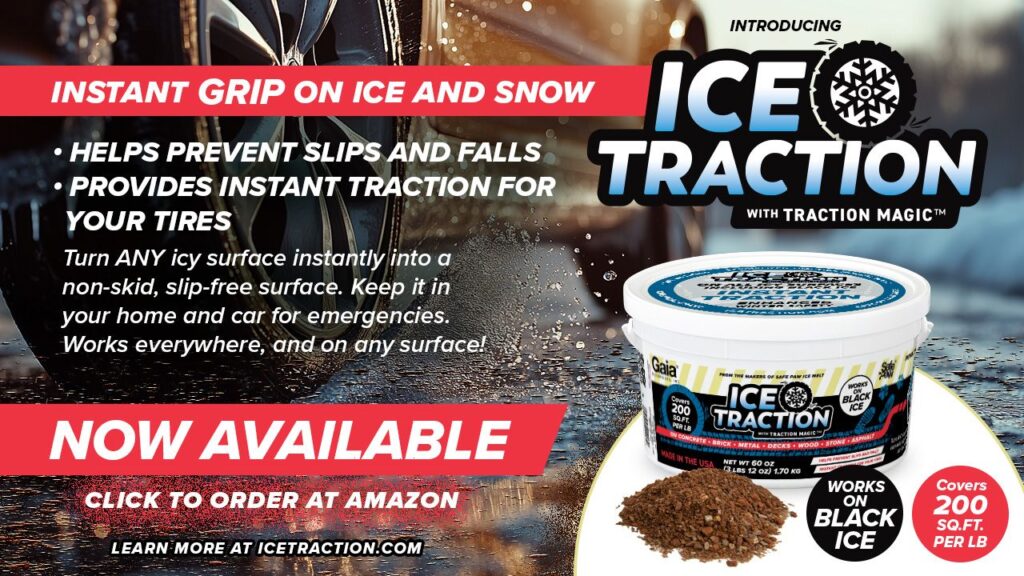
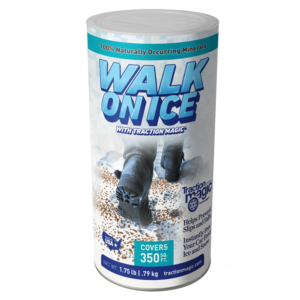
Ice Traction or Walk On Ice can be discussed because their primary purpose is grip rather than conventional chemical melting.
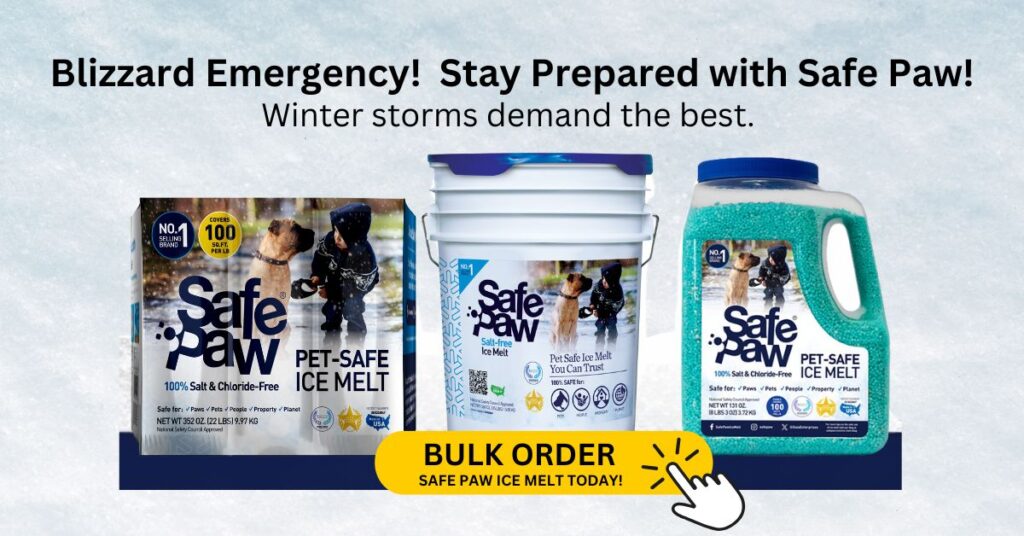
Pet Safe Ice Melt – Safe Paw
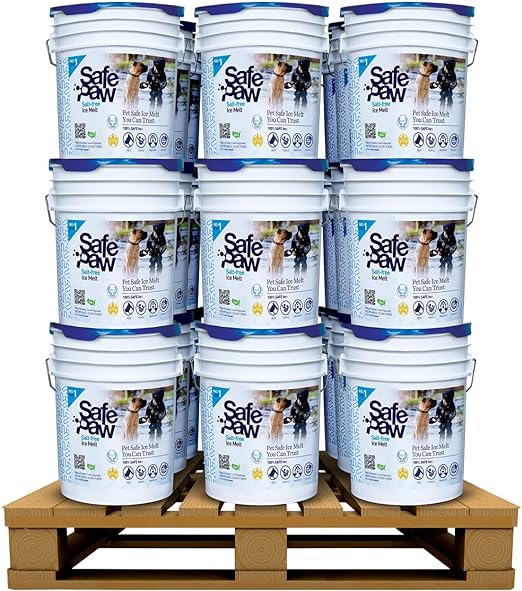
Safe Paw, Child Plant Dog Paw & Pet Safe Ice Melt -35lb, 36 Pails

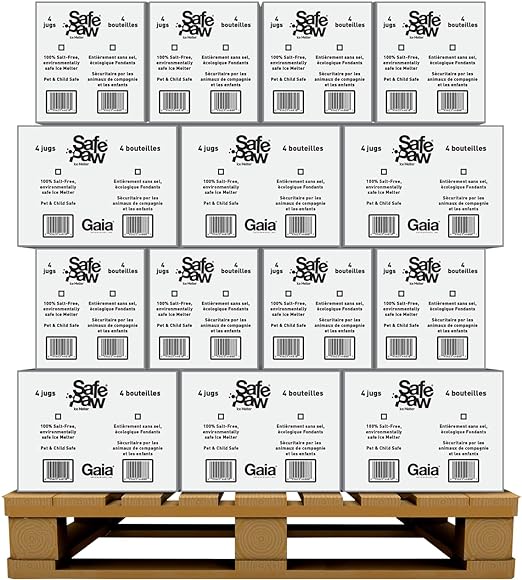
Safe Paw, Child Plant Dog Paw & Pet Safe Ice Melt -22lb, 100Bboxes
Safe Paw, Child Plant Dog Paw Pet Safe Ice Melt, 160 Jugs

Pet Products Powered By EzPz.pet
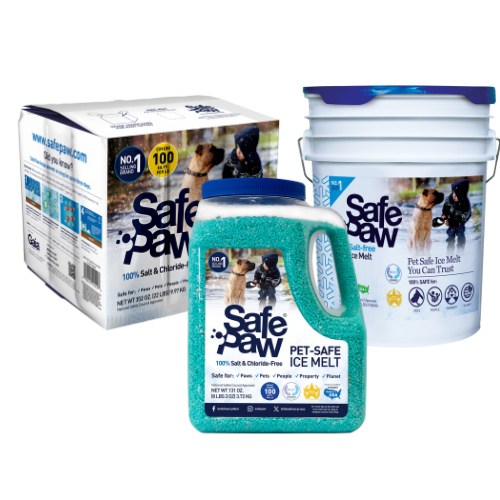

Ice Melt Safety
First, safety – how strong are your stairs? When it comes to choosing an ice-melting agent that is both effective and safe, especially around children or pets, choose carefully. Ice melt safety doesn’t simply mean preventing slips; it means ensuring chemicals won’t affect your pets or children. Many manufacturers promise effectiveness but can they guarantee safety? In your search for non-toxic ice melters always read through user reviews and product labels to ascertain whether they are really suited for use within a home setting.
Eco-Friendly Ice Melt
Going green even when white is out there next on our list. For anyone struggling between practicality and environmental responsibility, eco-friendly ice melts are heaven-sent. Unlike conventional rock salts that find their way into soil and water leading to significant damage to ecosystems; environmentally friendly ice melt solutions have been designed such that they have minimal impact on our planet’s ecosystem. Non-chloride deicers avoid chloride loading, but they should not automatically be described as environmentally harmless. Urea can contribute nitrogen and ammonia to receiving waters, while some glycol-based deicing formulations can create high oxygen demand during degradation. (US EPA). Have you ever thought about what happens to local flora and fauna after you’ve de-iced the roads?
Ice Melt for Concrete
And for those with concrete driveways and sidewalks, there’s the ever-important ice melt for concrete. Concrete can be particularly susceptible to damage from freeze-thaw cycles, exacerbated by some de-icing chemicals. The key here is finding an ice melt that claims concrete-safe credentials. Such products typically avoid using harsh chemicals that can lead to scaling or spalling of concrete surfaces. It’s about preserving the integrity of your walkways as much as it’s about melting ice.
Making the Right Choice
So, how do you pick the right product? Start with the label and certification—look for seals of approval from environmental groups and pet safety organizations. Don’t just take the manufacturer’s word for it; dive into user feedback for real-world insights into performance and safety. Whether it’s safeguarding your pets’ paws, ensuring your children play safely outside, or protecting the verdant world under the snow, your choice in ice melt can make all the difference.
With these considerations in mind, choose wisely, and you can enjoy a winter free from slips and environmental guilt. It’s not just about melting ice; it’s about doing so responsibly and safely, with an eye towards the future of our planet and the immediate safety of our loved ones and landscapes.

What Are Various Ice Melt Ingredients?
Della decided to do her research on various ice melter ingredients. She was adamant to find safe ingredients for her family and pet. Here is what she found out;
Sodium Chloride Or Rock Salt
Salt is the most common and least priced deicer, and it is used on many public pathways and roadways. Salt comes in a variety of forms, but one of the most prevalent is sodium chloride, which is quite similar to the salt we put on our food. Both physical structures and materials, as well as the ecosystem, are harmed by rock salt.
One of the most frequently asked questions is does rock salt damage concrete? We all know the answer, yes it does. It should not be used on concrete since it can damage both old and new concrete, asphalt, stone, and brick. Even little amounts of this salt can leak into neighboring soil, changing its makeup and hurting grass and plants. It is also toxic to pets and can contaminate groundwater. It can also cause skin or eye irritation.
Many ice melts have this salt alone or as in a blend. For example, Paw Thaw ice melter ingredients are CMA and sodium chloride. It claims to be pet safe but Della was sure that anything with sodium chloride is never safe for kids and safe.
Pet Safe Ice Melt Ingredients
Ice melt products that use glycols are becoming increasingly popular as well. Safe Paw for instance, is a new ice melt product that was manufactured without any salt, in sharp contrast to many other ice melt products. As such, Safe Paw does not have the toxicity of many competing varieties of ice melt products. Consumers that are aware of health and ecological issues should consider ice melt products like Safe Paw. The ingredients in many of these alternatives will produce excellent results, which may rival those of the chlorine-based products.
How To Find Pet Safe Ice Melt Ingredients?
Manufacturers will usually label their products very clearly, knowing that many people have something very specific in mind when they are purchasing their ice melt products in preparation for the first snowstorm. Customers that are concerned about the ingredients in specific products should go to the company website in question, which will probably provide a detailed ingredients list, assuming there wasn’t an ingredients list available with the packaging. Typically, pet and concrete safe ice melt products have short ingredients lists, in sharp contrast to many processed foods. Every new ingredient is an additional expense and many of them will prove unnecessary when it comes to successfully melting ice.
To confirm her findings Della decided to check the company website and read the reviews and fact sheets. She found out more about the Safe Paw ice melt ingredients and how it works.
- Safe Paw comprises traction agents made up of a modified crystalline amide core interleaved with glycol admixture.
- While breaking surface tension, the liquid component immediately begins melting ice.
- The crystal-core effectively penetrates and destabilizes ice, causing the melting process to accelerate.
- For up to three days, Safe Paw creates an invisible layer of protection that helps prevent ice from clinging to surfaces.
She found that Safe Paw ingredients are free from hazardous chemicals and are completely safe for pets and kids.
How Safe Is Chloride-Free, Environmentally Friendly Ice Melt?
The good news is that natural ice melt is salt-free and suitable for both children and pets. These salt melts are awarded for being safe for people, pets, and the environment. Some of the awards and articles referring to these environment-friendly ice melts are
- United States governmental agencies awards
- Parent Tested Parent Approved (PTPA) Green Product Seal of Approval for products that are family-friendly and effective.
- Inclusion in the Whole Green Catalog. Best Things for the Earth
When the granules of these ice melt come into contact with ice, the outer layer liquefies and begins to penetrate and break up the surface.
Even in frigid temperatures, after the ice has melted, this ice melt is present on the surface of pathways, steps, porches, decks, patios, and wherever else you need safe, dependable footing to resist ice. Pediatricians, veterinarians, and wildlife experts all suggest it.
Della concluded that a natural ice melt that’s devoid of caustic salts, colors, and dangerous chemicals is the best ice melt solution for homeowners like her. It is perfectly safe to use around pets. It is a non-corrosive snow and ice melt since it is chloride-free.
Before buying your ice melt, make sure that it is quick and effective not only on sunny days but especially during the days when you have a temperature below freezing point. Like Della, before making a decision go to the company website, read reviews and testimonials. You can even ask for a demo or technical assistance from the manufacturer.
Gaia Enterprises Inc. delivers 100% pet-safe and environmentally friendly winter products. Safe Paw, our flagship product, is the #1 selling pet-safe ice melt that does not harm pets, safe if ingested, and safe on all types of concrete.
Conclusion
It is now widely accepted that using rock salt to melt ice is ineffective. As the winter months approach, homeowners begin looking for ice melters that are safe for concrete, roads, and roofs. People with pets and children are on the lookout for ice melters safe for dogs, cats, and children. The majority of ice melts are caustic. Chloride does cause corrosion. Choose a non-toxic, chlorine-free, and salt-free ice melter. The majority of commercially available snow melters are poisonous to animals.
Some firms claim to be pet-friendly by rounding off the harsh edges of the salt. The truth is that they still contain hazardous chemicals that pets might lick off their paws and become unwell. Only a few firms are salt-free and pet-friendly. Ice melters with rock salt can irritate the eyes and cause skin irritation, severe vomiting, and diarrhea in some circumstances. Safe Paw ice melter ingredients are free from any such toxic chemicals and safe for ecology.
FAQs

New Product Launch – Ice Traction (with Traction Magic™)
Ice Traction is your go-to winter solution for driveways, walkways, parking lots — and even black ice on the road. Unlike salt or ice melts, it delivers instant grip on snow and slippery surfaces with no wait time. Just spread and go.
Other Ice Melt Products
Walk On Ice
Prevent slips at home, work or on the go, The handy disposable canister can be taken everywhere, with the same 100% naturally occurring minerals that provide instant traction on ice or snow.
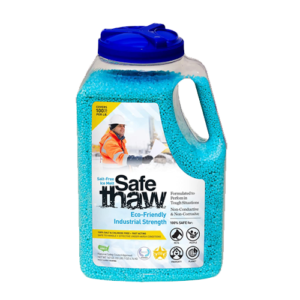
Safe Thaw
Imagine an ice melt you can put down and never worry about. It won’t harm pets, kids and your property. That’s Safe Thaw. Unlike anything else on the market, Safe Thaw can change how winter affects our planet.