



Homemade Ice Melt with Salt and Vinegar: Easy DIY De-Icing Solutions

Salt can melt ice by dissolving into available water and forming brine with a freezing point below 32°F (0°C). Household vinegar contains dilute acetic acid and may alter the properties of the liquid mixture, but salt is the better-established deicing component. There is limited authoritative evidence that adding household vinegar makes salt substantially more effective as a pavement deicer. A salt-and-vinegar mixture also exposes surfaces to both chloride and acid, so it should be used cautiously around concrete, plants, metals, and pets.
FHWA explains that a deicer must enter solution to depress water’s freezing point; sodium chloride brine has a eutectic temperature near -6°F under ideal concentration, although practical salt performance becomes much slower well before that theoretical limit. (Federal Highway Administration)
Winter often brings icy conditions that can make driveways and walkways hazardous. While commercial ice melts are widely available, many homeowners prefer cost-effective, eco-friendly alternatives. One popular method is a homemade ice melt salt and vinegar. This article explores how this DIY Homemade Ice Melt Salt And Vinegar solution works, its effectiveness, and how to create a homemade liquid ice melt that can help keep your property safe without causing damage.
Key Takeaways About Salt and Vinegar Ice Melt
- Salt is the primary verified deicing ingredient because it forms brine and lowers water’s freezing point.
- Household vinegar usually contains approximately 4–12% acetic acid in water. (PubChem)
- Do not explain vinegar’s effect by saying acetic acid itself has a lower freezing point than water; pure acetic acid freezes at about 16.6°C (62°F). (NIST WebBook)
- There is limited authoritative evidence that household vinegar materially improves sodium chloride’s deicing performance on pavement.
- A salt-and-vinegar mixture is still a chloride-based treatment because it contains sodium chloride.
- Salt residue can irritate dogs’ paws and significant ingestion can produce dangerous sodium elevations. (ASPCA)
- Vinegar is acidic and can cause irritation or gastrointestinal upset after sufficient pet exposure. (ASPCA)
- Repeated deicer exposure can contribute to concrete scaling and deterioration, while acids are also considered aggressive substances for concrete. (Federal Highway Administration)
- Traction and deicing are different goals; sometimes mechanical removal or traction is a better choice than another chemical mixture.
How Does Salt and Vinegar Melt Ice?
Salt is a well-known de-icing agent because it lowers the freezing point of water, preventing ice from forming at typical freezing temperatures. When salt is applied to ice, it creates a brine solution that dissolves the ice and prevents refreezing.
Household vinegar is a dilute aqueous acetic-acid solution. Its freezing behavior differs from pure water, but this does not by itself establish vinegar as an efficient pavement deicer. When combined with salt, vinegar enhances the ice-melting process by weakening the bond between the ice and the surface. This makes it easier to clear icy spots. However, vinegar’s acidic nature means it should be used sparingly to avoid potential surface damage over time, especially on concrete.
What Actually Happens When Salt and Vinegar Are Mixed for Deicing?
Salt dissolves into the water present in the mixture and on the icy surface. The dissolved sodium and chloride ions create brine whose freezing point is lower than that of pure water, which can help loosen the bond between ice and pavement.
Vinegar is primarily water with a small concentration of acetic acid. Although aqueous acetic-acid solutions have their own freezing behavior, household vinegar is not a standard highway deicer and there is limited evidence that it provides a meaningful performance advantage when added to sodium-chloride brine.
FHWA’s winter-maintenance guidance directly supports the salt/brine mechanism. (Federal Highway Administration)
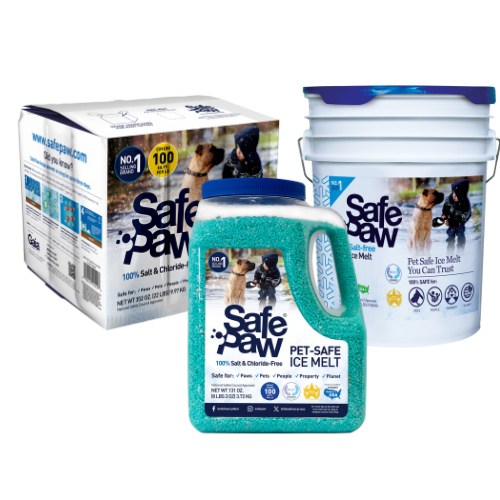
Pet Safe Ice Melt
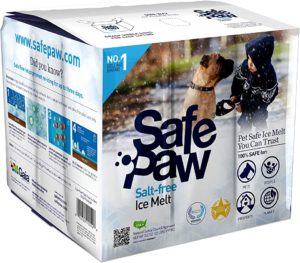
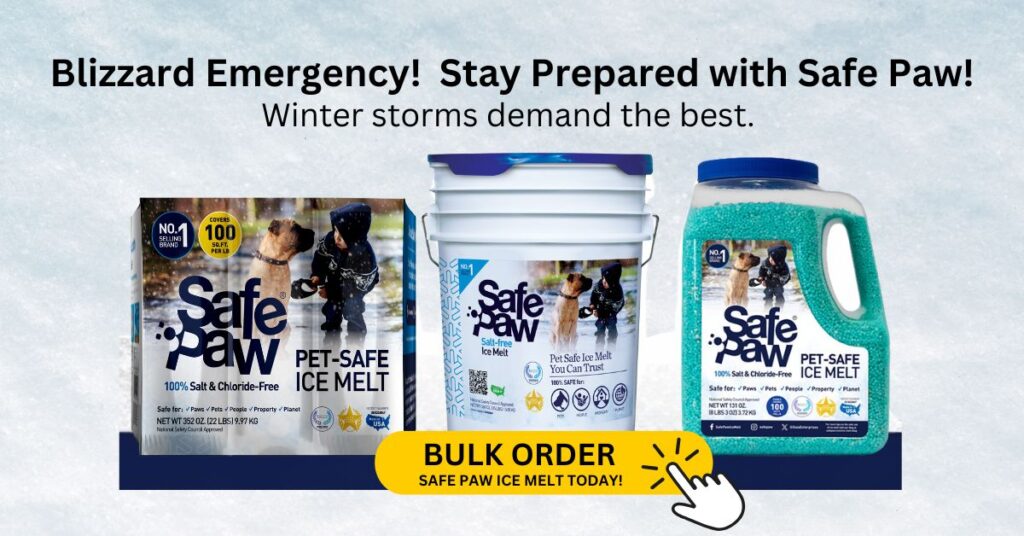
Pet Friendly Ice Melt – Safe Paw!
The Original and the #1 Child and Pet Safe Ice Melt for over 20 years. Guaranteed environmentally safe – will not harm waterways and sensitive wetlands.
How to Make a Homemade Ice Melt with Salt and Vinegar
To make a simple and effective homemade ice melter using salt and vinegar, follow this step-by-step process:
- Ingredients:
- 1 gallon of white vinegar
- 2 cups of table salt or rock salt
- 1 gallon of warm water
- Instructions:
- Mix the vinegar and water in a large bucket.
- Slowly add the salt while stirring until it fully dissolves.
- Pour the mixture into a watering can or sprayer for easy application.
- Apply only enough to wet a small test area, allow the solution to work on thin bonded ice, then mechanically remove loosened material. Avoid unnecessary over-application.
This solution works well in moderately cold conditions and can be applied before snowfall as a preventative measure.
Alternative Homemade Liquid Ice Melt Recipes
If you’re looking for other homemade liquid ice melt options, here are a few recipes that are effective and safe:
1. Rubbing Alcohol and Dish Soap Mixture
A common alternative involves mixing water, rubbing alcohol, and dish soap.
- Ingredients:
- 1/2 gallon of warm water
- 1/4 cup of rubbing alcohol (isopropyl alcohol)
- 6 drops of dish soap
- How It Works: Rubbing alcohol has a much lower freezing point than water, which helps to melt ice quickly. The dish soap helps the solution spread evenly and prevents the mixture from freezing again.
2. Baking Soda and Water Solution
Baking soda can be used as an ice melter due to its alkaline properties.
- Mix 1/2 cup of baking soda with a gallon of warm water.
- Pour the solution over icy areas and let it sit before scraping the ice away.
Homemade Salt and Vinegar Ice Melt: Pros and Cons
| Consideration | Potential Advantage | Important Limitation |
| Ingredients | Uses common household materials | Household availability does not establish pavement suitability |
| Salt component | Proven freezing-point depression | Chloride exposure, corrosion, pet and runoff concerns |
| Vinegar component | Dilute acetic-acid solution changes solution chemistry | Limited evidence of meaningful additional deicing benefit |
| Thin ice | May help loosen limited bonded ice because salt forms brine | Performance varies with concentration and pavement temperature |
| Pets | Can be applied in controlled areas | Salt and acidic residue should not be treated as pet-safe |
| Concrete | May be used experimentally on a small mature test area | Both deicing salts and acidic exposure can raise surface concerns |
| Environmental impact | Ingredients are readily available | Chloride runoff and excessive acidic application remain relevant |

Important Limitations of Salt and Vinegar Ice Melt
The effectiveness of this homemade mixture has not been established through the same standardized field testing used for purpose-designed winter-maintenance chemicals. Results can vary according to salt concentration, pavement temperature, ice thickness, dilution, surface condition, and application amount.
Do not assume the mixture is pet-safe because vinegar is a household food ingredient. Sodium chloride can irritate paws and cause sodium-related toxicity after substantial ingestion, while vinegar can cause irritation or stomach upset. (ASPCA)
Do not assume vinegar protects concrete from salt. FHWA documents deicer-related freeze-thaw and scaling mechanisms, while the American Cement Association identifies acids as aggressive substances from which concrete may require protection. (Federal Highway Administration)
Salt and Vinegar Ice Melt vs Rock Salt, Traction and Chloride-Free Deicer
| Winter Method | Main Function | Pet Consideration | Surface Consideration |
| Salt + vinegar DIY mixture | Primarily salt-based deicing | Salt and acidic residue require precautions | Chloride + acidic exposure |
| Rock salt / sodium chloride | Deicing | Paw irritation and ingestion concerns | Chloride/deicer scaling and corrosion concerns |
| Sand / mineral traction | Improves grip | Lower chemical-exposure concern when clean | Does not chemically melt ice |
| Ice Traction / Walk On Ice | Traction | Product-specific directions apply | Intended for grip rather than conventional deicing |
| Chloride-free formulated deicer | Chemical deicing without chloride salts | Evaluate full formulation and directions | Avoids chloride-related concerns; surface guidance still matters |
| Mechanical removal | Physically removes snow/ice | No deicer residue | Labor/equipment required |
ASPCA specifically recommends sand as a traction alternative when users want to reduce conventional deicer exposure. (ASPCA)
Best Winter Approach by Situation
- For thin bonded ice in an emergency:
A salt-based treatment may help, but adding vinegar should not be assumed to improve performance without supporting data. - For immediate slip reduction:
Use sand, Ice Traction, Walk On Ice, or another traction approach. - For pet-used walkways:
Minimize residue, prevent ingestion, and clean paws after exposure. - For new concrete:
Use mechanical removal and traction rather than a DIY acid-and-salt mixture. - For reducing chloride exposure:
Evaluate a verified chloride-free formulation. - For thick snow or ice:
Mechanically remove as much accumulation as possible before applying a deicer.
Benefits and Limitations of Homemade Ice Melt Solutions
Homemade ice melts are budget-friendly and reduce the use of harsh chemicals. The salt and vinegar mixture, for example, is easy to prepare with common household items. It can help break down thin ice layers and prevent dangerous slips and falls.
However, homemade ice melts are not always as effective in extremely cold conditions. For instance, the salt and vinegar solution may not work efficiently in temperatures below 15°F. Additionally, vinegar’s acidic nature can, over time, erode concrete if used excessively. It’s crucial to rinse treated areas with water after the ice has cleared to prevent long-term surface damage.
Pet Safe Ice Melt – Safe Paw
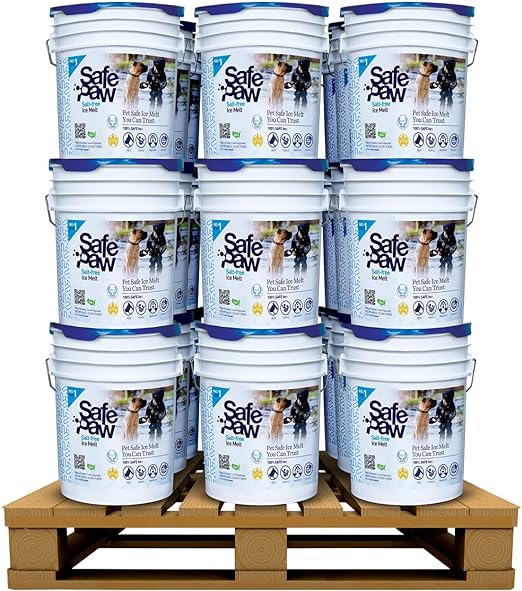
Safe Paw, Child Plant Dog Paw & Pet Safe Ice Melt -35lb, 36 Pails

Safe Paw, Child Plant Dog Paw & Pet Safe Ice Melt -22lb, 100Bboxes
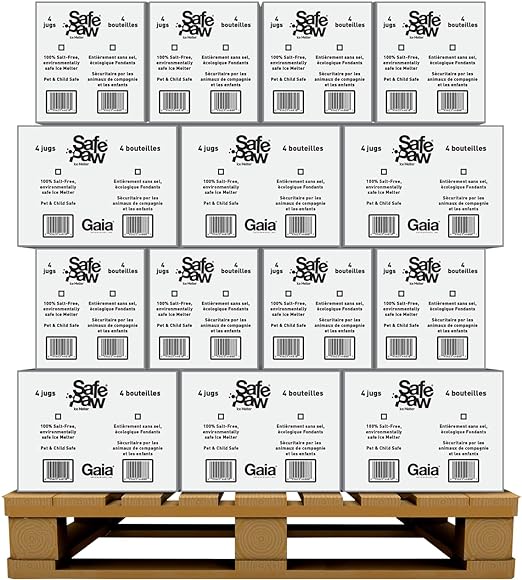
Safe Paw, Child Plant Dog Paw Pet Safe Ice Melt, 160 Jugs

Pet Products Powered By EzPz.pet

Environmental and Safety Considerations
When using any ice melt solution, including homemade ones, it’s important to consider their environmental impact. Salt can harm nearby plants and grass if it seeps into the soil. Vinegar, although eco-friendlier than some commercial de-icers, can also disrupt soil pH levels if over-applied.
For pets and children, make sure that your ice melt mixture is applied in controlled amounts. Avoid using too much salt, as pets can accidentally ingest it when licking their paws. Always rinse your pet’s paws after a walk in treated areas to prevent irritation.
Gaia Enterprises Inc. delivers 100% pet-safe and environmentally friendly winter products. Safe Paw, our flagship product, is the #1 selling pet-safe ice melt that does not harm pets, safe if ingested, and safe on all types of concrete.
Why Safe Paw is a Superior Option
While homemade solutions like salt and vinegar are convenient, they may not always provide reliable results in extreme weather. Safe Paw is a chloride-free, toxin-free ice melt that offers powerful de-icing without the harmful effects of traditional salt or acidic solutions.
Safe Paw melts ice at temperatures as low as -2°F and is safe for pets, children, and your driveway. Unlike homemade ice melters, Safe Paw won’t corrode concrete or harm nearby vegetation. Its long-lasting formula provides better coverage and peace of mind during the harshest winter days.
Conclusion
A homemade ice melt using salt and vinegar can be an effective solution for moderate winter weather. It works by lowering the freezing point of water and loosening ice for easy removal. However, it’s essential to use homemade solutions cautiously, as overuse of salt and acidic ingredients can cause surface damage and environmental stress.
For those seeking a hassle-free and eco-friendly solution, Safe Paw offers superior protection for your home and pets. By choosing the right method for your winter needs, you can maintain a safe, ice-free property all season long while avoiding the downsides of harsh chemicals and ineffective DIY methods.
FAQs
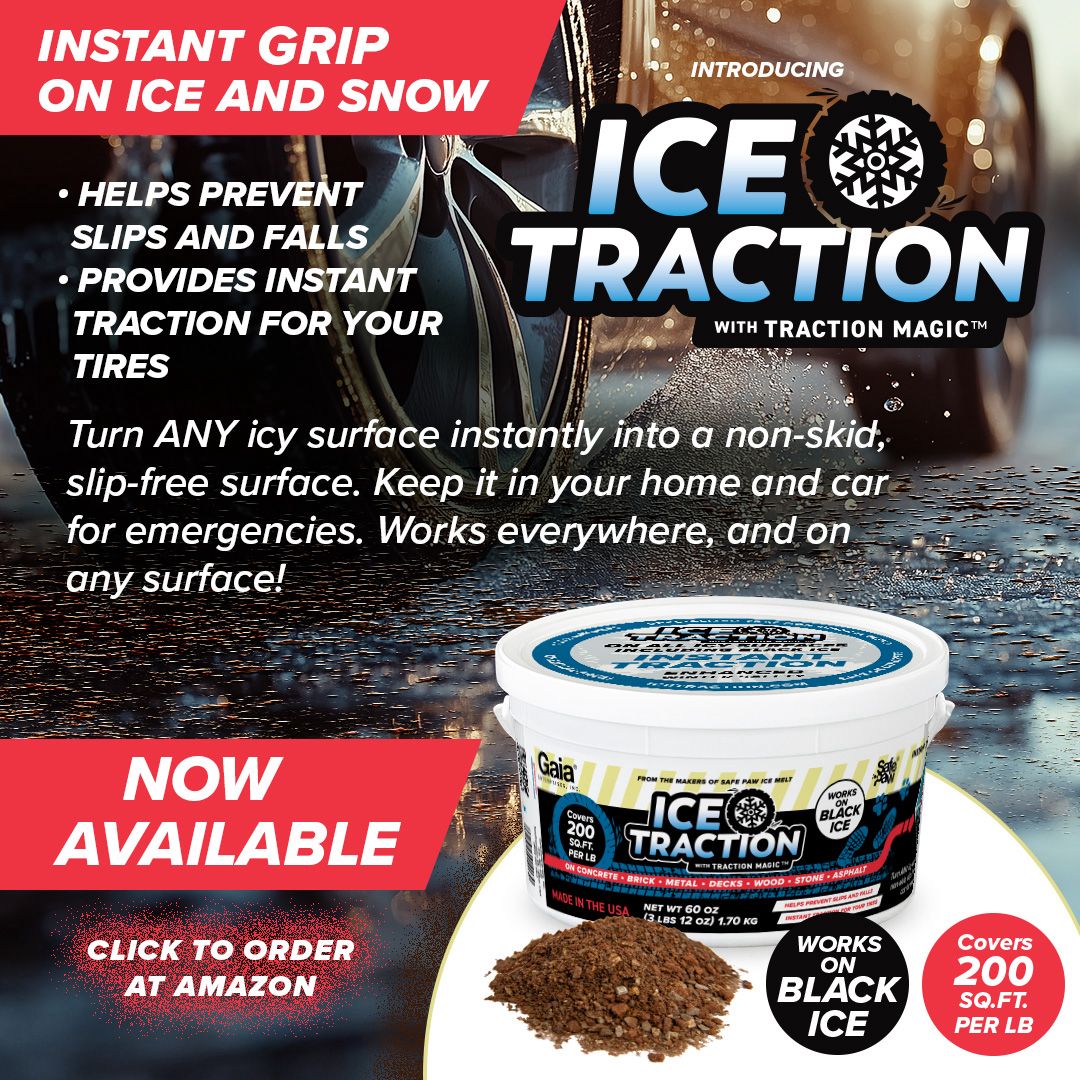
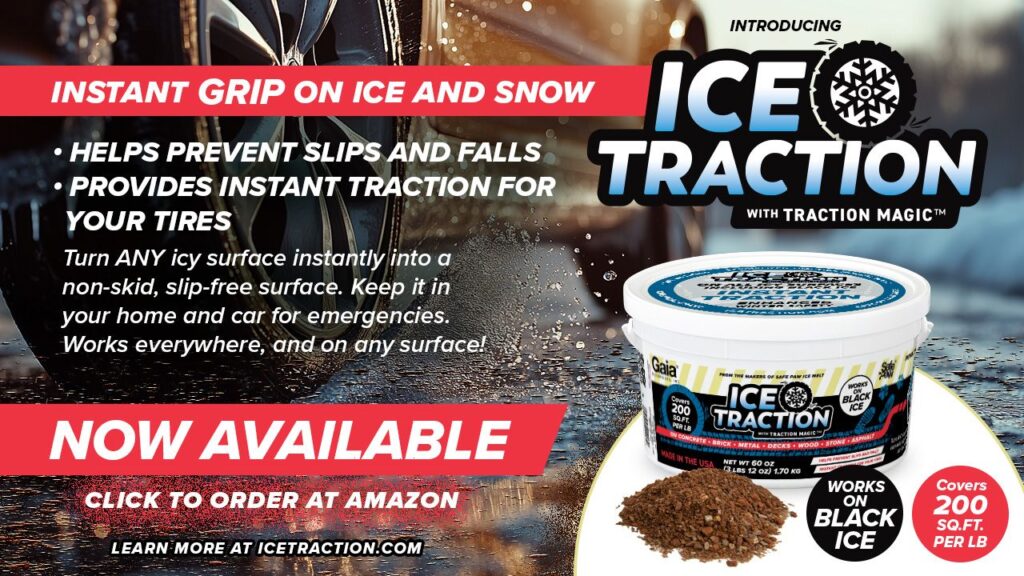
New Product Launch – Ice Traction (with Traction Magic™)
Ice Traction is your go-to winter solution for driveways, walkways, parking lots — and even black ice on the road. Unlike salt or ice melts, it delivers instant grip on snow and slippery surfaces with no wait time. Just spread and go.
Other Ice Melt Products
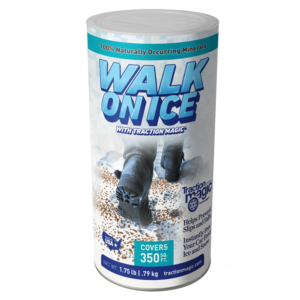
Walk On Ice
Prevent slips at home, work or on the go, The handy disposable canister can be taken everywhere, with the same 100% naturally occurring minerals that provide instant traction on ice or snow.
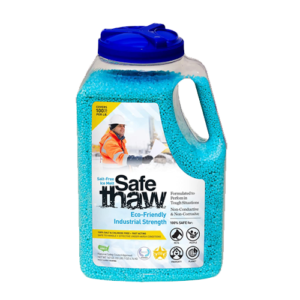
Safe Thaw
Imagine an ice melt you can put down and never worry about. It won’t harm pets, kids and your property. That’s Safe Thaw. Unlike anything else on the market, Safe Thaw can change how winter affects our planet.
Related Articles
- French Creek Freddie Predicts Early Spring for 2025
- Homemade Pet Safe Ice Melt: Is It Better Than Store-Bought?
- Propylene Glycol and Dogs: Is It Truly Safe?
- Homemade De-Icer Solutions: Safe and Effective Methods for Winter Walkways
- Homemade Ice Melt with Salt and Vinegar: Easy DIY De-Icing Solutions