


When Does Damaged Concrete Need Resurfacing or Full Replacement?

Concrete endures a lot—especially in regions where winter freeze-thaw cycles are routine. Over time, these conditions can lead to surface issues like pitting, popping, or scaling. But just because your concrete looks worn doesn’t mean it’s ready for demolition. So when does concrete need resurfacing, and when does it require full replacement?.
Surface Damage? Resurfacing Is Often Enough
If your concrete is flaking, pitting, or showing signs of what’s called “popping”—that is, small surface pieces breaking loose due to repeated freeze-thaw cycles—you’re typically still in the resurfacing zone. These problems, while unsightly, are cosmetic rather than structural.
Pitting and popping are commonly caused when water enters the concrete’s pores. During a freeze, this water expands, forcing chips of concrete to separate from the surface. The same applies to scaling, which refers to broader surface flaking or spalling due to similar freeze-thaw stresses. However, in all these cases, the core integrity of the concrete remains intact.
That means there’s no reason to replace it. Instead, a professional can apply a resurfacer or overlay compound to restore a smooth, durable finish. Proper resurfacing can extend your concrete’s life by years while saving money and reducing waste.
When Is Full Concrete Replacement Necessary?
Full replacement becomes necessary only when the entire concrete structure is compromised—think crumbling slabs, deep structural cracks that run through the body of the concrete, or sections that have sunk due to foundational failure. This type of deterioration is typically unrelated to any surface-level stressors or external products like deicers. In fact, no chloride-free deicer or surface treatment product can trigger deep structural failure.
If a whole concrete block or slab is failing, the issue lies in how the concrete was originally poured or supported, not in what was applied afterward. This could include poor subgrade preparation, inadequate curing during installation, or improper reinforcement.
Pet-Friendly Ice Melt
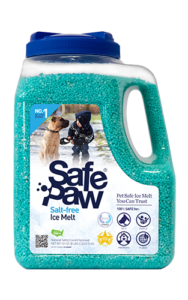
Pet Safe Ice Melt – Safe Paw
The Original and the #1 Pet and Child Safe Ice Melt for over 20 years. Guaranteed environmentally safe – will not harm waterways and sensitive wetlands.
Why Chloride-Free Deicers Aren’t to Blame
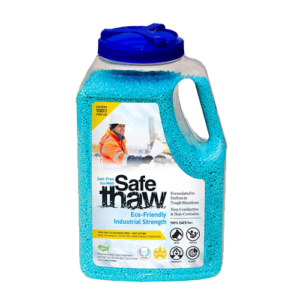
There’s a common misconception that deicing products might cause deep concrete failure. However, products like Safe Paw and Safe Thaw are surface-level, non-corrosive solutions that do not penetrate deeply enough to compromise the body of the concrete. They are chloride-free and designed to avoid the corrosive reactions associated with traditional rock salt or calcium chloride.
When you see deep cracks or structural crumbling, look to factors like age, weathering, poor installation, or foundational shifts—not the deicer you spread on top.places where light hits just right.
Conclusion
Resurface First, Replace Only When Necessary
Cosmetic wear and tear, including surface popping, pitting, or scaling, is usually best handled with resurfacing. It’s affordable, effective, and environmentally conscious. Full concrete replacement is rarely needed unless the integrity of the entire structure is compromised—and that’s not something any pet-safe deicer will cause. Choose smart maintenance strategies and don’t rush into demolition when a surface refresh might be all you need. With timely care, sealing, and chloride-free winter products, you can extend your concrete’s lifespan and preserve curb appeal season after season.
FAQs
Other Ice Melt Products
Walk On Ice
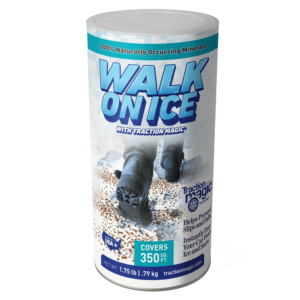
Prevent slips at home, work or on the go, The handy disposable canister can be taken everywhere, with the same 100% naturally occurring minerals that provide instant traction on ice or snow.
Safe Thaw
Imagine an ice melt you can put down and never worry about. It won’t harm pets, kids and your property. That’s Safe Thaw. Unlike anything else on the market, Safe Thaw can change how winter affects our planet.