



Ice Melt Or Kitty Litter: Which One You Should Buy?
Ice Melt vs Kitty Litter
Ice melt and kitty litter serve different purposes. Ice melt is designed to help melt ice by lowering water’s freezing point, while kitty litter does not melt ice and only provides temporary traction on slippery surfaces. For icy walkways, the right choice depends on whether you need ice removal, improved grip, or both.
Key Takeaway
Key Facts: Ice Melt vs Kitty Litter:
- Kitty litter does not melt ice.
- Kitty litter provides temporary traction only.
- Sand and kitty litter improve grip but do not lower the freezing point of water.
- Ice melt works through chemical processes that help loosen or melt ice.
- Traction materials and ice-melting products solve different winter problems.
- Wet kitty litter can become muddy or slippery.
- The best choice depends on temperature, surface type, weather conditions, and household needs.
Key Facts
- Kitty litter does not melt ice—it provides traction only.
- Rock salt (sodium chloride) becomes ineffective below roughly 15 °F (–9 °C).
- Pet-safe and surface-safe alternatives exist that avoid harsh salts.
- Sand gives traction but does not melt ice.
- Chemical deicers can irritate pets’ paws and cause toxicity if ingested.
Ice Melt vs Kitty Litter: Understanding the Difference
The main difference is function: ice melt helps reduce ice by changing the freezing behavior of water, while kitty litter only creates a rough surface that may improve traction. Kitty litter cannot replace an ice-melting product because it does not chemically melt frozen water.
Ice Melt vs Kitty Litter: Features Compared
| Feature | Ice Melt | Kitty Litter |
| Primary purpose | Melting or loosening ice | Providing temporary traction |
| Melts ice? | Yes, depending on formulation and conditions | No |
| Creates grip? | Some products provide limited traction | Yes |
| Works through chemistry? | Yes | No |
| Main material | Depends on formulation | Usually clay or absorbent minerals |
| Can become slippery when wet? | Depends on product | Yes, some types can become muddy |
| Best use | Ice treatment | Emergency traction support |
Why Do People Use Kitty Litter, Salt, and Sand for Winter Traction?
As winter approaches, homeowners begin searching for easy traction solutions — often typing queries like “kitty litter for ice melt,” “sidewalk salt,” “pet safe salt for ice,” or even “what temperature does it snow?” But while many DIY blogs claim kitty litter can act as a deicer, science and safety experts disagree.
Traditional litter does not melt ice — it only adds limited traction, and certain litters (especially clay-based ones) can create additional hazards when wet.
Before choosing between kitty litter, sand, salt, or modern deicers, it’s essential to understand their effectiveness, risks, and environmental impact.
The American Veterinary Medical Association (AVMA) confirms that salt-based ice melts and chemical deicers can cause paw burns, chemical ingestion, and gastrointestinal distress in pet.
Salt vs. Sand vs. Kitty Litter: Understanding Traction for Black Ice
When it comes to creating traction on icy surfaces, sand is an excellent choice. It doesn’t melt the ice, but it provides grip and can prevent slips and falls. Salt, on the other hand, can melt ice and is commonly used for de-icing purposes. Kitty litter, while not effective at melting ice, can provide some traction in a pinch.
When icy surfaces become a hazard, salt (or chemical ice-melt) actually melts ice by lowering the freezing point of water; sand and kitty litter simply provide grip but don’t change the ice.
Kitty litter provides traction, not ice-melting action—it does not chemically lower the freezing point of water.
Salt-based deicers like sodium chloride work by freezing-point depression and become less effective at very cold temperatures.
Does Sand Melt Ice? The Pros and Cons of Using Sand for Traction
Sand is cheap, but it’s not the best choice for melting ice in your driveway or sidewalk. Sand can become packed down into a hard surface that won’t absorb water from melted snow and ice, meaning that you won’t have any traction when walking on it. This can be dangerous to pets who might slip and fall over due to the rough surface.
In addition to being potentially hazardous for pets and children, the sand does not provide an effective way of melting snow and ice. It doesn’t conduct heat efficiently enough to cause quick thawing of frozen water droplets that collect on surfaces like driveways during winter months.
Why Kitty Litter Can Be Problematic on Ice
Kitty litter can create problems when used as an ice solution because it does not remove ice and may become wet, muddy, or slippery. It can also create cleanup challenges and may contribute sediment to drainage systems.
1. Slippery Residue
Wet litter can become a muddy layer that reduces traction.
2. Cleanup Problems
Litter particles may spread into homes, vehicles, and outdoor areas.
3. Environmental Considerations
Runoff carrying loose particles may contribute sediment concerns.
Does Sand Work Better Than Kitty Litter for Driveways?
Sand is one of the oldest winter traction tools — but it does not melt ice. Instead, it creates a gritty texture over slippery surfaces.
Pros of Sand
- Non-chemical
- Inexpensive
- Provides moderate traction
- Readily available
Cons of Sand
- Does not melt ice
- Gets compacted and loses traction
- Requires cleanup to avoid drainage clogging
- Adds particulate pollution
In contrast, kitty litter often performs worse than sand when wet.
The Minnesota Pollution Control Agency warns that sand contributes to stormwater pollution and clogs drainage systems during spring melt.
Sand improves traction but fails to reduce ice thickness or prevent re-freezing.
Concrete Safe Ice Melt
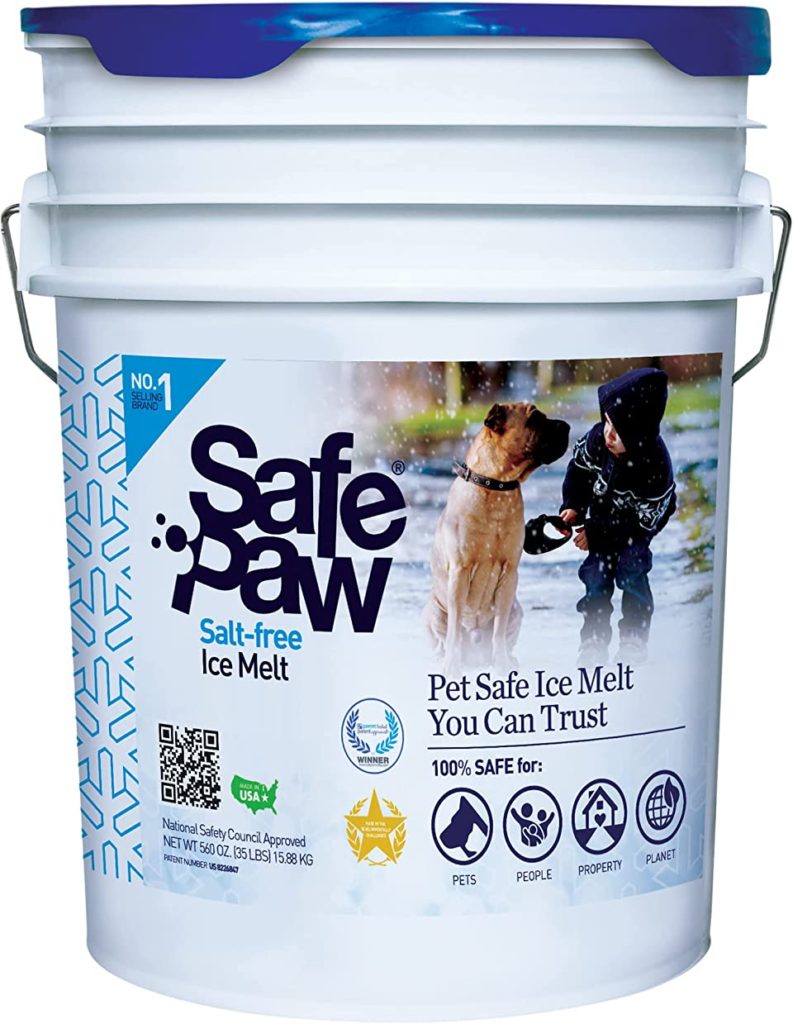
Safe Paw
The Original and the #1 Child and Pet Safe Ice Melt for over 20 years. Guaranteed environmentally safe – will not harm waterways and sensitive wetlands.
Does Kitty Litter Melt Ice?
No. Kitty litter does not melt ice. It does not lower water’s freezing point or create a chemical reaction that removes ice. It only provides a rough material that may temporarily improve traction.
When kitty litter becomes wet, some varieties can absorb moisture and create a muddy residue. This may reduce traction rather than improve it in some situations.
Why People Think Kitty Litter Helps
Some traction is created due to:
- Coarse granules
- Temporary grip
- Readily available in most homes
Why Kitty Litter Fails
- Turns to sludge when wet
- Provides inconsistent traction
- Creates messy residue that tracks indoors
- Offers zero melting capability
Kitty Litter Limitations
Why Kitty Litter Is Not an Ice Melt Replacement
| Limitation | Explanation |
| Does not melt ice | It does not change water’s freezing point |
| Temporary traction | Grip may decrease after becoming wet |
| Cleanup issues | Can create residue and mess |
| Drain concerns | Runoff may contribute to sediment issues |
| Storage concerns | Moisture can reduce effectiveness |
The Michigan State University Extension confirms kitty litter “does not melt ice and offers limited traction compared to specialized products.
Using kitty litter on icy surfaces may reduce slipping risk, but it will not melt the ice beneath or stop re-freezing
The Hidden Dangers: Why Kitty Litter for Ice Melt Can Be Hazardous
While kitty litter seems harmless, it presents hidden risks:
1. Slippery Sludge
When wet, clay litter becomes a slick mud that can increase slip hazards.
2. Environmental Impact
Clogged drains, sediment pollution, and soil disruption occur when litter washes away.
3. Indoor Residue
Tracks into homes, especially on pet paws.
4. No Melting—Only Illusion of Safety
Users may falsely believe the area is safe despite underlying ice.
The EPA states that particulate runoff — including sand and clay — negatively impacts waterways and aquatic life by increasing sedimentation.
Is Kitty Litter or Sand Better for Ice? Choosing the Right Traction Agent
For traction purposes, sand is generally a better option than kitty litter for ice. It’s specifically designed to create grip on slippery surfaces. However, for melting ice, you’ll want to use an ice melt product or salt. These substances are formulated to lower the freezing point of water, effectively turning ice into a brine that can be swept away.
Is Kitty Litter a Reliable Ice Melter Alternative for Your Home?
Only if your goal is traction, not melting. If you intend to remove ice, you’ll want a product designed for de-icing rather than simply gritting.
- Benefit: Safe for pets (if unscented/unclumped), non-corrosive.
- Drawbacks: Will leave residue, may track into the home or clog drainage, and does nothing to melt thick ice.
Kitty litter can be used for emergency traction, but as a de-icer it is ineffective—ice remains underneath while the litter sits on top.
How to Get Traction on Ice: Why Professional Ice Melters Beat DIY Hacks
Ice melts work by chemically lowering the freezing point of water, so ice becomes slush and can be removed or dissipate. The lower the temperature the product works at, the better for harsh winters.
- Traditional rock salt (NaCl) tends to fail below ~15 °F (–9 °C).
- More advanced deicers or pet-safe formulas may be designed for colder temps.
- Safety considerations: Many deicers contain chlorides which can irritate pet paws and cause ingestion hazards.
Ice-melting chemicals such as sodium chloride and calcium chloride can irritate pets’ paws and pose ingestion risks.
Why You Should Choose a Safe Paw Pet-Safe Ice Melt Over Traditional Salts
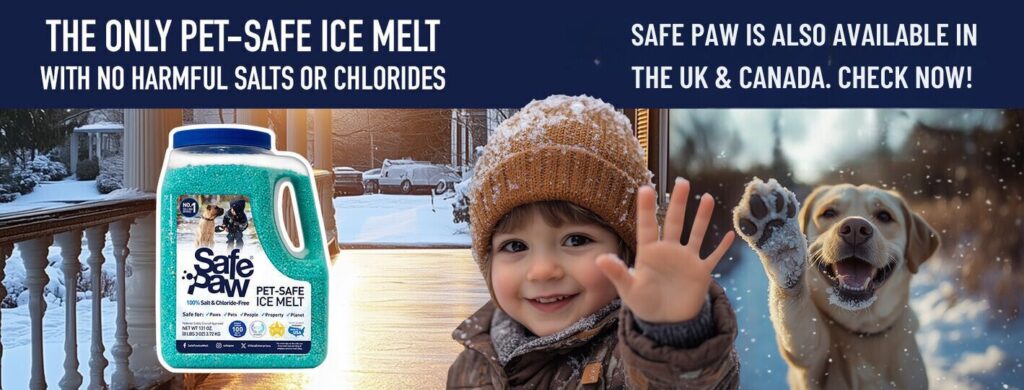
Choose a pet-safe, surface-safe ice melt that is formulated to work at low temperatures and avoids harsh salt or chloride formulas.
- Look for products labeled “pet safe” or “chloride-free”.
- Use sand or kitty litter for extra traction if needed, after applying a proper ice melt formula.
- Clear off snow first, apply deicer according to instructions, then top with grit if desired.
Many so-called pet-safe ice melts still contain magnesium chloride; always check the label—no product is completely risk-free.
Traction and Melting Comparison: Salt vs. Sand vs. Kitty Litter
| Material | Melts Ice? | Provides Traction? | Pet & Surface Safety | Best Use |
| Kitty Litter | ❌ | ✅ | Good for pets but messy | Temporary grip |
| Sand | ❌ | ✅✅ | Safe but hard to clean up | Walkways, pets |
| Ice Melt (Salt) | ✅ | ❌ | Can harm pets/concrete | Driveways/serious ice |
| Safe Paw Ice Melt | ✅ | ✅✅ | Formulated for animals/surfaces | Driveways, walkways, pet/child households |
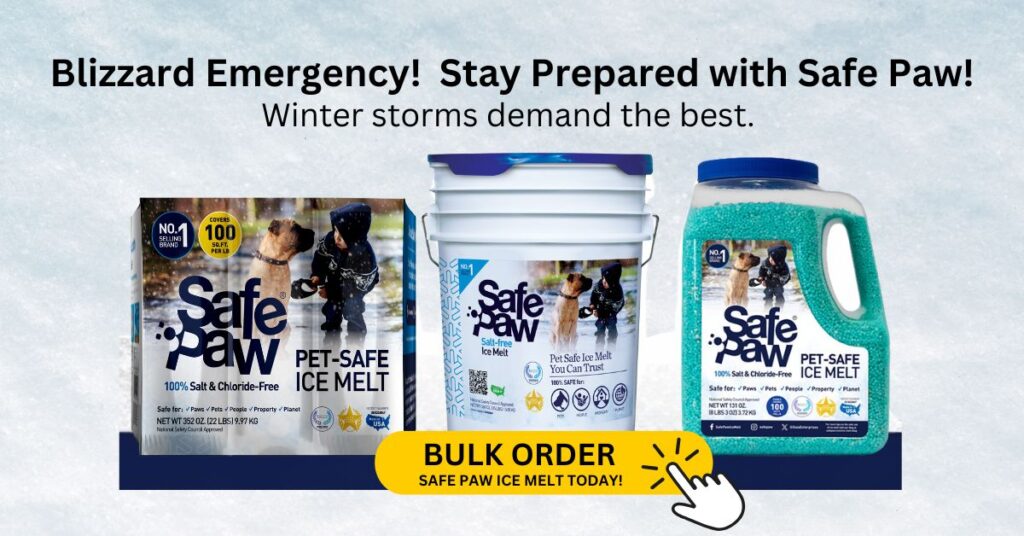
Pet Safe Ice Melt – Safe Paw
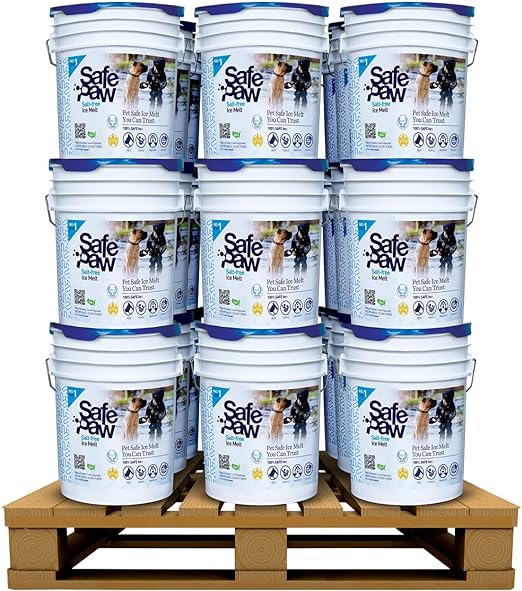
Safe Paw, Child Plant Dog Paw & Pet Safe Ice Melt -35lb, 36 Pails

Safe Paw, Child Plant Dog Paw & Pet Safe Ice Melt -22lb, 100Bboxes
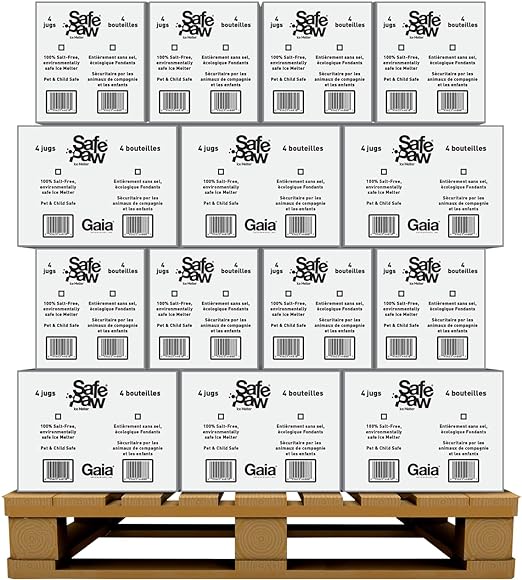
Safe Paw, Child Plant Dog Paw Pet Safe Ice Melt, 160 Jugs

Pet Products Powered By EzPz.pet
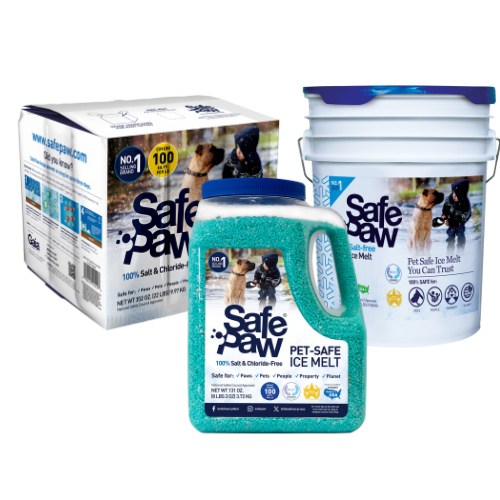
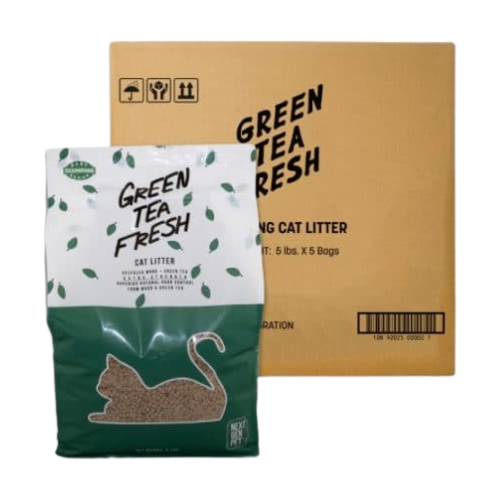

What’s the Best Pet Safe Ice Melt for Homes With Pets or Kids? Why Safe Paw Leads
The use of too much rock salt or chemical ice melt can damage your concrete. The easiest method to avoid this is to use a non-toxic ice melt suitable for concrete, which will not hurt you if you use it too much. Colored ice melt might help you spread the melt evenly across the area and avoid overusing it. Safe Paw is one of the few ice melt products on the market that can be used around pets and children, and it will not cause harm to your concrete walkways. It has even been considered the best ice melt for concrete.
It’s a one-of-a-kind compound with a time-released action because it’s completely salt-free. It has a non-corrosive structure with a crystalline amide core that is injected with glycols. Unlike rock salt and other salt-based ice melting products, which include potassium chloride or sodium chloride and can only melt ice to a temperature of 24 degrees, it can melt ice to a temperature of 2 degrees below zero.
The ASPCA Animal Poison Control Center lists salt-based ice melts as a common winter toxin for dogs and cats.
Why Do People Use Kitty Litter for Winter Traction?
The appeal of using kitty litter lies in its absorption and traction properties. While kitty litter doesn’t actively melt ice like chemical ice melts, it’s coarse enough to grip into ice and snow, preventing slips and providing traction on sidewalks, driveways, or other icy surfaces. The main benefits are:
- Traction: Kitty litter helps add a layer of grip on slippery ice, which is especially useful when you don’t want to use chemicals.
- Absorption: Some forms of kitty litter can absorb moisture, which can help in icy conditions, but only minimally.
- Pet-Safe Choice: Since it doesn’t contain salt or chemicals, it’s generally considered safer around pets, especially if they walk over or lick it.
Gaia Enterprises Inc. delivers 100% pet-safe and environmentally friendly winter products. Safe Paw, our flagship product, is the #1 selling pet-safe ice melt that does not harm pets, safe if ingested, and safe on all types of concrete.
What Are the Limitations of Kitty Litter on Ice Compared to Pet Safe Ice Melt?
While kitty litter is often promoted as an ice melt alternative, it’s essential to know that it has limitations. Traditional ice melt products actually work by lowering the freezing point of water to melt ice, but kitty litter doesn’t do this. Here’s what you need to keep in mind:
- Does Not Melt Ice: Kitty litter only provides traction and does not chemically melt ice, which means it will not help in clearing ice-covered areas.
- Messy Residue: Unlike Safe Paw, kitty litter leaves behind a gritty, sometimes muddy residue that can be challenging to clean up once the ice melts. This residue can also track into your home.
- Environmental Impact: If not cleaned up, kitty litter can wash into storm drains or nearby soil, potentially clogging systems or affecting local wildlife and plants.
What Are Safer and More Effective Alternatives to Kitty Litter Than Pet Safe Ice Melt?
For those concerned about pet safety and the environmental impact of traditional ice melts, Safe Paw presents an effective solution. This pet-safe ice melt provides all the benefits of traditional ice melt without the harsh chemicals found in other products. Here’s why Safe Paw stands out:
- Non-Toxic Formula: Unlike salts like sodium chloride or calcium chloride, Safe Paw’s formula is gentle on paws and pet-safe, allowing you to worry less about residue affecting your pets.
- Eco-Friendly: Safe Paw avoids harmful runoff into soil or water, maintaining a balance that is safer for the environment. Traditional salt-based de-icers can increase soil salinity, impacting plants and wildlife.
A study from the Virginia Department of Transportation notes that chloride salts (sodium, calcium, magnesium chloride) significantly accelerate concrete deterioration.
Applying Kitty Litter Effectively (If You Choose It Over Pet Safe Ice Melt)
If you choose to use kitty litter in certain spots for traction, here are a few tips to maximize its effectiveness:
- Use Sparingly: Sprinkle only a thin layer to avoid an excess of gritty residue.
- Combine with Ice Melt: For better results, combine kitty litter with a pet-safe product like Safe Paw. The ice melt will help break down the ice, while the kitty litter adds traction.
- Clean Up After Use: To prevent clogging drains or contaminating nearby soil, sweep up the kitty litter once it’s no longer needed.
While kitty litter can provide temporary traction, it’s not a comprehensive de-icing solution. Using Safe Paw or another pet-friendly ice melt offers a cleaner, more effective way to tackle winter ice without endangering pets or the environment.
What Temperature Does It Snow and How Safe Paw Pet Safe Ice Melt Improves Sidewalk Safety
Ever catch yourself wondering what temperature does it snow? Snow doesn’t always wait for the thermometer to hit freezing. In fact, snow can fall even when the ground temperature is slightly above 32°F (0°C), depending on humidity and atmospheric conditions. However, the ground’s ability to retain that snow—turning it into ice—is what turns a snowy day into a slippery hazard. When walkways, driveways, and paths are hit by snow at or near freezing, the immediate concern is not just traction, but how to manage it without harming pets, surfaces, or the environment.
That’s where sidewalk salt has traditionally come in. But most sidewalk salts are sodium chloride-based and can corrode concrete, irritate pet paws, and contribute to runoff pollution. When snow falls at borderline temperatures, many homeowners reach for the first bag of salt they can find. But unfortunately, this often leads to cracked pavement, rusted steps, or even paw burns. The solution? Skip the harsh salt and opt for a safer alternative like Safe Paw—a pet safe salt for ice that doesn’t contain corrosive ingredients. Safe Paw works even at temperatures as low as -2°F and offers traction while being completely chloride-free, salt-free, and gentle on pets and plants alike.
According to the National Weather Service, snow can occur above freezing temperatures due to evaporative cooling and atmospheric layering.
What Does “Snow Bunny” Mean in Winter Safety and How Safe Paw Pet Safe Ice Melt Protects Pets
When you think of winter, you might imagine a cheerful snow bunny hopping through freshly fallen powder. But the snow bunny meaning in real-life winter safety is a little deeper—it’s about being prepared, being gentle on the environment, and avoiding harsh chemicals. A true “snow bunny” isn’t just someone who loves snow—they’re someone who knows how to navigate it smartly. That means rejecting toxic sidewalk salt and kitty litter and embracing thoughtful, tested alternatives that won’t backfire after the thaw.
Using a pet safe salt for ice means your furry companions can trot across the driveway without injury. It means you’re not tracking chemical residue into your home or into your garden beds. And it also means your concrete won’t degrade year after year due to chemical exposure. Products like Safe Paw contain a patented dual-effect formula with a crystalline amide core that attacks ice at the molecular level without corroding or leaching toxins.
So the next time a snowstorm hits and you check the forecast to see what temperature does it snow, don’t scramble for table salt, kitty litter, or harmful sidewalk salt. Choose a product that works smarter—offering long-lasting protection, better traction, and safety for every member of your household, including the four-legged ones.
Conclusion: Why Safe Paw Pet Safe Ice Melt Is the Smarter Choice
While kitty litter and sidewalk salt offer temporary traction, neither delivers the complete, safe winter solution most households need. Understanding what temperature it snows and how ice reacts to various deicers can guide you toward smarter decisions. Don’t rely on quick fixes that corrode concrete or harm pets. True winter readiness means choosing a pet safe salt for ice, like Safe Paw, that blends performance with environmental responsibility. Embrace the snow bunny mindset—not just loving snow, but knowing how to handle it with care. That’s how you winter smart, safe, and sustainably.
Frequently Asked Questions

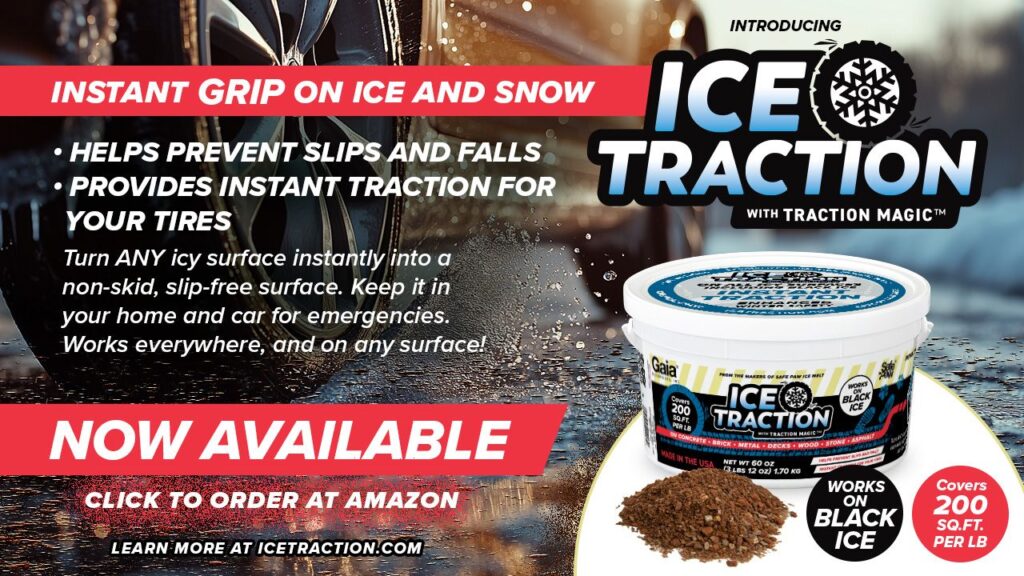
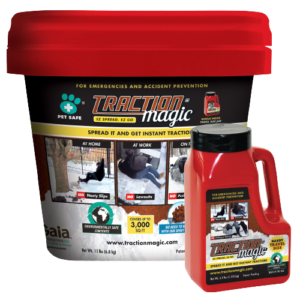
Stay safe and confident this winter with Traction Magic!
This innovative, 100% natural product offers instant traction on any icy surface. Whether you’re navigating your sidewalk, steps, or driveway, Traction Magic helps you stay upright and prevents falls.
Try Our Other Winter Safety Products
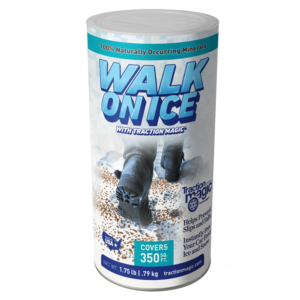
Walk On Ice
Prevent slips at home, work or on the go, The handy disposable canister can be taken everywhere, with the same 100% naturally occurring minerals that provide instant traction on ice or snow.
Traction Magic
Stay safe on slippery surfaces with a product that’s 100% natural and safe for pets, people, and your property. Use Traction Magic on sidewalks, steps, or as instant traction for your car.
Walk On Ice
Prevent slips at home, work or on the go, The handy disposable canister can be taken everywhere, with the same 100% naturally occurring minerals that provide instant traction on ice or snow.
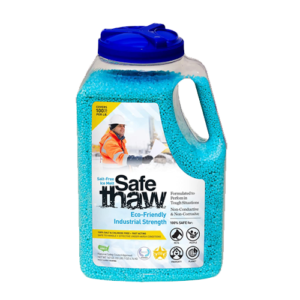
Safe Thaw
Imagine an ice melt you can put down and never worry about. It won’t harm pets, kids and your property. That’s Safe Thaw. Unlike anything else on the market, Safe Thaw can change how winter affects our planet.
Related Posts
- 5 Questions Never to Be Overlooked When Buying an Ice Melt
- Never Ignore These 3 Things While Buying an Ice Melt
- The Search for Elderly-Friendly Ice Melts That Don’t Harm Mother Earth
- Using the Right Ice Melter This Winter
- Don’t Buy an Ice Melt Before Checking These Three Points
- Tips for Applying Ice Melt Correctly on the Surface