A steep driveway is easier to manage in winter when snow is removed early, drainage is kept clear, and extra traction is added before surfaces become heavily packed or icy. Shoveling, snow blowing or plowing should remove as much snow as practical first. Sand or traction grit can provide immediate grip, while an appropriate deicer can help break the bond between remaining ice and the driveway. Where chloride exposure is a concern, a chloride-free ice melt may be considered, provided it is suitable for the driveway material and current temperature.
Article’s Audio Version
Key Takeaways
Remove snow early rather than allowing repeated traffic to compact it into a slippery layer.
Use mechanical snow removal first whenever practical.
Traction materials and deicers perform different jobs: traction improves grip, while deicers help loosen or melt bonded ice.
Watch drainage areas because meltwater can flow downhill and refreeze.
Choose winter treatments according to the driveway material, temperature and surface condition.
Where limiting chloride exposure is important, consider chloride-free alternatives rather than assuming all deicers have the same properties.
Snow removal is a major problem for property owners in our snow-prone region. After a storm, snow and ice on your driveway can make driving quite unsafe, and you may need to get it removed.
Many folks park towards the bottom of their driveway during the winter instead of hauling up. It reduces the chances of your automobile sliding down the driveway and ramming into someone’s mailbox or, worse, a pedestrian. The disadvantage of this strategy is that you could easily slip and fall on the snow and ice as you walk down to your car every day. In the winter, leaving your automobile on the street can cause complications. Here are some methods to deal with a steep driveway during winter.
Why Steep Driveways Become Difficult in Winter
A steep driveway creates several winter-maintenance challenges at the same time. Vehicles need sufficient tire traction to climb or descend the slope, pedestrians need reliable footing, and meltwater naturally travels toward lower sections of the driveway. If that water reaches a colder or shaded area and freezes again, new icy patches can form even after the main snowfall has been cleared.
A practical winter plan therefore needs to address four separate issues: snow accumulation, bonded ice, traction and drainage. No single snow-removal method solves all four in every situation.
5-Step Winter Plan for a Steep Driveway
Check the forecast and drainage areas. Clear leaves, packed snow or debris from places where meltwater normally drains.
Remove snow early. Shovel, snow blow or plow before repeated vehicle traffic compresses the snow.
Clear the main walking and driving paths. Pay particular attention to turns, shaded areas, the upper approach and the bottom of the slope.
Treat remaining slippery areas. Use traction grit for immediate grip or an appropriate deicer where bonded ice needs to be loosened.
Inspect for refreezing. Recheck the lower driveway, drainage channels and shaded sections after temperatures fall.
The Safety of Your Concrete
The wear and tear on your concrete driveway from harsh ice melts can lead to expensive repair work in the future. Thus, the quest for ice melt for driveways that is not harmful to concrete becomes essential. A solution like ‘Safe Paw’ stands out in this scenario, as it’s not only effective at eliminating ice, but it’s also a chemical-free solution that doesn’t harm your concrete.
What Type of Snow Melt is Safe for Concrete?
The safety of your concrete driveway is paramount. Most traditional ice melts contain chemicals that, while effective at melting ice, can damage the concrete and harm the environment. A blend of elements, such as sodium chloride (rock salt), calcium chloride, magnesium chloride, or potassium chloride, usually makes up conventional ice melts. Though these substances can erode concrete and affect its durability over time.
Safe Ice Melt for Both Concrete Driveways And Environment
Although calcium chloride and magnesium chloride are considered less damaging to concrete than sodium chloride, they still pose some environmental concerns. Therefore, the ideal solution is a product that is not only safe for concrete but also kind to the environment.
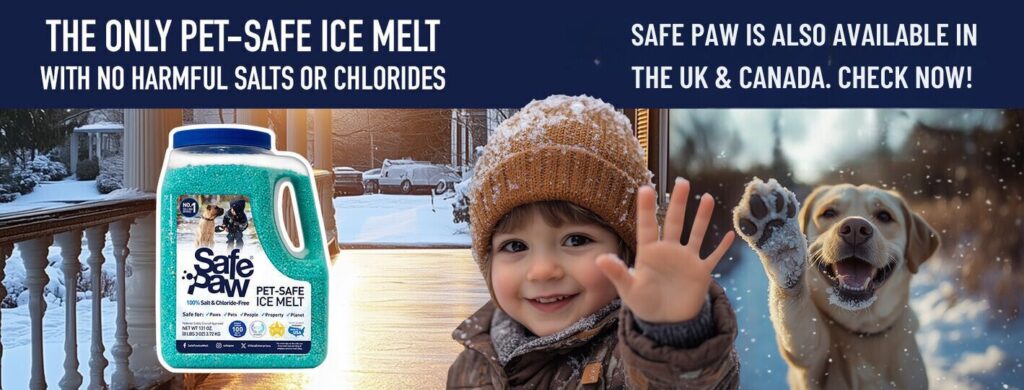
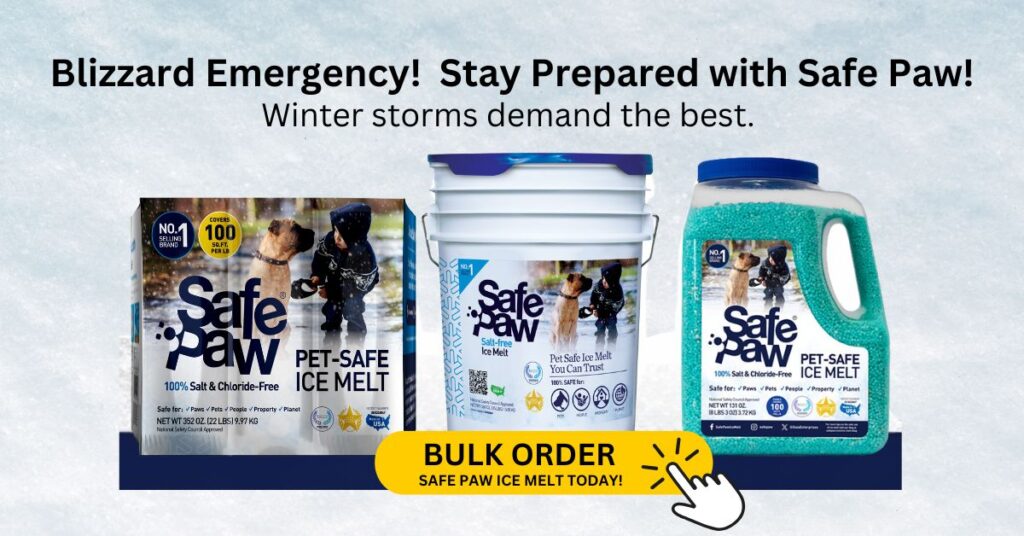
Ice and Snow Everywhere? Stock Up on Safe Paw – the ONLY Pet Safe Ice Melt you can trust
Ice melts are readily available at local hardware stores and are most effective when applied before heavy snowfall or storms. While de-icers are a popular choice due to their accessibility and inexpensive cost, they can hurt your property. For example, due to freeze-thaw cycles that promote cracking, rock salt can wreak havoc on a driveway surface. Hence, you need to avoid salt-based and get an ice melt concrete safeand environmentally friendly. You can look for green options like Safe Paw ice melt. You can also go through Safe Paw ice melt reviews to know more about this environmentally friendly and non-corrosive ice melt.
Winter Driveway Methods: Advantages and Limitations
Method
Advantages
Limitations
Most useful when
Shoveling
Removes snow without adding deicer
Labor-intensive on long or steep slopes
Snowfall is light to moderate
Snow blower
Clears larger areas efficiently
Equipment must be suitable for the slope and snow depth
Regular residential snow removal
Plowing
Removes large amounts of snow quickly
Can leave compacted snow or ice behind
Large driveways with adequate equipment access
Sand or traction grit
Provides immediate grip
Does not melt ice and requires cleanup
Melting is ineffective or unnecessary
Chloride-free ice melt
Avoids introducing chloride from the deicer
Performance and surface compatibility vary by formulation
Chloride exposure is a specific concern
Chloride-based deicer
Can break ice-pavement bonds effectively
Adds chloride exposure and may affect concrete, infrastructure or the environment depending on conditions
Appropriate surfaces and temperatures where its properties are suitable
Surface / drainage improvements
Addresses recurring structural causes
Higher upfront effort and cost
Chronic runoff, erosion or traction problems
Gravel Driveway
Consider a gravel driveway instead of a paved driveway if you have a high inclination. Gravel can be used to add traction to your steep driveway. However, because the gravel will erode or roll to the bottom of the hill over time, you’ll need to replenish it. If the major worry is slick conditions rather than visibility or car damage, this option is ideal.
Using Resin
Install pipes first to move water away and prevent erosion if your driveway has drainage concerns. Fill in the area with crushed sand and gravel, then cover it with a layer of decomposed granite. Finally, as the top layer, apply the stabilizing resin. In wet or icy circumstances, you’ll find that a resin surface is far safer.
Pour Concrete
The inclination of the driveway may be attributable to progressive erosion over time in some circumstances. You can fill in any dips, hollows, or sunken areas at the base of the driveway with compacted gravel and sand. Pour concrete on top of the compressed fill to form a new ramp at the driveway’s foot.
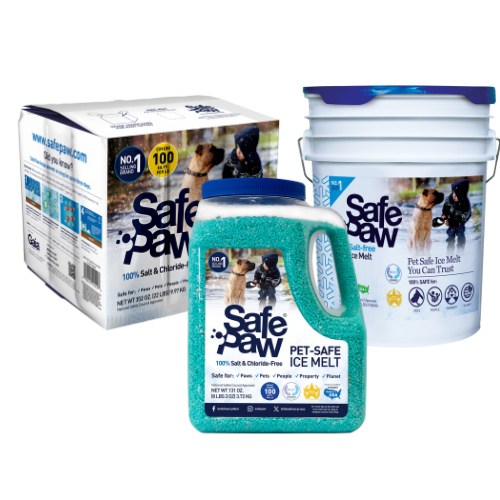
Gaia Enterprises Inc. delivers 100% pet-safe and environmentally friendly winter products. Safe Paw, our flagship product, is the #1 selling pet-safe ice melt that does not harm pets, safe if ingested, and safe on all types of concrete.
Which Approach Works for Different Winter Driveway Problems?
Problem
Mechanical removal
Traction grit
Deicer
Drainage / surface improvement
Fresh loose snow
Excellent
Usually unnecessary
Sometimes preventive
Not immediate
Packed snow
Good
Helpful
Helpful for bonded layer
Not immediate
Thin ice
Limited alone
Immediate grip
Useful where appropriate
Preventive
Very low temperature
Useful
Useful
Depends on formulation
Preventive
Repeated refreezing
Temporary
Temporary
Temporary
Important
Gravel migration or erosion
Limited
Limited
Limited
Important
Long-term slope problems
Temporary
Temporary
Temporary
Most relevant
Choosing an Approach by Situation
Situation
Practical approach
Fresh snowfall
Remove snow early with a shovel, blower or appropriate plowing equipment.
Persistent slick surface
Add traction grit after clearing loose snow.
Bonded ice
Use a surface- and temperature-appropriate deicer.
Chloride exposure is a concern
Consider a chloride-free ice melt.
New or vulnerable surfaces
Prioritize mechanical removal and surface-specific guidance.
Water repeatedly refreezes downhill
Improve drainage and redirect meltwater.
Gravel driveway
Maintain the gravel layer and replace material that migrates downhill.
Ice and Snow Everywhere? Stock Up on Safe Paw – the ONLY Pet Safe Ice Melt you can trust
The Original and the #1 Child and Pet Safe Ice Melt for over 20 years. Guaranteed environmentally safe – will not harm waterways and sensitive wetlands.
Shoveling, snow blowing, and snow plowing are all mechanical ways for removing snow from a driveway snow-melt system. You can perform this yourself or hire local persons or professional companies to accomplish them for you. It may or may not be a cost-effective technique, depending on the size of your driveway.
Pet Safe Ice Melt – Safe Paw
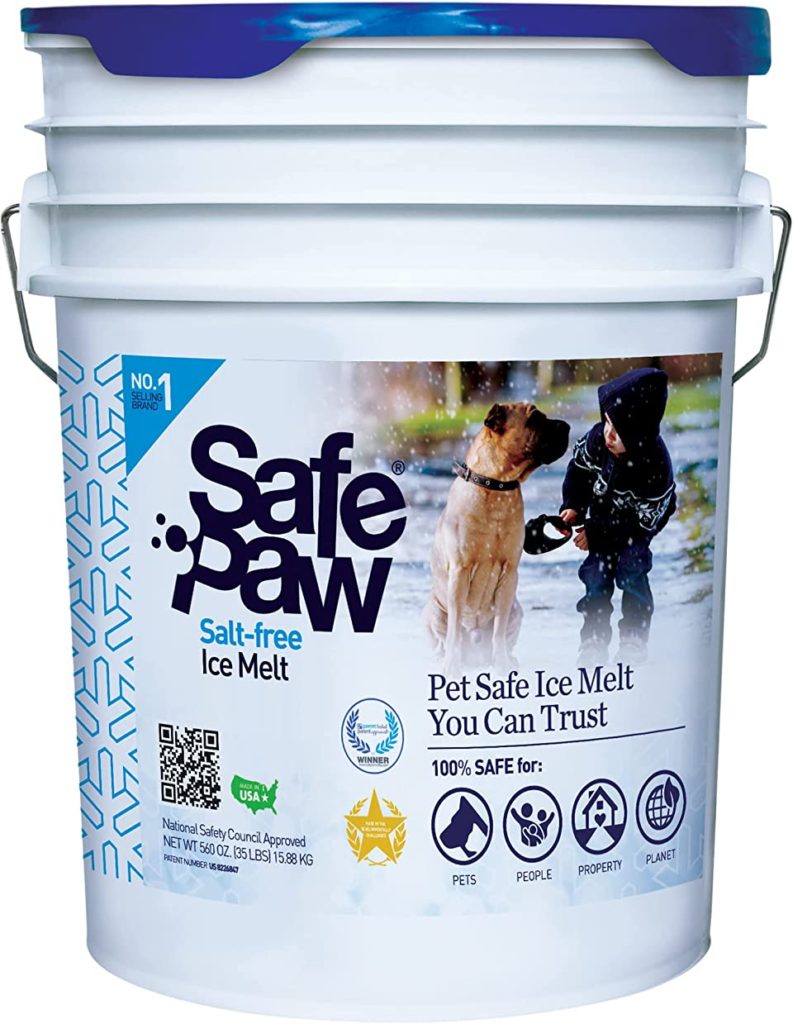
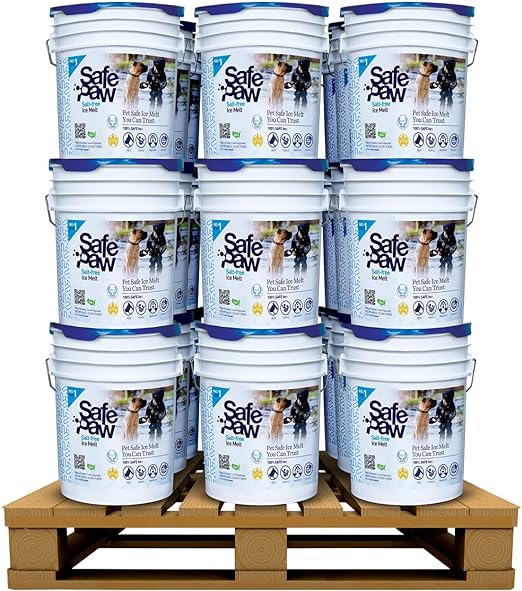
Safe Paw, Child Plant Dog Paw & Pet Safe Ice Melt -35lb, 36 Pails
Winter can be challenging, especially if you’re a pet owner. You want to keep your driveway and walkways ice-free, but the thought of using harmful chemicals that could burn your furry friend’s paws is daunting. This is where pet-safe ice melt products come into play. They’re designed specifically to tackle the ice without putting your pets at risk, offering the best combination of safety and effectiveness.
Most conventional ice melt products contain salts like sodium chloride or magnesium chloride, which are efficient at melting ice but can cause serious harm to pets if they come into contact with paws or are ingested. Imagine your beloved dog running out to play, only to end up with cracked, bleeding paws or an upset stomach. It’s not a pleasant thought, right? That’s why it’s essential to choose a safe ice melt for pets, one that doesn’t compromise your pets’ safety.
Safe Paw, for example, is an eco-friendly ice melt that avoids using harmful salts altogether. It offers a non-toxic, pet-friendly alternative to traditional ice melt, meaning your pets can run across the driveway or sidewalk without you worrying about burns or chemical reactions. In fact, Safe Paw uses a unique formulation that’s also a concrete-safe ice melt, which means it won’t damage your property either. It’s a win-win—your pets stay safe, and your driveways and pathways stay in great condition all winter long.
So, what makes a good pet-safe ice melt? It should be free of chlorides, non-corrosive, and designed to be gentle on paws. Products like Safe Paw are made with this in mind, offering a solution that works effectively at melting ice but won’t cause harm to your pets, children, or even the environment. The best driveway ice melt solutions are those that strike the perfect balance: effective enough to clear ice yet gentle enough to protect your pets and property.
Pet-Safe Deicers
Now let’s talk about pet-safe deicers. Unlike traditional deicers that may contain rock salt or calcium chloride, pet-safe deicers are specially formulated to be non-toxic and safe for both animals and the environment. When you think about using a deicer, you want something that can do the job effectively without exposing your pets to harmful chemicals. Imagine your dog licking his paws after walking across a treated driveway. If the deicer contains toxic ingredients, this can be extremely dangerous.
For pet owners, the importance of a safe ice melt for pets cannot be overstated. Not only does a good eco-friendly ice melt protect animals, but it also prevents corrosion on concrete and damage to vegetation. Rock salt and traditional deicers might seem cheaper, but they come with hidden costs—vet visits, damaged surfaces, and harmed plants. That’s where products like Safe Paw step in, offering a concrete-safe ice melt that protects both your driveway and your pets.
Moreover, using a pet-safe deicer is beneficial not only for your pets but also for the overall environment. Unlike some harsh chemical products, eco-friendly solutions don’t contribute to harmful runoff that can end up polluting local waterways. By choosing an eco-friendly ice melt, you’re making a responsible choice for your family and the planet.
Get ready for winter with – the ONLY Pet Safe Ice Melt you can trust
Driveway Ice Melt Solutions: Pet-Safe and Effective
When winter hits and your driveway turns into a sheet of ice, the first thing you might think of is grabbing any ice melt you have at hand. But think again—are you choosing a product that keeps your family, pets, and property safe? The ideal driveway ice melt solutions need to work under harsh winter conditions, melt ice quickly, and be safe for everyone in the household.
Pet-safe options like Safe Paw are specifically designed for such purposes. They offer a powerful melting action without using harsh chemicals that can damage your driveway or your pet’s health. If you’re worried about preserving the integrity of your surfaces, especially concrete, opting for a concrete-safe ice melt is the right decision. After all, you shouldn’t have to deal with surface damage and costly repairs just because you want to prevent slipping hazards.
Winter doesn’t have to mean choosing between safety and effectiveness. With the right pet-safe ice melt or pet-safe deicer, you can protect your loved ones—both human and furry—while keeping your driveway clear. Plus, when you pick an eco-friendly ice melt, you’re helping to maintain the health of your local environment. There are real benefits in every direction: no more cracked concrete, no more vet visits, and no more toxic runoff.
Safe Paw represents all these values in one product. From keeping your pets safe to maintaining your driveway ice melt solutions responsibly, it’s a choice that supports the well-being of your family, your home, and the world around you. So this winter, don’t just melt the ice—do it safely and smartly. Choose a product that keeps everything and everyone you care about protected.
Don’t Get Left Out in the Cold
While finding a balance between safety, effectiveness, and Eco-friendliness may seem daunting, the journey doesn’t need to be a cold and lonely one. A number of products on the market cater to these needs without compromising any one aspect.
Ice and Snow Everywhere? Stock Up on Safe Paw – the ONLY Pet Safe Ice Melt you can trust
For all types of driveways including steep surfaces, the safest snow removal method is using an effective natural ice melt. Safe paw ice melter reviews tell us that this green product not only removes snow but also provides traction on steep driveways. Whereas, all other methods are more expensive and time-consuming while not being completely safe. When it comes to going to and from your house during the snow season, peace of mind and guarantee of safety are priceless.
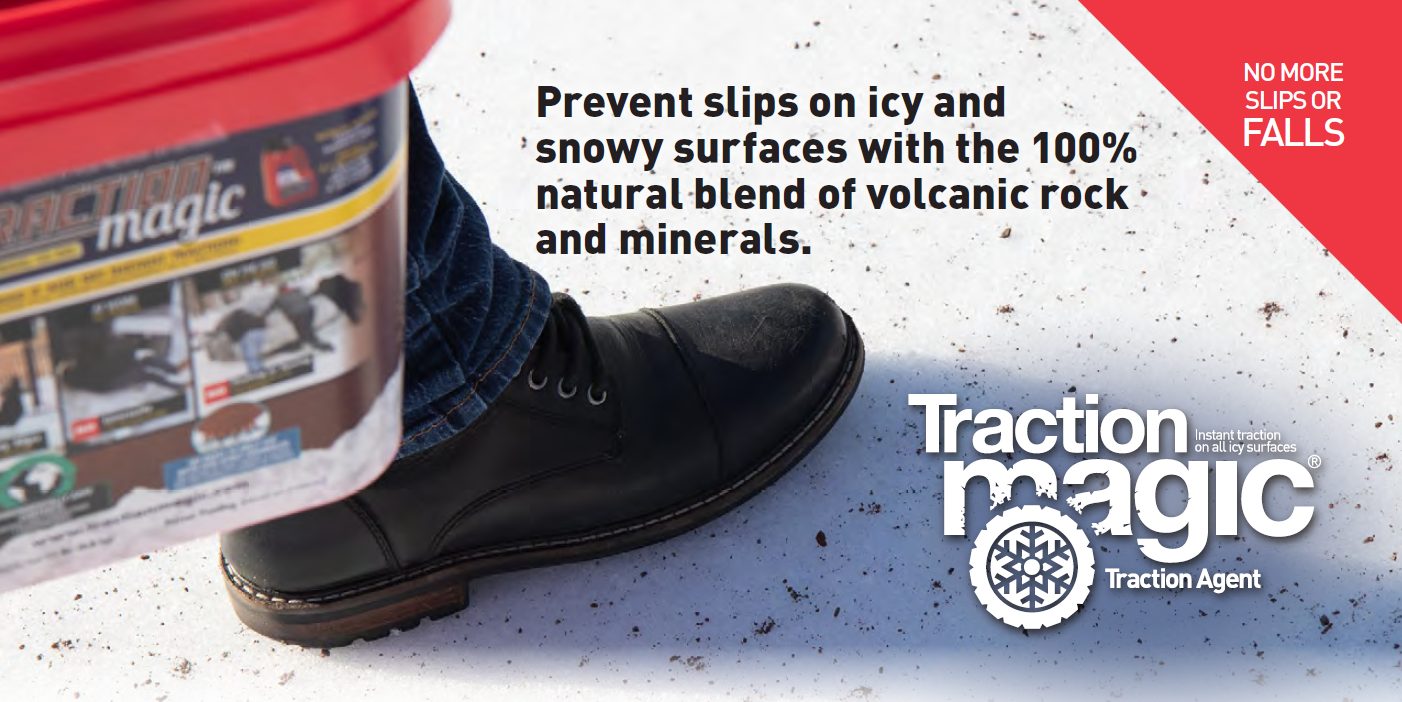
Stay safe on slippery surfaces with a product that’s 100% natural and safe for pets, people, and your property. Use Traction Magic on sidewalks, steps, or as instant traction for your car.
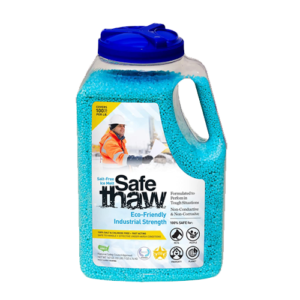
Imagine an ice melt you can put down and never worry about. It won’t harm pets, kids and your property. That’s Safe Thaw. Unlike anything else on the market, Safe Thaw can change how winter affects our planet.
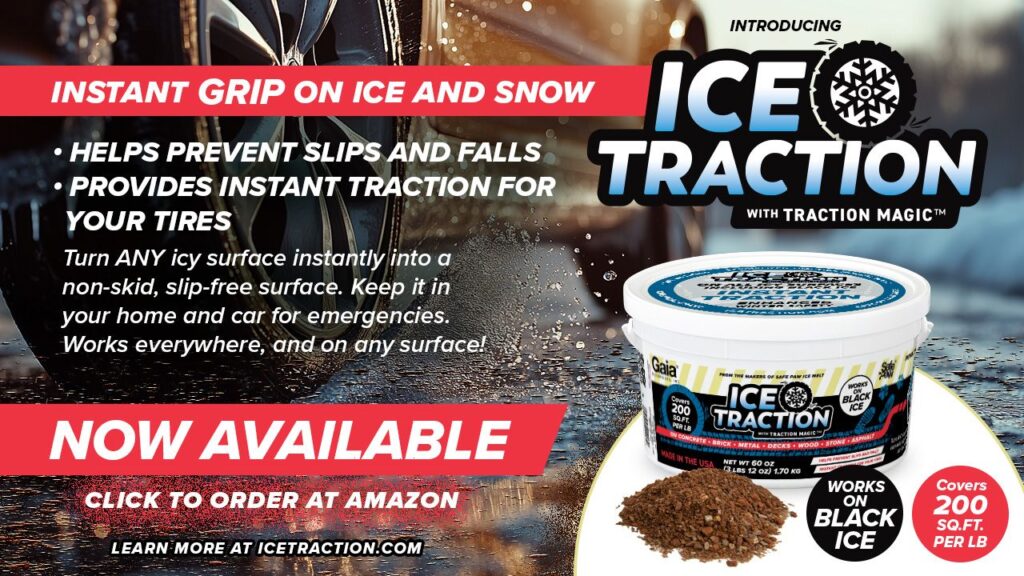
Ice Traction (with Traction Magic™) is your go-to winter solution for driveways, walkways, parking lots — and even black ice on the road. Unlike salt or ice melts, it delivers instant grip on snow and slippery surfaces with no wait time. Just spread and go.
Imagine an ice melt you can put down and never worry about. It won’t harm pets, kids and your property. That’s Safe Thaw. Unlike anything else on the market, Safe Thaw can change how winter affects our planet.
Use the minimum effective amount recommended for the specific product. Clear loose snow first and concentrate treatment on remaining icy areas rather than spreading excess material across the entire driveway.
New concrete can be more vulnerable to winter exposure. Follow the concrete contractor’s curing guidance and the deicer’s surface instructions before application. Mechanical snow removal and traction materials can be used while the surface is still considered vulnerable.
New asphalt may need time to harden before deicers are introduced. Follow the paving contractor’s guidance and the treatment manufacturer’s surface instructions. During the early period, mechanical removal and traction grit may be preferable.
No. Effective working temperature varies by formulation and active ingredients. Check the product specifications before application. When temperatures fall below the product’s effective range, mechanical snow removal and traction materials may become more useful.
No. “Chloride-free” describes the absence of chloride ingredients; it does not by itself guarantee suitability for every surface. Concrete age and condition, asphalt curing, temperature, drainage and application rate should still be considered.
Author: Shweta Saxena
Shweta, a passionate pet lover and environmental advocate, has dedicated herself to promoting winter safety for pets. Living amidst the scenic, snowy landscapes of Canada, she expertly merges her love for animals with her exceptional writing talents. Her commitment is deeply rooted in ensuring the well-being of pets during the harsh winter months.