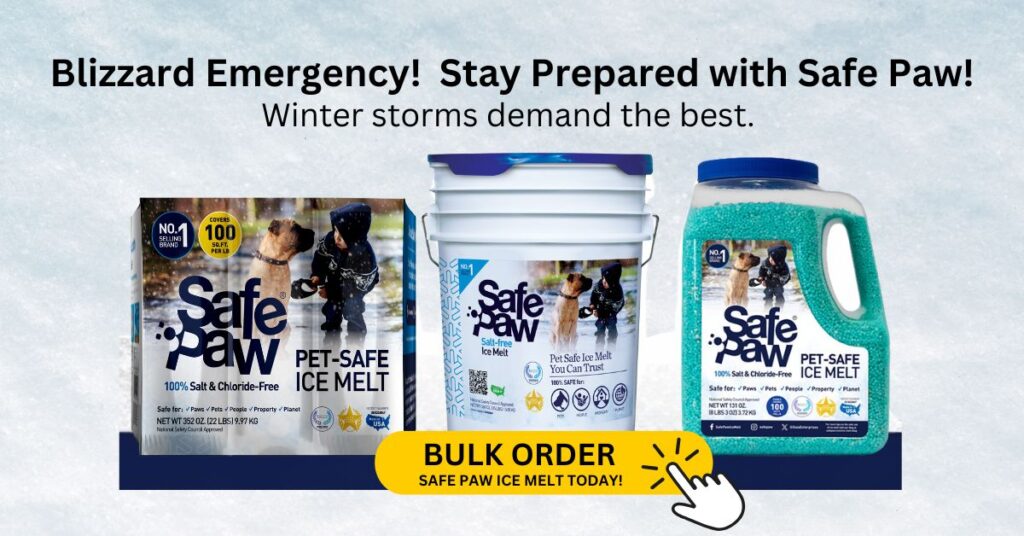



Does Safe Paw Work On New Concrete?
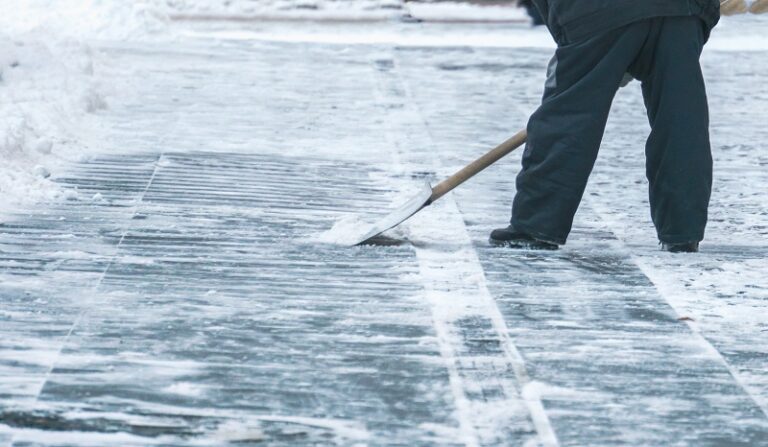
If you are looking for the best new concrete deicer, consider your surroundings, temperatures, and the melting agent’s corrosive qualities. Chloride-free ice melter products are not only safer for your furry friends, but they are also better for the environment and less corrosive to concrete and metal. Because no salt substances are used in these products, your pets and concrete will be far less likely to become sick. Safe Paws ice melter is unlike any other on the market and is safe for new concrete (older than 12 months), pets, and people.
Key Takeaways
- Safe Paw’s manufacturer guidance is to wait until concrete is at least 12 months old.
- Do not use chemical ice melt on concrete during its first 12 months.
- Use shoveling, sweeping, traction grit or non-slip mats on younger concrete.
- Concrete damage depends on moisture saturation, freeze–thaw exposure, surface quality, drainage and the deicer used.
- Chloride-based deicers can increase the risk of scaling, reinforcement corrosion and other deterioration.
- After 12 months, inspect the concrete, follow the product label and test a small area before wider use.
- Avoid claims such as “safe on every type of concrete” unless the statement is supported by an applicable test report.
- Keep all ice-melt products away from pets and prevent unnecessary ingestion, even when a product is marketed as pet-friendly.
FHWA identifies freeze–thaw deterioration and deicer scaling as separate but related concrete-distress mechanisms, while ASPCA guidance warns that common deicers may irritate paws or cause illness after ingestion. (Federal Highway Administration)
Concrete Curing and Safe Paw’s 12-Month Rule
Concrete curing begins immediately after placement and involves maintaining suitable moisture and temperature conditions so the material can develop its intended strength and durability. Concrete continues changing after the initial curing period, and 28 days is commonly used as a standard strength-measurement point.
Safe Paw’s recommendation to wait 12 months is a separate product-use guideline. It is intended to provide a conservative waiting period before the product is applied to recently installed concrete. The 12-month recommendation should therefore be presented as Safe Paw’s guidance—not as a universal industry definition of how long concrete takes to cure.
Add a concrete-age timeline
| Concrete age | Recommended winter treatment |
| 0–30 days | Protect from freezing; follow the installer’s curing instructions; do not apply deicer |
| 1–12 months | Shovel or sweep; use traction grit or mats; avoid chemical deicers |
| More than 12 months | Inspect the surface; test a small area; use a suitable product according to its label |
| Any age with cracks or scaling | Prioritize mechanical removal and seek repair advice before chemical treatment |
Gaia Enterprises Inc. delivers 100% pet-safe and environmentally friendly winter products. Safe Paw, our flagship product, is the #1 selling pet-safe ice melt that does not harm pets, safe if ingested, and safe on all types of concrete.
How Does Concrete Get Damaged Because Of Snow?
The porous concrete absorbs the melted ice and snow (slush) left on the surface. When this liquid (melted snow) re-freezes in the pore structure of the concrete, it expands, causing the surface to pop off and cause scaling. Safe Paw has a long-lasting effect and decreases the freeze-thaw cycle, thus, safeguarding your concrete that is more than a year old.
Ice Melt Safe For New Concrete
Safe Paw has several advantages versus salt when it comes to new concrete. First and foremost, Safe Paw is eco-friendly. It will cause no harm to surround rivers or land once it has completed its task and has been swept away.
How to Protect New Concrete During Winter
- Check the installation date. Do not apply Safe Paw during the first 12 months.
- Remove snow early. Shovel or sweep before snow becomes compacted.
- Avoid metal-edge damage. Use a plastic-edged shovel unless the installer recommends otherwise.
- Add traction without melting. Apply sand, traction grit or a suitable non-slip material.
- Remove standing water and slush. Prevent water from remaining in low areas or cracks.
- Inspect the surface regularly. Look for scaling, cracking, discoloration or sealer failure.
- Use a deicer only after the waiting period. Follow the product label and test a small area first.
Traction products improve grip but do not melt ice; deicers melt or loosen ice but should not replace timely snow removal.
How to Protect New Concrete in Winter: Snow Removal and Ice Control Options
| Method | Pros | Cons | Recommendation |
| Plastic snow shovel | No chemical exposure; immediate removal | Requires physical effort | Recommended |
| Snow blower | Efficient for larger areas | May not remove bonded ice | Recommended when appropriate for the surface |
| Sand or traction grit | Provides immediate grip | Does not melt ice; creates cleanup | Recommended |
| Non-slip mats | No chemical contact with concrete | Covers only limited areas | Useful for steps and entrances |
| Heated outdoor mat | Melts or prevents ice without loose deicer | Costs more and requires power | Useful in small high-risk areas |
| Chemical deicer | Can loosen bonded ice | Not recommended during Safe Paw’s first-year waiting period | Avoid during the first 12 months |
| Metal-edged shovel | Breaks compacted ice | May scratch or chip the surface | Avoid unless approved by the installer |

Bulk Purchase With Safe Paw
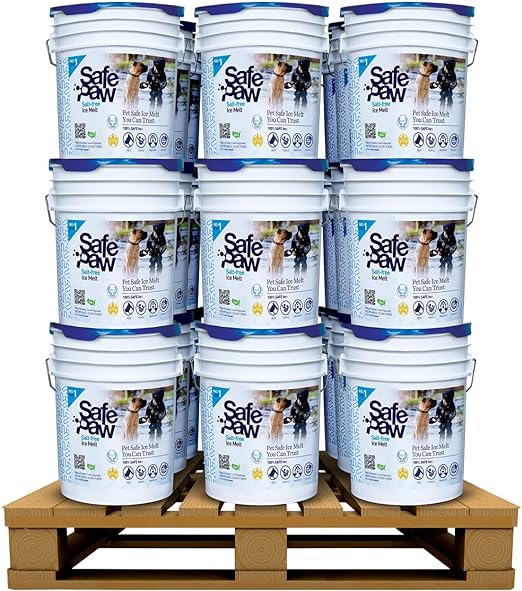
Safe Paw, Child Plant Dog Paw & Pet Safe Ice Melt -35lb, 36 Pails

Safe Paw, Child Plant Dog Paw & Pet Safe Ice Melt -22lb, 100Bboxes
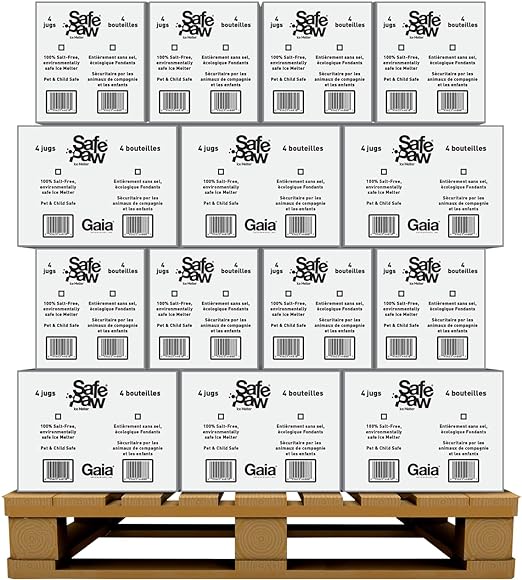
Safe Paw, Child Plant Dog Paw Pet Safe Ice Melt, 160 Jugs

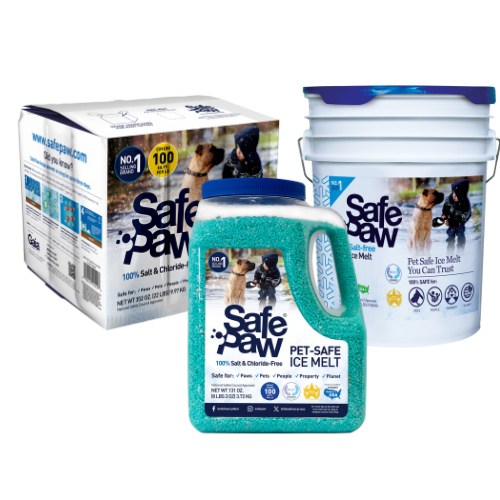


All surfaces, including concrete, rubber, paint, plastic, and pavers, are safe to use. You’ll probably want to use your ice melter on fresh concrete, but you might also need to treat existing concrete, walkways, stone, or other surfaces. You can safely use Safe paw ice melter on these surfaces which are treated and are at least 12 months old.
Ice-Removal Options for Concrete
| Product or method | Contains chloride? | Main concrete consideration | Suitable during first 12 months? | Notes |
| Sodium chloride or rock salt | Yes | May contribute to scaling, chloride penetration and metal corrosion | No | Widely available but not appropriate for sensitive new concrete |
| Calcium chloride | Yes | Strong deicing action, but concentrated chloride exposure can affect concrete and metal | No | Follow surface and product restrictions |
| Magnesium chloride | Yes | Still introduces chloride despite being promoted as gentler than some salts | No | Do not describe it as chloride-free |
| Calcium magnesium acetate | No chloride | Lower chloride-corrosion concern but does not remove every freeze–thaw risk | No | Performance and cost vary |
| Safe Paw | Manufacturer states chloride-free | Manufacturer recommends use only after concrete is more than 12 months old | No | Link the SDS and concrete test documentation |
| Sand or traction grit | No deicing chemical | Does not chemically melt ice | Yes | Adds grip and requires later cleanup |
| Heated mat | No loose deicer | Requires electricity and covers a limited area | Yes | Useful on steps and short walkways |
Best Winter Solution by Situation
| Situation | Best approach | Why |
| Concrete under 12 months old | Shovel plus traction grit | Avoids chemical deicer exposure |
| Concrete over 12 months old with no visible damage | Label-directed chloride-free deicer after a patch test | Aligns with Safe Paw’s stated use restriction |
| Stamped or colored concrete | Ask the installer or sealer manufacturer first | Coatings and sealers may have separate restrictions |
| Cracked or scaling concrete | Mechanical removal and professional assessment | Existing deterioration increases moisture entry |
| Steps and small entrances | Heated or non-slip mats | Provides targeted treatment without loose chemicals |
| Home with pets | Minimize product quantity, clean paws and secure the package | Reduces contact and ingestion exposure |
| Steep driveway | Snow removal plus traction material | Immediate grip may be more important than melting alone |
| Commercial property | Calibrated spreading and a written maintenance plan | Improves quantity control and documentation |
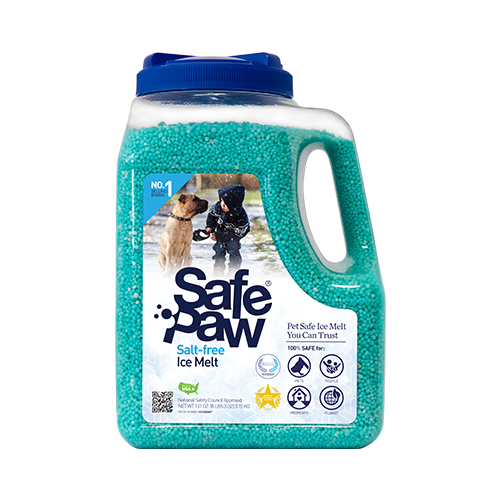
Safe Paw
The Original and the #1 Pet and Child Safe Ice Melt for over 20 years. Guaranteed environmentally safe – will not harm waterways and sensitive wetlands.
When you use Safe Paw, you receive a timed-release action because it’s made of a modified crystalline amide core that’s laced with a glycol admixture. First, the ice begins to melt almost instantly, breaking the surface tension. The product’s core then destabilizes the ice, allowing it to melt more quickly. At the same time, a traction agent is incorporated to make walking on snow and ice simpler for you and your family.
Other Ice Melts
Rock salt or sodium chloride is the most common element in ice melt. It attacks the metal rebar within the concrete. It is equally damaging to the plants, soil, animals, and groundwater in the surrounding area.
Calcium chloride creates an oily layer on the surface, discoloring the concrete. Other dangerous ice melt chemicals include magnesium chloride, ammonium nitrate, and ammonium sulfate. These chemicals damage the concrete and cause scaling and pop-outs.
Calcium magnesium acetate tends to leave a slush behind, making your new concrete more susceptible to freeze-thaw damage.
Ice melts at a much slower rate with potassium chloride compared with other ice dissolvers. It will neither prevent slips or falls nor will it clear snow off the concrete. Both kitty litter and sand can aid with traction, but they are not effective in melting ice.
When it comes to maintaining new concrete during the harsh winter months, it’s crucial to understand how freeze-thaw cycles can damage your surfaces. Whether you’re dealing with a freshly poured driveway or walkway, knowing how to protect new concrete from freezing is key to ensuring its longevity. While there are several ice melt products on the market, you should be particularly cautious when choosing one for newly laid concrete, as it’s more susceptible to damage.
Freeze-Thaw Cycles and Concrete Damage
Freeze-thaw cycles occur when water seeps into the porous surface of the concrete, then freezes and expands as temperatures drop. This expansion creates pressure, leading to cracks and surface scaling. For new concrete, which hasn’t fully cured, the damage can be even more significant. The process of curing takes up to 12 months, during which time the concrete is particularly vulnerable to harsh conditions. That’s why it’s essential to winterize new concrete before the first freeze sets in. Using protective covers and sealing the concrete can help, but avoiding the use of any ice melt for new concrete in its first year is the safest bet.
Safe Ice Melt Options for New Concrete
While no ice melt is fully recommended for new concrete, there are options that work well on older concrete surfaces and could be considered once your new concrete has fully cured. When it’s time to de-ice your driveway after that 12-month period, you’ll want to focus on safe ice melt for concrete surfaces that won’t corrode or damage the structure.
The best ice melt for new concrete (once it’s fully cured) should be non-corrosive and gentle. Many traditional ice melts, like those containing rock salt or calcium chloride, can accelerate damage due to their corrosive properties. Instead, look for non-corrosive ice melt options that won’t exacerbate surface scaling or cracking. These are typically chloride-free and specifically designed to minimize their impact on concrete.
Protect New Concrete from Freezing
Before applying any ice melt, it’s important to take preventative measures. To winterize new concrete, you can use protective barriers like insulated blankets during freezing temperatures, which help maintain a consistent temperature and protect the surface from freeze-thaw cycles. Sealing the concrete with a high-quality sealer is another great way to add a layer of protection. This helps block moisture from penetrating the surface, reducing the risk of freeze-thaw damage.
While you wait for your new concrete to cure, avoid any ice melt for concrete surfaces, as even the gentler options can be too harsh. It’s best to stick to shoveling snow and using non-slip mats or sand for traction. If you need an ice melt for concrete after the one-year mark, always choose a product that is labeled safe ice melt for new concrete to minimize potential damage.
Long-Term Winter Maintenance for Concrete
In the long run, protecting your concrete will involve a mix of proper sealing, maintenance, and choosing the right products. Non-corrosive ice melts, like Safe Paw, are designed to be gentle on concrete while still effectively melting ice. This makes them a great option for those looking to minimize the risk of salt damage or surface erosion after the concrete has cured. Although Safe Paw is a non-corrosive ice melt, even it is not recommended for use on concrete that is less than 12 months old.
In summary, the best ice melt for new concrete is no ice melt at all—at least for the first 12 months. During that time, focus on manual snow removal and protective measures. Once the concrete has fully cured, you can opt for non-corrosive ice melt solutions to keep your surfaces safe during the winter months. Always prioritize your concrete’s long-term health by choosing products that will protect rather than harm.
Conclusion
Most ice melters contain a combination of sodium chloride, potassium chloride, and magnesium chloride. Nausea, increased urination, abnormal blood pressure, dehydration, and neurological difficulties are some of the health issues that can occur in pets after swallowing chloride-based ice melters. Safe paws are safe for people, pets, and ecology.
Get ready for winter with the ONLY Pet Safe Ice Melt you can trust
FAQs
Other Ice Melt Products
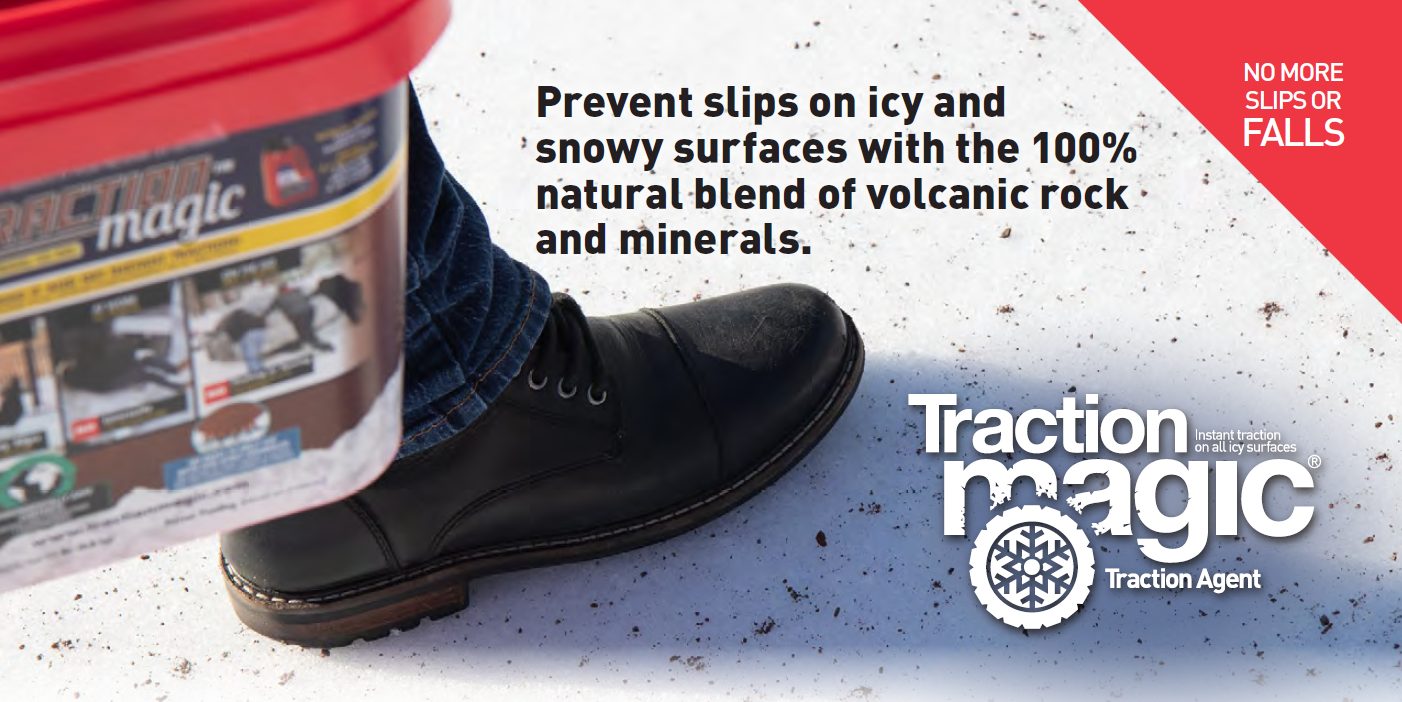
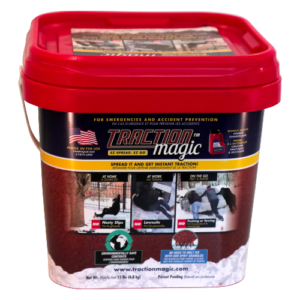
Traction Magic
Stay safe on slippery surfaces with a product that’s 100% natural and safe for pets, people, and your property. Use Traction Magic on sidewalks, steps, or as instant traction for your car.
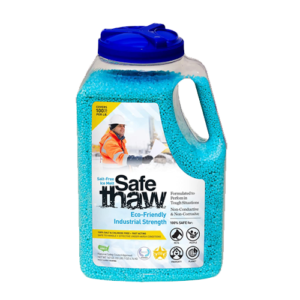
Safe Thaw
Imagine an ice melt you can put down and never worry about. It won’t harm pets, kids and your property. That’s Safe Thaw. Unlike anything else on the market, Safe Thaw can change how winter affects our planet.
Ice Traction (with Traction Magic™)
Ice Traction (with Traction Magic™) is your go-to winter solution for driveways, walkways, parking lots — and even black ice on the road. Unlike salt or ice melts, it delivers instant grip on snow and slippery surfaces with no wait time. Just spread and go.

Safe Thaw
Imagine an ice melt you can put down and never worry about. It won’t harm pets, kids and your property. That’s Safe Thaw. Unlike anything else on the market, Safe Thaw can change how winter affects our planet.