


The Dangers of Potassium Chloride Ice Melt

Many parents, pet owners, and wildlife lovers wrongly assume that potassium chloride rock salt is the same stuff they put on their food, only in larger form. They conclude that if it is safe to eat, it must be safe to use on their sidewalks, steps, and other icy surfaces – Surfaces where children and animals might easily come in contact with and even ingest potassium chloride ice melt.
However, table salt is sodium chloride, NaCl, not potassium chloride, KCl. While the salt you season food with is safe in limited quantities, potassium chloride poses much higher health risks including death. There are other reasons not to use KCl as ice melt, and they are discussed below along with a safe, natural alternative ice melt: Safe Paw.
Fast Facts: Which Ice Melt is Safe for Pets and Concrete?
- Potassium chloride ice melt typically performs only to 12–25°F, making it less reliable during severe cold, according to MPCA performance evaluations.
- Chloride-based deicers—including potassium, calcium, magnesium, and sodium chloride—accelerate freeze–thaw damage in concrete, as noted by the American Concrete Institute (ACI).
- Pets and children often ingest deicer granules accidentally because chloride crystals mimic coarse table salt, according to the Pet Poison Helpline.
- Independent research from the U.S. Geological Survey shows chloride runoff elevates salinity in urban streams, affecting vegetation and aquatic ecosystems.
- Salt-free, chloride-free formulas (e.g., urea/propylene glycol blends) significantly reduce risks to paw pads, vegetation, and reinforced concrete, according to EPA-listed low-toxicity compounds.
What is Potassium Chloride Ice Melt, and How Does it Differ from Table Salt?
Potassium chloride (KCl) is a chemical compound sometimes used as a deicer because it can lower the freezing point of water in moderate winter conditions. Its appearance resembles coarse sodium chloride, which leads many people to mistakenly assume that KCl is similar to table salt.
However, the similarity stops at appearance. While small, medically regulated doses of potassium chloride can be used as supplements, deicing-grade KCl is not purified for ingestion and can contain impurities harmful to pets, children, and wildlife.
You might know that potassium chloride is available as a dietary supplement. Does that make it safe? First, the supplement form is regulated for dose and purity. Potassium chloride salt is not advisable for human consumption and often contains poisonous impurities.
The US Centers for Disease Control and Prevention is one of many health organizations warning against exposure to potassium chloride.
| The Centers for Disease Control and Prevention (CDC) advises against exposure to non-dietary grades of potassium chloride due to potential contaminants and concentration variability. |
| Potassium chloride behaves differently in the body than sodium chloride—excess potassium intake can lead to hyperkalemia, a condition described by the Mayo Clinic as potentially life-threatening due to cardiac involvement. |
Is Potassium Chloride Ice Melt Safe for Dogs and Everyday Winter Use?
Potassium chloride works effectively only down to around 12–25°F, making it a moderate-performance deicer. However, risks arise when people, pets, or wildlife come into direct contact with the pellets.
These concerns highlight why families with pets or children often choose lower-risk alternatives.
Some of the harmful effects of Potassium Chloride are as follows
- Cough and sore throat are caused by inhaling KCl dust (such as during handling or spreading)
- Redness and eye pain (when eyes are touched with hands that have handled KCl or dust gets into the eyes while spreading)
- Nausea, vomiting, weakness, convulsions caused by ingesting potassium chloride
Children and pets like the taste of salt, including Potassium Chloride salt. When they ingest too much of it, serious health risks occur, like stomach ulcers and internal bleeding.
The Mayo Clinic reports that potassium poisoning leads to hyperkalemia, a condition that results in diminished kidney function and cardiac failure when acute. Did you know that potassium chloride is used in lethal injections to stop the heart?
Pets are susceptible to all these dangers and more common ones too. When they walk on KCl ice melt and other rock salt products, the skin on their paws can be irritated and even burned, resulting in a painful rash or blistering. If your dog is exposed to it while on your daily walk around the neighborhood, rinse off its paws when you get home, and never let your dog stop to lick salt off the ground. As potassium chloride is not for dogs.
When winter finally comes, it can be a real challenge to strike a balance between safety and environmental responsibility when de-icing. Do you ever think about keeping your furry friends safe on those slippery walkways without damaging the environment around your home?
Potassium chloride exposure can irritate skin, eyes, and mucous membranes, especially when handled in granular form.
Pet-safe Deicer
For pet lovers, it is not just ice; it is what melts ice. Pet-safe deicers are essential which require no harmful salts. A variety of defreezers function well but also have potential risks if ingested through paws or fur licking. Look for pet-safe ice melt products that indicate this in their descriptions and save yourself from too much anxiety. When was the last time you read all those labels detailing?
Winter Safety
Deicing alone is not enough to guarantee safety during winter times. Winter safety involves preparedness and preventing accidents. Were you aware that applying deicer before the storm begins can reduce overall ice buildup? Also regular inspection of walking paths helps reduce any accidents happening there. What are you doing to keep these areas free from ice?
De-Icing Solution
Choosing the right deicing solution is like threading through a minefield. Each type has its advantages and disadvantages with options ranging from rock salt to more sophisticated blends as examples. Moreover, how do these choices affect your immediate environment? Take potassium chloride for example, it’s ideal – being effective at low temperatures compared to most salts. Does this sound unfamiliar?
Potassium Chloride Benefits
Speaking of potassium chloride, it has less corrosive effects than other salts such as sodium chloride; hence many people prefer using it as their choice for potassium chloride ice melt in order to protect concrete floors and metals from damage caused by harsh chemicals in salts. But they’re also infamous for irritating pets’ paws and plants. t can cause irritation to the skin, eyes, and mucous membranes, which can lead to burning or stinging. It may also be harmful if ingested; symptoms include vomiting, diarrhea, and dehydration. Large amounts are fatal.
To go through these icy conditions successfully calls for having a good sense of equilibrium. Safety and sustainability can still be achieved without sacrificing the effectiveness of deicing products. Make smart decisions such as buying Safe Paw so that you may confront winter’s demands head-on while being gentle to your pets, flowers and home. How do your present selections fare about this?
Salt Free Ice Melt
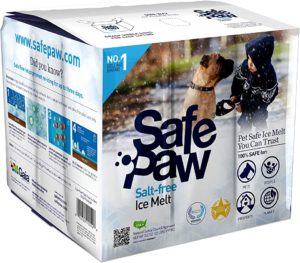
Pet Friendly Ice Melt – Safe Paw!
The Original and the #1 Child and Pet Safe Ice Melt for over 20 years. Guaranteed environmentally safe – will not harm waterways and sensitive wetlands.
Performance Audit: Potassium Chloride vs. Calcium Chloride Ice Melt
Potassium Chloride Ice Melt:
It has pale white irregular crystals that leave behind a white residue. The deicing speed is slower than other ice melts. It works well at 12 degrees Fahrenheit. Potassium chloride is not safe for concrete as it increases the frequency of the freeze-thaw cycle, thus damaging the surface.
Safe Paw – A Safe and Effective Ice Melt:
Pet owners and parents breathe a sigh of relief when they learn about Safe Paw ice melt. Not only is it safe for pets, people, and the planet, it works at a lower temperature and melts ice more effective than rock salt like potassium chloride. This reduces the risk of dangerous slips and falls on icy surfaces, the main reason to use ice melt in the first place.
Safety First: Safe Paw is recognized as safe for people, pets, and the planet, as these recommendations show:
- United States governmental agencies awards
- Included in the Green Catalog: 1000 Best Things for the Earth
- Parent Tested Parent Approved (PTPA) Green Product Seal of Approval
Secure Footing Too: What good is ice melt if it doesn’t work? While KCl rock salt becomes ineffective in very cold temperatures, Safe Pet effectively melts ice at any temperature:
- The outer layer liquefies when it contacts the ice, and this releases a proprietary, safe ice-melting formula that breaks up the slick surface of the ice
- The inner core of amide, a safe and proven ice melter, can then penetrate deep into the ice to destroy its structure
- The blend includes a safe level of glycol, a substance used in deicing products and to prevent freezing
- When the ice is melted and the moisture evaporates, a coating of Safe Paw is left behind to prevent icy surfaces when the next storm comes
Pet Safe Ice Melt – Safe Paw
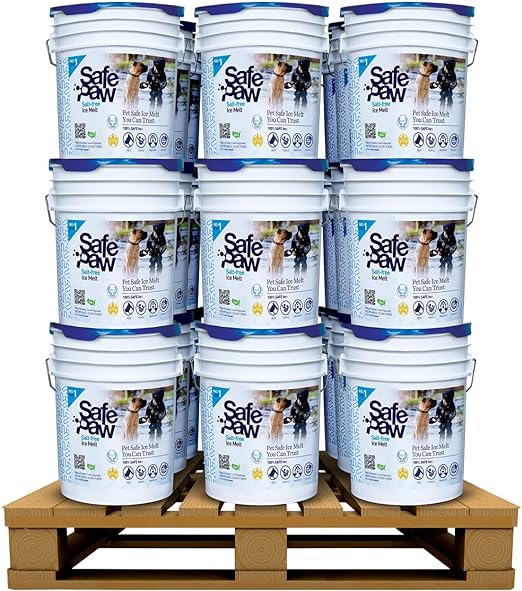
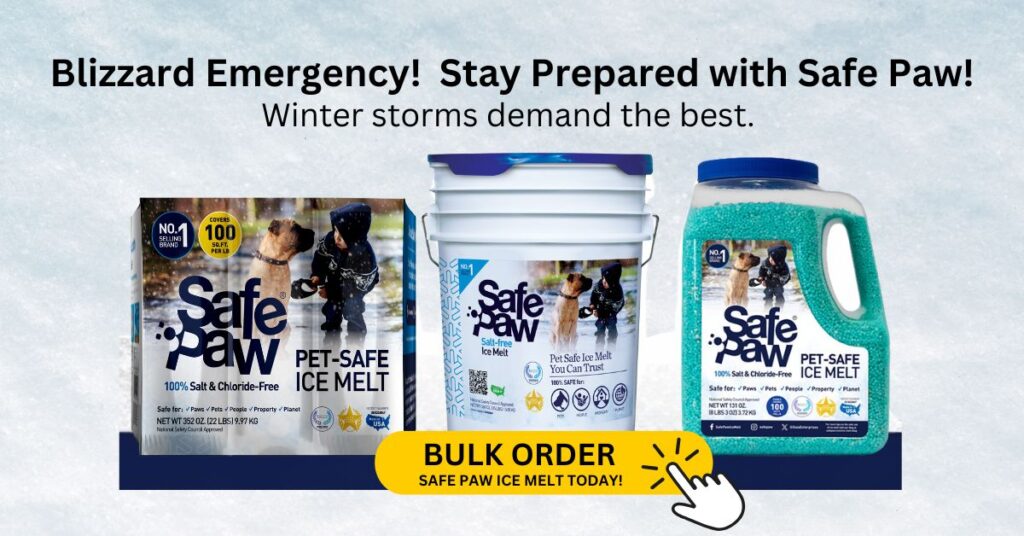
Safe Paw, Child Plant Dog Paw & Pet Safe Ice Melt -35lb, 36 Pails

Safe Paw, Child Plant Dog Paw & Pet Safe Ice Melt -22lb, 100Bboxes
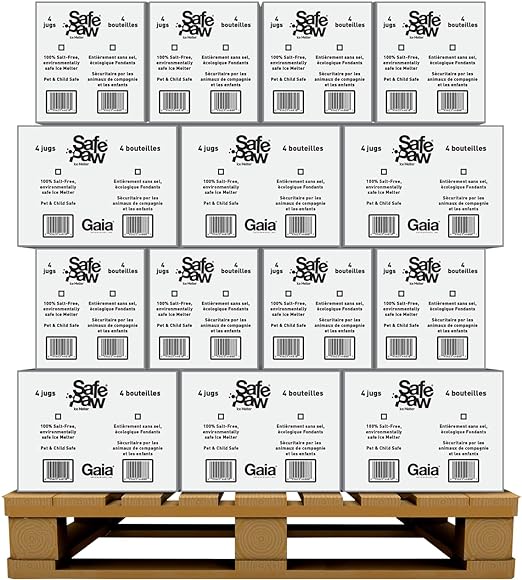
Safe Paw, Child Plant Dog Paw Pet Safe Ice Melt, 160 Jugs

Pet Products Powered By EzPz.pet
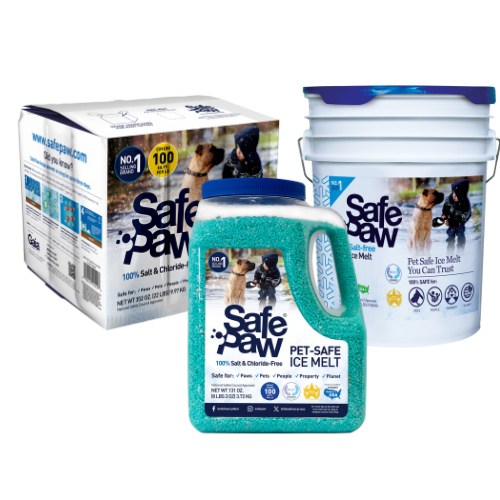


Safe Paw is the top-selling ice melt brand and boasts of prestigious awards and recommendations. It is recommended by pediatricians, veterinarians and animal hospitals, animal shelters and humane societies, and wildlife experts. It is the right choice for pets, kids, and the planet!
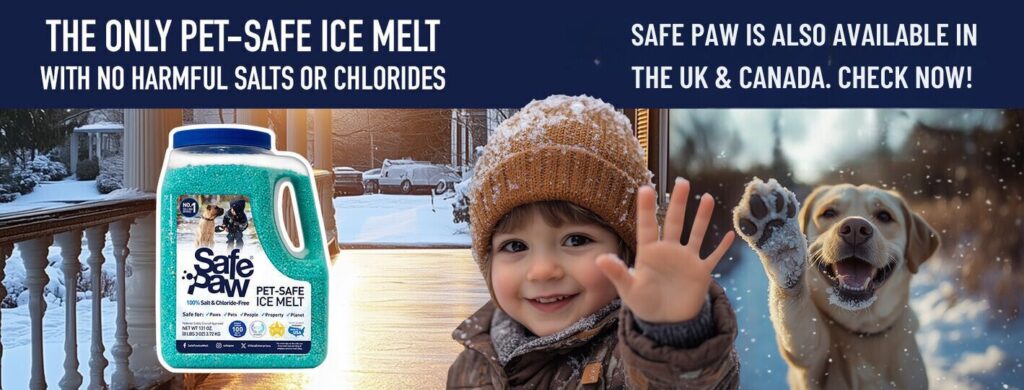
Find a Safe Paw retailer today. There’s one in your neighborhood, and Safe Paw can be ordered online too. It’s the right choice for pets, kids, and the planet!
Sodium Chloride:
Many of the most popular salt-based ice melt on the market, such as Safe Step 8300 and Road Runner ice melt, have sodium chloride as the main ingredient. While these rock salt products melt ice in moderately cold conditions, they pose serious health risks to family members, pets, soil, animals, water bodies, and infrastructure.
Hypernatremia can develop in dogs who consume large amounts of this ice melt. It happens when the salt level in the blood rises. It can cause dehydration, tachycardia, tachypnea, and mortality in severe cases.
When salt is present in high concentrations in the soil, it absorbs water quickly and competes with plants for moisture. Excess salt in the soil leads vegetation to suffer from drought-like conditions.
Increased salt levels in drinking water are dangerous for people who are already suffering from high blood pressure. The use of salt-based ice melt is one of the causes for this.
Sodium chloride, sometimes known as rock salt, is one of the most poisonous components that can harm our pets. When using rock salt to melt the ice around your home, it is vital to keep an eye on your pets. It is troublesome to keep track of this when you have an energetic pet.
Salt pellets may become trapped between the paw pads of pets walking on a pavement that has been treated with rock salt to remove ice. It could create inflammation or burns on or between your pet’s pads, which can be extremely painful.
Potassium Chloride vs Rock Salt
The use of potassium chloride for ice melting is limited due to its endothermic qualities and the lowest effective temperature of +25°F (-4°C). It has a low melt capability and works slower than calcium chloride, rock salt, and magnesium chloride. Corrosion and environmental effects are moderate, as they are with other chloride materials.
Rock salt is used owing to its ease of availability and low cost. It absorbs heat from the environment to form an ice-melting brine. When temperatures are low then it becomes ineffective and sluggish.
Rock salt, like all chloride-based compounds, is corrosive in nature. If rock salt deicer is applied in large quantities straight to grass or vegetation, it can injure lawns and other plants.
How do KCl, NaCl, CaCl₂ and salt-free ice melts compare?
| Ice Melt Type | Minimum Effective Temperature | Impact on Concrete & Metals | Pet Safety Notes | Marketed as “Pet-Friendly”? | General Notes |
| Potassium Chloride (KCl) | ~12–25°F | Moderate corrosivity; increases freeze–thaw cycles | Can irritate paws; not intended for ingestion | Sometimes labeled as “plant-safe” | Slower melting in cold weather |
| Sodium Chloride (NaCl) | ~15°F | High corrosivity; increases concrete scaling | Can burn paws; harmful if ingested | Rarely | Low cost, heavy environmental load |
| Magnesium Chloride (MgCl₂) | ~5°F | Moderate corrosion; contributes to chloride runoff | Can irritate skin/paws | Marketed as safer but still chloride-based | Faster melting than KCl |
| Calcium Chloride (CaCl₂) | ~–20°F | Heat release may affect surfaces | Can irritate paws and GI tract | Sometimes | Strong performance in extreme cold |
| Salt-Free / Chloride-Free (Safe Paw®) | –2°F | Non-corrosive to concrete and metal | Designed for pet and child safety | Yes — genuinely chloride-free | Leaves anti-slip barrier after melting |
Pet Safe Ice Melt – Safe Paw
Safe Paw, Child Plant Dog Paw & Pet Safe Ice Melt -35lb, 36 Pails
Safe Paw, Child Plant Dog Paw & Pet Safe Ice Melt -22lb, 100Bboxes
Safe Paw, Child Plant Dog Paw Pet Safe Ice Melt, 160 Jugs
Pet Products Powered By EzPz.pet
How Does Potassium Chloride Affect Concrete, Pets, And Plants?
So, the conclusion of Potassium Chloride vs Salt, is that they both are dangerous for pets, the environment, and concrete. Their regular use and contact can also result in skin irritation, eye soreness, and other health hazards.
Does Potassium Chloride Melt Ice Without Damaging Concrete or Plants?
Concrete deterioration occurs because:
- Chlorides increase pore water saturation
- Freeze–thaw pressure expands cracks
- Corrosion compromises embedded rebar integrity
- Plants experience drought-like stress due to osmotic imbalance in the soil.
| The American Concrete Institute reports that chloride intrusion accelerates steel reinforcement corrosion and surface scaling due to freeze–thaw saturation. |
| Chloride salts elevate soil salinity, reducing water uptake, as confirmed in USDA soil salinity guidelines. |
Finding a Truly Pet-Safe Ice Melt: The Benefits of Chloride-Free Formulas
To get the most out of your salt free ice melt, keep it indoors and at room temperature. Before the winter rains come, spread it on the surfaces prone to suffer from ice accumulation.
If your car becomes stuck in the snow or ice, it can be utilized as a traction aid. To boost grip, clean the ruts and sprinkle the ice melt pellets around the tires. There are other natural products available in the market, to provide you traction. You can also use your solid ice melt for giving you instant traction and to avoid any slip and fall incidents.
You would not need as much this ice melt as you would with other homemade or cheap salt based ice melting products. Natural salt-free ice melt is a safe and effective product. Using too much ice melt may cause the grass to brown or surfaces to become temporarily colored. If this happens, cut back on the amount of product you are using. Wait for some time and if the effects still persists follow the procedures given below:
- If your grass starts to turn brown, water it and do not fertilize it.
- By the end of the spring, the color should have returned.
- When exposed to water and sunlight, surface coloration caused by usage fades with time.
- Use OxyClean or a comparable solution to hasten the fading process.
The natural salt-free ice melts are non-toxic products that are also good for the environment and will not damage your surroundings.
Salt granules trapped in paw pads can contribute to cracking, burns, and discomfort during winter months.
Where Can I Get A Natural Ice Melt?
100% salt free Safe Paw ice melt is easily available in the United States and Canada.
You can get it from
- Amazon.
- Veterinary clinics
- Stores that sell pet supplies
- Chain grocers and drugstores
Why Are So Many “Pet-Friendly” Ice Melts Still Chloride-Based?
Many winter products labeled “pet-friendly” or “safer for pets” still rely on magnesium chloride or potassium chloride, not because they are harmless, but because they are perceived as less severe than rock salt.
Manufacturers may use reduced concentrations or buffer coatings, allowing them to market these formulas as “gentler,” even though chloride is still present. This is why choosing products that are truly salt-free and chloride-free is essential for households prioritizing pet and child safety.
| The ASPCA lists sodium, calcium, and magnesium chloride as common winter hazards for dogs and cats due to irritation and toxicity risks if ingested. |
The Truth About “Pet-Friendly” Labels: Why Many Still Contain Harmful Salts
Even when a deicer is labeled as “gentle on paws” or “pet-friendly,” it may still contain chloride salts (like magnesium chloride) that pose risks to your pets.
Consider this scenario: A homeowner uses a deicer advertised as “gentle” that contains magnesium chloride. While the concentration might be lower than traditional rock salt, after repeated exposure, the dog develops redness and irritation between its paw pads, prompting constant licking.
The issue isn’t typically deception in labeling; it’s a matter of chloride exposure. All chloride salts share common mechanisms of harm:
- Dermal Irritation: Concentrated salts extract moisture from paw pads, leading to dryness, cracking, and chemical burns when granules get lodged between the toes.
- Ingestion Toxicity: Licking paws after a walk can lead to the accidental ingestion of chloride salts, causing gastrointestinal upset (vomiting and diarrhea).
The Solution: Moving Beyond Chlorides
The only way to completely eliminate the risk of irritation and ingestion toxicity is by switching to a salt-free, chloride-free deicer (such as those based on urea or propylene glycol). This change resolves the irritation because the source of chemical and osmotic stress is entirely removed.
How to Identify Safety Red Flags in Magnesium and Sodium Chloride Ice Melts
Because winter safety labeling can be vague, reviewing a Material Safety Data Sheet (MSDS) offers clear insight. Here’s what to check:
- Look for any listed chlorides (sodium, calcium, magnesium, potassium).
- Look for Corrosive to metals or causes skin irritation hazard statements.
- Check whether the product is listed as toxic if ingested.
A true salt-free ice melt will not list chloride compounds anywhere on the MSDS.
| OSHA requires chloride-based deicers to list potential hazards including skin irritation, eye irritation, and ingestion toxicity when applicable. |
Why Are Chloride-Free Ice Melts Becoming Preferred for Winter Safety?
Traditional chloride deicers can:
- Leave harmful residues on surfaces
- Track indoors
- Contribute to long-term concrete degradation
- Cause paw irritation or ingestion hazards
Salt-free options provide:
- Gentler surface contact
- Consistent melting without corrosive effects
- Safer conditions for pets and wildlife
What are the Best Safer Alternatives to Potassium Chloride Ice Melt?
Safer formulations typically include:
- Urea-based blends
- Propylene glycol blends
- Dual-action traction + melt agents
- Amide-based ice penetration technology
Salt-free options are preferred by households with:
- Young children
- Pets
- Delicate landscaping
- Newly poured or decorative concrete
| Propylene glycol is listed by the EPA as a low-toxicity compound suitable for controlled deicing applications. |
| Urea-based deicers are non-corrosive to concrete and metal, as documented in ASTM corrosion evaluations. |
How Do Potassium Chloride, Rock Salt, Calcium Chloride, and Salt-Free Ice Melts Compare?
Safe Paw® Ice Melt is a chloride-free, salt-free deicer developed by Gaia Enterprises Inc., founded by chemical engineer Steve Greenwald. It was formulated as an alternative to chloride-based ice melts—including potassium chloride, sodium chloride, calcium chloride, and magnesium chloride—with emphasis on pet safety, concrete longevity, and reduced environmental runoff.
These conclusions come from Gaia Enterprises’ 30-plus years of developing pet-safe deicing solutions and carefully reviewing MSDS documentation for typical ice-melt ingredients.
Conclusion: Protecting Your Home with Genuinely Safe Ice Melt for Pets
In a world where the quick fix often wins, it’s easy to overlook the long-term costs of using harsh ice melt chemicals. But when you choose pet safe salt like Safe Paw, you’re investing in a future where winter safety doesn’t come at the expense of your family, pets, concrete, or environment. As snowflakes begin to fall—and you check your weather app wondering how low does the temperature have to be to snow—rest easy knowing Safe Paw is working beneath your feet. It’s not just about melting ice; it’s about melting away the risks that come with it. If safety, sustainability, and strength are on your checklist this winter, Safe Paw is the natural choice.
FAQ: Frequently Asked Questions About Potassium Chloride and Winter Safety

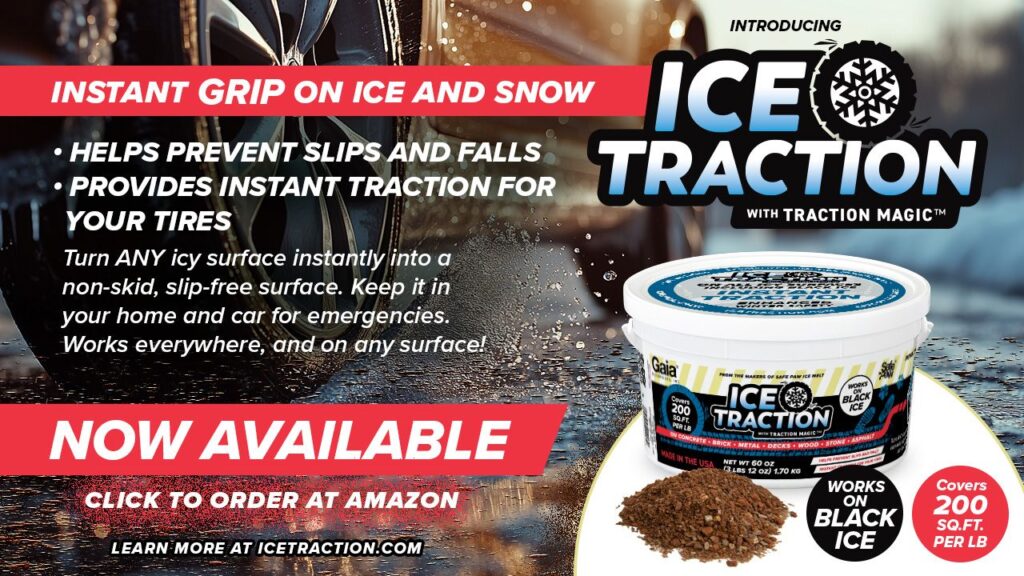
Stay safe and confident this winter with Traction Magic!
This innovative, 100% natural product offers instant traction on any icy surface. Whether you’re navigating your sidewalk, steps, or driveway, Traction Magic helps you stay upright and prevents falls.
Try Our Other Winter Safety Products
Walk On Ice
Prevent slips at home, work or on the go, The handy disposable canister can be taken everywhere, with the same 100% naturally occurring minerals that provide instant traction on ice or snow.
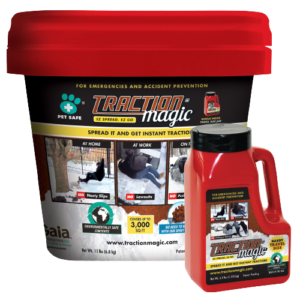
Traction Magic
Stay safe on slippery surfaces with a product that’s 100% natural and safe for pets, people, and your property. Use Traction Magic on sidewalks, steps, or as instant traction for your car.
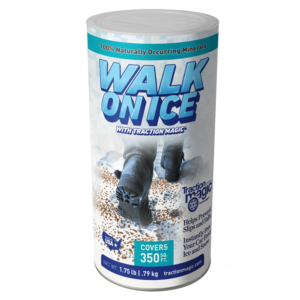
Walk On Ice
Prevent slips at home, work or on the go, The handy disposable canister can be taken everywhere, with the same 100% naturally occurring minerals that provide instant traction on ice or snow.
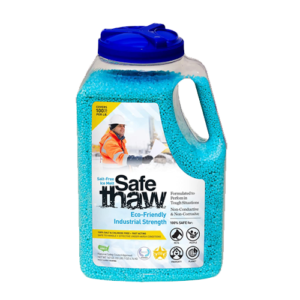
Safe Thaw
Imagine an ice melt you can put down and never worry about. It won’t harm pets, kids and your property. That’s Safe Thaw. Unlike anything else on the market, Safe Thaw can change how winter affects our planet.