


Why Your Winter Ice Melt is Tainting Your Town’s Water
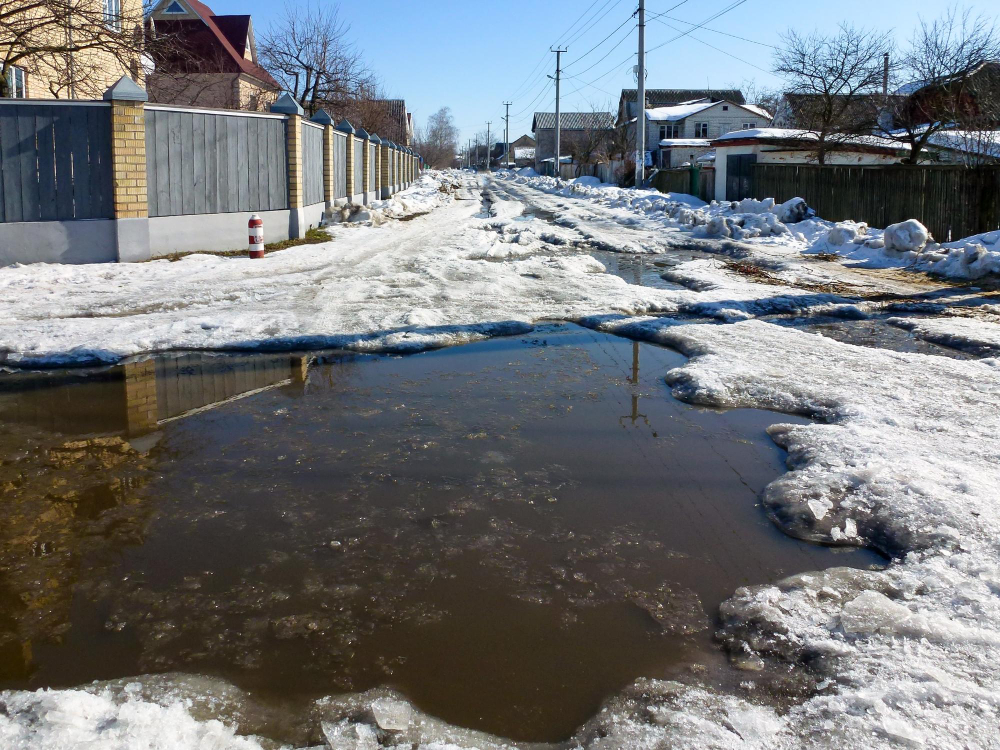
The ice forms, the sidewalks become treacherous, and out comes the bag of rock salt. You’re doing your part to keep people from slipping, but have you ever stopped to wonder where all that bright blue or white slush goes once the snow melts?
It melts, runs off the pavement, enters the storm drains, and eventually makes its way into your local creeks, rivers, reservoirs, and groundwater. That bag of salt you used to clear your front porch isn’t just disappearing; it’s becoming a pervasive, slow-motion pollutant.
This November 3rd is One Health Day—a global movement recognizing that the health of people, animals, and the environment are inextricably linked. There is no clearer example of this connection than the widespread environmental crisis caused by common chloride ice melts. Let’s explore why the salt you sprinkle is fundamentally changing your town’s water and why choosing a responsible alternative is critical for the entire community.
The Invisible Pollution: Chloride Saturation
Most conventional ice melts are composed of various chloride salts (sodium chloride, calcium chloride, magnesium chloride). These chemicals don’t evaporate or break down; they dissolve and become permanent pollutants in water systems.
- Rising Chloride Levels: Studies across the U.S. have confirmed that chloride concentrations in many urban and suburban streams and lakes are steadily rising due to road and sidewalk salt usage. The U.S. Geological Survey (USGS) reports that road salt application is a primary cause of increasing chloride levels in streams, affecting drinking water sources and aquatic ecosystems across the Northeast and Midwest.
- Permanent Contaminant: Once salt enters a body of water, it’s virtually impossible to remove. Standard water treatment processes can’t filter out chloride, meaning it stays in the water system permanently, gradually increasing salinity.
Chloride salts from winter de-icers are permanent water contaminants that standard municipal water treatment processes cannot filter, leading to rising salinity in freshwater resources.
Pet-Friendly Ice Melt
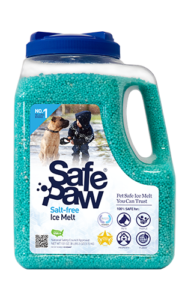
Pet Safe Ice Melt – Safe Paw
The Original and the #1 Pet and Child Safe Ice Melt for over 20 years. Guaranteed environmentally safe – will not harm waterways and sensitive wetlands.
Why This Matters: The ‘One Health’ Impact
The increasing salinity of fresh water impacts three main areas crucial to the One Health initiative:
1. Environmental Health (Aquatic Life)
Aquatic organisms, particularly amphibians (like frogs and salamanders) and certain fish species, cannot tolerate high salt levels.
- Toxicity Thresholds: Increased salinity disrupts the osmoregulation (the regulation of water and salt balance) of aquatic creatures. Research has shown that even slight increases in salt concentration can hinder the development of larval stages in amphibians, leading to population declines.
- Stratification: Salty water is denser. When salty runoff enters deep lakes, it sinks to the bottom and can prevent the usual seasonal mixing (stratification) of the water, which can starve the lake bottom of vital oxygen, killing life there.
2. Pet Health (Direct Ingestion)
The same contaminated runoff poses a direct risk to your pet. Pets, especially dogs, are often tempted to drink from salty puddles or snowmelt, leading to gastrointestinal distress or, in serious cases, hypernatremia (salt poisoning). The highly concentrated runoff is more dangerous than a tiny bit of salt residue.
3. Human Health (Infrastructure & Taste)
While chloride levels typically don’t reach dangerous levels for most people’s health, they severely impact water quality and infrastructure.
- Corrosion: High chloride levels are corrosive to municipal water pipes and appliances, requiring costly infrastructure maintenance and replacement.
- Taste: High salinity gives drinking water a noticeable, unpleasant salty taste, affecting community perception of water quality.
The Responsible Solution: A Non-Corrosive Community
Since we cannot stop the ice, we must change the product we use. The solution is switching to truly chloride-free ice melts.
These safer alternatives use non-salt compounds, often based on ingredients like propylene glycol or urea, which melt ice without introducing corrosive, permanent chloride pollution into the environment. They also eliminate the primary risk of chemical burns on your pet’s paws.
Embrace products like Safe Paw, which are specifically formulated to be non-toxic and non-corrosive. By using responsible products on your property, you’re not just protecting your pet’s health; you’re actively safeguarding your local waterways and contributing to the overall health of your entire community—a true demonstration of the One Health ideal.
This winter, choose safety not just for your sidewalk, but for your town’s water supply.
FAQs
Other Ice Melt Products
Walk On Ice
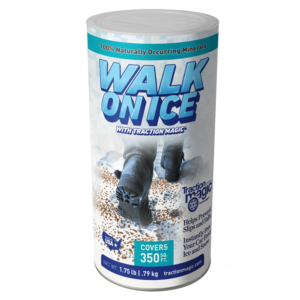
Prevent slips at home, work or on the go, The handy disposable canister can be taken everywhere, with the same 100% naturally occurring minerals that provide instant traction on ice or snow.
Safe Thaw
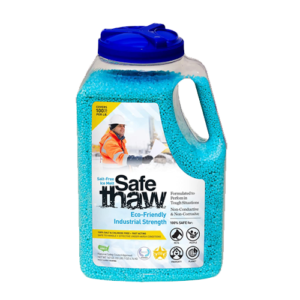
Imagine an ice melt you can put down and never worry about. It won’t harm pets, kids and your property. That’s Safe Thaw. Unlike anything else on the market, Safe Thaw can change how winter affects our planet.