



Type Of Ice Melt And What To Choose
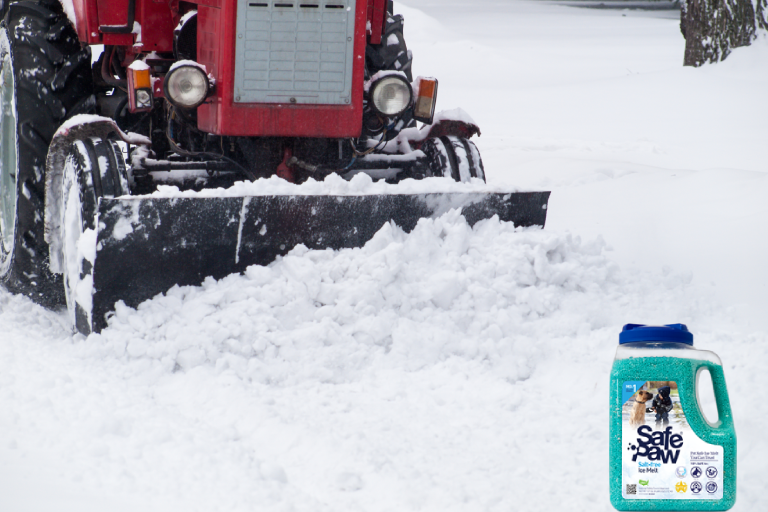
What Type of Ice Melt Should You Choose? Quick Answer
The right ice melt depends on temperature, surface type, pet exposure, environmental considerations, and whether you need to melt ice or simply improve traction. Common deicers include sodium chloride, calcium chloride, magnesium chloride, calcium magnesium acetate, and chloride-free formulations. Each has different cold-weather performance, corrosion potential, environmental effects, and exposure considerations, so no single type is ideal for every situation.
FHWA distinguishes several common deicing chemicals and emphasizes that performance depends on pavement temperature, precipitation, concentration, and application conditions. (fhwa.dot.gov)
Key Takeaways for Choosing an Ice Melt
- Sodium chloride or rock salt is common and economical but becomes less effective as temperatures fall.
- Calcium chloride dissolves exothermically and has different low-temperature behavior from sodium chloride.
- Magnesium chloride is another chloride-based deicer with different freezing-point characteristics.
- Calcium magnesium acetate (CMA) is a non-chloride alternative with different performance and cost considerations.
- Chloride-free ice melts avoid chloride salts, but individual formulations still need to be evaluated separately.
- Pet exposure matters because dogs may ingest deicer residue while licking their paws.
- Concrete age and condition matter when choosing any winter treatment.
- A traction product and an ice melt do different jobs: traction improves grip, while a deicer changes the freezing behavior of water. (fhwa.dot.gov)
Ice melts are easy to find. They’re in every hardware store, grocery store and even gas station. There are so many types of ice melts available—it can be hard to decide which one is right for you.
There are many types of ice melt, and each has its own pros and cons. If you’re looking to make the most of your time and money, it’s important to know what each type is and how it works.
And if you are wondering at what temperature it snows, then we’ll discuss that in this article.
Types of Ice Melt and How They Differ
Sodium Chloride / Rock Salt
Sodium chloride is one of the most commonly used deicers. It is readily available and economical, but its practical effectiveness decreases as pavement temperatures fall. It also contributes sodium and chloride to runoff. (fhwa.dot.gov)
Calcium Chloride
Calcium chloride dissolves readily in water and releases considerable heat during dissolution. Its chemical freezing-point characteristics differ from sodium chloride, but actual field performance still depends on concentration, pavement temperature, moisture, and application conditions. (fhwa.dot.gov)
Magnesium Chloride
Magnesium chloride is another chloride-based deicer. Like other chlorides, its effectiveness depends on concentration and temperature, and its use contributes chloride to the surrounding environment. (fhwa.dot.gov)
Calcium Magnesium Acetate
Calcium magnesium acetate, or CMA, is a non-chloride deicing material. Its corrosion, performance, and cost characteristics differ from conventional chloride salts, so it should be evaluated according to the specific winter application.
Chloride-Free Ice Melt
Chloride-free ice melts form a separate category from conventional chloride salts. Because formulations vary, evaluate the actual ingredients, application instructions, surface guidance, and available product documentation rather than assuming all chloride-free products behave identically.
For Safe Paw specifically, the current FAQ describes it as chloride-free. (safepaw.com)
Eco-Friendly Ice Melt
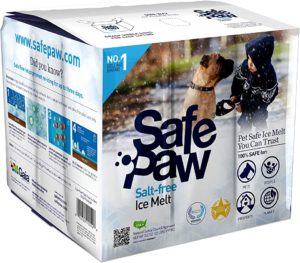
Pet Friendly Ice Melt – Safe Paw!
The Original and the #1 Child and Pet Safe Ice Melt for over 20 years. Guaranteed environmentally safe – will not harm waterways and sensitive wetlands.
Types Of Ice Melt And What To Choose
Calcium chloride
Calcium Chloride: Pros and Cons
Pros
- Dissolves readily in water
- Releases heat while dissolving
- Has different low-temperature characteristics from sodium chloride
- Available in solid and liquid forms
Cons / Limitations
- Contains chloride
- Can contribute to environmental chloride loading
- Can irritate tissue if improperly handled or ingested
- Chloride exposure can contribute to metal/infrastructure corrosion
- Actual working performance varies with temperature, concentration, and conditions
ASPCA notes that calcium chloride, magnesium chloride, and potassium chloride can cause gastrointestinal irritation when ingested by pets. (aspca.org)
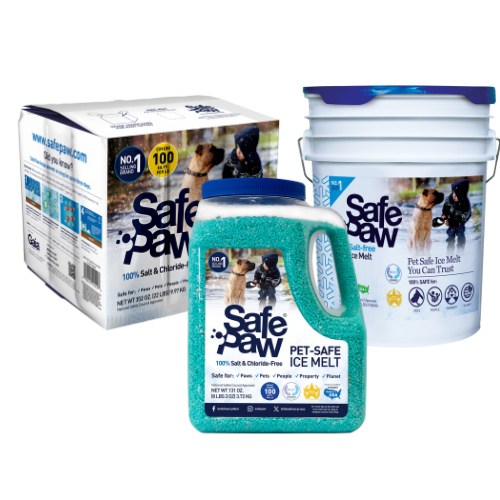
Pet Safe Ice Melt – Safe Paw
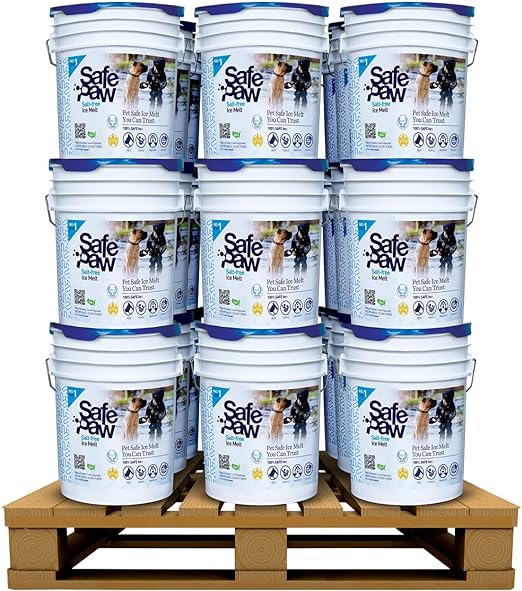
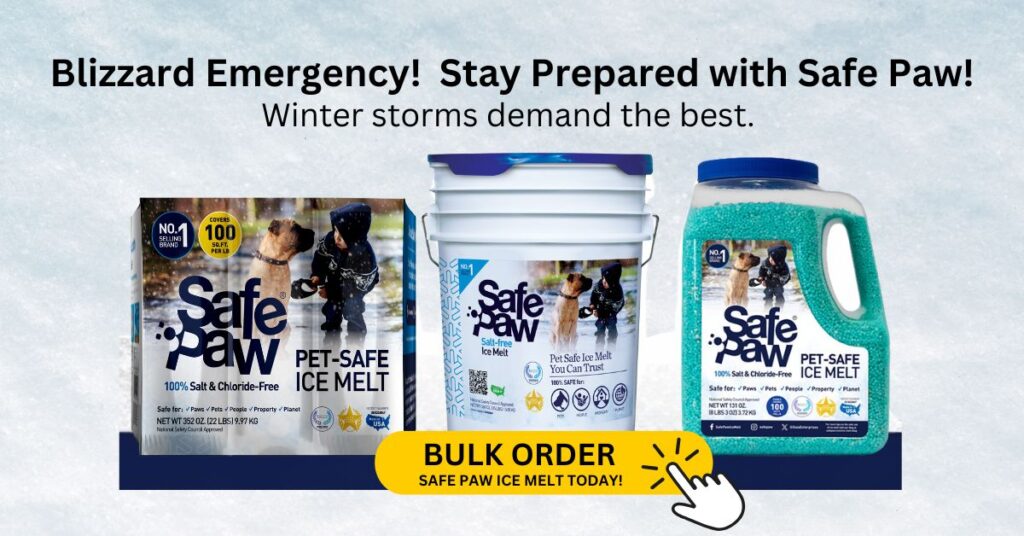
Safe Paw, Child Plant Dog Paw & Pet Safe Ice Melt -35lb, 36 Pails

Safe Paw, Child Plant Dog Paw & Pet Safe Ice Melt -22lb, 100Bboxes
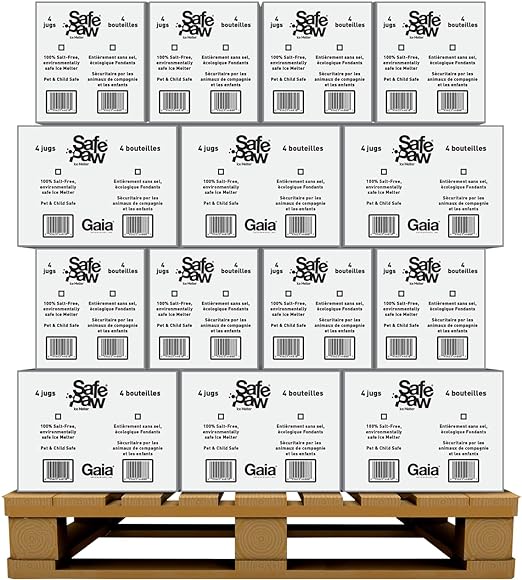
Safe Paw, Child Plant Dog Paw Pet Safe Ice Melt, 160 Jugs

Pet Products Powered By EzPz.pet


Salt
Salt, on the other hand, eats away at more than just car bodies.
Rock salt also has sodium as the main ingredient. Despite it being a nutritional necessity, it has a bad reputation regarding health, owing to concerns about hypertension.
Hypertension is a leading cause of death and cardiovascular disease.

Potassium Chloride ice melt:
It is similar to the potassium-based fertilizer formula. It has a melting point of between 12o F to 25 o F. It is one of the most expensive ice melt products on the market.
It is exothermic and gets affected by the freeze/thaw cycle during the day which may cause your concrete to develop cracks. It is not entirely suitable for your vegetation either. It is not pet-friendly and may cause them slight discomfort if they ingest the product accidentally.
To avoid these health issues, let us choose a safe ice melt solution. It will not only keep everyone safe but is also gentle for plants and pets. It gives a long-lasting effect without damaging your surfaces.
Types of Ice Melt: Pros and Cons of Common Winter Deicers
| Type of Ice Melt | Main Advantages | Main Limitations |
| Sodium chloride / rock salt | Widely available, economical | Reduced effectiveness at low temperatures; chloride runoff and corrosion concerns |
| Calcium chloride | Dissolves exothermically; different low-temperature behavior | Chloride-based; tissue, corrosion, and runoff considerations |
| Magnesium chloride | Useful in deicing/anti-icing formulations | Chloride-based; GI irritation possible if ingested |
| Calcium magnesium acetate | Non-chloride formulation | Different cost and performance characteristics |
| Chloride-free formulation | Avoids chloride salts | Performance depends on individual formulation |
FHWA documents sodium chloride, calcium chloride, magnesium chloride, CMA and potassium acetate among important deicing/anti-icing chemicals. (fhwa.dot.gov)
Important Limitations When Comparing Ice Melt Types
A laboratory freezing point is not the same as a guaranteed real-world working temperature. Actual performance depends on concentration, pavement temperature, precipitation, dilution, application rate, and product formulation.
FHWA, for example, lists very low eutectic temperatures for several chemicals but separately notes that practical winter-maintenance performance can differ substantially from those theoretical values. (fhwa.dot.gov)
“Pet safe” is not a standardized guarantee that all deicers carrying that wording have the same formulation or exposure profile. ASPCA notes that there are no specific requirements for labeling a deicer “pet safe,” so ingredient and application information should still be reviewed. (aspca.org)
Ice Melt For Concrete – Fast Way To Melt Ice
Safe Paw is considered the best ice melt for concrete
The non-corrosive formula can be used on concrete, lawns, and decking material without discoloring or damaging the surface. Safe Paw crystal leaches out a deicing liquid and speeds up the melting process even at a temperature as low as (-25) °F. In addition, ice-melting crystals prevent water from reforming to destabilize and melt ice particles in 10-minutes. It does not have any toxic chlorides and is non-corrosive. It is safe for pets and plants. Its all-natural ingredients will melt snow without damaging your concrete. It also gives you long-lasting protection from snow accumulation.
At What Temperature Does It Snow
To get to the bottom of this mystery, we need to look at two factors: temperature and humidity. Snowflakes form when there is water vapor in the air and a temperature below freezing. The more water vapor there is in the air, the greater chance you have of seeing snowflakes. On average, it takes between 0°C (32°F) and -7°C (19°F) for snowflakes to form.
Environmental Friendliness
The environmental footprints of the substances used in de-icing are highly significant. When it comes to environmentally friendly ice melts, they use ingredients that break down safely in the environment to minimize ecological disruption. Often these products are made out of natural components such as beetroot juice or urea providing effective melting without lingering damages characteristic of more aggressive chemicals. These help conserve local ecosystems and keep our natural waterways free from pollution.
Pet-Safe Ice Melt
Our pets are part of our family and their safety is crucial. Traditional ice melts can irritate and burn their paws and cause acute problems if swallowed. Pet-safe ice melts are formulated with non-toxic contents. This allows animal owners to have peace of mind. Such products often include glycols or other mild agents through which ice can be melted without using the corrosive materials which may be dangerous. Just let your pets enjoy snowing outside without any worry.
Plant-Safe Options
For gardeners, however, a choice concerning ice melt may determine whether there will be a flourishing spring garden or you will have to struggle to recover it from chemical damage. Plant-safe ice melts provide solutions against vegetation’s demands not suffering from build-up salts that may kill plants due to high volumes nitrogen content issue. Safe Paw contains special nitrogen inhibitors that restrict nitrogen spreading in the environment. The plant lover shall, therefore, choose this particular type to allow safe pathways but still preserve beauty and integrity in his/her exterior spaces.
Concrete Safe
Winter poses a risk to concrete structural integrity conservation efforts. In preventing cycles of freeze-and-thaw that often result in surface spalling and internal deterioration over time, concrete-safe ice melts come in handy at all times. This could include products like Safe Paw that do not harm concrete or other masonry surfaces hence prolonging the lifetime serviceability of homes.
Chloride-based De-icers
However, chloride-based de-icers such as sodium chloride (rock salt) and calcium chloride dissolve ice quickly on surfaces but have significant problems. They can also corrode metals, damage vehicles and degrade concrete. Furthermore, when these salts run off into water bodies they lead to more saltiness that is known for its adverse effects on aquatic life. The use of these chemicals requires awareness and moderation because their misuse can be disastrous.
From the above discussion of various ice melt products, it is logical to make decisions that are consistent with one’s values like pet protection, garden preservation or environmental conservation. As people have those priorities for such items, everyone and everything around your house will be safer in terms of a more secure winter season.
Which Type of Ice Melt Should You Choose for Pets, Concrete and Winter Conditions?
| Situation | What to Prioritize | Suitable Approach to Evaluate |
| Areas used by pets | Ingredient profile, paw contact, ingestion precautions | Review formulation and pet-use instructions |
| Older cured concrete | Surface condition and deicer chemistry | Product-specific concrete guidance |
| New concrete | Avoid unnecessary chemical exposure during early curing | Mechanical removal or traction |
| Chloride-sensitive areas | Chloride content and runoff | Non-chloride or chloride-free option |
| Very cold conditions | Product-specific tested performance | Compare deicer performance data rather than marketing temperature alone |
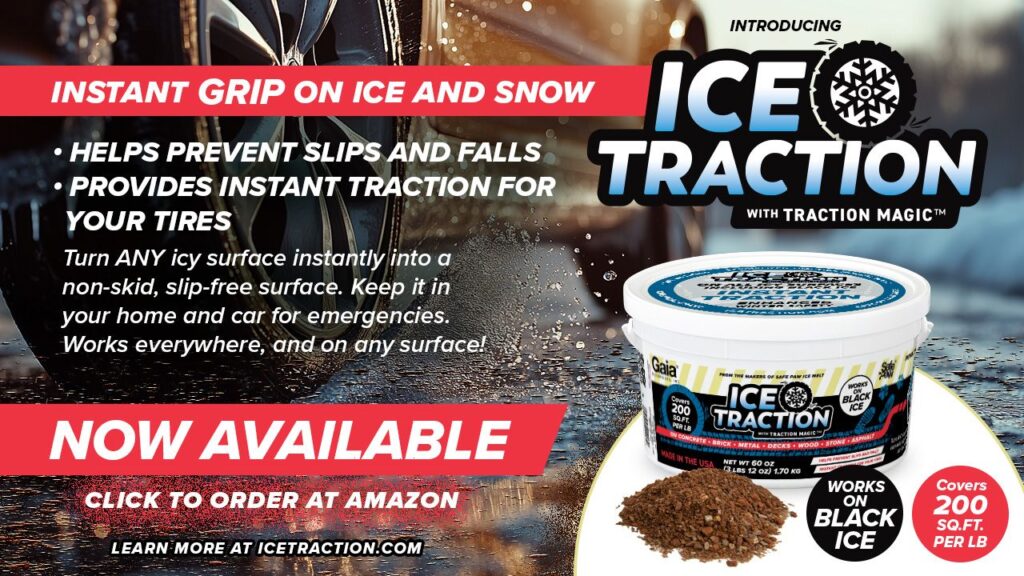
| Need grip immediately | Traction rather than melting | Ice Traction or Walk On Ice |
| Environmentally sensitive areas | Minimize salt loading and excess application | Chloride reduction plus mechanical removal |
EPA identifies winter maintenance as a significant source of salt entering the environment and recommends reducing unnecessary salt use and considering alternative practices. (epa.gov)
Best Fit by Winter Situation
- For environmentally sensitive locations: Minimize total deicer use and consider runoff pathways.
- For a low-cost conventional approach: Evaluate sodium chloride where temperatures and surface guidance make it appropriate.
- For colder conditions: Compare calcium chloride and magnesium chloride using product-specific working-temperature data.
- For reducing chloride exposure: Consider a verified chloride-free formulation.
- For pet-used spaces: Review ingredients, paw-contact precautions, and accidental-ingestion guidance.
- For new concrete: Use mechanical removal and traction rather than ice melt.
- For immediate grip without waiting for melting: Ice Traction or Walk On Ice may be relevant as traction approaches rather than deicers.
Conclusion
If you’re looking for a low-cost solution that will make your driveway and walkways safe, rock salt is probably the way to go. Rock salt is typically the cheapest option, but it’s also the most environmentally damaging. It can kill plants, damage concrete and other surfaces, and cause serious damage to animals that come in contact with it. If you have pets or small children who play outside, you may want to choose something else.
Gaia Enterprises Inc. delivers 100% pet-safe and environmentally friendly winter products. Safe Paw, our flagship product, is the #1 selling pet-safe ice melt that does not harm pets, safe if ingested, and safe on all types of concrete.
FAQs
Other Ice Melt Products
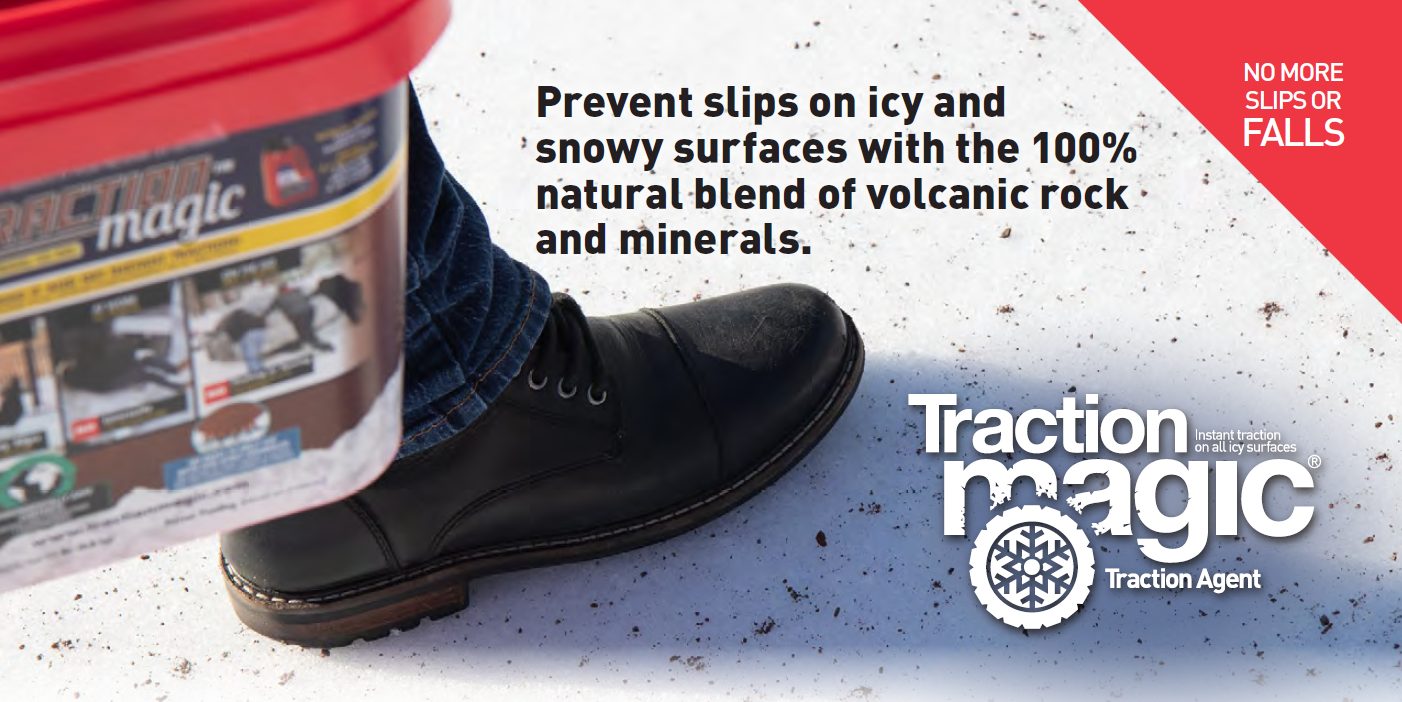
Traction Magic
Stay safe on slippery surfaces with a product that’s 100% natural and safe for pets, people, and your property. Use Traction Magic on sidewalks, steps, or as instant traction for your car.
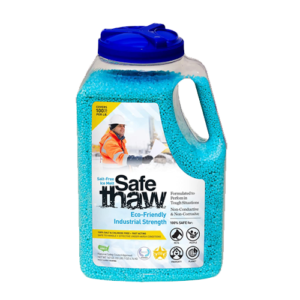
Safe Thaw
Imagine an ice melt you can put down and never worry about. It won’t harm pets, kids and your property. That’s Safe Thaw. Unlike anything else on the market, Safe Thaw can change how winter affects our planet.
Ice Traction (with Traction Magic™)
Ice Traction (with Traction Magic™) is your go-to winter solution for driveways, walkways, parking lots — and even black ice on the road. Unlike salt or ice melts, it delivers instant grip on snow and slippery surfaces with no wait time. Just spread and go.

Safe Thaw
Imagine an ice melt you can put down and never worry about. It won’t harm pets, kids and your property. That’s Safe Thaw. Unlike anything else on the market, Safe Thaw can change how winter affects our planet.
- Local Bulk Rock Salt Wholesalers: What You Need To Know
- How Reading Ice Melt Labels Can Save You Time And Money
- Proper Storage Solutions: How To Safely Store Ice Melt Products To Last All Winter
- Global Perspective: Diverse Ice Melt Solutions From Around The World
- The Next Big Thing: Anticipating Trends and Technologies in Ice Melt