How To Prevent Slipping On Your Wooden Deck This Winter?
0 comments
Sourced by Freepik.com
The safest way to reduce slipping on a wooden deck in winter is to remove loose snow promptly, prevent compacted snow from turning into ice, and add traction where needed. Use a plastic shovel or broom rather than a metal shovel, treat remaining ice with a product suitable for the deck material, and remove slush or residue after treatment. Anti-slip strips or coatings can provide additional traction in frequently used areas. Always consider the deck material, surface finish, and manufacturer care instructions before applying any treatment.
Manufacturer deck-care guidance supports using plastic rather than metal snow-removal tools, while wood-science sources confirm that moisture is an important factor in wood performance. (TimberTech)
Listen to the Article: Audio Version Available
Every winter, keeping your wood deck clear from snow is a challenge. We all love our backyards and our decks but the idea of using salts on deck worries us. But as fall comes around, a nip in the air tells you; you have to start prepping for winters soon. The decks will quickly begin to get stained with wintery snow, and you will have to keep track of the damage that might happen quickly.
So, how can we keep our wood decks free from the snow? First, let’s look at quick steps to use ice melter products and other alternatives to keep our wood decks in excellent condition.
Key Takeaways
Clear loose snow early with a broom or plastic shovel.
Avoid metal shovels and aggressive ice-chipping tools that may scratch the deck.
Check whether the deck is natural wood, treated wood, composite, or PVC before selecting a deicing method.
Apply any suitable ice melt sparingly and evenly after removing most of the snow.
Use anti-slip strips, coatings, or traction aids in frequently traveled areas where additional grip is needed.
Remove melted slush and inspect the deck periodically during winter.
The existing article already recommends plastic shoveling but scatters the advice throughout several sections. (Safe Paw Ice Melter)
Check Your Deck Material Before Treating Ice
Before choosing a winter treatment, identify the type of deck surface you have. Natural wood, pressure-treated wood, painted or stained wood, composite decking, and PVC decking may have different maintenance requirements. A method suitable for one surface may not be appropriate for another, particularly when coatings, sealants, or manufacturer-specific finishes are involved.
For any unfamiliar treatment, review the care guidance for the decking material and test a small, inconspicuous area before treating a larger section.
Shovel
You can easily remove the top layer of your wooden deck with a plastic shovel. Metal shovels if not used properly can damage the deck. Carefully remove the upper layer and then use an ice melt safe for wood decks, such as Safe Paw, to quickly break the icy layer and remove it with a soft scraper. Since it is safe for the foliage, it will not harm even harm your garden and landscape.
Environment Friendly Ice Melt
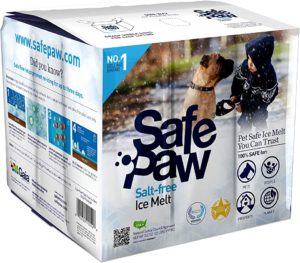
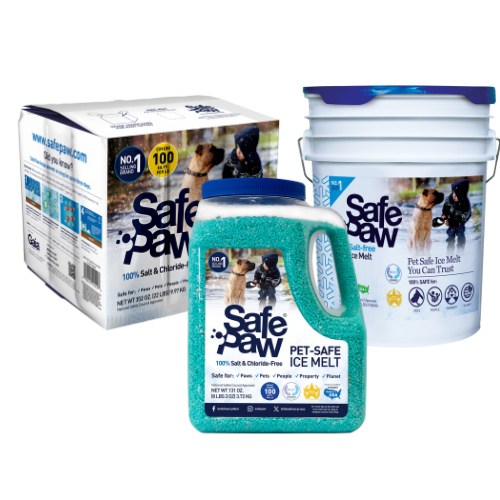
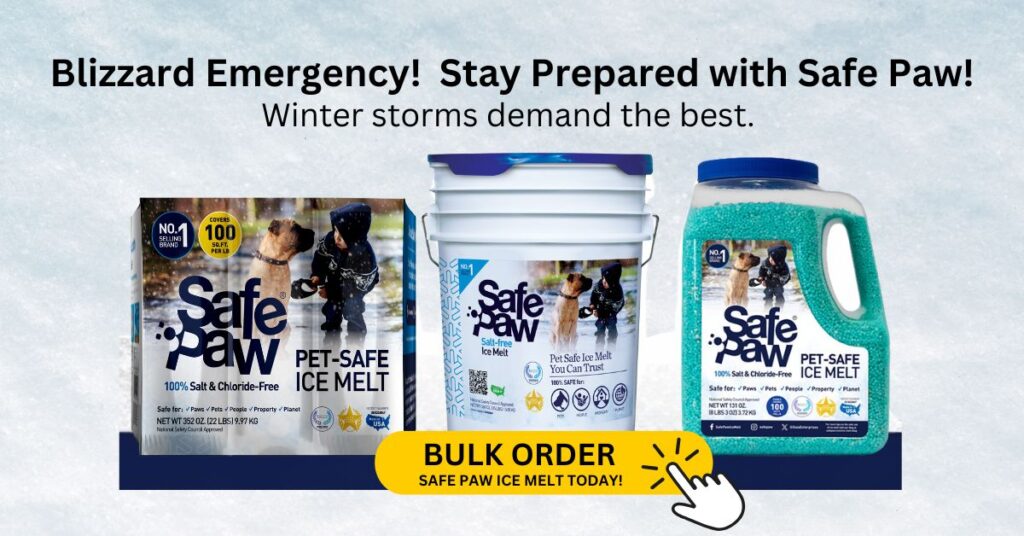
Pet Friendly Ice Melt – Safe Paw!
The Original and the #1 Child and Pet Safe Ice Melt for over 20 years. Guaranteed environmentally safe – will not harm waterways and sensitive wetlands.
Pretreat your wood deck with an anti-slip coating of safe pet ice melter like Safe Paw, to ensure that the snow does not stick to the surface. It will prevent the water from seeping into the wood and will prevent it from expanding. The lifespan of the wood deck will also increase with the anti-slip coating.
Ice and Snow Everywhere? Stock Up on Safe Paw – the ONLY Pet Safe Ice Melt you can trust
Use a good-quality tarp sheet to cover the wood decks before a snowstorm. It will leave the snow on the top surface, making it easy to shovel and remove the tarp sheet to use the deck.
5 Steps to Make a Wooden Deck Safer in Winter
Clear debris first. Remove leaves, dirt, and other material that can trap moisture.
Remove fresh snow. Use a broom for light snow or a plastic shovel for deeper accumulation.
Address remaining ice. Use a treatment appropriate for the deck material rather than aggressively chipping the surface.
Improve traction. Add anti-slip strips, coatings, or a suitable traction aid in frequently used walking areas.
Clean and inspect. Remove slush and residue where appropriate and check the deck periodically for worn finishes or slippery buildup.
Winter Deck Safety Methods: Advantages and Limitations
Method
Advantages
Limitations
Plastic shovel or broom
Removes snow without introducing a deicer; suitable for routine snow clearing
Does not remove firmly bonded ice
Anti-slip decking strips
Provides ongoing traction in frequently used areas
Requires installation and does not remove snow or ice
Non-slip deck coating
Can improve surface grip over a larger area
Requires surface preparation and periodic maintenance
Deck-compatible chloride-free ice melt
Helps break down remaining ice after snow removal
Surface compatibility and application instructions should still be checked
Traction agent
Provides grip on icy areas without relying on melting
Does not remove the underlying ice
Why Choose a Specific Ice Melt for Wood Decks?
Wood decks require careful handling because they can be damaged by harsh chemicals. Using the wrong type of ice melt can lead to wood discoloration, degradation, or even structural damage due to the freeze-thaw cycle. Moreover, wood is porous and can absorb these chemicals, leading to a shorter lifespan of your deck.
What Makes a Good Ice Melt for Wood Decks?
Non-corrosive Formula: Look for ice melts that are labeled as safe for wood. These products are generally less harsh and reduce the risk of damaging the wood fibers.
Pet-safe Ingredients: If you have pets, choosing a pet-safe ice melt is crucial. Some ice melts contain chemicals that can harm your pets if they ingest them or walk on treated surfaces.
Environmental Considerations: Opt for environmentally friendly ice melt options. These typically have a lesser impact on surrounding vegetation and wildlife, and they prevent harmful runoff into waterways.
Recommended Products
Calcium Magnesium Acetate (CMA): While CMA is less corrosive and safer for pets and plants, it is not as effective at lower temperatures compared to other ice melts. Its higher cost can also be a deterrent, making it less economical for frequent use throughout the winter.
Magnesium Chloride: Although better than calcium chloride, magnesium chloride still poses a risk of moisture absorption that can lead to the wood swelling and warping. It’s also worth noting that it can still cause mild irritation for pets if not cleaned off their paws properly.
Natural Alternatives (Sand, Non-salt Grits): These options provide traction without melting ice, which means the underlying ice layer remains unless physically removed. This can lead to prolonged hazardous conditions on your deck. Additionally, these materials can get messy and need regular cleanup to prevent accumulation and potential damage to the deck surface.
Important Deck-Surface Considerations
Before treating an icy deck:
Do not assume that every deicing product is appropriate for every deck material.
Avoid metal shovels or aggressive ice-chipping tools that can scratch or gouge the surface.
Remove as much loose snow as practical before treating remaining ice.
Apply deicing products only as directed; additional material does not necessarily mean faster melting.
On stained, painted, sealed, composite, or PVC decking, check the surface-care instructions before widespread application.
Remember that traction products improve grip but do not necessarily melt or remove ice.
Manufacturer guidance for both wood and composite decking likewise emphasizes careful tool selection and surface-specific maintenance. (T-Rex)
Safe Pet Ice Melter
Use good quality, eco-friendly and non-corrosive ice melt to apply on the wood deck. These substances are harmless to your wood deck and will prevent any erosion too. Safe Paw is one such non-corrosive and non-conductive ice melt that comprises natural ingredients for the decks. Safe Paw doesn’t damage your concrete and is also safe for pets and kids.
While there are many ways to remove snow from the wood deck, the above are tested in all seasons. Safe Paw tends to break down the icy layer and makes it easy to walk without slipping or falling. Its dual patented compound, along with crystals infused with glycols, makes it easy to apply and deice.
Get ready for winter with – the ONLY Pet Safe Ice Melt you can trust
Fresh snow: Use a broom or plastic shovel before snow becomes compacted.
Remaining ice after shoveling: Consider a deck-compatible chloride-free ice melt and apply it only where needed.
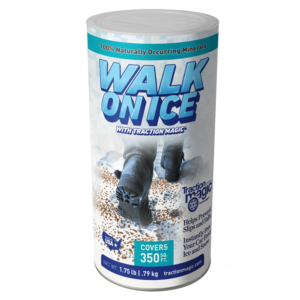
Immediate traction: A traction product such as Walk On Ice can provide additional grip where melting is not the immediate objective.
Recurring slippery areas: Anti-slip strips or a compatible deck coating may provide a longer-term traction solution.
Stained, sealed, painted, composite, or PVC surfaces: Review the care instructions for the specific surface before applying any treatment.
The SafePaw FAQ identifies Walk On Ice as a traction-focused product, so it is more naturally relevant here than SafeThaw or an industrial product. (Safe Paw Ice Melter)
Choosing the best ice melt for wood decks is crucial, especially if you want to maintain the integrity and beauty of your outdoor space. Not all ice melts are created equal, and the wrong choice can damage your wooden deck or pose risks to pets and the environment.
Recommendations and Precautions:
Use Sparingly: Even the safer ice melts should be used conservatively. Over-application can lead to chemical buildup and potential damage to the wood fibers over time.
Prompt Removal: After the ice melt has done its job, promptly remove the resulting slush and any residual product. This minimizes the wood’s exposure to chemicals which can extend the life of your deck.
Regular Maintenance: Protect your deck with suitable sealants to prevent moisture and chemicals from penetrating the wood, which is vital irrespective of the type of ice melt used.
While alternatives like CMA and magnesium chloride offer benefits over more corrosive salts, they come with their own set of challenges and costs. For the utmost safety and minimal environmental impact, products like Safe Paw may offer a more balanced solution, being effective without the risks associated with salt-based and chemical deicers. This makes it crucial to choose a product that aligns with your specific needs for efficacy, pet safety, and wood preservation.
Pet Safe Ice Melt – Safe Paw
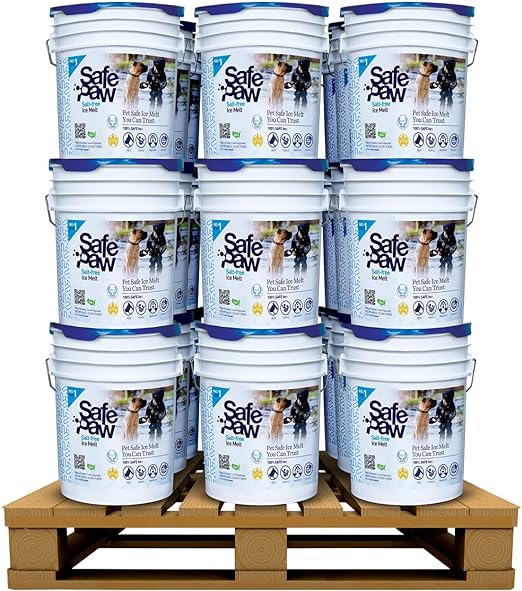
Safe Paw, Child Plant Dog Paw & Pet Safe Ice Melt -35lb, 36 Pails
We all want a winter without any slip and fall accidents, and with Safe Paw, you can prevent such incidents. It is not only a superb rock salt alternative, but it also serves as an excellent option to pretreat your wood decks. So now make your home kid-friendly and pet-friendly with Safe Paw at your disposal.
Gaia Enterprises Inc. delivers 100% pet-safe and environmentally friendly winter products. Safe Paw, our flagship product, is the #1 selling pet-safe ice melt that does not harm pets, safe if ingested, and safe on all types of concrete.
FAQs
Safe Paw is described in the SafePaw FAQ as a chloride-free, non-corrosive ice melt suitable for wood decking. Clear most loose snow first, then apply it evenly to remaining icy areas. For stained, sealed, painted, or specialty decking, also follow the surface-care instructions for that material. (Safe Paw Ice Melter)
Yes. Removing the bulk of loose snow first reduces the amount of material that must be treated and makes it easier to target remaining icy patches. The SafePaw FAQ specifically recommends applying Safe Paw evenly after most snow has been cleared. (Safe Paw Ice Melter)
The SafePaw FAQ describes Safe Paw as suitable for composite decking. Because composite products and finishes differ, it is still sensible to follow the decking manufacturer’s care instructions before applying any winter treatment. (Safe Paw Ice Melter)
SafePaw’s FAQ states that its blue-green color is intended to make application coverage visible and describes it as non-staining on composite decking. For an unfamiliar or specialty surface, testing a small inconspicuous area first is a sensible precaution. (Safe Paw Ice Melter)
A. Non-slip composite decking is a type of decking made from a composite of wood and plastic. It is designed to have a higher level of traction than traditional wood decking, making it less slippery, particularly in wet or icy conditions.
A. Yes, you can use ice melt on Trex or other composite decking. However, it’s essential to select a product that won’t damage the composite material. Always refer to the decking manufacturer’s instructions before applying any ice melt product.
A. Yes, it is safe to use specific types of ice melt on composite decking. These products are designed to melt ice and snow without damaging the deck. However, always check the manufacturer’s guidelines before application.
A. Composite decking brands that have more grain or texture tend to be less slippery, as they provide more traction. Some brands, like Trex and TimberTech, offer specific lines of products designed with increased traction. When choosing composite decking, look for options that have a deep grain and a textured finish. Also, consider products that feature a cap layer, as this can provide extra resistance to slipping. As always, it’s recommended to check with the manufacturer or retailer to understand the slip-resistance of a particular product.
A. Composite decking is generally less slippery than traditional wooden decking. This is because most composite decking surfaces are designed to be textured and have a higher level of friction, especially when compared to smooth, untreated wood. However, like any outdoor surface, composite decking can still become slippery when wet or icy, so it’s important to consider anti-slip measures in such conditions.
A. To clean a slippery wood deck, first remove any debris like leaves or dirt. Next, prepare a solution of 1 cup bleach mixed with 1 gallon of water. Alternatively, you can use a deck cleaner solution available in home improvement stores. Use a stiff-bristled brush to scrub the deck with the solution, working in small sections. This will help remove the algae, mold, or moss that’s causing the slipperiness. Rinely thoroughly with a garden hose or pressure washer on a low setting. Allow the deck to dry completely before applying any treatments or sealants. Always test a small area first and check your deck’s care instructions to ensure these cleaning methods are safe for your specific deck.
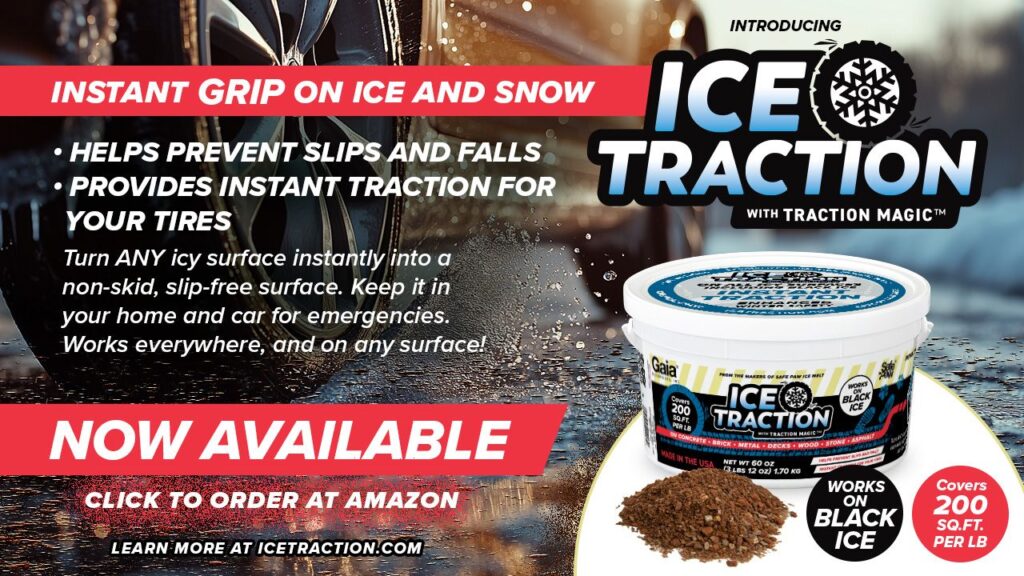
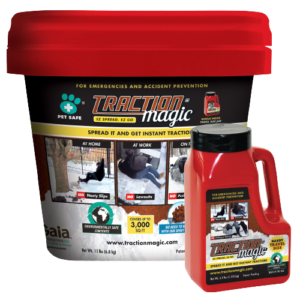
Stay safe and confident this winter with Traction Magic! This innovative, 100% natural product offers instant traction on any icy surface. Whether you’re navigating your sidewalk, steps, or driveway, Traction Magic helps you stay upright and prevents falls.
Prevent slips at home, work or on the go, The handy disposable canister can be taken everywhere, with the same 100% naturally occurring minerals that provide instant traction on ice or snow.
Stay safe on slippery surfaces with a product that’s 100% natural and safe for pets, people, and your property. Use Traction Magic on sidewalks, steps, or as instant traction for your car.
Prevent slips at home, work or on the go, The handy disposable canister can be taken everywhere, with the same 100% naturally occurring minerals that provide instant traction on ice or snow.
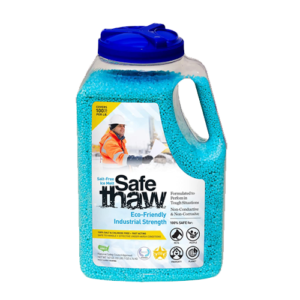
Imagine an ice melt you can put down and never worry about. It won’t harm pets, kids and your property. That’s Safe Thaw. Unlike anything else on the market, Safe Thaw can change how winter affects our planet.