When we think about winter, the next thing that strikes our mind is snow. The beautiful white layer of snow may look ravishing but can cause serious accidents.
And so with the winter season comes snow and with snow comes a challenge. And that is how to melt the snow that is covering the driveway, sidewalk, and rooftop.
But the challenges don’t end here. The next one is to find an ice melt that is safe for your pets as well as the concrete.
Most of the homemade ice melts are made from rock salt and chlorine. But here’s a fact- such ice melts can be severely harmful to pets, concrete, and the environment as well.
Key Takeaways
Most DIY ice melts still rely on salt, which is harmful to pets, concrete, and vegetation.
Chloride-based ice melts—including sodium chloride, potassium chloride, magnesium chloride, and calcium chloride—cause paw burns, concrete scaling, and metal corrosion.
Scientific research shows that salts accelerate freeze–thaw damage in concrete, causing spalling and scaling.
Safer options like rubbing alcohol, beet juice, CMA ice melt avoid corrosive chlorides—but vary in performance.
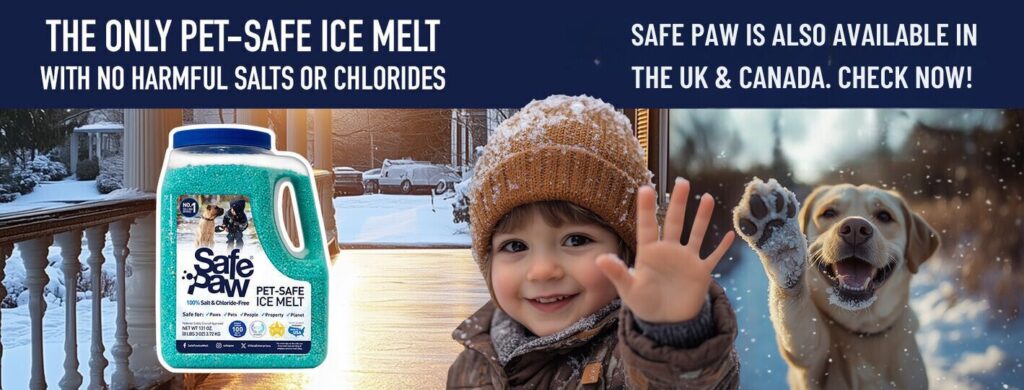
Safe Paw, a chloride-free and salt-free ice melt, provides a pet-safe, concrete-safe, and eco-safe alternative.
Why Most Homemade Ice Melts Aren’t Actually Safe
Many online recipes suggest mixing:
Table salt
Rock salt
Water softener salt
Bleach
Dishwasher salt
“Pet-safe salt”
But these formulas are all chloride-based salts, meaning they can still damage surfaces and irritate paws.
Salt works by lowering the freezing point of water, but the chemical reaction causes several harmful effects:
It increases water absorption into concrete
It accelerates freeze–thaw cracking
It corrodes metal and rebar
It burns paw pads
This means even innocent-looking DIY recipes can cause long-term damage.
Freeze–thaw cycling combined with deicing salts significantly increases surface scaling and deterioration in concrete, as documented by the Portland Cement Association
Safe Ice Melt for Dogs: As the winter world wraps itself in a frosty blanket, keeping our canine companions safe is paramount. The top picks for best pet safe ice melt are those devoid of harsh salts like sodium chloride—known culprits of paw pain and skin irritation. Instead, scout out specially formulated ice melts for dogs that feature milder ingredients like modified urea or glycol solutions, celebrated for their gentleness and non-toxicity if licked.
Ice Melt for Pets: Venturing out into icy terrains demands a strategic selection of de-icing products that uphold our pets’ safety. True pet-friendly ice melt is inherently non-toxic, pampering paws and skin with care. Labels like safe ice melt for cats and dogs usually signal a formulation far removed from aggressive chemicals, leaning on nature-derived, softer compounds instead.
Types of Pet-Friendly Ice Melt: Dive into the diversity of types of pet-friendly ice melt: think glycol-based formulas, beet juice, or calcium magnesium acetate (CMA). These alternatives don’t just claim efficacy; they deliver it without the perilous side effects linked to more conventional ice melts. Preferred in pet-owning households, they carve paths of safety in snowy settings.
Why Pets Are Especially Vulnerable to Ice Melt Exposure
Pets face risks from ice melt in three ways:
Paw contact (burns, dryness, irritation)
Licking paws after walks (toxic ingestion)
Exposure to chemical runoff (skin and eye irritation)
Salt residues cling to paw pads and fur, and snowmelt pools can contain high salt concentrations. Salt burns are one of the most common winter veterinary complaints.
The ASPCA warns that chloride salts can cause paw irritation, chemical burns, and gastrointestinal distress in pets that lick them.
What Makes an Ice Melt Truly Pet-Safe?
A safe ice melt must be:
Chloride-free (no sodium chloride, calcium chloride, magnesium chloride, potassium chloride)
Non-corrosive
Non-toxic if pets lick it
Gentle on paws and skin
Biodegradable and eco-safe
Many products labeled “pet friendly” still contain chloride salts. Chemically, there is no such thing as “pet-friendly salt.”
The only genuinely safe options are chloride-free formulas like modified urea blends.
Safe Alternatives to Ice Melt:
Why not sidestep traditional ice melts altogether? While alternatives like spreading sand or kitty litter sidestep the chemical hazards of salt, they come with their own set of challenges. Sand provides traction but does nothing to actually melt ice, potentially leading to buildup that must be manually cleared. Similarly, kitty litter can offer immediate grip but often becomes soggy and clumpy, complicating cleanup efforts and potentially clogging drains. Heated mats are a high-tech solution, providing clear paths without chemical use; however, they can hike up energy bills and require initial investment. Even using coffee grounds, while eco-friendly, can leave behind a messy residue that might stain surfaces. Each alternative, though useful in certain contexts, underscores the importance of choosing solutions that align closely with your specific needs for eco-friendly ice melt practices.
Ice Melt Brands: Navigating the frosty aisles of ice melt brands can be tricky; it’s vital to separate the truly environmentally and pet-safe from the pretenders. Though many claim safety, authentic safe winter de-icing options are transparent about their ingredients—guiding you to choices that are genuinely kind to both paws and pavements.
Types of Pet-Friendly Ice Melt Alternatives (Pros & Cons)
1. Glycol-Based Ice Melts
Glycol formulas (often used in airport deicers) are less corrosive and safer for paws.
Medium melting power
Not harmful in low quantities
Less damaging to concrete
2. Modified Urea
Commonly used in pet-safe commercial products.
Non-corrosive
Safe for paws
Works moderately well on thin ice
Modified Urea-based deicers reduce chloride pollution compared to salt, as noted by the U.S. Environmental Protection Agency.
3. Calcium Magnesium Acetate (CMA)
One of the safest recognized alternatives for infrastructure.
Very low corrosion
Biodegradable
Safer for plants, soil, and pets
But CMA loses effectiveness in extreme cold.
CMA is significantly less corrosive to metal and concrete than sodium chloride, according to the Transportation Research Board.
You need to be careful while choosing the right ice-melt products. Choose an ice-melt that is salt-free, chlorine-free, acetate-free, and is pet friendly as well as non-corrosive.
And that’s why you need an ice-melt home remedy.
Down below are some of the best ice melt home remedies you can use. Each ice-melt home remedy has some pros and cons and we’ll discuss that too-
Rubbing Alcohol:
Rubbing alcohol might not be as powerful as salt-based ice melter. However, it is better than these ice melt as it is not as toxic or harmful as salt-based products.
Excessive amounts can cause skin, eye, and lung irritation.
Isopropyl alcohol has a freezing point of –128°F, enabling it to melt ice at extremely low temperatures. While isopropyl alcohol melts ice due to its low freezing point (–128°F), its use on windshields risks drying out and cracking rubber wiper blades and seals.
Sugar Beet Juice For Ice Melt:
If you think that only salt can help in melting ice, you’re mistaken. Sugar can also be used as an ice melter. Sugar, when used in the right amount, lowers the freezing temperature of the water.
As sugar doesn’t have any side effects on animals or the surroundings, you can use it without worrying about the side-effects. The only thing that you need to take care of is that sugar beet juice can leave its mark on deiced surfaces.
Pros of Sugar Beet Juice-
Easy to use and easily available.
No harmful effects on animals.
Cons of Sugar Beet Juice-
Can leave stains on deiced surfaces.
DOT agencies, including New York State DOT, use beet brine to lower freezing points and improve anti-icing performance.
Fertilizer:
You can pour the fertilizer atop the snow. And the heating effects of the fertilizer will gradually start to melt the snow. However, the process is a little slower than salt and rubbing alcohol. Compost can consist of potassium chloride, ammonium sulfate, and urea.
Pros of Fertilizer-
Effective ice melt for concrete.
Easily available and easy to use.
Cons of Fertilizer-
Harmful for the environment if the fertilizer enters the municipal sewers and waterways.
What Are the Best Safe Non-Chemical Alternatives to Ice Melt (and Are They Actually Effective)?
If you prefer traction-only solutions rather than chemical de-icers, here are common non-chemical options—along with their strengths, drawbacks, and how they compare to a truly pet-safe, chloride-free melt like Safe Paw.
1. Sand
Positives:
Sand provides immediate friction on icy surfaces, making walkways safer even when temperatures are extremely low.
It is inorganic, non-toxic, and free of salt-based chemicals.
Negatives:
Limestone fragments scatter and require cleanup, and like other aggregates, it does not melt the ice layer beneath.
It can also chip, scratch, or damage delicate flooring if tracked indoors—something Safe Paw avoids entirely.
5. Heated Walkway Mats
Positives:
Heated mats actively melt ice and snow using embedded heating cables—no salt, no chlorides, no chemicals.
They provide consistent, reliable ice removal on steps, entrances, and small walkways.
Negatives:
They require electricity, which increases cost and limits coverage for large areas like driveways.
Installation is more complex and expensive compared to simply spreading Safe Paw.
The Chemistry Behind Calcium Chloride & Why It’s Harsh
When comparing ice melt products, understanding what’s inside matters just as much as how well it works. The calcium chloride formula is frequently found in commercial deicers due to its rapid-action performance. It absorbs moisture from the air and generates heat through an exothermic reaction, allowing it to melt ice even in sub-zero temperatures. While its effectiveness is undeniable, calcium chloride can be aggressive—especially toward surfaces and pet paws. Prolonged exposure can lead to chemical burns, concrete corrosion, and even damage to grass and vegetation.
That’s why for households with pets or delicate surfaces, it’s vital to go beyond performance and consider safety. The rise in popularity of pet friendly salt alternatives has made it easier to find deicers that don’t rely on corrosive formulas. These options ditch harsh chlorides in favor of gentler, biodegradable blends like glycol, urea, or calcium magnesium acetate (CMA). Safe Paw, for instance, avoids the calcium chloride formula entirely, relying instead on a patented, non-toxic compound safe for pets, paws, and concrete.
Are CMA Ice Melts Truly the Best Alternative? Plus, What Is a Snowbunny?
So how does CMA ice melt hold up in the safety vs. effectiveness debate? Calcium magnesium acetate (CMA) is considered a safer alternative to traditional salt-based deicers. It doesn’t generate heat like calcium chloride, but it works by preventing snow and ice from bonding to surfaces, making removal easier. While it’s significantly less corrosive, it does have some limitations. Its melting capacity decreases in extremely cold conditions (below 20°F), and it may require supplemental treatment during major snow events. Still, it’s a favorite among municipalities and airports for its reduced environmental impact and concrete preservation.
And now for a fun aside—what is a snowbunny? The term “snowbunny” is often used to describe someone (usually stylish and enthusiastic) who loves snowy environments but may not be entirely prepared for the reality of winter’s hazards. It’s cute slang, but it reminds us that a fashionable approach to winter doesn’t always equal a functional one. Don’t be a snowbunny when it comes to deicing—make informed decisions that balance safety, environmental care, and real effectiveness.
Whether you’re eyeing homemade options or shopping for a trusted store-bought brand, stay cautious of products with vague ingredient lists. Transparency is a hallmark of trustworthy pet friendly salt alternatives. Look for those that clearly state they’re chloride-free and biodegradable.
CMA (Calcium Magnesium Acetate) is considered one of the safest mainstream deicers for both pets and infrastructure.
Strengths
Non-corrosive
Environmentally safe
Helps prevent bonding of ice to pavement
Weaknesses
Higher cost
Slower acting
Not suitable for extreme cold
This is why many airports and bridges use CMA—it protects high-value infrastructure.
What is The Truth About “Pet Friendly Salt”?
Many winter-deicing products are marketed as “pet friendly,” but when you dig into the chemistry, many of these claims are more marketing than safety. Here’s a deeper look:
What’s really in “salt” and why it matters
The word “salt” in this context usually refers to a chloride salt(e.g., Sodium chloride / NaCl, Calcium chloride / CaCl₂, Magnesium chloride / MgCl₂).
However, chlorides are also associated with paw pad burns, drying of skin, irritation of mucous membranes, and damage to concrete, metal and vegetation.
The reality behind “pet friendly salt”
The term “pet friendly salt” is unregulated — there’s no standard definition of what it means. Many products carry this label yet still contain chloride salts.
In short: “pet friendly” ≠ “pet safe.”
If a product contains magnesium chloride, calcium chloride, sodium chloride or potassium chloride, it’s not truly pet safe — no matter how gentle the pellets feel.
Why chloride salts are still risky for pets
Contact with paws: The salts can cause dryness, cracking, or chemical-burn-like irritation of paw pads.
Ingestion risk: Pets may lick their paws (or snow) and ingest small amounts of salt. Even moderate amounts can cause vomiting, diarrhea or worse, depending on the salt and dose.
Surfaces & infrastructure damage: Chlorides corrode concrete, metals, damage vegetation and can lead to long-term degradation of pavement and hardscape.
What to look for instead: Truly pet-safe deicers
The safest de-icing products are chloride-free and salt-free, typically using modified urea or other non-corrosive compounds.
Example products:
Safe Paw 100% Salt‑Free Ice Melt — melts ice down to –2 °F, is 100% salt & chloride free.
Always read the ingredient list: avoid sodium chloride, calcium chloride, magnesium chloride, and potassium chloride. If any of those are listed, it’s not truly pet safe.
Why this matters for you & your pets
Winter is tough enough; you don’t want your pet limping because of chemical burns on their paws.
Using a “pet-friendly” product that still contains chlorides gives a false sense of safety.
Infrastructure matters: Using chloride salts can damage home surfaces, landscaping, and even vehicles (which is an added cost).
When you invest in a deicer for a home with pets, go beyond the marketing — look for a chloride-free, salt-free label and verification.
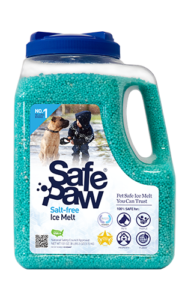
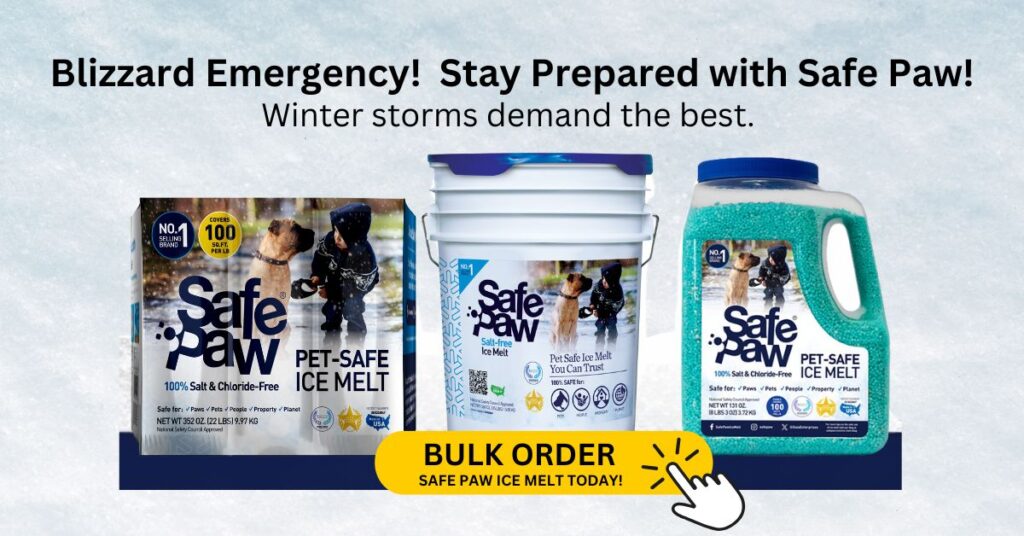
Safe Paw: The Most Proven Pet-Safe, Concrete-Safe Ice Melt
Zero chlorides- It is also labeled as 100 % salt- and chloride-free, further confirming there are no chloride salts (e.g., sodium chloride, calcium chloride, magnesium chloride) in the composition.
Zero acetates- “acetate free” and “non-corrosive formula”, ensuring safe use on surfaces and around pets without damage to concrete, metal or plant life.
Zero corrosive chemicals
Instead, it uses a modified urea + glycol composite that melts ice without harming paws, concrete, vegetation, or waterways.
The Original and the #1 Pet and Child Safe Ice Melt for over 20 years. Guaranteed environmentally safe – will not harm waterways and sensitive wetlands.
Yes — it’s eco-friendly and can reduce reliance on traditional salts, but it can leave reddish or brown stains on surfaces and may be sticky, tracking into homes.
No — standard calcium chloride ice melts can cause paw pad burns, irritation, and serious health issues if ingested. On the plus side, calcium chloride melts ice very quickly and works in extremely low temperatures (which is why many commercial de-icers use it).
Yes — Calcium Magnesium Acetate (CMA) is less corrosive than many traditional salts and safer for surrounding vegetation and infrastructure. Its effectiveness drops off at very low temperatures (below about 20 °F / -6 °C), and it’s often more expensive than simpler salts.
No — water-softener salt is basically sodium chloride (rock salt), which is corrosive and can damage concrete, vehicles and harm pets/vegetation. On the plus side, it’s very cheap and widely available, making it tempting to use — although its drawbacks often outweigh the savings.
A. Apply Safe Paw evenly across the icy surface. After ice melts, promptly remove slush. Always refer to the product label for specific instructions.
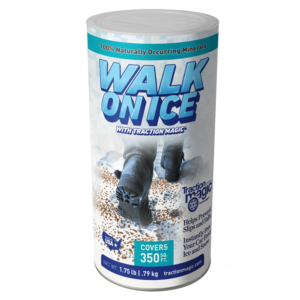
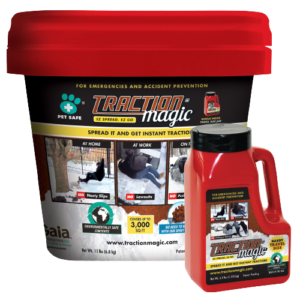
Stay safe and confident this winter with Traction Magic! This innovative, 100% natural product offers instant traction on any icy surface. Whether you’re navigating your sidewalk, steps, or driveway, Traction Magic helps you stay upright and prevents falls.
Prevent slips at home, work or on the go, The handy disposable canister can be taken everywhere, with the same 100% naturally occurring minerals that provide instant traction on ice or snow.
Stay safe on slippery surfaces with a product that’s 100% natural and safe for pets, people, and your property. Use Traction Magic on sidewalks, steps, or as instant traction for your car.
Prevent slips at home, work or on the go, The handy disposable canister can be taken everywhere, with the same 100% naturally occurring minerals that provide instant traction on ice or snow.
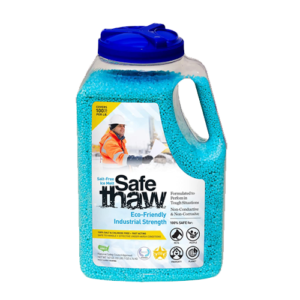
Imagine an ice melt you can put down and never worry about. It won’t harm pets, kids and your property. That’s Safe Thaw. Unlike anything else on the market, Safe Thaw can change how winter affects our planet.