


Pet Safe vs Pet Friendly Ice Melt: Key Differences Explained
You’ve seen the labels: “Pet Safe,” “Pet Friendly,” or even “Safer for Pets.” But what do they really mean? Let's uncover the truth.
If you're a pet parent, you're probably doing everything you can to keep your furry family members safe through the winter. But here’s the problem—most people don’t realize that those comforting phrases on ice melt packaging aren’t regulated. In fact, a product can call itself “pet friendly” even if it contains chemicals known to burn paw pads, poison internal organs, or destroy concrete.
This guide cuts through the marketing jargon. We'll explain the pet safe vs pet friendly ice melt difference, dive deep into real ingredient profiles, and help you make a truly informed, science-backed decision. You'll also learn why Safe Paw stands apart as the original, patented, and non-toxic ice melt for pets—designed not just to be safer, but to be safe. Period.
The Key Difference
The terms "pet safe" and "pet friendly" are not regulated by any government agency. This means any company can label their product with these terms—regardless of the actual safety profile of their ingredients. That leads to widespread confusion among consumers and puts pets at risk.
| Feature | Rock Salt | "Pet Friendly" Blends | Truly "Pet Safe" Formulas |
|---|---|---|---|
| Primary Claim | Melts Ice | Less irritating to paws | Non-toxic, safe if ingested |
| Common Ingredients | Sodium Chloride | Magnesium/Calcium Chloride | Chloride-free, Salt-free (Urea, Glycols) |
| Effectiveness | Effective to ~15°F | Effective at low temps | Less effective below ~20°F |
| Regulation | None | No standard | No standard |
| Pet Safety Risk | High | Moderate | Low |
| Key Takeaway | Avoid for pets | Still a salt, still a risk | Safest chemical option |
Primary Claim
Rock Salt: Melts Ice
"Pet Friendly" Blends: Less irritating to paws
Truly "Pet Safe": Non-toxic, safe if ingested
Common Ingredients
Rock Salt: Sodium Chloride
"Pet Friendly" Blends: Magnesium/Calcium Chloride
Truly "Pet Safe": Chloride-free, Salt-free (Urea, Glycols)
Effectiveness
Rock Salt: Effective to ~15°F
"Pet Friendly" Blends: Effective at low temps
Truly "Pet Safe": Less effective below ~20°F
Regulation
Rock Salt: None
"Pet Friendly" Blends: No standard
Truly "Pet Safe": No standard
Pet Safety Risk
Rock Salt: High
"Pet Friendly" Blends: Moderate
Truly "Pet Safe": Low
Key Takeaway
Rock Salt: Avoid for pets
"Pet Friendly" Blends: Still a salt, still a risk
Truly "Pet Safe": Safest chemical option
The key difference? Pet friendly ice melt may still contain chlorides, which can irritate paws and harm internal organs if ingested. Pet safe ice melt, when truly non-toxic, avoids chlorides altogether—but you must read the label to be sure. This is why understanding the difference between pet safe and pet friendly ice melt is not just semantics—it’s a matter of protecting your pet’s health.
De-Icing the Ingredients: What You’re Really Spreading
The front of the package might say “pet safe,” but if you want the truth, flip it over and read the ingredient list. That’s where the real story is told—and too often, it’s a story of salts, chlorides, and misleading claims.
Is "pet friendly" ice melt truly safe for pets?
Let’s break down the most common chloride-based chemicals used in so-called “pet friendly” ice melts and explain why they are not actually safe for pets, the environment, or your property.
Magnesium Chloride
Often marketed as “gentler” than rock salt, this is still a chloride salt, and its safety is often overstated.
- For pets: Can cause chemical burns on paw pads. If ingested, it can lead to vomiting, diarrhea, or neurological symptoms.
- For surfaces: Corrosive to concrete over time, causing surface erosion and premature degradation.
- For the environment: Accumulates in soil, harms nearby plants, and contaminates runoff water.
Calcium Chloride
Praised for its ice-melting power at extremely low temperatures (as low as -25°F), but the trade-offs are significant and dangerous.
- For pets: Releases heat on contact with water (exothermic), which can literally burn your pet’s paws. Licking it may cause oral and gastrointestinal burns.
- For surfaces: Extremely corrosive—causing concrete spalling, rust on vehicles, and damage to floors if tracked indoors.
- For lawns and waterways: Runoff can poison plant roots and pollute freshwater sources.
Some products blend this with Calcium Magnesium Acetate (CMA) and call the result “enhanced” or “pet-safer,” but it merely dilutes the risk—the formula remains mostly harmful salt.
Sodium Chloride (Rock Salt)
The most common and cheapest option, rock salt is the least safe choice, especially around pets.
- For pets: Causes paw cracking, burns, and salt poisoning if licked. Even a small amount can be dangerous for small pets.
- For your home: Highly corrosive, eating away at walkways, driveways, and the undercarriage of your car.
- For the ecosystem: One teaspoon can permanently pollute five gallons of water, harming plants and aquatic life.
Other Chemicals to Watch For
Here are other ingredients or marketing tactics used in so-called "pet friendly" ice melts that pet parents need to know about:
Potassium Chloride
Sometimes swapped in to replace sodium chloride, this compound is still a salt-based chloride and has similar effects—paw burns, GI upset, and corrosion. It’s often labeled as “less toxic” but is far from non-toxic.
Magnesium Acetate or Calcium Magnesium Acetate (CMA)
CMA is often used to greenwash dangerous formulas. While less toxic itself, it’s typically used in small amounts to “offset” the risks of a formula that is still 90% chloride-based.
Proprietary Blends
Some brands hide their true ingredients behind vague terms like “proprietary formula” or “organic additive.” These labels are often marketing smoke screens for products that still contain multiple salts. Without full transparency, these claims should be treated with caution.
Label Tricks to Watch For
If you’re wondering what does pet friendly ice melt mean or what ice melt should I buy for pets, here are label red flags that should raise concern:
If a product contains magnesium chloride, calcium chloride, sodium chloride, or potassium chloride, it’s not truly pet safe—no matter how gentle the pellets feel.
The Safe Alternative: Chloride-Free Ice Melt for Pets
When comparing pet safe vs pet friendly ice melt, the difference comes down to one key factor: chlorides vs no chlorides.
A true pet safe deicer will always be:
That’s where Safe Paw comes in, offering a patented, chemical-engineered formula that works without using any of the harmful ingredients listed above. It’s trusted by pet parents, vets, and environmentally conscious homeowners because it eliminates risk—without sacrificing performance.
Safe Paw Ice Melt: A Scientific Breakthrough in Pet Safety
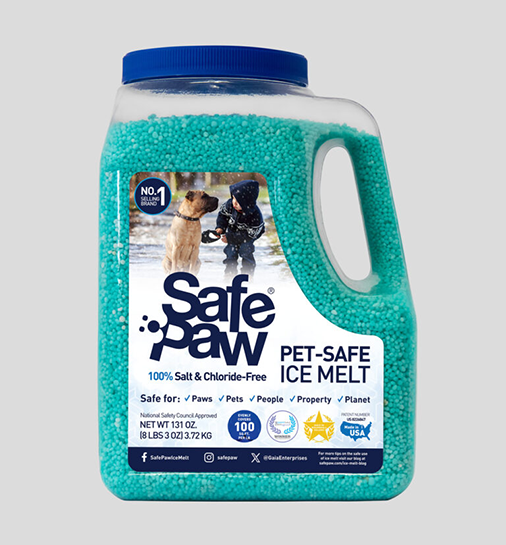
Unlike many brands that slapped on the “pet friendly” label in recent years to ride a trend, Safe Paw was created decades ago out of necessity.
When founder Steve Greenwald saw his own dog suffer paw burns from salt-based deicers, he formulated a solution that would be truly safe—not just less harmful.
Safe Paw has since become the industry leader in chloride free ice melt for pets, with a patented formula that offers safety, performance, and peace of mind.
Here’s what makes Safe Paw different—and safer.
Key Ingredients & How They Work
Modified Carbonyl Diamide (Modified Urea)
At the heart of Safe Paw’s formula is a proprietary form of modified urea, also known as carbonyl diamide. Unlike agricultural or fertilizer-grade urea, which can be corrosive, Safe Paw’s version is:
- Non-toxic if ingested by pets or children
- Non-corrosive to concrete, pavers, wood decks, and painted surfaces
- Non-conductive, making it safe to use around electronics and wiring (e.g., on steps with holiday lights)
- Effective in temperatures as low as -2°F, despite being salt-free
- Eco-friendly, especially with the added nitrogen inhibitors
How it works: Instead of raising temperature by chemical reaction (which can cause burns), Safe Paw’s modified urea disrupts the molecular structure of ice, weakening it and allowing for easy removal without heat or chemical corrosion.
Special Glycols
Some worry about glycols because of the danger associated with ethylene glycol (used in antifreeze). But Safe Paw uses propylene glycol, which is:
- FDA-classified as GRAS (Generally Recognized As Safe)
- Found in food, cosmetics, and pharmaceuticals
- Widely accepted as safe for pets in small quantities
In the Safe Paw formula, glycols are used to:
- Lower the freezing point of water
- Speed up the melting process
- Improve spreadability and surface coverage
- Prevent re-freezing for longer-lasting protection
Unlike traditional ice melts that require multiple applications, Safe Paw works smarter—not harsher.
Non-Ionic Surfactants
Surfactants help break the surface tension of ice and allow ingredients to spread more evenly, even on rough or porous surfaces. Safe Paw’s surfactants are:
- Non-reactive with soil or plants
- Biodegradable
- Help reduce waste by ensuring full coverage with less product
This supports Safe Paw’s reputation as an eco friendly ice melt that won’t harm pets, plants, or pavement.
Patented Nitrogen Inhibitors
Urea-based products have historically raised concerns about nitrate pollution in soil and water. Safe Paw’s chemists solved this with exclusive nitrogen inhibitors, which:
- Prevent nitrate leaching
- Keep nearby soil and water safe
- Support long-term environmental health
In a world increasingly concerned with runoff and water pollution, Safe Paw provides the rare blend of performance and environmental responsibility.
Is It Really Safe? What the Science Says
Let’s put this in perspective with actual health data:
Compare this with a typical pet friendly product using magnesium chloride. Just 1–2 grams ingested by a small dog could result in vomiting, lethargy, or tremors—and yet many of these products are labeled “pet safe.”
Safe Paw = Performance + Peace of Mind
Pet friendly may reduce risk.
Pet safe eliminates it.
The Unregulated Landscape of Ice Melt Safety Claims
Let’s be clear: there is no legal definition or regulatory standard for the terms “pet safe” or “pet friendly” or pet safe deicer vs pet friendly deicer. That’s not just an oversight—it’s a real hazard.
Any brand can print those words on their label, regardless of whether the product contains sodium chloride, magnesium chloride, or calcium chloride—all of which have been proven to cause:
Common Marketing Tactics Used to Mislead
So how do they get away with it?
“Pet Safe” – with an asterisk*
Flip the bag over and you’ll often see the disclaimer: “when used as directed”. This doesn’t speak to the safety of the ingredients—just how you apply them.
“Gentle on paws” or “rounded pellets”
Some brands simply polish the edges of salt crystals to reduce abrasiveness. But smoothing the surface of a chemical doesn't neutralize its toxicity.
“Contains no rock salt”
Sounds good, right? But most of these products simply substitute rock salt (sodium chloride) with magnesium chloride or calcium chloride—which are still chlorides and still harmful.
“Safer than traditional ice melts”
Safer doesn't mean safe. That’s like saying a hot stove is safer than an open flame—neither one belongs near your dog’s paws.
“Natural” or “sea-derived”
Many salts are technically natural—but that doesn’t make them safe. Arsenic is natural. So is lead.
Blending in CMA (Calcium Magnesium Acetate)
Some brands try to make salt-based products look greener by adding a touch of CMA. But if the bulk of the formula is still chloride, the risks remain.
This lack of regulation has flooded the market with eco friendly ice melt vs pet friendly confusion—and consumers are paying the price with vet bills, cracked sidewalks, and damaged landscaping.
Reading the Label: How to Decode Ice Melt Ingredients
When it comes to pet safety, the back of the bag is your best friend. Here's how to spot danger and verify safety—no matter what the front label says.
Ingredients to AVOID
| Ingredient | Why It’s a Red Flag |
|---|---|
| Sodium Chloride (NaCl) | Jagged, corrosive, toxic if licked. Worst offender for paws and stomachs. |
| Calcium Chloride (CaCl₂) | Burns paws with heat reaction. Highly corrosive. Very toxic. |
| Magnesium Chloride (MgCl₂) | Milder than others, but still causes GI upset and corrosion. |
| Potassium Chloride | Another salt. Still irritates paws and harms internal organs if ingested. |
| Proprietary Blends | If it doesn’t list the ingredients, assume the worst. |
Even small amounts of these ingredients can cause:
Ingredients to LOOK FOR
| Ingredient | Why It’s Safe |
|---|---|
| Modified Carbonyl Diamide | Used in Safe Paw. Chloride-free. Non-toxic. Non-corrosive. |
| Propylene Glycol | Safe in regulated amounts. Used in food and pharmaceuticals. |
| Non-Ionic Surfactants | Help product spread evenly without harming vegetation. |
| Patented Nitrogen Inhibitors | Reduce nitrate runoff. Support long-term eco safety. |
If the label doesn’t say “chloride-free”, “salt-free”, or “non-toxic if ingested”, walk away.
Better yet, look for Safe Paw, which proudly lists its non-toxic, salt-free, and eco safe credentials. You’ll never have to second-guess what’s inside.
What to Do If Your Pet Is Exposed to Ice Melt
Even with the best precautions, your pet might come into contact with ice melt while out on a walk, especially if neighbors are using chloride-based products. Quick action can reduce the risk of injury or poisoning.
Signs of Paw Irritation
- Limping or refusal to walk
- Licking, chewing, or biting paws
- Redness, swelling, or cracks on paw pads
- Whimpering or signs of pain
What to Do
- Gently rinse your pet’s paws with lukewarm water.
- Use a soft towel to dry them completely—don’t let moisture linger.
- Apply a pet-safe paw balm or petroleum jelly to soothe the area.
- Contact your vet if irritation lasts more than a few hours.
Signs of Ice Melt Ingestion
- Excessive drooling or foaming at the mouth
- Vomiting or diarrhea
- Lethargy or “drunk” behavior
- Seizures or muscle tremors (in severe cases)
What to Do
- Call your veterinarian immediately.
- Do not induce vomiting unless explicitly told to.
- Contact a poison control hotline for urgent advice.
🏥 ASPCA Animal Poison Control: (888) 426-4435
🏥 Pet Poison Helpline: (855) 764-7661
How to Protect Your Pet’s Paws This Winter
You can’t control what your neighbors use—but you can create a solid defense strategy to protect your dog or cat from harmful deicers.
Practical Winter Safety Tips for Pets:
Product Examples: What to Look For and What to Avoid
To help you navigate store shelves, here's a quick reference to understand the types of ice melt formulations out there—and how to evaluate them based on ingredients and safety.
Types of Pet Safe Ice Melt
These are your safest bets when the label clearly says:
Common Ingredients:
- Modified Urea (Carbonyl Diamide)
- Propylene Glycol
- Nitrogen Inhibitors
- Non-Ionic Surfactants
💡 Safe Paw checks all of these boxes—and is the only brand backed by 30+ years of safety data, scientific formulation, and consumer trust.
Types of “Pet Friendly” Ice Melt to Be Cautious Of
These products are often salt-based but advertised as “gentler” than rock salt. Their danger is often downplayed.
Watch out for:
Look for misleading keywords:
None of these terms guarantee safety. Only the ingredients can.
Final Thoughts: Why the Difference Matters
When it comes to your pet’s safety, not all ice melt products are created equal. The difference between pet safe vs pet friendly ice melt isn't just a technicality—it's the difference between a product that might cause harm and one that you can trust completely.
Many brands labeled as “pet friendly” still rely on salt-based or chloride-heavy formulas that can cause serious issues. Truly pet safe ice melt solutions like Safe Paw are formulated to be chloride-free, salt-free, and non-toxic. They don’t just reduce risk—they eliminate it.
Choose the option that’s trusted by veterinarians, loved by pet owners, and backed by science. Choose Safe Paw. Not just pet friendly. Pet safe.
Frequently Asked Questions About Pet Safe Ice Melt
Which is better: pet safe or pet friendly ice melt?
Pet safe ice melt is the better and safer choice. Unlike pet friendly products, which may still contain harmful chloride salts, pet safe ice melts are typically chloride-free, salt-free, and non-toxic if ingested. Only pet safe formulas like Safe Paw offer true protection for pets, paws, and the environment.
Is pet friendly ice melt truly safe for dogs?
Not always. The term “pet friendly” is unregulated and often used to describe products with rounded salt pellets or diluted chloride blends. These may reduce irritation but still contain chemicals that can burn paws or cause GI issues if licked. Always read the ingredient list—magnesium chloride and calcium chloride are still toxic to pets.
Does pet safe ice melt harm concrete?
No—true pet safe products like Safe Paw are non-corrosive and safe for concrete, brick, pavers, and wood decking. Unlike salt-based melts that can cause spalling, cracking, or surface degradation, chloride-free formulas will not damage hardscaping or floors.
What ice melt should I buy for pets?
Look for a veterinarian recommended pet safe ice melt that is salt-free, chloride-free, and non-toxic if ingested. Safe Paw is one of the only ice melts on the market that meets all these criteria and has been trusted for over 30 years by pet owners and professionals alike.
Pet safe vs pet friendly: which protects paws better?
Pet safe ice melts protect paws significantly better because they do not contain harsh chlorides that burn or dry out paw pads. Pet friendly ice melts may be gentler in texture but can still cause pain, cracking, or poisoning if ingested after licking.
Best pet safe ice melt for concrete?
Safe Paw is the best pet safe ice melt for concrete. Its unique formula is not only non-toxic to pets but also non-corrosive to concrete, making it ideal for homes, walkways, and commercial properties where safety and longevity matter.
Top pet friendly ice melt brands?
Be cautious. Many top-selling “pet friendly” ice melt brands still use magnesium chloride or calcium chloride. These ingredients may be less harsh than rock salt but still pose health risks. Always check for truly chloride-free formulations. Safe Paw remains the most trusted non-toxic ice melt for pets.
Is there a veterinarian recommended pet safe ice melt?
Yes. Safe Paw is a veterinarian-recommended ice melt because it’s completely free of salts and chlorides, making it non-toxic to pets even if accidentally ingested. It’s also safe for children and the environment.
Is there a non toxic ice melt for pets?
Yes. Products like Safe Paw are 100% non toxic, even if your dog licks their paws or a small amount is accidentally ingested. Traditional ice melts, even when labeled “pet friendly,” often contain toxic salts that can make pets sick.
What’s the safest ice melt for dogs’ paws?
The safest ice melt for dogs’ paws is one that is salt-free, chloride-free, and non-exothermic. Safe Paw meets all these conditions and has been specifically designed to prevent burns, drying, and irritation on contact.
What are the best winter safety tips for pets and ice melt?
Is there an eco friendly ice melt that won’t harm pets?
Yes. Safe Paw is both eco friendly and safe for pets. Its patented formula is non-toxic, non-corrosive, and contains nitrogen inhibitors to prevent runoff pollution, making it safe for soil, plants, and freshwater ecosystems.