


Lime Stone Steps? Here’s What To Use to Melt Ice
For limestone steps, choose an ice-melt formulation based on the stone’s sensitivity to salts, chlorides, moisture, and repeated freeze-thaw exposure. Chloride-free, non-corrosive formulations can be considered when the goal is to reduce chloride exposure to natural stone. Always check the product’s surface-use directions before application.
What to Look For
- Chloride-free formulation
- Compatibility with natural stone
- Clear ingredient information
- Appropriate temperature range
- Controlled application rate
- Pet-access considerations
- Guidance for removing residue
Natural stone stairs are a high-end material that adds value to any home over time. Limestone and sandstone stairs, in particular, are eye-catching, providing depth to your house and pool areas. Natural stone is known for its durability and resistance to the elements.
Key Takeaways for Melting Ice on Limestone Steps
- Limestone is porous, so moisture and dissolved materials can enter the stone.
- Chloride-containing deicers can create additional salt exposure for natural stone.
- Freeze-thaw cycles can increase the risk of deterioration in susceptible stone.
- Sand does not melt ice; it primarily provides traction.
- Excessive deicer application can increase residue and unnecessary exposure.
- Pet safety and stone compatibility are separate considerations.
- Product instructions should be checked before applying any ice melt to limestone.
Long-term protection, especially against salt, necessitates your attention. The abrasive salt-based ice melt compounds can wreak havoc on almost any building material, including metal, concrete, and stone. Some stones are more resistant to salt attack than others; porous materials like limestone and sandstone are more vulnerable. Hence, as a homeowner, you need to know what type of salt is used on roads. You also need to understand the importance of avoiding corrosive ice melts. The non-salt ice melt is the best option for homeowners. Let us know more about ice melts safely for limestone.
Why Is Limestone More Sensitive to Ice Melt?
Limestone is a porous natural stone. Its pores and joints can retain moisture and dissolved substances, so repeated exposure to deicing materials and freeze-thaw conditions can contribute to surface deterioration. The condition, porosity, installation, drainage, and type of limestone also affect how the stone responds.
- Moisture: Water can enter porous areas of the stone.
- Deicer Exposure: Dissolved deicing compounds can move with moisture.
- Freezing: Water trapped within pores can freeze as temperatures fall.
- Repeated Cycles: Repeated freezing and thawing can contribute to deterioration over time.
How Can Ice Melt Damage Limestone?
Ice melt applied
↓
Deicer dissolves in moisture
↓
Solution can enter porous stone/joints
↓
Temperature changes cause freezing and thawing
↓
Repeated cycles can contribute to deterioration
↓
Surface, joints, or stone appearance may be affected
Is Limestone the Same as Concrete When Choosing Ice Melt?
No. Limestone is a natural stone, while concrete is a manufactured cement-based material. Both can be affected by winter conditions, but their composition, porosity, installation, and surface characteristics differ. An ice melt that is suitable for concrete should not automatically be assumed to be suitable for limestone.
Does Sand Melt Ice on Limestone Steps?
No. Sand does not melt ice. It is primarily used to increase traction on slippery surfaces. On limestone, loose sand can also accumulate in pores and joints and may create additional cleanup or abrasion concerns.
Sand Provides
- Traction
- Temporary grip on slippery surfaces
- No chemical melting action
Sand Does Not Provide
- Ice melting
- Freezing-point reduction
- Deicing
Ice Melt vs. Traction Materials for Limestone Steps
| Characteristic | Ice Melt | Sand / Traction Material |
| Melts ice | Yes, depending on formulation and conditions | No |
| Provides traction | May provide limited traction depending on material | Primary purpose |
| Changes freezing behavior | Some formulations do | No |
| Can leave residue | Yes | Yes |
| Cleanup may be required | Sometimes | Often |
| Limestone considerations | Depends on ingredients and stone compatibility | Can accumulate in pores/joints |
| Pet-access considerations | Depends on ingredients and exposure | Material can be tracked indoors |
How Does Salt Damage Limestone? Understanding Stone Porosity and Corrosion
Water’s freezing point lowers through de-icers. Depending on how much salt is in the water, the freezing point of the salty water will vary. This water will thaw and freeze periodically if the temperature increases and falls beyond the 20° threshold.
It implies that if saline water gets into the crevices and pores of your walkways and patios, the freezing and thawing will harm the material, whether it’s limestone or concrete. As a result, when mixed with snowmelt water, it’s advisable to opt for a de-icing chemical with a low freezing point.
There are other chloride-based ice melts in the market, sold under different brand names but have the same corrosive chloride-based ingredients. They may be less toxic for plants and pets, but they are equally disastrous for your limestone stairs.
Chloride-based ice melts—such as sodium chloride, calcium chloride, and magnesium chloride—work by lowering the freezing point of water. But when used on limestone, the chemical behavior becomes destructive. Once saltwater seeps into limestone, it undergoes repeated freezing cycles. Each freeze expands the liquid while salt crystals also grow inside the pores.
These processes lead to:
- Surface scaling
- Pitting and flaking
- Loss of structural density
- Discoloration
- Accelerated erosion around stair edges
Chloride salts also leave behind residues that continue drawing moisture into the stone long after the ice has melted.
| Scientific studies show that chloride salts dramatically accelerate freeze–thaw deterioration by increasing crystallization pressure inside pores and microcracks. |
Ice Melt Surface Compatibility Checklist
| Surface | Key Consideration |
| Limestone | Porosity, salt exposure, freeze-thaw cycles |
| Brick pavers | Masonry porosity, joints, runoff |
| Concrete | Deicer exposure, freeze-thaw conditions, surface condition |
| Natural stone | Stone type and porosity |
| Metal | Corrosion exposure |
| Asphalt | Surface condition and temperature |
| Wood | Moisture and material compatibility |
| Stone conservation research notes that porous limestone is significantly more vulnerable to salt scaling than denser stone types such as granite. |
Deicer Ingredients and Limestone Considerations
| Deicer Type | Limestone Consideration | Key Point |
| Sodium chloride | Introduces chloride salts to the treated area | Repeated salt exposure can be a concern for susceptible natural stone |
| Calcium chloride | Chloride-containing deicer | Should not automatically be considered harmless to limestone |
| Magnesium chloride | Chloride-containing deicer | Chloride exposure remains a consideration |
| Calcium magnesium acetate (CMA) | Different chemistry from traditional chloride salts | Evaluate product-specific surface compatibility and application guidance |
| Chloride-free formulation | Avoids chloride salt exposure | Consider when reducing chloride exposure is an objective |
What Should You Do If Rock Salt Was Already Used on Limestone?
If rock salt has already been applied to limestone, avoid adding more simply because ice remains. Remove loose snow and excess salt where practical, allow the surface to drain, and follow appropriate cleaning guidance for the specific stone. For valuable or heavily deteriorated limestone, consult a qualified stone-care professional before using cleaning chemicals.
Shared Risks: How Chloride-Based Deicers Damage Both Concrete and Stone
Deicing salts accelerate damage to both the porous limestone steps and the adjacent concrete landings or sidewalks. This damage occurs when the harmful chlorides and salts from the ice melt penetrate the surfaces. Since both materials are exposed to the same corrosive agents, the structural degradation and cosmetic damage accelerate across the entire paired structure. Using a chloride-free, salt-free melt is necessary to provide seamless protection for both stone and concrete.
- Accelerated Damage: Deicers accelerate the deterioration of both limestone steps and the adjacent concrete surfaces (landings/sidewalks).
- Shared Exposure: Both materials are exposed to the same harmful deicers (typically chloride-based salts).
- Penetration: The corrosive salts penetrate the pores of both the limestone and the concrete.
- Structural Risk: When damage occurs to one element (e.g., the concrete landing), it can compromise the stability or appearance of the entire paired structure, accelerating damage across the entire structure.
- Protective Solution: A chloride-free, salt-free ice melt is required to seamlessly protect both the stone and the concrete.
| Engineering results confirm chloride-based salts increase concrete scaling, internal cracking, and reinforcement corrosion. |
Choosing an Ice-Control Approach for Limestone Steps
| Winter Situation | What to Consider |
| Thin layer of ice | Use an appropriate ice-melt formulation according to its directions |
| Heavy snow | Remove loose snow before applying deicer |
| Pet-access steps | Consider pet exposure and surface compatibility separately |
| Sensitive limestone | Prioritize documented natural-stone compatibility |
| Need for traction rather than melting | Consider a traction material |
| Concern about chloride exposure | Consider chloride-free formulations |
| Repeated freeze-thaw conditions | Minimize unnecessary deicer exposure and monitor the surface |
| Studies show that chlorides chemically react with concrete hydrates, increasing porosity and weakening structural bonds. |
Protecting Natural Stone: Which Ice Melt is Safe for Limestone and Sandstone?
Natural stone steps add architectural beauty and long-term value to a property. Limestone and sandstone, in particular, offer a refined aesthetic and slip-resistant texture, making them popular choices for both older homes and modern entrances. However, winter conditions challenge these materials. When ice forms and homeowners reach for deicers, the wrong product can trigger long-term stone damage.
Limestone is a porous sedimentary rock, meaning meltwater and dissolved salts easily penetrate its surface. Once inside, water refreezes and expands, exerting pressure that breaks down the stone from within. Protecting limestone requires understanding which ice melts harm stone—and which protect it without sacrificing safety, effectiveness, or environmental responsibility.
| Comparative durability tests confirm that salt–freeze cycles cause more scaling than pure water freeze–thaw cycles. |
How Freeze-Thaw Cycles Affect Limestone
Moisture enters porous limestone
↓
Temperature drops
↓
Moisture freezes
↓
Temperature rises
↓
Moisture thaws
↓
Cycle repeats
↓
Potential surface deterioration
Comparing Deicers: Sodium Chloride vs. Magnesium Chloride Ice Melt Safety
- Calcium Magnesium Acetate (CMA) :Calcium magnesium acetate (CMA) is a deicing compound that differs chemically from traditional chloride salts. It may be considered for applications where reducing chloride exposure is important, but suitability for limestone should still be evaluated based on the specific product, stone type, application rate, and manufacturer’s surface-use guidance.
- Potassium Chloride : It is sold as one of the safest de-icers for pet owners. But if swallowed by pets with kidney conditions, it can be fatal. When used in moderation, it is the least destructive de-icers for plants. Furthermore, its freezing point of 15–20° is comparable to rock salt. Hence, it will not be able to prevent a freeze-thaw cycle.
- Magnesium Chloride: Like potassium chloride, if consumed by pets with kidney illness, it can be fatal. The freezing point of magnesium chloride is -13°.
- Sodium Chloride (Rock Salt)
- Extremely corrosive
- High freeze–thaw pressure
- Strong residue that attracts moisture
- High likelihood of long-term stone surface loss
- Calcium Chloride
- Fast-melting but aggressively hygroscopic
- Pulls water deep into pores
- Increases internal structural stress
The safest approach is selecting a formula that is entirely free of salt and chlorides, eliminating the chemical pathways that damage limestone altogether.
What Should You Avoid Using on Limestone Steps?
- Excessive amounts of ice melt
- Unverified homemade mixtures
- Products without clearly identified ingredients
- Deicers that do not provide surface-use guidance
- Unnecessary repeated applications
- Large accumulations of salt-containing residue
- Assuming a product suitable for concrete is automatically suitable for limestone
| Pet safety experts confirm that many “pet-friendly” ice melts still contain chlorides that irritate paws or cause stomach upset if residues are ingested. |
Which Ice Melt is Safe for Natural Stone? Choosing a Salt-Free Ice Melt
Limestone responds best to a salt-free, chloride-free, non-corrosive formulation that uses a blend such as urea and propylene glycol. This chemistry breaks the bond between ice and the stone surface without triggering the destructive reactions caused by traditional salts.
A high-quality chloride-free ice melt like Safe Paw, designed for sensitive surfaces typically offers:
- Non-corrosive performance (safe on limestone, concrete, wood, metal)
- Effective melting down to –2°F
- Non-toxic, pet-safe ingredients
- Minimal residue
This ensures limestone steps stay structurally sound and visually attractive through many freeze–thaw cycles.
| Expert product reviews recognize salt-free formulas using glycol-based technology as among the safest options for concrete and stone because they avoid the corrosion mechanisms of traditional salts. |
How to Apply Ice Melt on Limestone Steps
1. Remove Loose Snow
Clear loose snow before applying deicer whenever practical.
2. Apply Only the Recommended Amount
More product does not necessarily mean faster or more effective melting.
3. Distribute Evenly
Avoid creating concentrated piles of material in one location.
4. Monitor Meltwater
Consider where dissolved deicer and meltwater will flow.
5. Remove Residue
Sweep or remove remaining material when conditions allow.
6. Reapply Only When Needed
Follow the product’s application instructions rather than repeatedly adding material without assessing conditions.
Does Sand Melt Ice? The Pros and Cons of Traction Agents on Natural Stone
Sand is often misunderstood. While people commonly spread sand for traction, sand does not melt ice.
Sand also:
- Accumulates in pores
- Causes abrasive wear
- Requires cleanup after storms
- Clogs drainage systems
For limestone, which is already porous, sand creates more problems than it solves.
| Home care sources confirm that sand offers grip but has no ice-melting properties and may scratch delicate surfaces like limestone. |
Limestone Step Ice-Melt Safety Checklist
☐ Identify the limestone surface and its condition.
☐ Check the ice melt ingredients.
☐ Confirm natural-stone compatibility.
☐ Avoid excessive application.
☐ Remove loose snow first.
☐ Watch where meltwater flows.
☐ Remove excess residue when practical.
☐ Consider pet-access areas separately.
☐ Recheck the surface after melting.
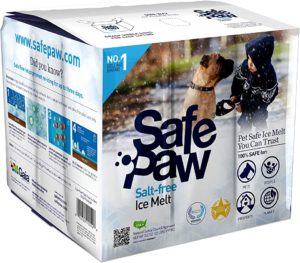
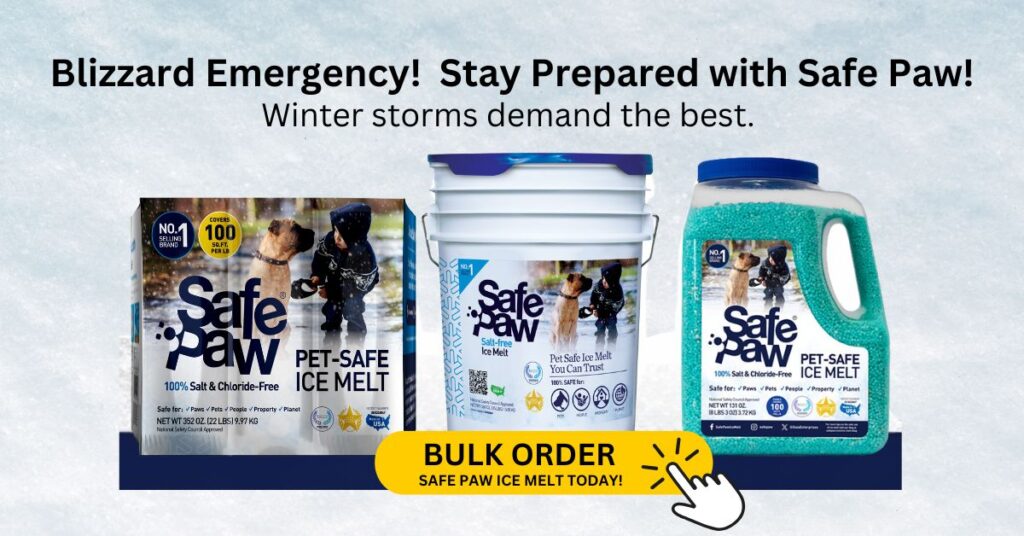
Pet Friendly Ice Melt – Safe Paw!
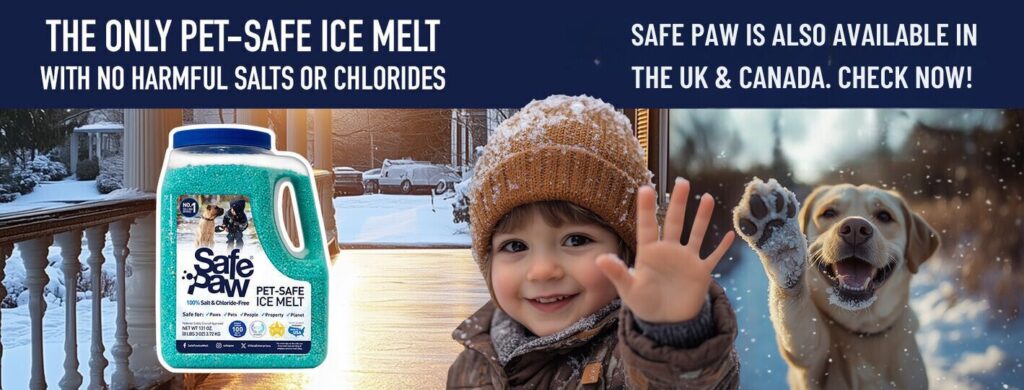
The Original and the #1 Child and Pet Safe Ice Melt for over 20 years. Guaranteed environmentally safe – will not harm waterways and sensitive wetlands.
Is Pet-Safe Ice Melt Safe for Limestone?
Not necessarily. Pet considerations and natural-stone compatibility are separate questions. A product should be evaluated for both its ingredients and its suitability for limestone or other natural-stone surfaces.
For Pet-Access Areas
- Check the ingredient list.
- Follow product directions.
- Avoid excessive application.
- Remove unnecessary residue.
- Consider where pets walk after treatment.
Selecting a Non-Corrosive Ice Melt for Concrete and Limestone Sidewalks
Using the wrong type of ice melt can spell disaster for concrete sidewalks. While effective, many traditional salts can cause spalling and cracking due to the harsh chemicals they contain. For concrete sidewalks, it’s essential to choose ice melt products that are effective yet gentle enough to preserve the structure of the concrete.
Pet Safety and Limestone Compatibility Are Different
| Question | What to Evaluate |
| Is the product suitable around pets? | Ingredient information and product-specific pet-use guidance |
| Is it suitable for limestone? | Natural-stone compatibility and surface-use directions |
| Can residue remain? | Recommended application and cleanup |
| Where does meltwater go? | Drainage and nearby landscaping |
| Is repeated application necessary? | Temperature, precipitation, ice thickness, and product directions |
How to Choose Ice Melt for Limestone Steps
1. Ingredients
Identify the active deicing ingredients.
2. Chloride Content
Determine whether the formulation contains chloride salts.
3. Surface Compatibility
Look specifically for guidance covering limestone or natural stone.
4. Application Rate
Use the stated amount rather than applying extra product.
5. Environmental Conditions
Consider temperature, moisture, snow depth, runoff, and repeated freeze-thaw exposure.
Key Ice Melt Terms for Limestone
- Chloride-free ice melt: An ice melt formulation without chloride salts.
- Deicer: A material used to help melt or prevent the bonding of ice to a surface.
- Freeze-thaw cycle: A repeated change between freezing and thawing conditions that can affect porous materials.
- Natural stone: Stone such as limestone that is quarried from natural geological formations.
- Traction material: A material used primarily to improve grip rather than chemically melt ice.
Non-Corrosive Ice Melt for Concrete
Non-corrosive ice melt is formulated to minimize damage to concrete surfaces. These products often contain ingredients like Calcium Magnesium Acetate (CMA), which is much milder on concrete than the traditional rock salt. It works by not allowing ice particles to bond with each other or the concrete surface, thus making it easier to remove without spoiling the concrete. However, it’s crucial to remember that while CMA is gentle on the environment and surfaces, it operates effectively only in temperatures just below freezing, making it less versatile in extreme cold.
Pet-Safe Ice Melt for Concrete
If you have pets at home, their safety is as important as clearing your sidewalks. Pet-safe ice melts for concrete consist of ingredients that are safe for their paws and will not cause harm if swallowed accidentally. These products ordinarily avoid powerful substances and salts in favour of gentler compounds that can melt ice without the dangers posed by conventional ice melts.
Ice Melt Damage to Concrete
Understanding how ice melt can damage concrete is key to choosing the right product. Ice melts containing sodium chloride or magnesium chloride can accelerate the freeze-thaw cycle on concrete surfaces. This cycle causes water to seep into the concrete, freeze, and expand, thus creating cracks and potholes. Additionally, the corrosive nature of these chemicals can further degrade the integrity of the concrete over time.
Knowing how an ice melt can damage concrete is central to choosing the right product. Sodium chloride or magnesium chloride-based ice melts may hasten this process leading to a freeze-thaw on top of a concrete area. Water seeps into the concrete during this process, freezes and expands creating cracks and potholes. In addition, these chemicals corrode the internal structure of the concrete over time.
It causing unnecessary harm to the environment, your pets, or the lifespan of your concrete.
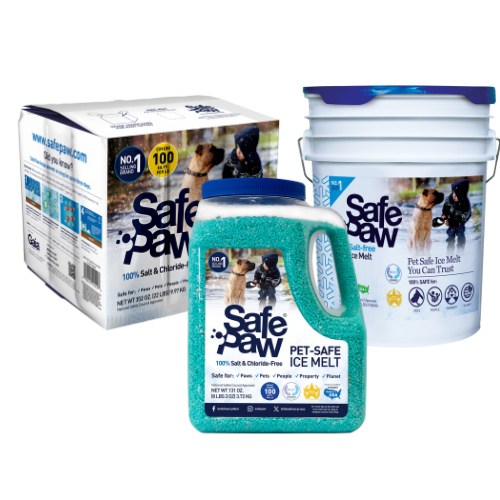
Pet Safe Ice Melt – Safe Paw
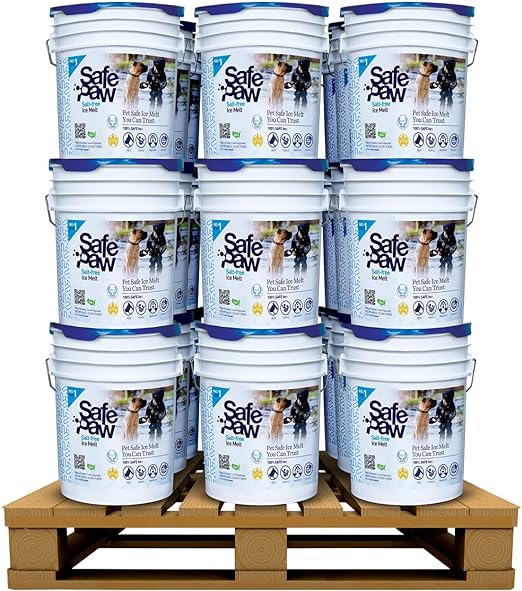
Safe Paw, Child Plant Dog Paw & Pet Safe Ice Melt -35lb, 36 Pails

Safe Paw, Child Plant Dog Paw & Pet Safe Ice Melt -22lb, 100Bboxes
Safe Paw, Child Plant Dog Paw Pet Safe Ice Melt, 160 Jugs

Pet Products Powered By EzPz.pet


How Does a Salt-Free Ice Melt Compare to Common Deicers?
| Ice Melt Type | Limestone Safety | Pet Safety | Cold Performance |
| Sodium Chloride | Highly damaging | Irritating | Limited |
| Calcium Chloride | Damaging | Risky for paws | Very good |
| Magnesium Chloride | Moderately damaging | Risk varies | Good |
| Potassium Chloride | Moderate | Safer for pets | Limited |
| CMA | Gentle | Generally safe | Only slightly below freezing |
| Salt-Free, Chloride-Free (urea + propylene glycol) | Excellent | Non-toxic | Effective to –2°F |
| Industry analysis shows even “milder” chlorides still contribute to stone and concrete deterioration when repeatedly used. |
Best Practices for Limestone Step Protection in Winter: A Maintenance Guide
1. Apply Before Ice Bonds Form
Pre-treatment prevents snow from fusing tightly with stone.
2. Use Only the Necessary Amount
Overapplication increases residue and runoff.
3. Remove Snow First
This ensures full contact with the stone surface.
4. Clear Residue After Melting
Residue removal protects stone, pets, and indoor floors.
5. Avoid Abrasive Materials
Sand or gravel accelerates surface scratching.
| Veterinary guidance recommends wiping paws after exposure to outdoor surfaces to prevent irritation from any remaining residues. |
Managing Snow Emergencies: Protecting Your Property in Extreme Conditions
When a Licking County snow emergency is declared, it’s not just about staying off the roads—it’s also a critical reminder to take fast, protective action at home. Natural stone steps, especially limestone, are particularly vulnerable when temperatures fluctuate rapidly. During emergencies, when plows push thick snow toward walkways or when you’re stuck indoors, your stone surfaces face increased freeze-thaw risks from lingering slush and runoff. Waiting too long to treat surfaces can lead to scaling, surface delamination, and deep pitting—especially if harsh deicers like magnesium chloride are used.
And while the term “is magnesium chloride safe for pets” might show up in pet product searches, the reality is more nuanced. Although it’s considered less toxic than traditional rock salt, magnesium chloride can still irritate paws and pose health risks to pets with kidney conditions. More importantly, it is not ideal for limestone surfaces due to its corrosive tendencies and low freeze-point rebound that can trigger more aggressive thaw cycles.
Understanding the emergency alerts from your county—like Licking County snow emergency levels—should go hand in hand with understanding what your surfaces and pets can handle. Emergencies call for immediate action, and using a non-toxic, salt-free solution like Safe Paw means you don’t need to compromise safety for speed. Its formulation allows quick application with no concern for paw irritation or stone degradation, even in high-alert weather scenarios.
How Do Snow Emergencies Impact Limestone Steps?
During events like a Licking County snow emergency, limestone surfaces face heightened freeze–thaw stress. Snowplows push slush onto walkways, temperatures drop rapidly, and water infiltrates stone pores.
Because emergencies increase thaw/refreeze frequency, they require faster intervention and a more protective ice melt.
| Research highlights that salt–freeze cycles produce stronger scaling effects than freeze cycles without salt contamination. |
What Temp Does Snow Melt? Impact on Stone Stability and Refreezing
Many people wonder: what temp does snow melt? Scientifically, pure snow begins to melt at 32°F (0°C). But when snow has been compacted, salted, or mixed with road grime, its melting point can drop even lower. This matters especially for homeowners using treatments like sand or basic salts. While it’s common to hear people ask, “does sand melt ice?”—the answer is no. Sand doesn’t melt ice; it only provides temporary traction. It also clogs drains and leaves behind gritty residue that can scratch delicate surfaces like limestone or sandstone.
That’s where the limitations of traditional winter solutions become obvious. Sand may be non-toxic, but it lacks ice-melting capability. Magnesium chloride melts at lower temperatures, but raises concerns over pet safety and material corrosion. Neither gives you the well-rounded protection that a product like Safe Paw offers.
Knowing what temp does snow melt helps you time your ice melt application precisely—ideally just before snow begins to fall or when temperatures are rising after a freeze. Safe Paw works effectively in low temperatures, breaking the bond between snow and stone without chemical aggression. It also contains traction agents, providing the same surface grip benefit as sand without the cleanup nightmare or the abrasive effect on natural stone.
So while others are tossing sand or harsh salts, a more holistic approach means using a chloride-free melt that covers temperature response, traction, surface integrity, and paw safety—all in one formula.
| Studies show impurities like dirt or salt lower snow’s melting temperature, influencing how ice bonds to surfaces. |
| Consumer guides emphasize that chloride-free ice melts work by breaking surface tension rather than relying on aggressive chemical dissolution. |
Conclusion: Safeguarding Your Home with Chloride-Free Ice Melt Products
If your region is under a Licking County snow emergency, it’s a clear signal to act fast and smart. Limestone stairs don’t just need ice melted—they need protection. Relying on products like magnesium chloride may seem tempting, but you now know that asking “is magnesium chloride safe for pets” isn’t just a yes/no question—it depends on their health and your surfaces.
Also, while sand is often used in panic during snow events, you know better than to ask “does sand melt ice”—it doesn’t. You’ve learned how snow behaves depending on the temperature and how inappropriate ice melt can quietly destroy valuable limestone and concrete over time.
The best defense? Choosing a product like Safe Paw that ticks every box—safe for paws, safe for limestone, effective at low temperatures, and completely salt-free. Whether you’re dealing with sudden snow emergencies or seasonal snowfall, Safe Paw offers peace of mind and true winter protection.
Gaia Enterprises Inc. delivers 100% pet-safe and environmentally friendly winter products. Safe Paw, our flagship product, is the #1 selling pet-safe ice melt that does not harm pets, safe if ingested, and safe on all types of concrete.
FAQ: Frequently Asked Questions About Limestone-Safe Deicers
Other Ice Melt Products
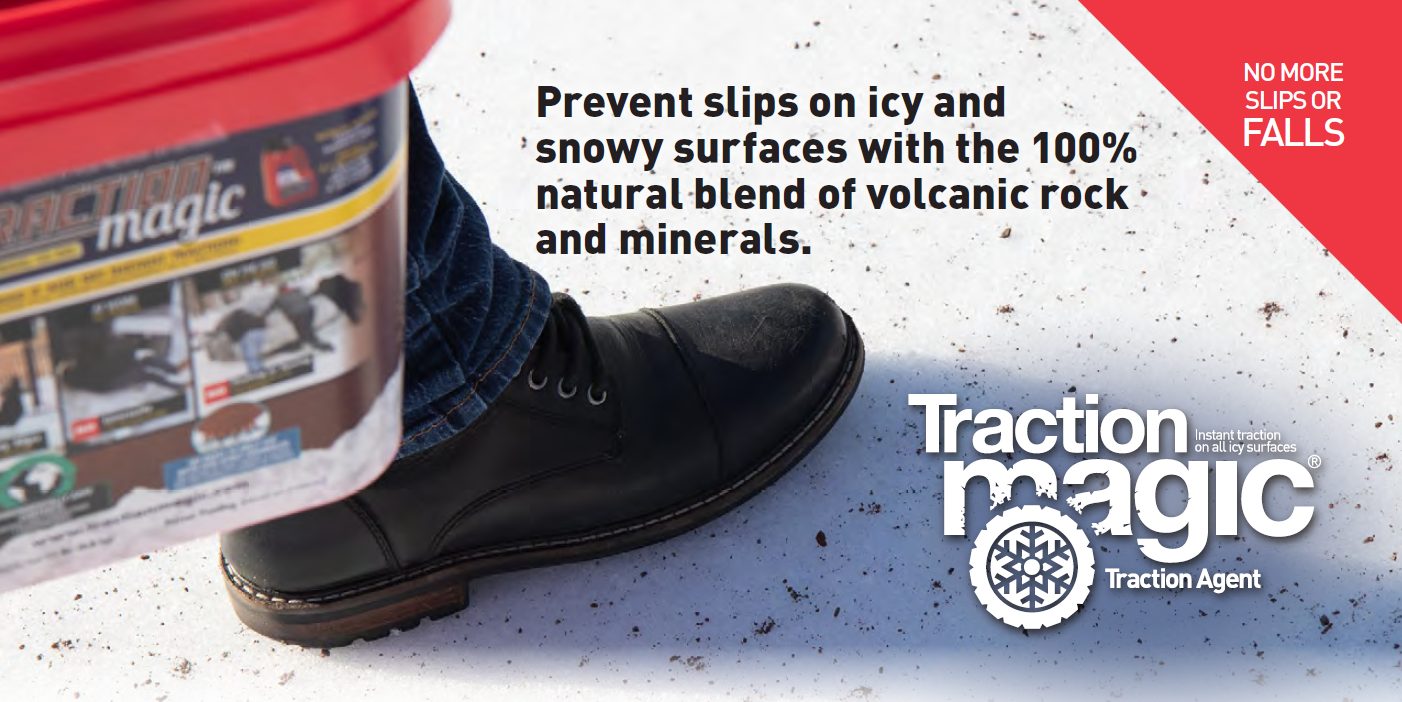
Traction Magic
Stay safe on slippery surfaces with a product that’s 100% natural and safe for pets, people, and your property. Use Traction Magic on sidewalks, steps, or as instant traction for your car.
Safe Thaw
Imagine an ice melt you can put down and never worry about. It won’t harm pets, kids and your property. That’s Safe Thaw. Unlike anything else on the market, Safe Thaw can change how winter affects our planet.
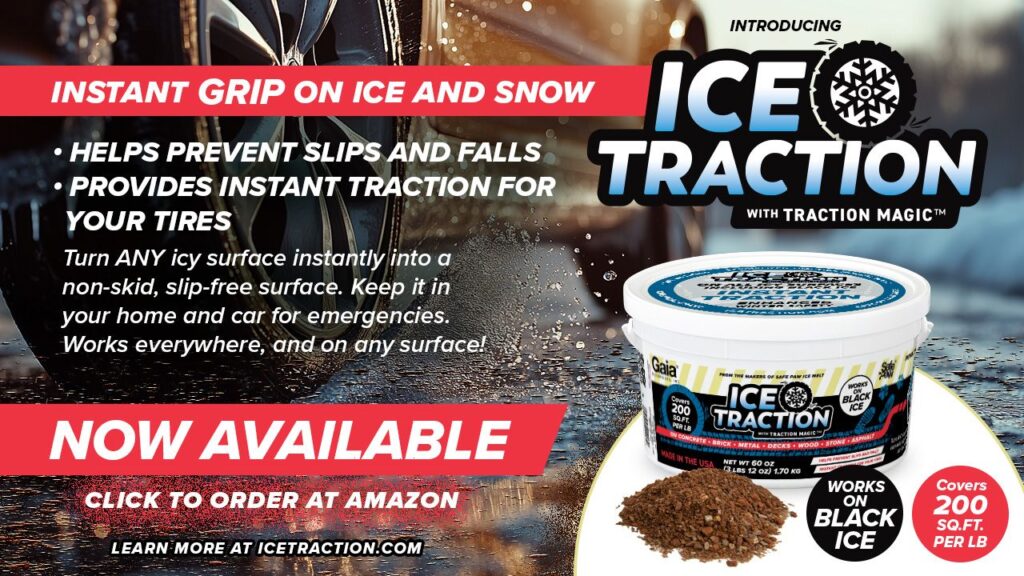
Ice Traction (with Traction Magic™)
Ice Traction (with Traction Magic™) is your go-to winter solution for driveways, walkways, parking lots — and even black ice on the road. Unlike salt or ice melts, it delivers instant grip on snow and slippery surfaces with no wait time. Just spread and go.

Safe Thaw
Imagine an ice melt you can put down and never worry about. It won’t harm pets, kids and your property. That’s Safe Thaw. Unlike anything else on the market, Safe Thaw can change how winter affects our planet.