3 Ways In Which Magnesium Chloride Is Hurting You And Your Pet
0 comments
Magnesium chloride ice melt can irritate a pet’s paws, mouth and gastrointestinal tract, especially when residue is licked from the feet or a pet eats treated snow or granules. The level of risk depends on the product concentration, the amount swallowed, the animal’s size and health, and the duration of exposure.
ASPCA Poison Control notes that magnesium chloride is used in some products marketed as pet-friendly and may be safer than rock salt, but it can still cause stomach upset and should not be treated as harmless. Wipe or rinse paws after winter walks, prevent access to deicer bags and slush, and contact a veterinarian or animal poison-control service promptly if ingestion or symptoms occur.
Is magnesium chloride harmful to pets? It can be. Contact may irritate paws, and licking or swallowing the product may cause drooling, vomiting or diarrhea. Larger exposures can lead to dehydration or electrolyte changes. Use deicers sparingly, clean paws after walks and seek veterinary advice for known ingestion or symptoms.
Key Takeaways
Magnesium chloride deicer may irritate paw pads, eyes and the gastrointestinal tract.
A small lick and a large ingestion are not equivalent; risk depends on dose, concentration, pet size and health status.
Products marketed as pet-friendly are not automatically harmless, and there are no specific U.S. labeling requirements that guarantee a deicer is pet-safe.
Common signs after exposure include paw licking, redness, drooling, vomiting and diarrhea.
Severe or repeated exposure may cause dehydration, weakness or electrolyte abnormalities and needs prompt veterinary advice.
After a walk, wipe or rinse paws and prevent licking until they are clean and dry.
Store all deicer products securely and keep pets away from treated slush and open packaging.
Do not induce vomiting or give home remedies unless a veterinarian or animal poison-control professional instructs you to do so.
Use product-specific evidence for any claim about melting temperature, corrosion, environmental impact or pet safety.
PET EXPOSURE WARNING: No deicer should be considered safe to eat. Keep pets away from product bags, granules, brine, treated snow and slush. If your pet swallows a deicer or develops vomiting, diarrhea, drooling, weakness, tremors, seizures, limping or persistent paw irritation, contact a veterinarian or animal poison-control service promptly. Do not induce vomiting or give a home remedy unless instructed by a veterinary professional.
Audio Edition of This Article
During the winter, ice melt is an urgent necessity. It keeps sidewalks clear, cleans and de-ices driveways and parking lots, and makes roadways safe for driving. While ice melt is necessary, not all varieties are suitable for use around dogs. When consumed, some are extremely dangerous, while others irritate the paws, skin, and mucous membranes after exposure.
Key Takeaways
Magnesium chloride deicer may irritate paw pads, eyes and the gastrointestinal tract.
A small lick and a large ingestion are not equivalent; risk depends on dose, concentration, pet size and health status.
Products marketed as pet-friendly are not automatically harmless, and there are no specific U.S. labeling requirements that guarantee a deicer is pet-safe.
Common signs after exposure include paw licking, redness, drooling, vomiting and diarrhea.
Severe or repeated exposure may cause dehydration, weakness or electrolyte abnormalities and needs prompt veterinary advice.
After a walk, wipe or rinse paws and prevent licking until they are clean and dry.
Store all deicer products securely and keep pets away from treated slush and open packaging.
Do not induce vomiting or give home remedies unless a veterinarian or animal poison-control professional instructs you to do so.
Use product-specific evidence for any claim about melting temperature, corrosion, environmental impact or pet safety.
How Pets Are Exposed to Magnesium Chloride
Paw contact. Granules or brine can remain between toes and on pads, causing irritation or prompting licking.
Licking treated paws. This is a common route for small accidental ingestion after a walk.
Eating granules or treated snow. Direct access to bags, piles, slush or salty snow can create a larger dose.
Eye or nose exposure. Dust and splashes may irritate sensitive tissues.
Repeated household tracking. Residue can be carried indoors on paws, footwear and mats unless cleaned.
Symptoms to Watch For
Exposure Level
Possible Signs
Recommended Response
Local paw/skin irritation
Persistent licking, redness, tenderness, cracked pads or limping
Rinse paws with lukewarm water, dry thoroughly and contact a veterinarian if signs persist or worsen.
Mild ingestion
Drooling, nausea, vomiting, diarrhea or reduced appetite
Remove access, keep the package, and call a veterinarian or animal poison-control service for product-specific advice.
Seek urgent veterinary care. Do not wait for symptoms to become severe.
Eye exposure
Squinting, redness, tearing or pawing at the eye
Rinse gently with clean lukewarm water and obtain veterinary advice promptly.
What to Do After Exposure
Move the pet away from the treated area. Prevent further licking or access to granules, brine and treated snow.
Clean the paws. Rinse or wipe paws and the skin between the toes with lukewarm water, then dry thoroughly.
Save the product information. Keep the bag, label or a clear photo of the ingredient list and concentration.
Do not induce vomiting. Do not give milk, oil, salt, charcoal or another home remedy unless a veterinary professional instructs you.
Call for product-specific advice. Contact your veterinarian, ASPCA Animal Poison Control Center or Pet Poison Helpline when ingestion is known or suspected, or when symptoms are present.
Seek emergency care for serious signs. Repeated vomiting, weakness, tremors, seizures, collapse or breathing difficulty require urgent veterinary attention.
Prevention Checklist for Pet Owners
Use only the amount stated on the product label.
Keep pets indoors during application and away until the area is cleared according to label directions.
Choose routes with less visible deicer residue when walking pets.
Use booties or a veterinarian-approved paw barrier for sensitive dogs.
Wipe paws, lower legs and belly after walks.
Keep deicer bags and scoops in a closed, pet-inaccessible location.
Clean tracked residue from entry mats and floors.
Provide clean drinking water; do not allow pets to eat treated snow or slush.
Pet Exposure Decision Guide
1. Was there only paw contact? Rinse and dry the paws, prevent licking and monitor for redness or discomfort.
2. Was any product swallowed? Keep the package and call a veterinarian or poison-control service for advice based on the ingredient and amount.
3. Are symptoms present? Vomiting, diarrhea, drooling, limping, weakness, tremors or unusual behavior warrant prompt veterinary guidance.
4. Was the amount large or unknown? Treat it as potentially significant and seek urgent professional advice.
5. Is the pet very small, young, old or medically vulnerable? Use a lower threshold for contacting a veterinarian.
6. Is the pet having seizures, collapse or breathing trouble? Go to an emergency veterinary hospital immediately.
How to Evaluate a Pet-Friendly Ice Melt
Read the complete ingredient list and safety data sheet.
Do not rely only on the words “pet friendly” or “pet safe.”
Check application rate and cleanup instructions.
Review warnings for ingestion, eye contact and skin exposure.
Look for specific test methods behind non-corrosion or environmental claims.
Confirm the lowest effective temperature through current technical documentation.
Use the minimum necessary quantity and prevent access to stored product.
Plan for paw cleaning and runoff management.
Reliable alternatives
Deicer Category
Potential Advantage
Pet Exposure Concern
Property/Environment Note
Recommended Wording
Sodium chloride / rock salt
Low cost and widely available
Can irritate paws; significant ingestion may cause dangerous sodium imbalance
Chloride runoff contributes to salinization and infrastructure damage
Use cautiously and keep pets away from residue.
Calcium chloride
Works at lower temperatures than rock salt
Can be irritating to the mouth and gastrointestinal tract
Chloride and material-compatibility concerns
Do not call pet-safe without product-specific evidence.
Magnesium chloride
Common in some pet-friendly formulations and may be less harsh than rock salt in some uses
May still irritate paws and cause stomach upset or electrolyte changes after ingestion
Still adds chloride to runoff; material effects depend on formulation and use
A potentially lower-risk option than some salts, not a harmless one.
Urea-based deicer
Chloride-free
May still cause stomach upset if swallowed
Nitrogen runoff and performance limitations may apply
Evaluate the complete product, not only the ingredient class.
Acetate/CMA-type deicer
Often selected to reduce chloride exposure
Ingestion and formulation risks still require label review
Cost, oxygen demand and material compatibility vary
Potential alternative when supported by product data.
Safe Paw or another proprietary salt-/chloride-free product
Avoids conventional chloride salts
Prevent ingestion; rely on current label and toxicology evidence
Claims about surfaces and environment require defined testing
Position as a product to evaluate, not as risk-free.
Pros and Cons of Magnesium Chloride Around Pets
Potential Advantages
Limitations and Risks
Commonly available and effective as a deicer in cold conditions.
Residue can irritate paws and may be licked during grooming.
Included in some products marketed as pet-friendly.
“Pet-friendly” is not a guarantee of no risk or no stomach upset.
May be less likely than rock salt to cause sodium poisoning at comparable small exposures.
Larger ingestions can still cause vomiting, diarrhea, dehydration or electrolyte changes.
Can reduce ice when used according to the label.
Still contributes chloride to runoff and may affect some surfaces or metals.
Get ready for winter with the ONLY Pet Safe Ice Melt you can trust
Is Magnesium Chloride Harmful to Pets and Children? Understanding the Risks
Magnesium chloride is harmful to pets, children, wildlife, and even adults. Many hazardous effects are listed on the Material Safety Data Sheet for magnesium chloride, including:
Contact lens irritates and burns the eyes.
It causes skin irritation and burns (particularly in the mouth and throat).
When consumed, it causes nausea, vomiting, and diarrhea in the gastrointestinal tract.
Its dust causes respiratory discomfort.
Inhaling or ingesting metal fumes causes flu-like symptoms such as fever, chills, cough, weakness, chest and muscle pain, and an increase in white blood cell count.
Contact with children has the same less dangerous results as it does with pets: irritation of the skin, eyes, mouth, and throat, as well as stomach discomfort. These dangers also exist for wildlife that is known to eat salt when they come upon it. Finally, skin contact and inhalation of magnesium chloride dust puts the person spreading the salt melt at risk.
When pets walk on surfaces treated with magnesium chloride, the compound clings to their paw pads and fur. Later, when they groom or lick themselves, they may ingest harmful levels of the chemical — leading to vomiting, dehydration, and in severe cases, neurological symptoms.
The Pet Poison Helpline and ASPCA both classify chloride-based deicers as moderate to severe toxins for pets. Even small amounts can lead to gastrointestinal distress or burns on paw pads.
Get ready for winter with the ONLY Pet Safe Ice Melt you can trust
Does Magnesium Chloride Hurt Pets? Risks to Paws and Ingestion Dangers
Just one winter walk on magnesium chloride can expose pets to irritation and toxicity. The salt draws moisture from their skin due to its high osmotic activity, leading to dryness, cracking, and burns.
Magnesium Chloride Ice Melt Dangers: Common Symptoms and Reactions in Pets
Persistent paw licking
Redness or swelling between pads
Sneezing or watery eyes from airborne particles
Digestive upset (vomiting, diarrhea, loss of appetite)
Wildlife faces similar risks. Animals drawn to the salty taste may ingest residues directly from the ground or melted runoff — a behavior that can lead to poisoning or dehydration.
And magnesium chloride doesn’t just harm pets — it also damages concrete and vegetation. The EPA notes that chloride salts contribute to soil contamination and surface corrosion when used repeatedly over time.
Why You Should Switch to a Pet-Safe Ice Melt for Better Winter Safety
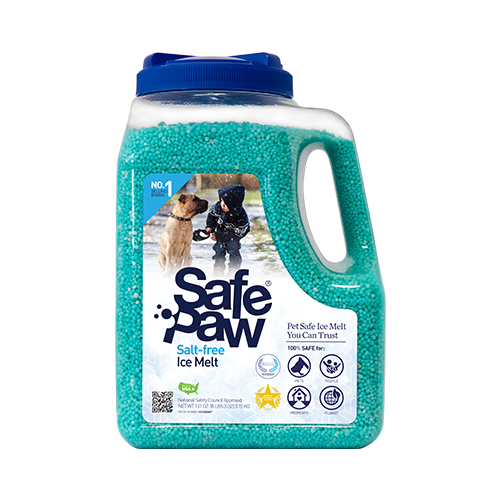
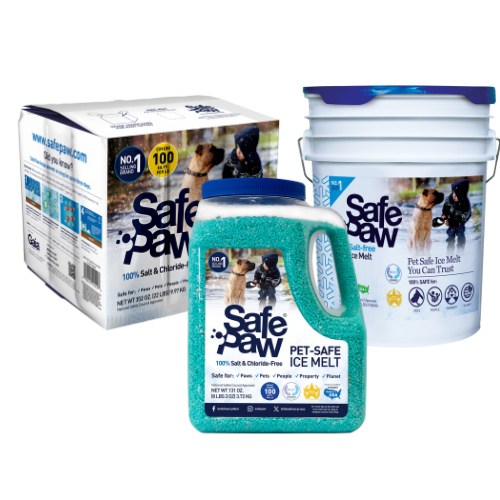
Not all ice melts are created equal. Pet-safe deicers like Safe Paw®, manufactured by Gaia Enterprises, provide powerful melting performance without using any chlorides or salts.
Unlike magnesium chloride, Safe Paw is:
100% salt-free and non-corrosive
Safe for pets, children, lawns, and waterways
Effective down to –2°F, when most salt-based products stop working
The unique dual-core formula quickly liquefies surface ice and penetrates deep to prevent refreezing — protecting your surfaces and your pet’s paws all winter long.
Safe Paw was developed over 30 years ago by chemical engineer Steve Greenwald after witnessing his own dog’s paw injuries from traditional salt-based ice melts.
Magnesium Chloride vs. Pet Safe Ice Melt: Which is Better for Your Home?
When searching for “snow salt near me,” choose products that are both eco-friendly and pet-safe. Here are reliable alternatives:
Ice Melt Type
Safety for Pets
Effectiveness
Environmental Impact
Calcium Chloride
Moderate (can irritate paws)
High above 0°F
Corrosive
Beet Juice Blends
Good
Moderate
Eco-safe
Safe Paw®
Excellent
Effective to –2°F
Non-toxic, non-corrosive
Always rinse or wipe your pet’s paws after outdoor walks to remove any chemical residue — even if you use pet-safe products.
Why Safe Paw Pet Safe Ice Melt is the Best Chloride-Free Solution
Safe Paw doesn’t just prevent harm — it actively protects. It’s been trusted for over two decades by veterinarians, pet shelters, and municipalities that prioritize animal safety.
Safe Paw Ice Melt:
Works through a unique endothermic reaction, melting ice without external heat.
Leaves behind a protective layer that prevents re-icing.
Contains no salts, chlorides, or harmful chemicals.
Safe even if ingested — non-toxic and child-friendly.
Safe Paw meets stringent environmental standards set by U.S. regulatory agencies and remains the only ice melt guaranteed to be safe for pets and the planet.
Get ready for winter with the ONLY Pet Safe Ice Melt you can trust
Finding the Best Ice Melt Pet Safety Solutions for Your Property
Safe Paw
The Original and the #1 Pet and Child Safe Ice Melt for over 20 years. Guaranteed environmentally safe – will not harm waterways and sensitive wetlands.
Safe Paw is the only ice melt product of its sort on the market, and it complies with the severe environmental regulations set forth by US regulatory agencies. Safe Paw ice melt will not affect you, your dogs, children, wildlife, or the environment in general, including your lawn and plants.
It has two ice-fighting mechanisms. When the unique outer core comes into contact with ice, it quickly liquefies and begins to melt and break up the ice’s surface. Then it penetrates deep into the ice to finish the melting process.
Glycol is used in Safe Paw to defrost the ice and prevent additional freezing. Safe Paw ice melt not only melts current ice but also protects the surface to prevent ice from accumulating in the future.
Understanding Magnesium Chloride Ice Melt Dangers and Safe Alternatives
It’s no surprise that many households reach for magnesium chloride ice melt during winter—especially when weather apps ping warnings and you feel pressure to clear walkways fast. But here’s the truth: while it might seem effective at first, this compound poses very real risks to pets, kids, landscaping, and even the people spreading it. When temperatures fall well below freezing, magnesium chloride ice melt struggles to perform. It slows down dramatically and creates the illusion of safety on surfaces that may still be slick with invisible ice—a dangerous trap for unsuspecting feet and paws.
Beyond inefficiency in deep cold, the residue left behind from magnesium chloride can wreak havoc on surfaces and soil. Its brine can seep into cracks, corroding concrete and leaching into garden beds, altering pH levels and harming plant life. For pet parents, the stakes are even higher. Magnesium chloride particles linger on surfaces and can cling to paws, getting tracked into the house. Once inside, your pet may lick their feet—potentially ingesting harmful levels of this chemical.
Even a quick outing becomes a minefield. Curious pets sniff, scratch, and walk on everything, and magnesium chloride exposure can lead to vomiting, dehydration, and respiratory distress. So when you’re searching “snow salt near me,” know that not all salt is created equal. If you’re relying on what’s most convenient, you may be choosing safety for your driveway at the expense of your pets.
How Long Does It Take Snow to Melt? Why Your De-Icer Choice Impacts Speed
Wondering how long does it take for snow to melt on your treated driveway? The answer depends heavily on what you’re using. If you’re applying magnesium chloride ice melt, you’re relying on a substance that becomes less effective as temperatures dip below 5°F. Its melting capacity weakens when you need it most. That’s not just an inconvenience—it can be misleading. Snow might partially melt and then refreeze, making surfaces even more dangerous.
Compare that with a solution like Safe Paw, which starts breaking the surface tension immediately with its unique outer core and then penetrates deep into the ice to continue melting—even in extremely cold conditions. Its endothermic reaction isn’t dependent on external heat like the sun or warmer air, so you aren’t left wondering whether it’s working. You’ll see the results without worrying about chemical runoff, corroded surfaces, or pet health issues.
And while we’re talking winter efficiency, don’t forget the indoor component. If you’re hopping in your car and hitting the defrost button in car to clear the windshield, you’re already thinking about layered winter safety. That same mindset should apply outside your car—don’t just settle for basic deicers or random “snow salt near me” results. Choose a product that’s engineered for performance and peace of mind across all fronts.
The speed of snowmelt depends on the compound’s melting point. Magnesium chloride slows dramatically in deep cold, taking up to 3× longer to melt snow at 0°F.
In contrast, Safe Paw’s endothermic formula begins breaking surface tension immediately, melting faster even in sub-zero conditions (down to –2°F). It also prevents refreezing, reducing the risk of hidden ice buildup.
Faster melting isn’t just about convenience — it’s about preventing slips, falls, and paw injuries.
Magnesium Chloride vs. Safe Paw – Which Response Fits the Situation?
Situation
First Action
Product Role
Professional Help
Pet walked through treated sidewalk
Wipe or rinse paws and prevent licking
No additional product needed
Vet advice if irritation persists
Small lick from paw residue
Clean paws, retain label and monitor
Do not give another substance as a remedy
Call vet/poison control if symptoms or uncertainty
Pet ate granules or unknown amount
Remove access and keep package
None
Prompt veterinary/poison-control advice
Repeated vomiting, weakness, tremors or seizure
Go to emergency veterinary care
None
Urgent
Choosing a product for home use
Review full ingredient list, label and evidence
Select the lowest-risk option that meets site needs
Ask veterinarian for high-risk pets
Sensitive paws or recurring irritation
Use booties/paw barrier and reduce residue exposure
Use minimally and clean promptly
Veterinary exam for cracks, bleeding or pain
Best-For Recommendations
Best for Routine Pet Walks – Avoid visible granules and slush, use booties for sensitive paws, and wipe paws and lower legs after every treated-route walk.
Best for a Pet-Friendly Home Application- Use the minimum label-directed amount of a product with clear ingredient, safety and cleanup information. Restrict access during application.
Best for a Known Ingestion– Keep the package and contact a veterinarian or animal poison-control service for product-specific advice.
Best for Paw Irritation– Rinse, dry and prevent licking. Seek veterinary care for pain, bleeding, limping or persistent redness.
Best for Severe Symptoms– Emergency veterinary care for tremors, seizures, collapse, marked weakness, breathing difficulty or repeated vomiting.
Best for Environmental Risk Reduction– Reduce total deicer use, apply only where needed, sweep excess granules and manage runoff.
Best for Safe Paw Positioning-Present it as a salt- and chloride-free option supported by its current label and test data – not as a product that is safe to ingest or risk-free.
Conclusion: Protecting Your Pets with Safe Paw Pet Safe Ice Melt
From paw burns to patchy performance, magnesium chloride ice melt introduces far more harm than help during winter. It underperforms in deep cold, damages surfaces and soil, and endangers pets with every pawstep. While common searches for “snow salt near me” might tempt you toward a quick purchase, knowing how long it takes for snow to melt—and how safely it does—matters more. By choosing Safe Paw, you’re choosing a non-toxic, chloride-free solution that works in low temperatures, protects surfaces, and shields the most vulnerable members of your home. It’s more than ice removal—it’s winter done responsibly.
Magnesium chloride ice melt is not automatically harmless or automatically a severe poison. It can irritate paws and the gastrointestinal tract, and larger exposures may cause more serious effects. Pet owners can reduce risk by limiting product use, keeping bags inaccessible, avoiding treated snow and slush, and cleaning paws after walks. If a pet swallows a deicer or develops symptoms, keep the product label and contact a veterinarian or animal poison-control service. When comparing alternatives, rely on the complete formula, current label and independent evidence – not only a “pet-safe” marketing phrase.
Choosing Safe Paw means protecting what matters most:
Your pets’ health
Your home and environment
Your peace of mind
Because winter safety shouldn’t come at the expense of your furry family members.
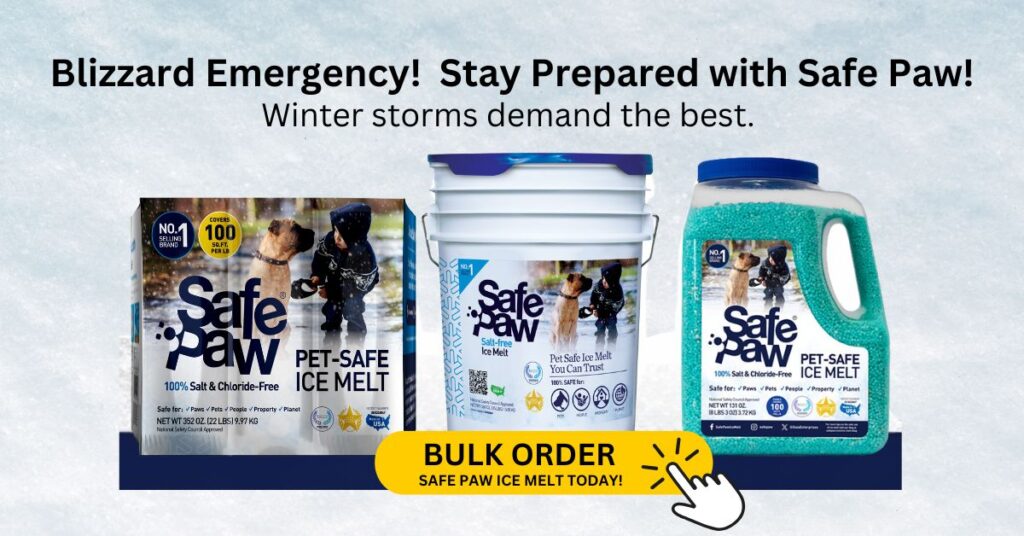
Gaia Enterprises Inc. delivers 100% pet-safe and environmentally friendly winter products. Safe Paw, our flagship product, is the #1 selling pet-safe ice melt that does not harm pets, safe if ingested, and safe on all types of concrete.
FAQ: About Magnesium Chloride and Pet Safety
It can cause harm, but severity depends on the amount, concentration and route of exposure. Paw contact may cause irritation, while swallowing the product can cause drooling, vomiting, diarrhea and, with larger exposures, electrolyte problems or neurologic signs.
Some magnesium chloride products are marketed as pet-friendly and may pose less risk of sodium poisoning than rock salt, but they can still irritate paws and the gastrointestinal tract. No deicer should be considered harmless.
Rinse or wipe the paws and skin between the toes with lukewarm water, dry thoroughly and prevent licking until clean. Contact a veterinarian if redness, pain, limping or persistent licking develops.
Remove access, keep the product package and contact your veterinarian or an animal poison-control service for product-specific advice. Do not induce vomiting unless instructed.
Repeated vomiting or diarrhea, marked lethargy, weakness, tremors, seizures, collapse, breathing difficulty or a large/unknown ingestion require urgent veterinary assessment.
No. ASPCA notes there are no specific requirements for labeling a deicer “pet safe.” Even products marketed for pets may cause stomach upset or irritation and must be used according to the label.
Yes when deicer residue may be present. Wiping or rinsing the paws, lower legs and belly reduces irritation and accidental ingestion during grooming.
The article should not make that promise. Prevent ingestion, follow the current label and contact a veterinarian or poison-control professional if a meaningful amount is swallowed or symptoms occur.
Chloride-containing runoff contributes to freshwater salinization. Environmental impact depends on the amount used, drainage and local conditions, so use the minimum effective amount and prevent concentrated runoff where possible.
Use the least amount of deicer needed, restrict pet access during application, choose lower-residue routes, use booties or a paw barrier when appropriate, and clean paws after walks.
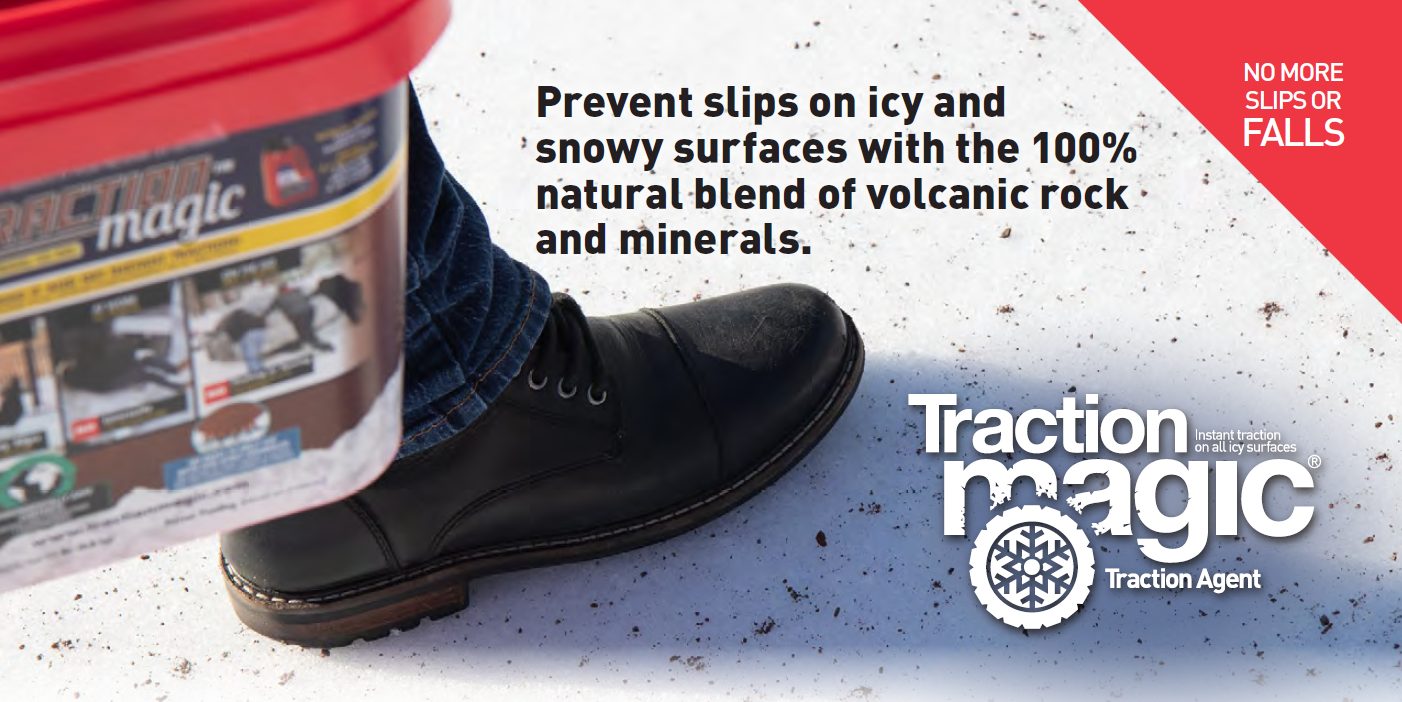
Stay safe on slippery surfaces with a product that’s 100% natural and safe for pets, people, and your property. Use Traction Magic on sidewalks, steps, or as instant traction for your car.
Imagine an ice melt you can put down and never worry about. It won’t harm pets, kids and your property. That’s Safe Thaw. Unlike anything else on the market, Safe Thaw can change how winter affects our planet.
Ice Traction (with Traction Magic™) is your go-to winter solution for driveways, walkways, parking lots — and even black ice on the road. Unlike salt or ice melts, it delivers instant grip on snow and slippery surfaces with no wait time. Just spread and go.
Imagine an ice melt you can put down and never worry about. It won’t harm pets, kids and your property. That’s Safe Thaw. Unlike anything else on the market, Safe Thaw can change how winter affects our planet.